By RAED BADAVVI-
Kalo Africa Media Correspondent – Doha, Qatar
Guinea has reaffirmed its commitment to expanding political, economic, cultural and scientific cooperation with Qatar, highlighting major investment opportunities and the role of young people in national development as its embassy celebrated the country’s 68th Independence Anniversary in Doha.
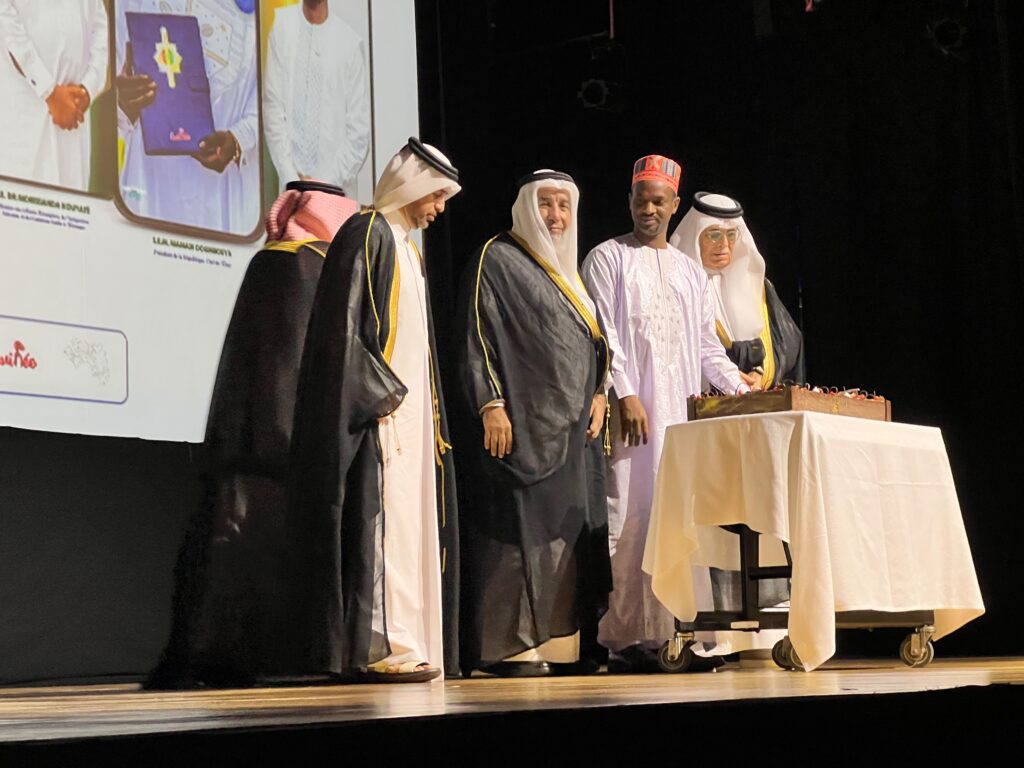
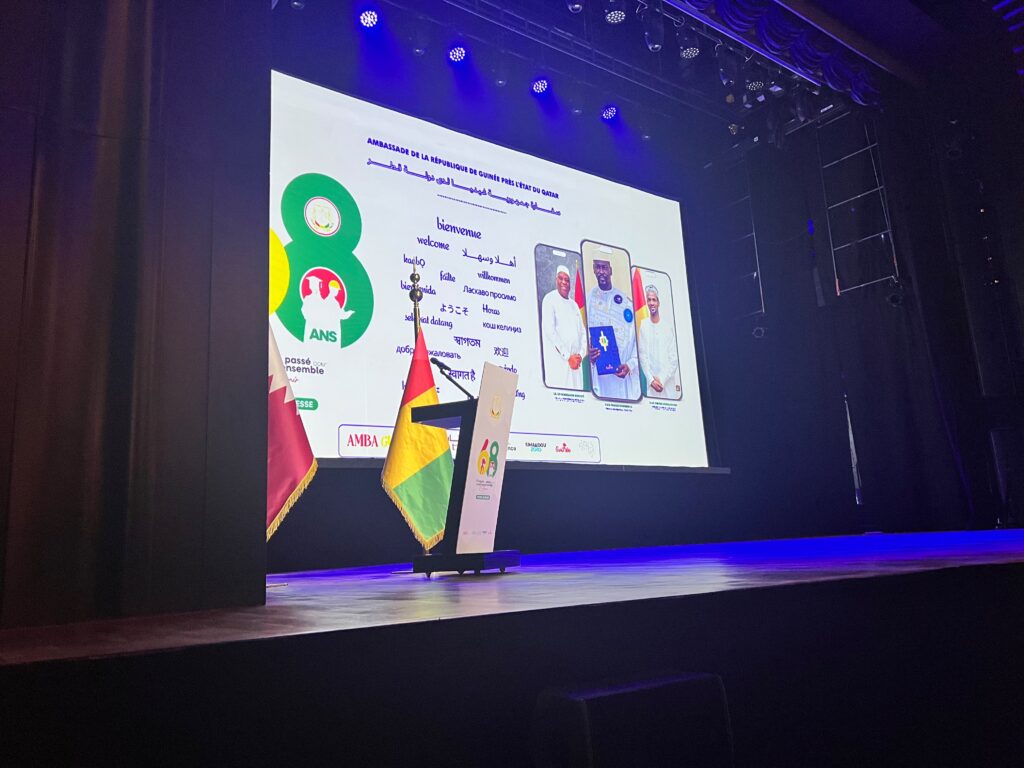
The celebration, held on Sunday at the Drama Theatre of Katara Cultural Village, brought together senior Qatari officials, ambassadors, representatives of international organisations and members of the Guinean community.
Among the prominent guests were Qatar’s Minister of Awqaf and Islamic Affairs, Ghanem bin Shaheen bin Ghanem Al Ghanim; Minister of State and President of Qatar National Library, Dr. Hamad bin Abdulaziz Al Kuwari; Director of Protocol at the Ministry of Foreign Affairs, Ambassador Ibrahim Yousif Fakhro; and General Manager of Katara Cultural Village, Professor Khaled Ibrahim Al Sulaiti.
Addressing the gathering, Guinea’s Ambassador to Qatar, Thierno Abdoulaye Sow, reaffirmed his government’s determination to strengthen bilateral relations and explore new opportunities for cooperation.
He described the relationship between Guinea and Qatar as one built on mutual trust and shared values.
Guinea Praises Qatar’s Diplomatic Role
Conveying greetings from Guinean President Mamadi Doumbouya to Qatar’s Amir, Sheikh Tamim bin Hamad Al Thani, Ambassador Sow expressed his country’s appreciation for Qatar’s diplomatic engagement in promoting peace, dialogue and stability.
He praised Doha’s efforts in the Middle East and internationally, emphasizing Qatar’s contribution to bringing nations and peoples closer together.
The ambassador said Guinea was committed to building on its existing friendship with Qatar and developing partnerships that could contribute to economic and social progress.
Major Investment Opportunities
A central part of the ambassador’s address focused on Guinea’s economic transformation and its ambition to attract greater international investment.
Sow highlighted the Simandou 2040 development programme, presenting it as a major component of the country’s long-term economic strategy.
He said the Simandou iron ore megaproject represented an investment of approximately $20 billion and included a 760-kilometre multipurpose railway connecting the mining area to the deep-water port of Morébaya.
According to the ambassador, the infrastructure is designed to support annual iron ore production of between 100 million and 120 million tonnes while facilitating the transportation of goods and passengers.
Citing projections attributed to the International Monetary Fund, Sow said the Simandou project could increase Guinea’s gross domestic product by 26% by 2030 and contribute to projected economic growth of 11.6% in 2027.
He also outlined investments exceeding $6 billion in three major alumina refinery projects, alongside plans to expand domestic mineral processing and steel production.
The ambassador presented these initiatives as opportunities for industrial development, technology transfer, employment and international partnerships.
Beyond mining, he emphasized Guinea’s agricultural potential, pointing to more than 13.7 million hectares of identified arable land and extensive water resources.
He said the country was seeking investment in agriculture, agro-industry and livestock production as part of efforts to diversify its economy.
Youth at the Centre of National Development
This year’s independence celebration was held under the theme “Drawing Inspiration from the Past to Build the Future Together: Our Youth.”
Ambassador Sow said young people, whom he estimated to represent nearly 70% of Guinea’s population, were central to the country’s economic and social transformation.
He highlighted their contributions to innovation, technology and entrepreneurship, describing youth development as a national priority.
The ambassador also emphasized the importance of Guineans living abroad, noting their contribution to the country’s development and their role in strengthening relations with host nations.
A New Direction for Economic Diplomacy
Sow outlined Guinea’s efforts to strengthen its international engagement through a foreign policy focused on economic diplomacy, strategic partnerships and attracting foreign investment.
He said the government’s approach sought to transform diplomatic relations into practical opportunities for development, trade and international cooperation.
The ambassador also referred to Guinea’s political and institutional reforms, presenting them as part of efforts to reinforce international confidence and encourage investment.
He highlighted the forthcoming Simandou Mining Summit, scheduled for November 11-14, 2026, as a platform for promoting investment opportunities and international partnerships.
Remembering Guinea’s Independence
The ambassador recalled October 2, 1958, when Guinea gained independence from France and became the first independent French-speaking country in sub-Saharan Africa.
He paid tribute to the national figures whose sacrifices secured the country’s independence and emphasized the responsibility of preserving their legacy for future generations.
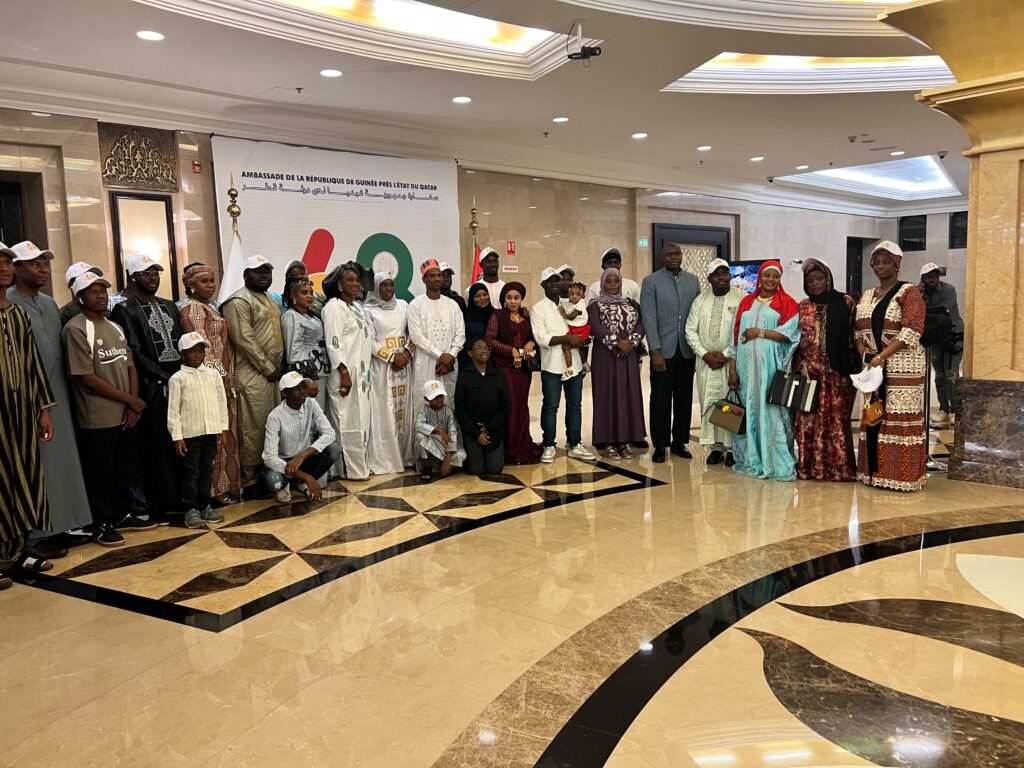
The celebration also provided an opportunity for the Guinean community in Qatar to commemorate its national history and maintain connections with its homeland.
Concluding his address, Sow expressed appreciation to the embassy’s staff and members of the Guinean community for their contributions to the celebrations.
The anniversary gathering underscored Guinea’s intention to strengthen its diplomatic and economic engagement with Qatar while presenting its development priorities and investment potential to an international audience in Doha.
EVENT IN PICTURES: