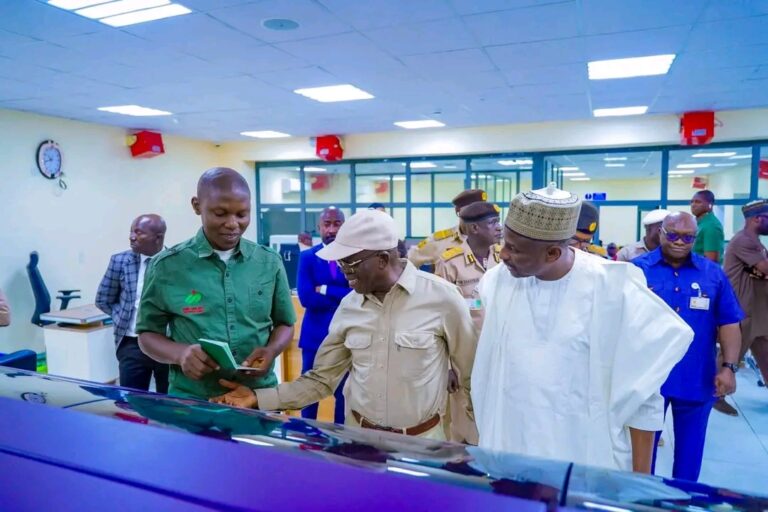
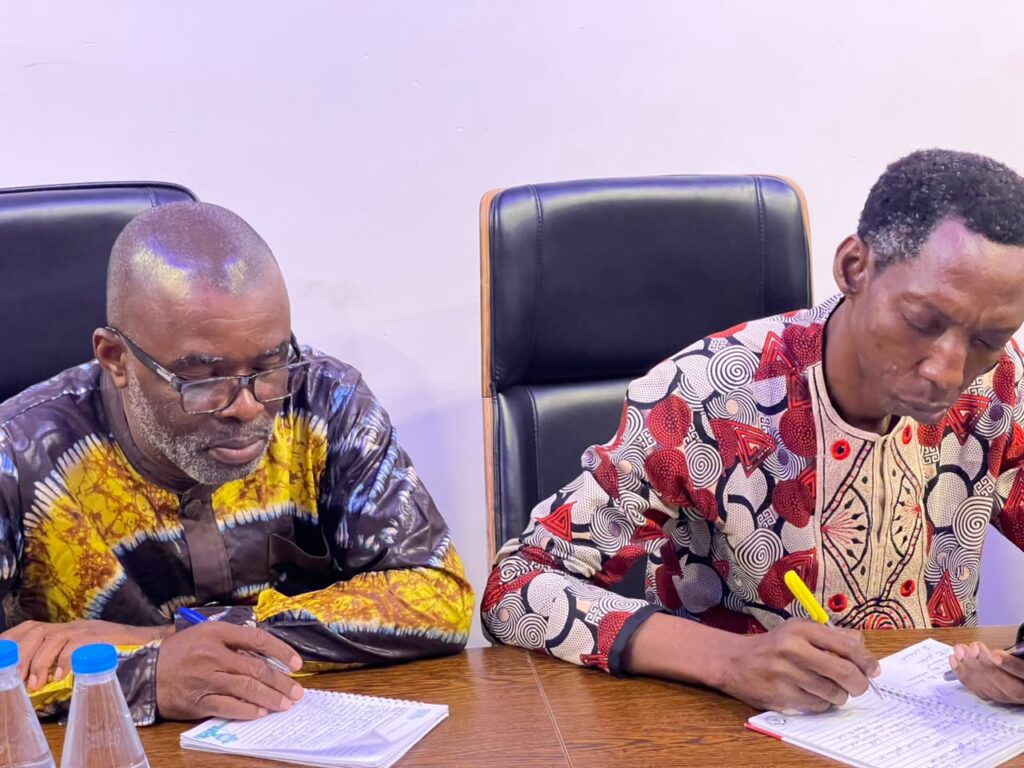
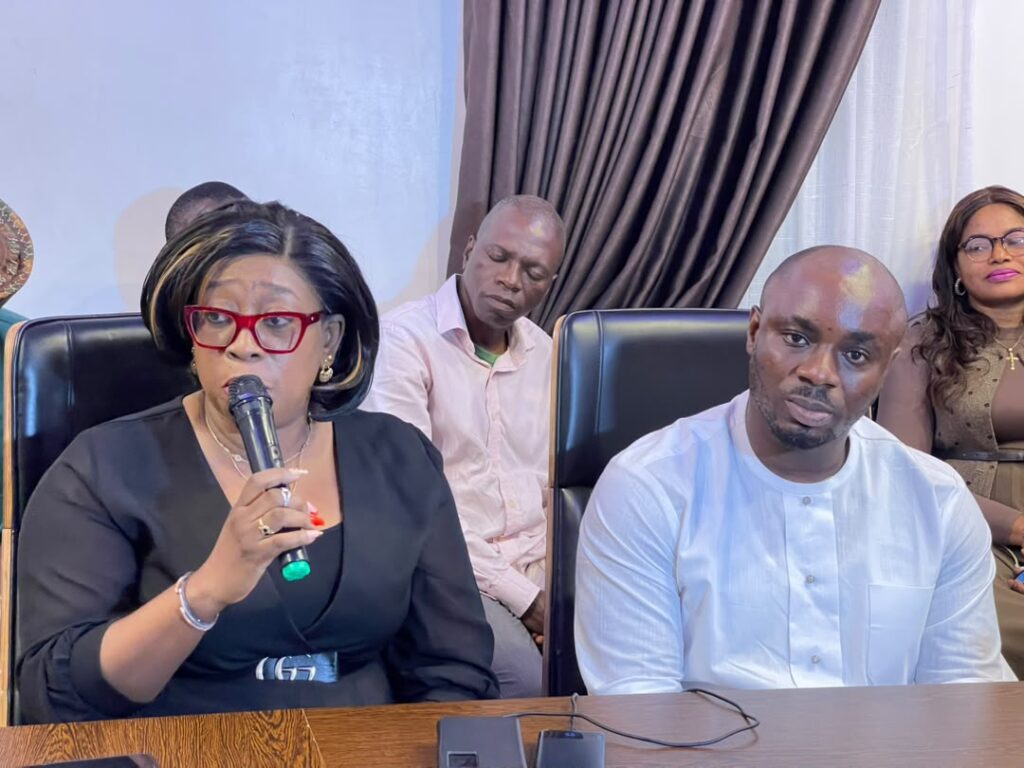
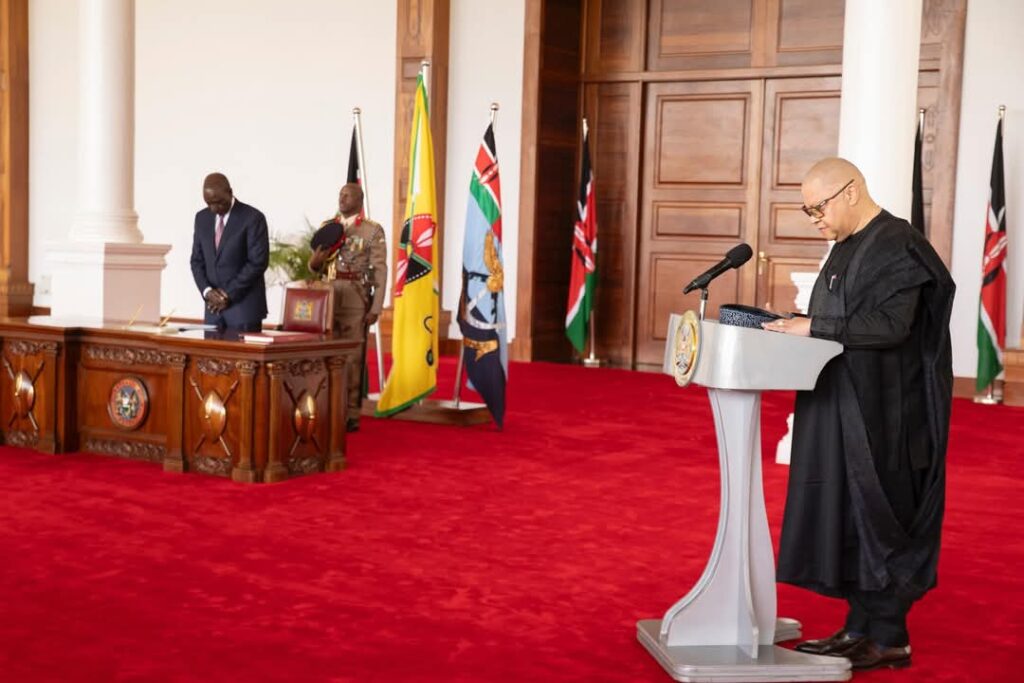
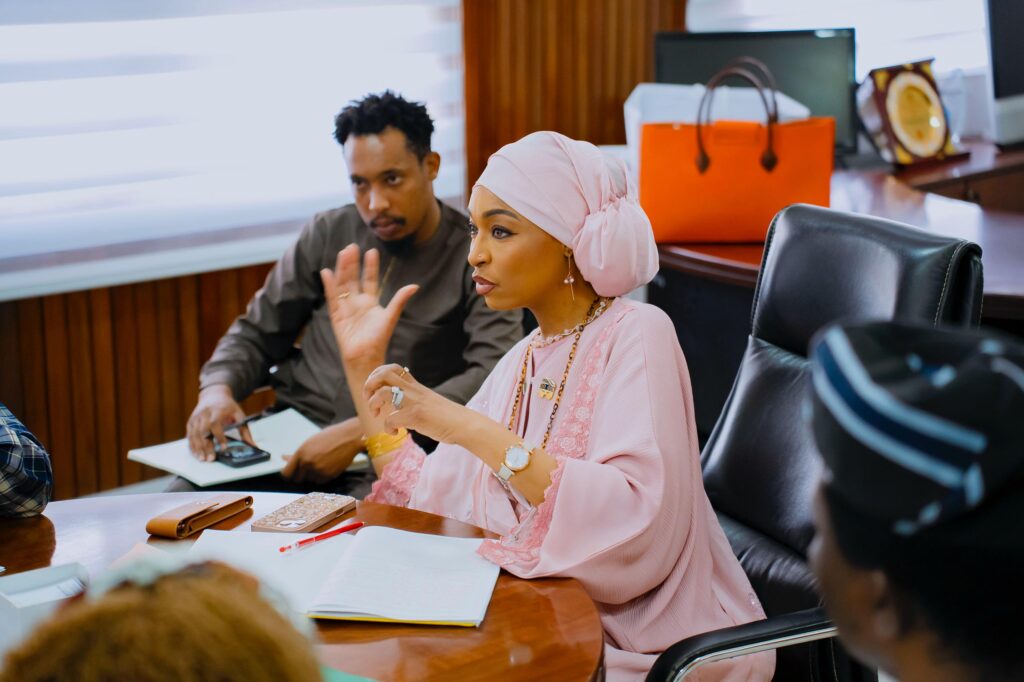
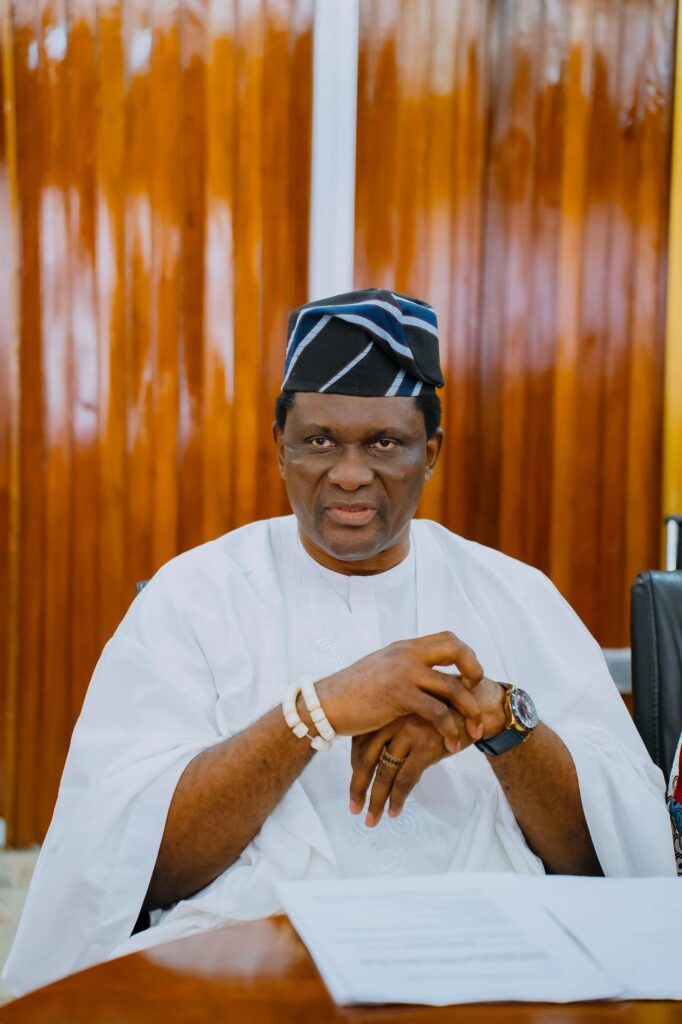
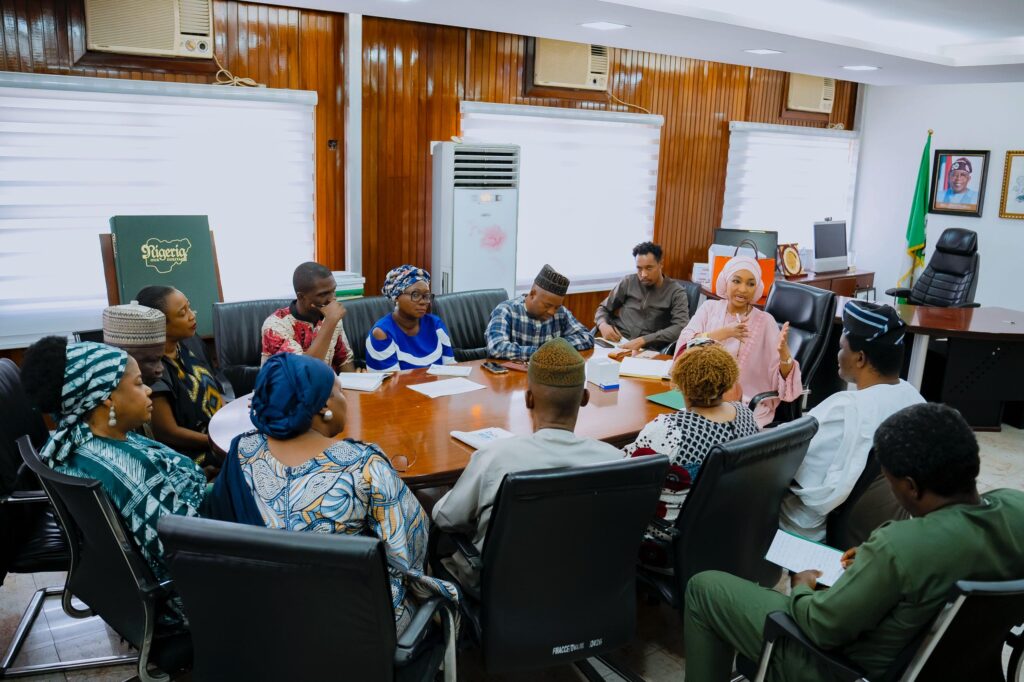
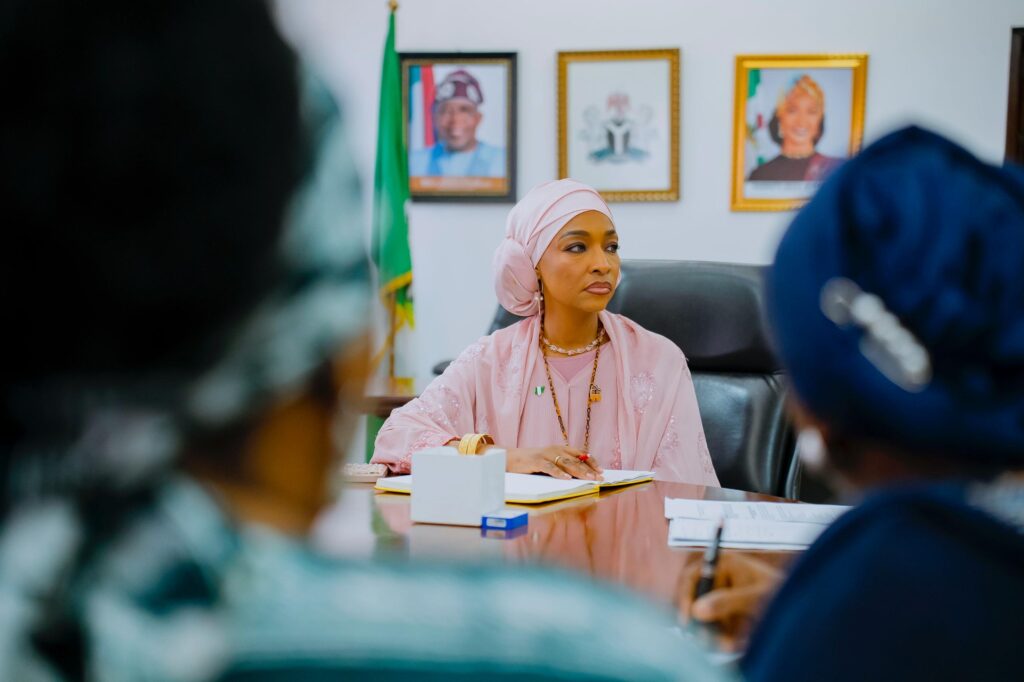
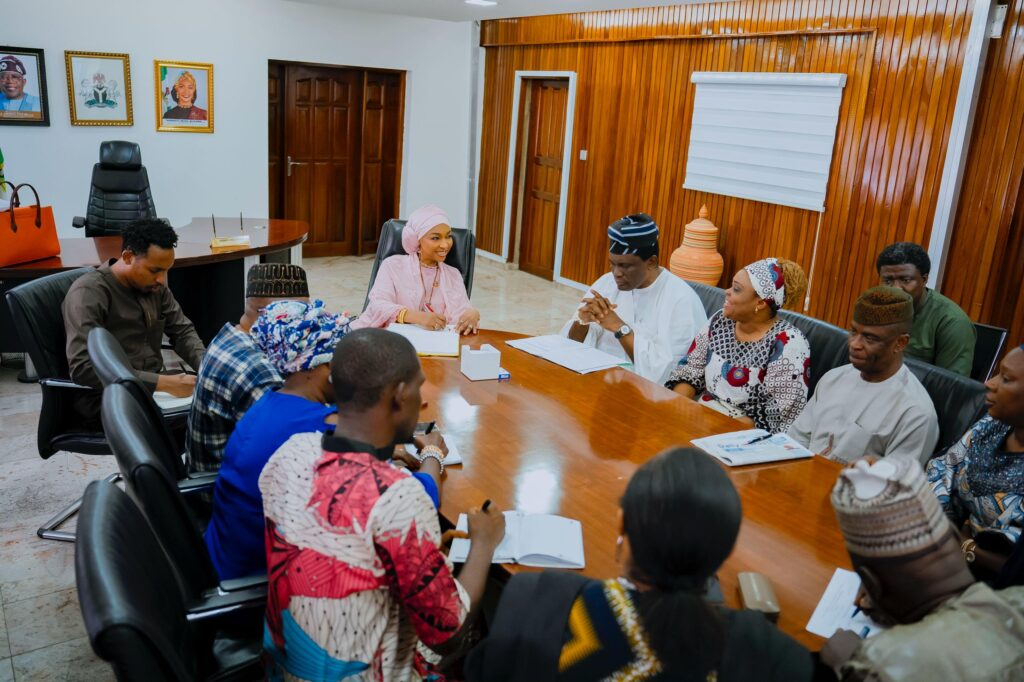
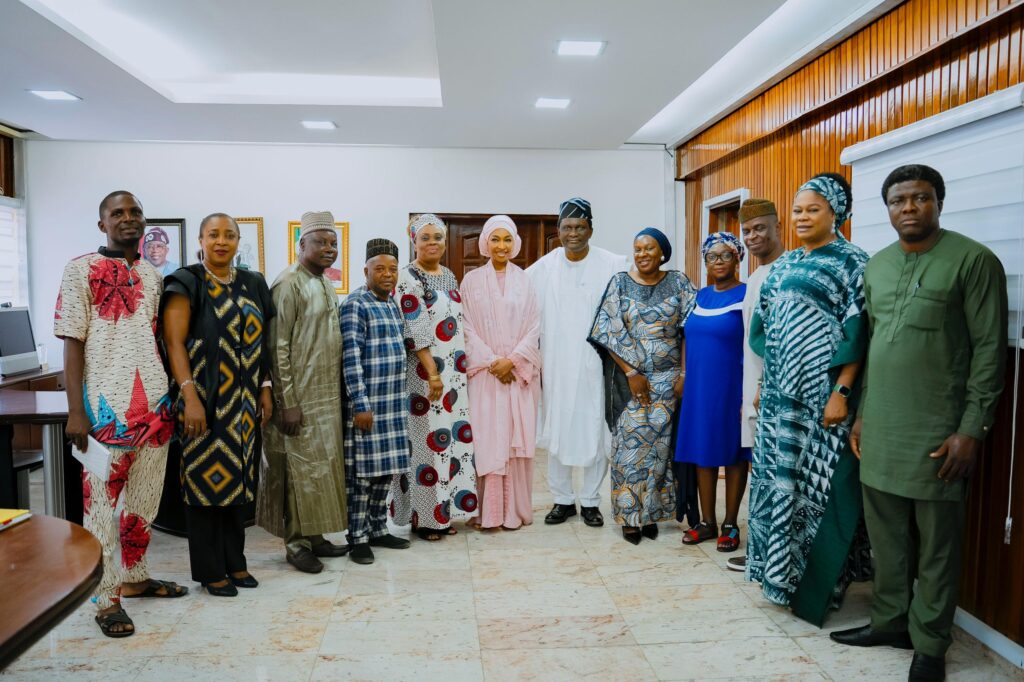
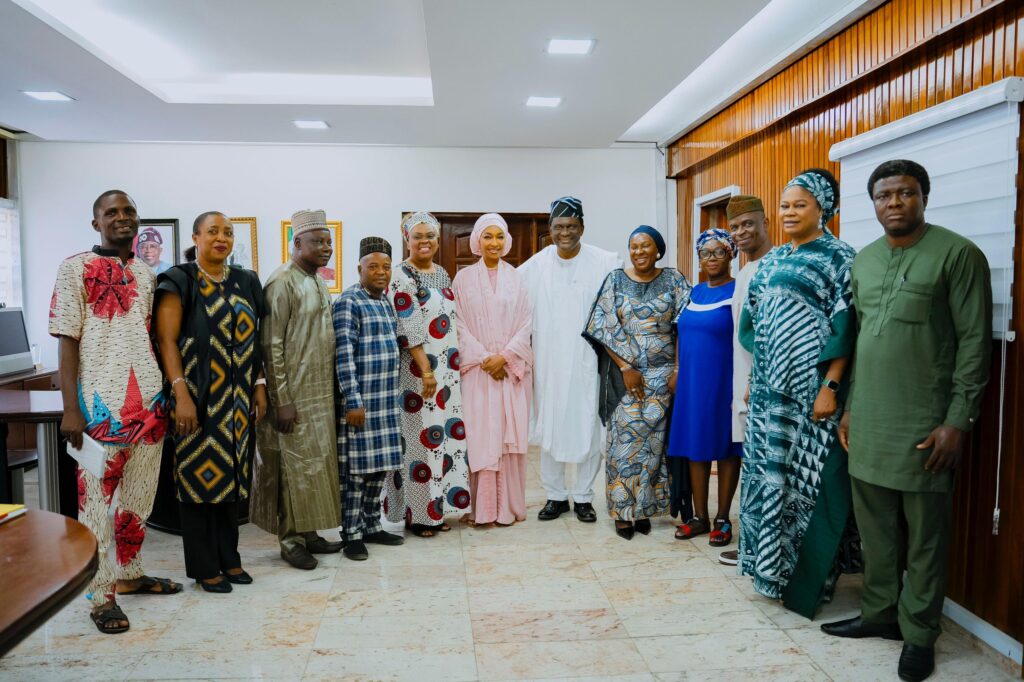
Nigeria has commenced construction of a National Passport Manufacturing Centre (NPMC) at the Nigeria Immigration Service (NIS) Headquarters in Abuja, in a major move towards achieving full local production of its national passport.
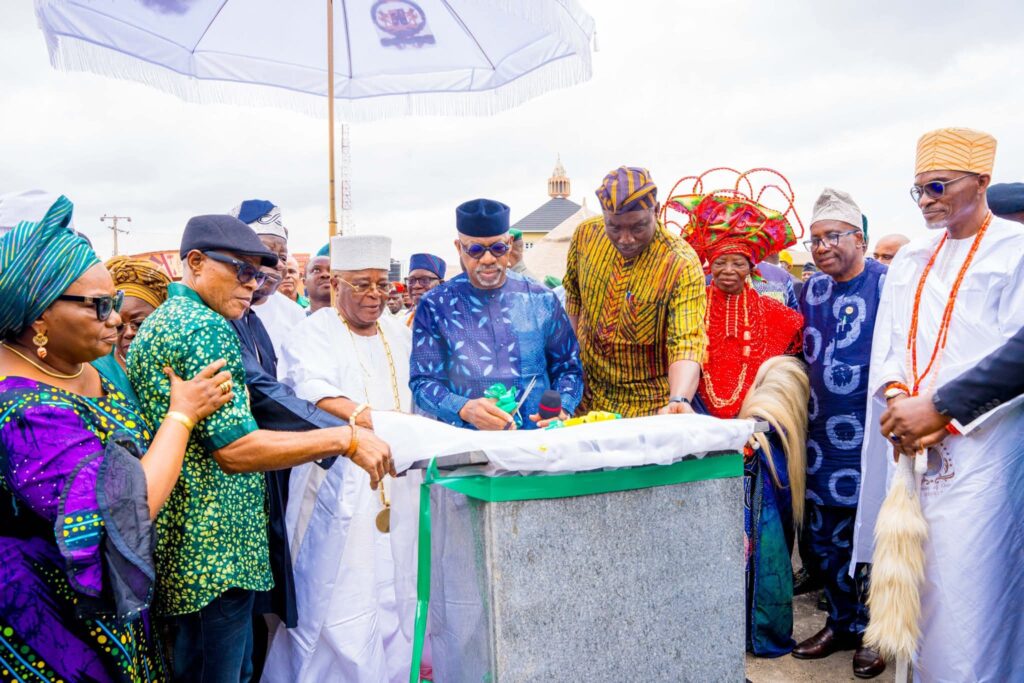
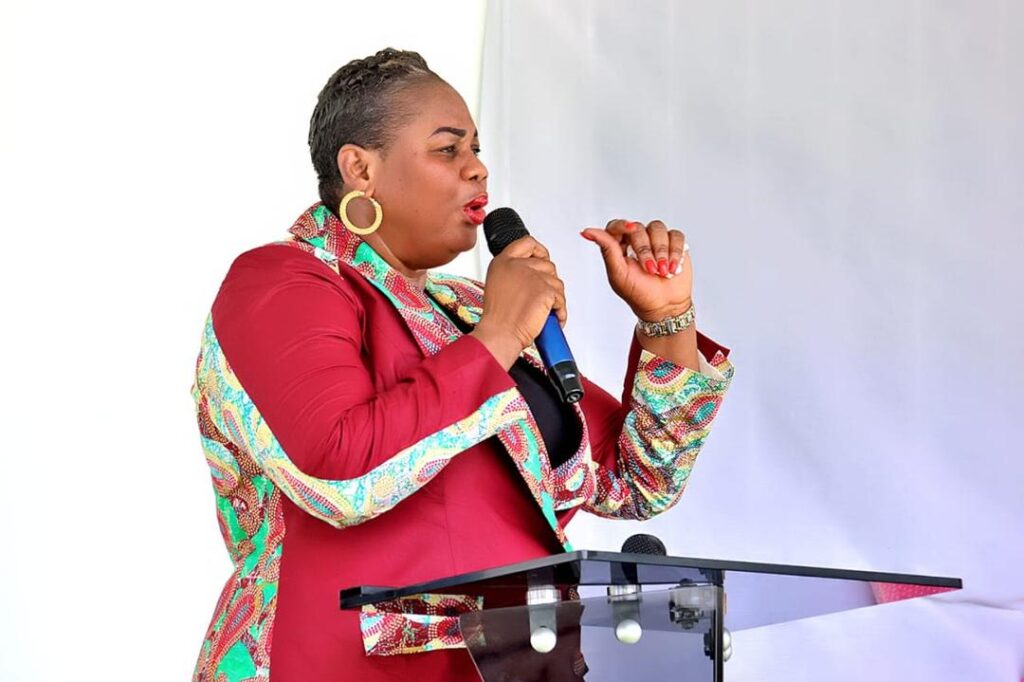
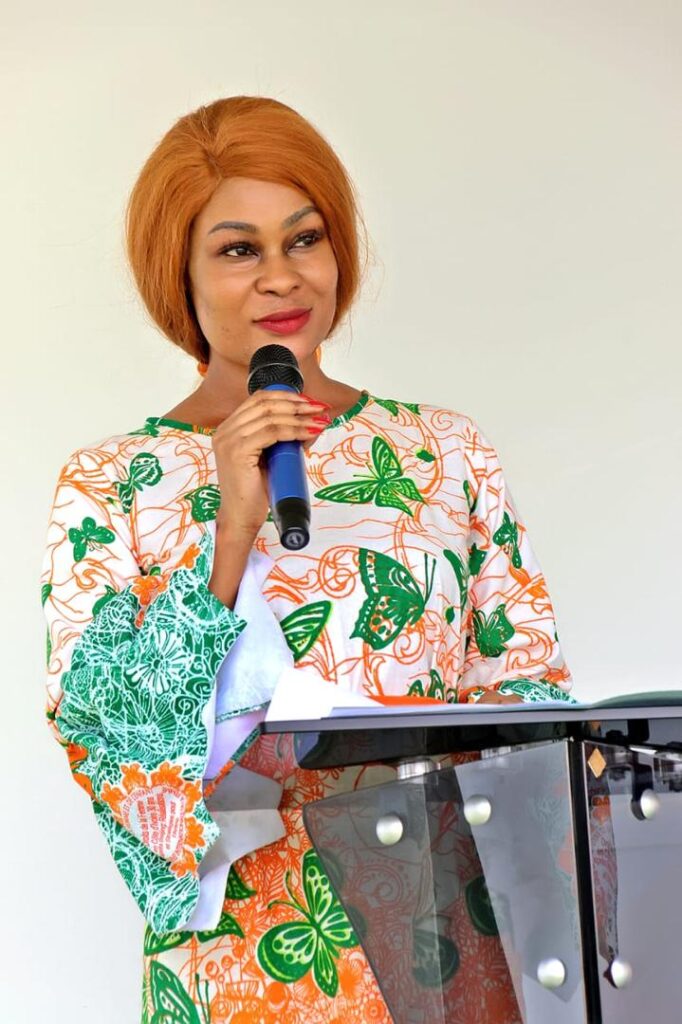
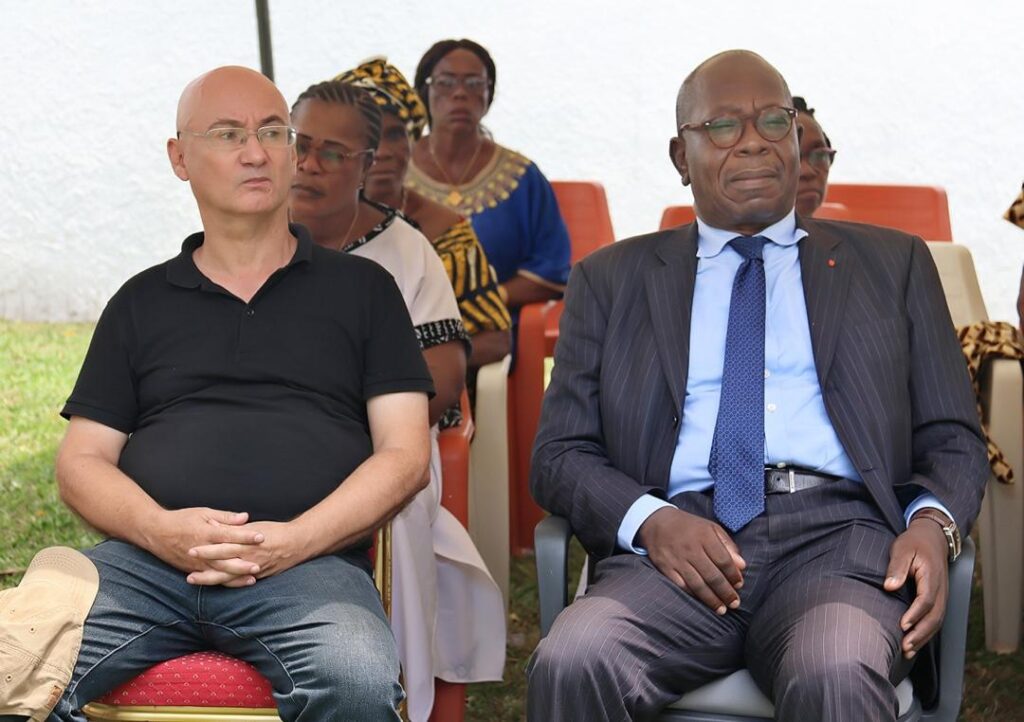
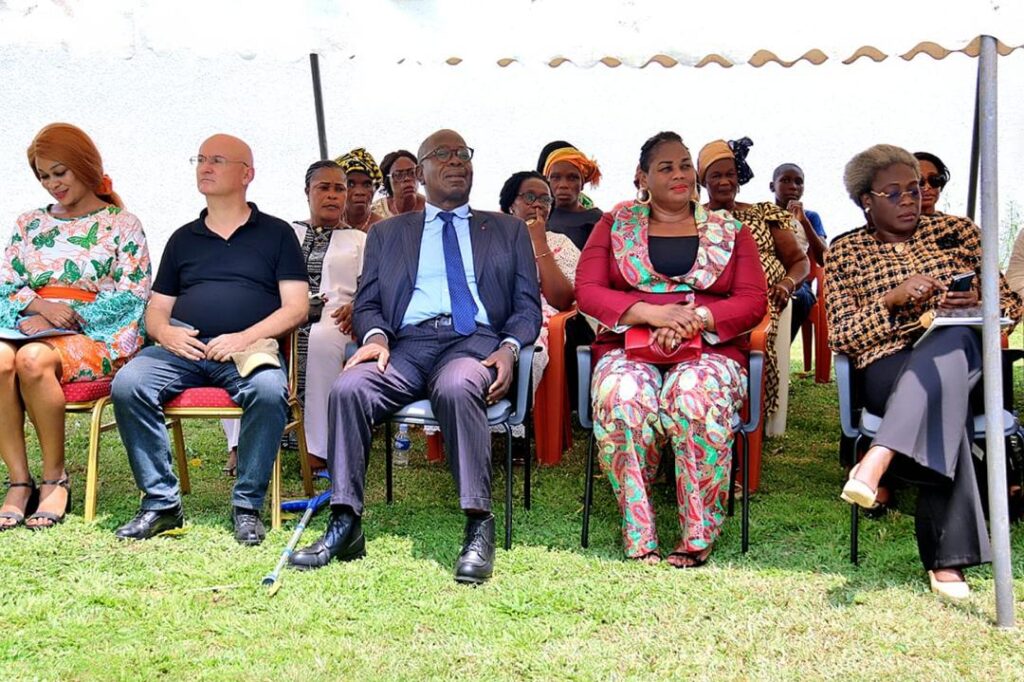
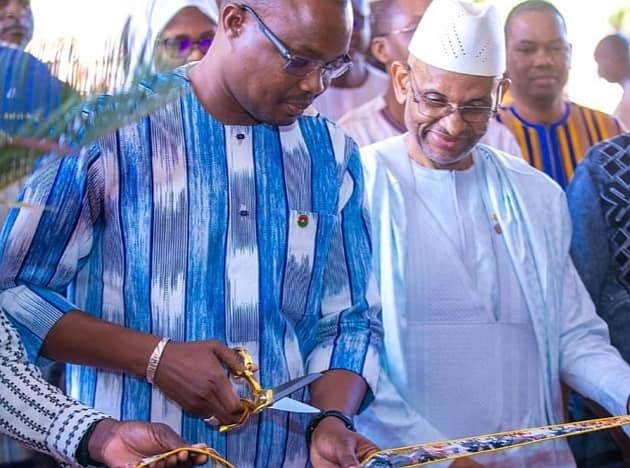
The groundbreaking ceremony, led by the Minister of Interior, Olubunmi Tunji- Ojo, supported by Senator Adam Oshiomole, marks the final phase of the Federal Government’s drive to localise the entire Nigerian passport production value chain and reduce dependence on foreign manufacturers.
The proposed facility, occupying 1.1 hectares, will be AI-driven and powered independently of the national electricity grid. Upon completion in May 2027, it is expected to produce six million passport booklets annually, with the capacity to scale up to 10 million.
Beyond meeting Nigeria’s estimated domestic demand of two million passport booklets annually, the facility is expected to position the country as a potential passport supplier to neighbouring nations that currently depend on manufacturers in Europe and the Americas.
The development will also make Nigeria the first country in West Africa to establish an e-passport manufacturing plant and the second in Africa with full e-passport production capabilities.
The project builds on a series of passport administration reforms introduced since 2023, beginning with the automation of application and approval processes, followed by the introduction of contactless biometric passport applications in 2024 and the establishment of a passport personalisation centre in 2025.
Other reported achievements under the current administration include the establishment of an independent NIS data centre, the deployment of Advance Passenger Information (API) and Passenger Name Record (PNR) systems, the clearance of a backlog of 204,332 passports, operational contactless passport renewal services for Nigerians in the diaspora, a functional e-visa platform and the introduction of e-gates at major Nigerian airports.
According to the government, the new manufacturing centre is expected to strengthen national security, reduce foreign exchange exposure in passport production, create opportunities for regional exports and give Nigeria greater control over the production of a critical national identity document.
The initiative forms part of President Bola Ahmed Tinubu’s broader public sector modernisation and local content development agenda.
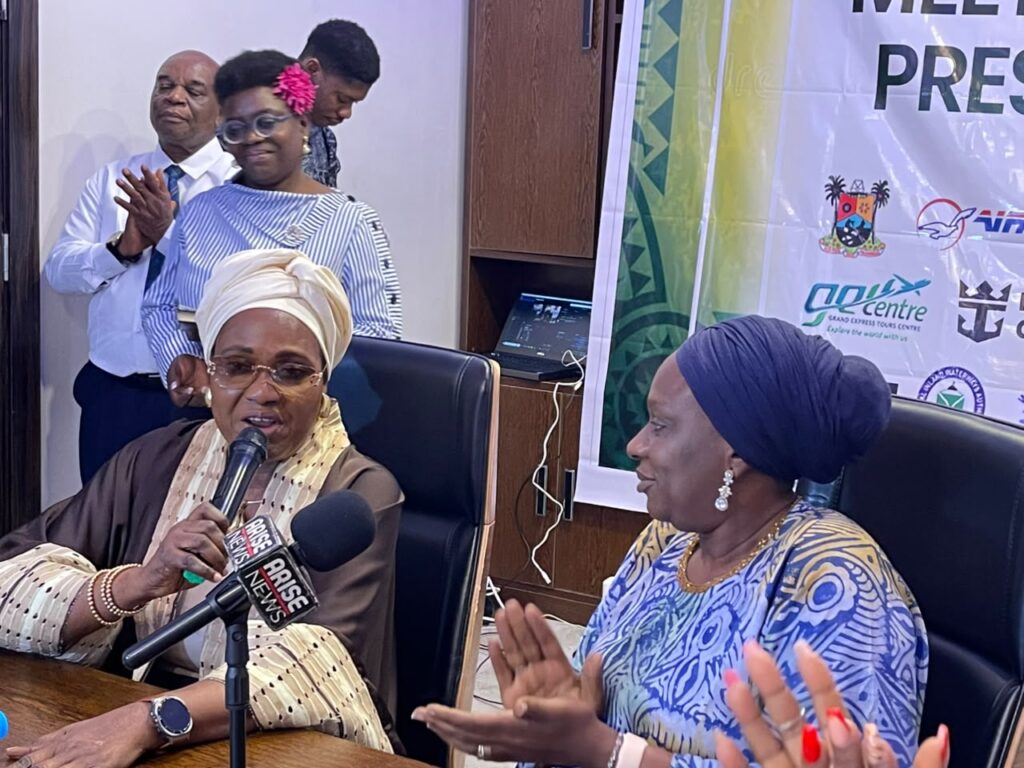
The Africa Blue Economy Roundtable (ABER) has announced the appointment of Dr. (Mrs.) Charity Akpamgbo as Liaison Officer to the Presidency (Aso Rock Villa), Abuja Liaison Bureau, with immediate effect.
The appointment was conveyed in a letter with reference ABER/PRES/APP/PLO/2026/02 dated 11th November, 2026, signed by the Convener and Founder of ABER, Dr. Piriye Kiyaramo, on behalf of the Board of Trustees of BRACED Tourism Promotion & Development Initiative (BTPDI), sponsors of the Africa Blue Economy Roundtable.
According to the letter, the appointment is more than a routine engagement; it is a strategic addition to ABER’s continental leadership architecture. The appointment is in recognition of her distinguished profile as a Management Consultant and Executive Performance Coach, Managing Director/CEO of ICherry Travels & Global Concepts Ltd, Founder and Executive Director of Green Time Ecology and Sustainable Development Initiative, and Ambassador of the National Park Service in Nigeria — placing her at the nexus of finance, eco-tourism, conservation and sustainable development, which are the core pillars of ABER’s mandate.
ABER’s Mission is to unlock Africa’s Blue Economy potential through dialogue, deal-making and advocacy, positioning the continent as a global leader in Blue Finance and Smart Blue Tourism.
As Liaison Desk Officer to the Presidency, Dr. Akpamgbo will:
i. Act as the official representative of ABER at the Presidency, managing all protocol and high-level engagements in the Presidency (Aso Rock Villa);
ii. Serve as primary liaison to Federal Ministries (Marine & Blue Economy, Tourism, Environment, Foreign Affairs), MDAs, National Park Service), the Diplomatic Corps and Development Partners; and
iii. Coordinate and ensure the success of all ABER engagements, events and policy dialogues in the Presidency.
The appointment is described as a position of high trust, requiring utmost integrity, diplomatic discretion and loyalty. The tenure is two (2) years, from 11th November, 2026 to 10th November, 2028, renewable based on performance and mutual agreement.
ABER congratulates Dr. (Mrs.) Charity Akpamgbo on her appointment and expresses confidence that her wealth of experience will significantly enhance ABER’s presence at the Presidency and strengthen its mission of advancing Africa’s Blue Economy.
Hajiya Medina Dauda Nadabo, Head, Directorate of Communication & Public Affairs Africa Blue Economy Roundtable (ABER) Abuja Liaison Bureau.
Focus: Tourism, Trade,Investment and International Business Partnerships
Accra–
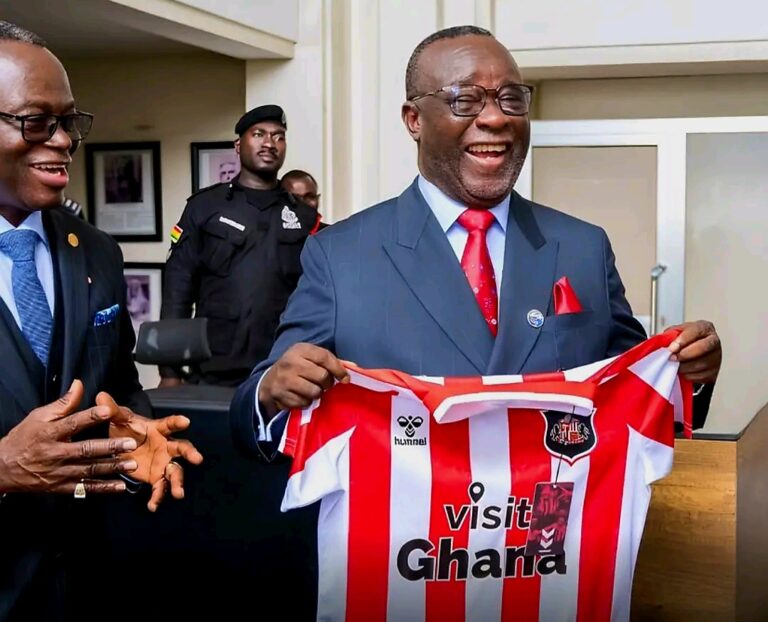
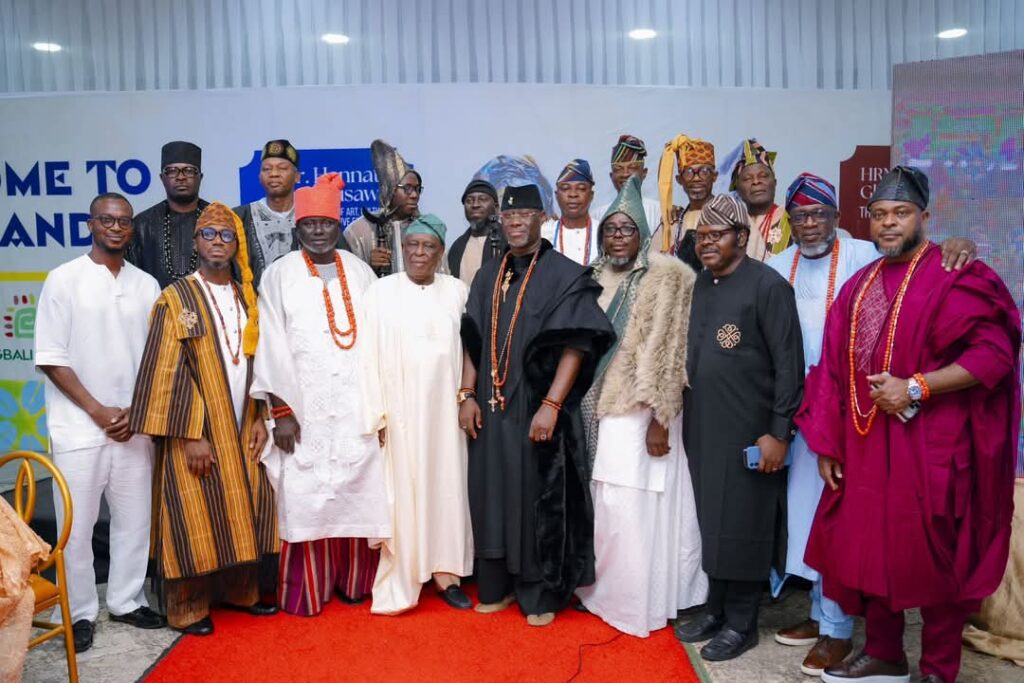
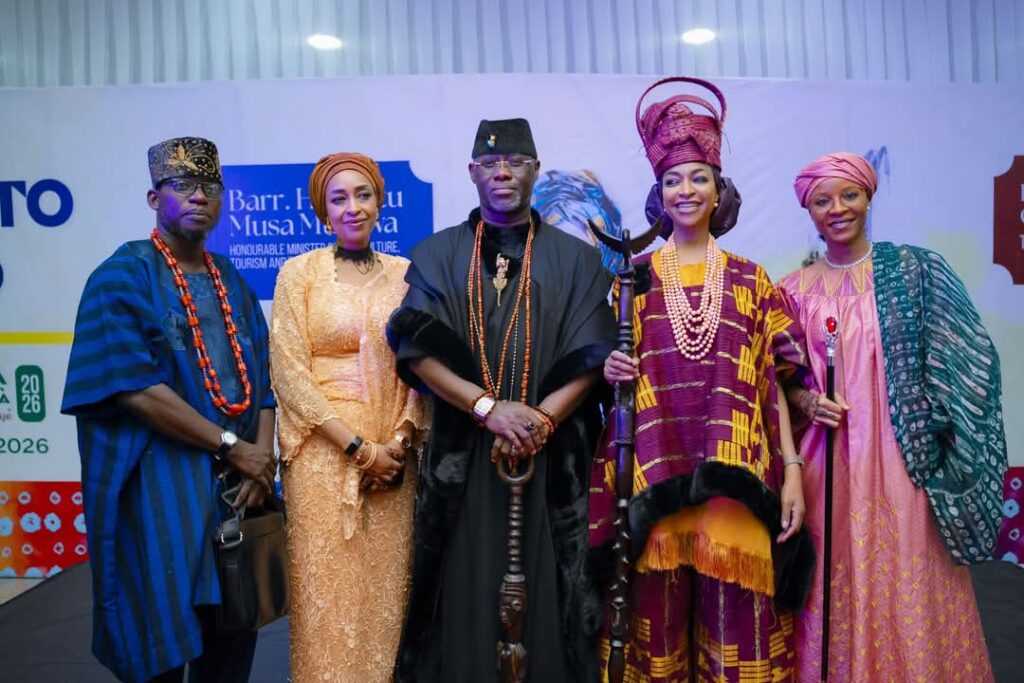
Ghana is strengthening its ambition to become a leading gateway for African tourism, trade and investment with the launch of the GHATEX Tourism, Trade and Expo, an international platform designed to promote business partnerships, cross-border collaboration and investment opportunities across Africa and beyond on the 17th November, 2026 in Accra, Ghana.
The maiden edition of the two-day expo is scheduled for February 16–17, 2027, at the La Palm Royal Beach Hotel in Accra, bringing together tourism stakeholders, investors, manufacturers, hospitality operators, diplomatic representatives and business leaders.
Speaking at the official launch on behalf of the Minister for Tourism, Culture and Creative Arts, the Ministry’s Director of Tourism, Dr. Geoffrey Deladem Tamakloe, emphasised the need for Ghana to leverage its strategic position as host of the African Continental Free Trade Area (AfCFTA) Secretariat to deepen intra-African commercial relations and tourism development.
He described GHATEX as more than an exhibition, noting that it should become a strategic platform for connecting African and international investors with emerging opportunities across the continent.
He said Ghana’s ambition should extend beyond being a tourism destination to becoming a meeting point for African tourism, trade, culture and investment.
Dr. Tamakloe also highlighted the government’s proposed US$1 billion investment in tourism, culture and creative arts under its New Economy Programme, describing it as an opportunity to develop a competitive, year-round visitor economy.
Other priority interventions include improving heritage tourism infrastructure, developing an international convention centre, establishing a professional convention bureau and expanding hotel accommodation in selected regions.
He noted that these initiatives, alongside the Black Star Experience, could strengthen Ghana’s international appeal, attract major business events, increase visitor arrivals and generate employment, particularly for young people and women.
Meanwhile, the Chief Executive Officer of the Ghana Tourism Authority, Mrs. Maame Efua Houadjeto, called for improved hospitality standards, professional training and strategic destination branding to enhance Ghana’s competitiveness in the global tourism market.
She described tourism as a powerful engine of trade and an essential component of national identity, stressing that the country must transform its rich cultural and natural attractions into internationally competitive visitor experiences.
Mrs. Houadjeto also identified culinary tourism as an important growth opportunity, urging operators in the food and beverage industry to combine Ghanaian traditional cuisine with international standards of hygiene, presentation and customer service.
She further explained that the Black Star Experience should promote the totality of experiences available to visitors, while destination branding must be supported by market research, reliable data and consistent service delivery.
According to her, branding goes beyond visual identity and must reflect a sustained commitment to quality and excellence.
Bridging West and East Africa Through Tourism and Trade
For the organisers, GHATEX is designed to bridge the gap between tourism and trade, with particular emphasis on strengthening commercial relationships between West and East African countries.
Chairperson of GHATEX Tourism, Trade and Expo, Gifty Essinam Barawusu, said the initiative would create a platform for African businesses to connect, transact and explore opportunities across regional markets.
She identified improved air connectivity between West and East Africa as a critical requirement for achieving this ambition, noting that expanded airline services would facilitate tourism exchanges and commercial activities between the regions.
Barawusu also emphasised the importance of diplomatic missions and government institutions in addressing barriers to cross-border movement, travel and business transactions.
She explained that GHATEX would facilitate partnerships between Ghanaian tour operators and their East African counterparts to develop joint tourism packages, encourage regional travel and attract visitors to both markets.
Beyond tourism, the expo is expected to provide opportunities for small and medium-sized enterprises, manufacturers, investors and other businesses seeking to expand their presence across African markets.
She disclosed that GHATEX is registered with the Ghana Investment Promotion Centre and would facilitate connections between prospective investors and relevant institutions to explore investment opportunities.
The Chairperson also advocated a review of visa fees and travel costs across African countries, arguing that more affordable movement would encourage regional tourism and increase spending in hotels, restaurants, food businesses and other sectors of the visitor economy.
International Support and Growing Participation
The Zambia High Commissioner to Ghana, H.E. Daniel Mahongo, also addressed stakeholders at the launch, highlighting the importance of initiatives such as GHATEX in strengthening cooperation and economic relationships among African countries.
Similarly, a member of the organising committee, Apostle Emmanuel Mensah, disclosed that the initiative was already attracting international interest, with prospective participants from different countries visiting the event’s website and registering ahead of the inaugural edition.
The organisers expect participation from government institutions, diplomatic missions, tourism professionals, investors, manufacturers and private-sector representatives from Africa, Europe and other international markets.
The exhibition will feature opportunities for business-to-business engagements, tourism marketing, investment promotion, networking and the development of strategic cross-border partnerships.
A Platform for Africa’s Economic Integration
As African countries continue to pursue deeper economic integration through the African Continental Free Trade Area, platforms such as GHATEX could play an important role in connecting tourism with trade, investment and cultural exchange.
Its proposed focus on West-East African collaboration reflects the growing need for stronger regional connectivity, private-sector partnerships and easier movement of people, goods and services.
However, the long-term impact of the initiative will depend on sustained collaboration among governments, the private sector, diplomatic institutions and international development partners.
With Ghana seeking to strengthen its position as a regional business and tourism hub, the maiden GHATEX Tourism, Trade and Expo presents an opportunity to translate Africa’s shared economic ambitions into practical commercial partnerships.
Event Details Date: 28-29 November 2026 Time: 6:00 AM – 6:00 PM Venue: Old German Boma, Bagamoyo, Pwani, Tanzania Distances: 5KM, 10KM and 15KM Registration: TZS 45,000 (Tanzanians & East African citizens) | TZS 85,000 (Residents & foreigners)
Bagamoyo is set to welcome runners, fitness enthusiasts, tourists and sports lovers on Sunday, 29 November 2026, for the Bagamoyo Heritage Run (BHR), a unique sporting event designed to celebrate Tanzania’s rich history, culture, tourism and emerging economic opportunities.
Hosted at the Old German Boma, Bagamoyo, Pwani, the event is organised by The Runners Sports Agency on behalf of The Runners Club, one of Tanzania’s largest running communities, with over 1,000 members and thousands of followers. Under the theme “Run in Color. Run for Heritage. Run for the Future,” the event will combine sports, tourism, health promotion, entertainment and community engagement, while showcasing Bagamoyo’s historical landmarks, including the Old Arab Fort, Old Harbor, Caravan Serai, Kaole Ruins, Catholic Historic Museum and Msalabani Beach.
The race will feature 5KM, 10KM and 15KM categories, welcoming Tanzanians, East African citizens, residents and international participants. Beyond promoting healthy lifestyles, the event aims to boost domestic tourism, support local businesses, strengthen community participation and spotlight Bagamoyo’s growing significance as a tourism and economic destination, particularly amid emerging port, logistics and industrial developments.
The Bagamoyo Heritage Run is more than a race; it is a celebration of heritage, unity and opportunity, positioning sports tourism as a powerful tool for destination promotion and sustainable economic development.
High-level Addis Ababa dialogue advances visa-free mobility, continental tourism collaboration and sustainable economic development as AITEC World announces four nominees for the 2027 African Mobility Excellence Awards.
Addis Ababa-
African tourism leaders, policymakers, traditional rulers, industry professionals and international stakeholders have called for urgent action to dismantle barriers to intra-African travel, improve air connectivity and position tourism as a major driver of economic transformation across the continent.
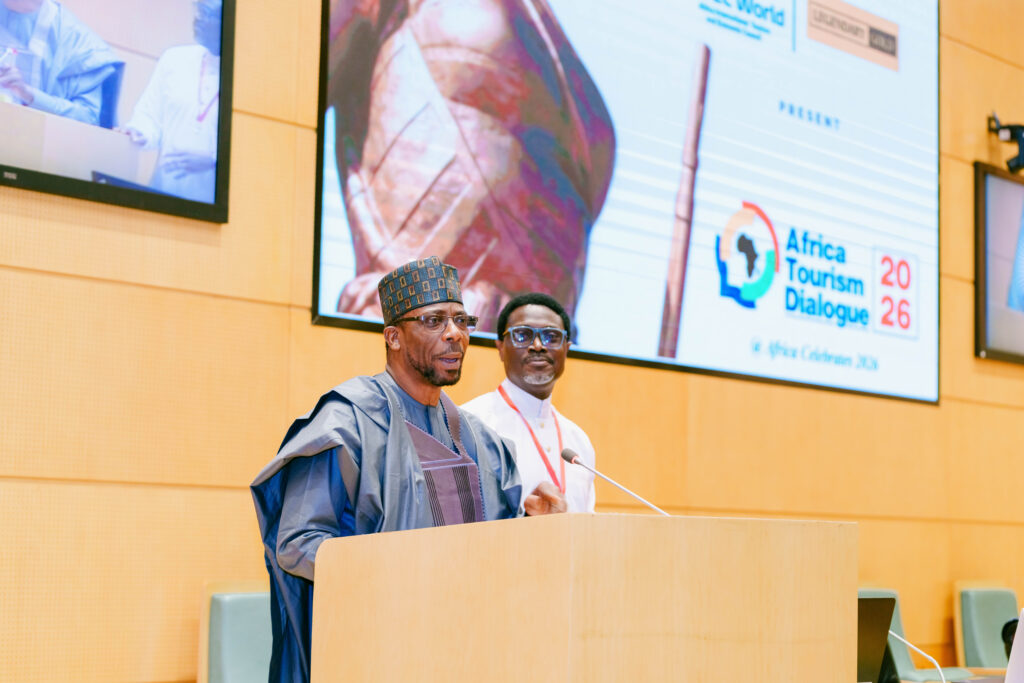
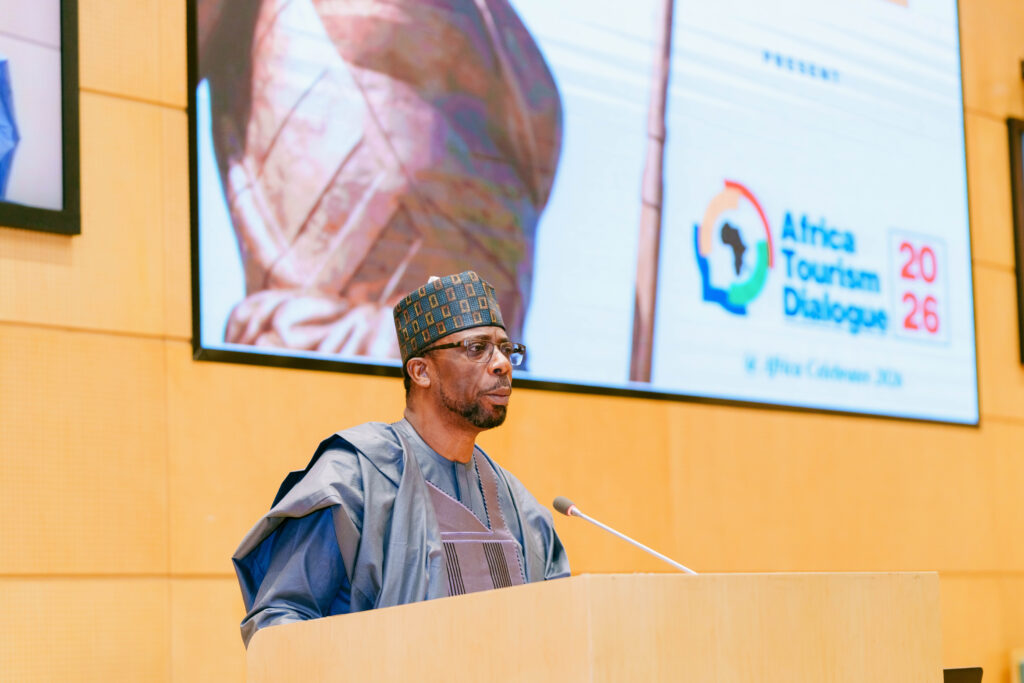
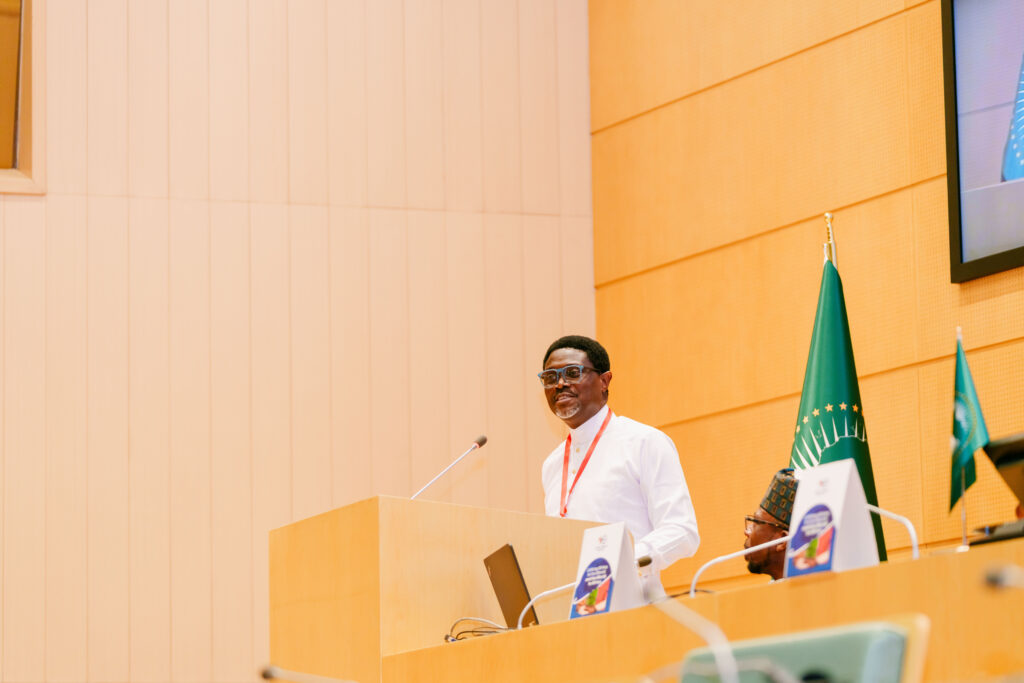
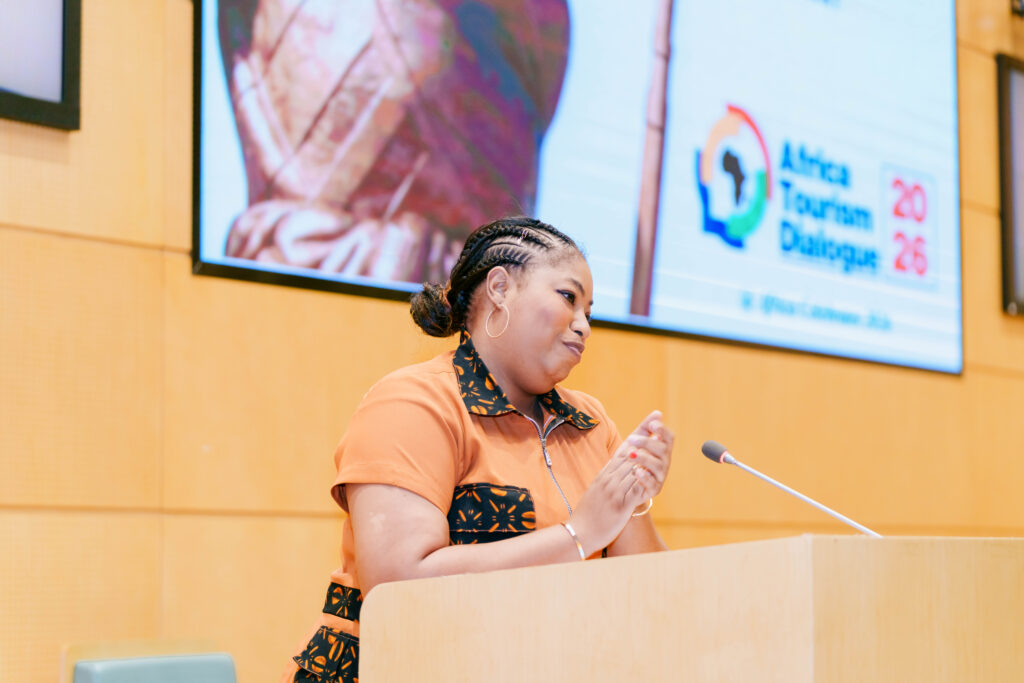
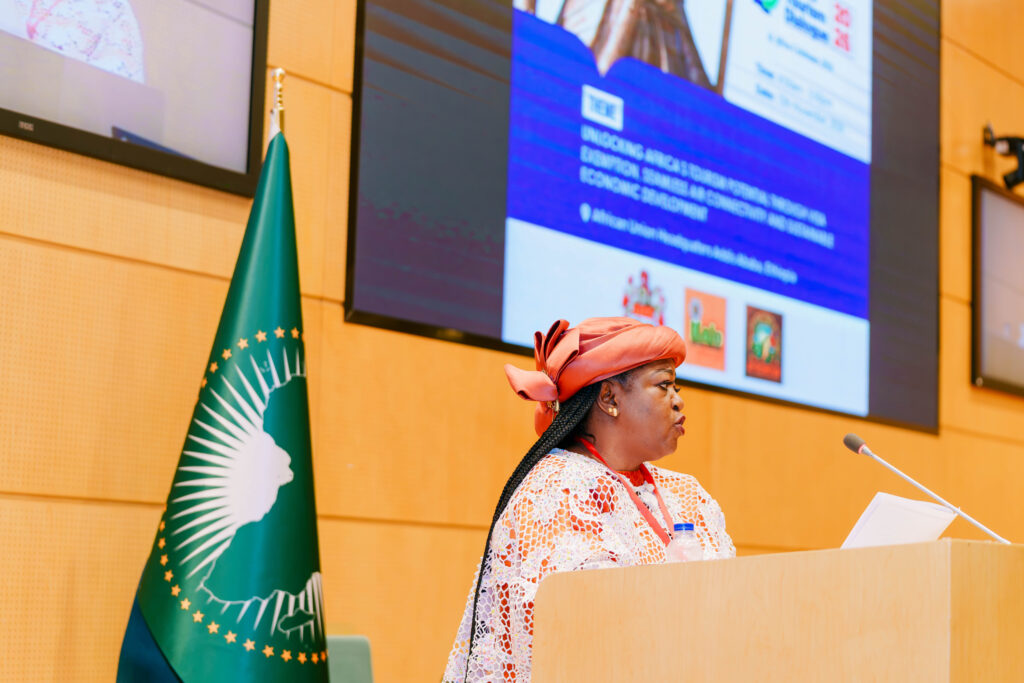
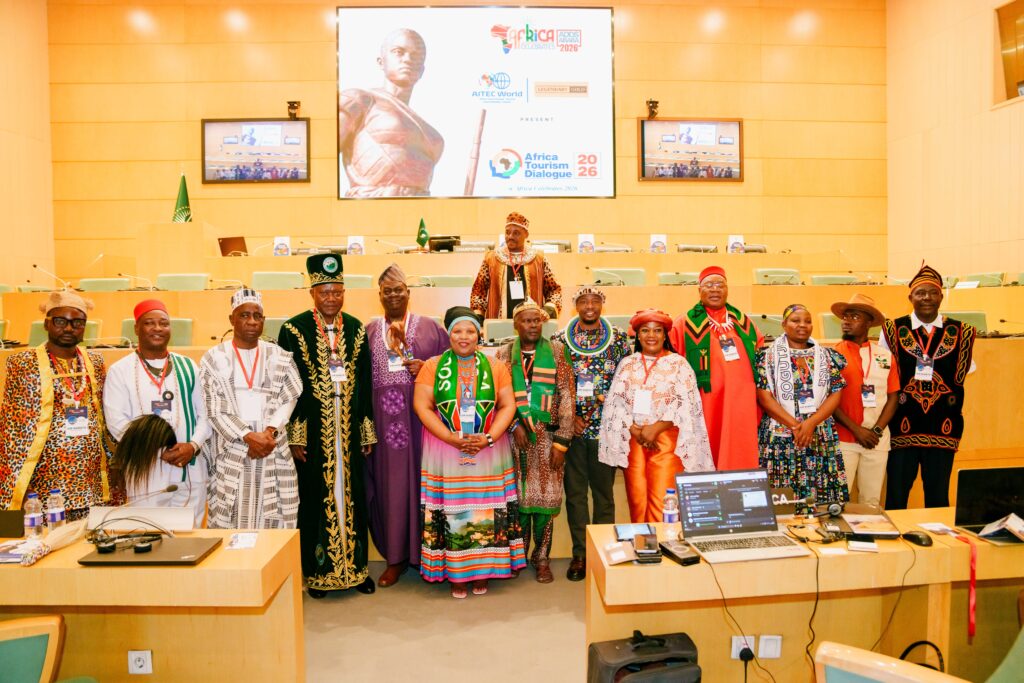
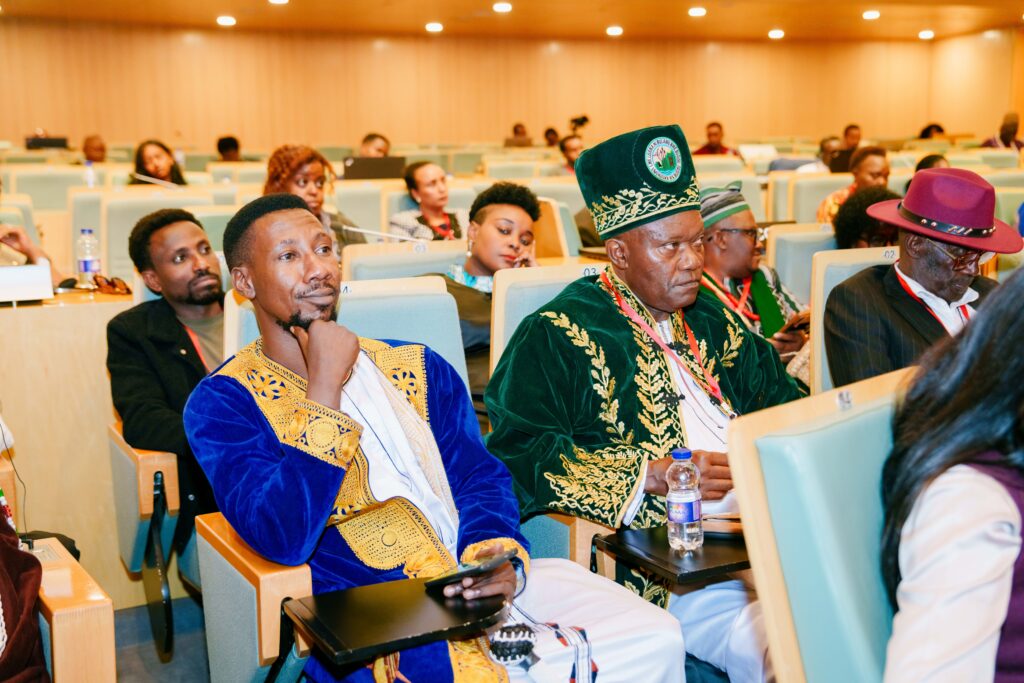
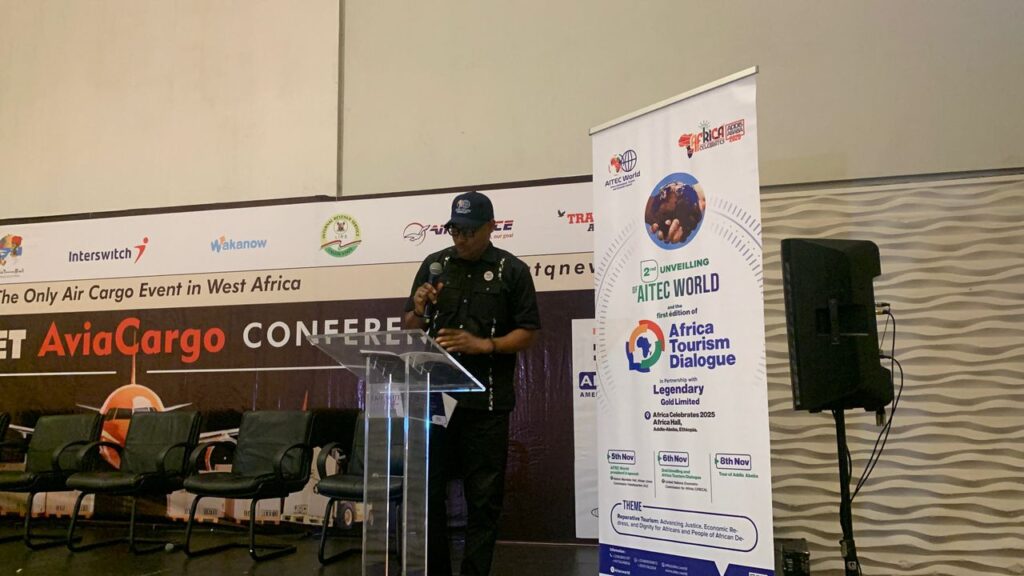
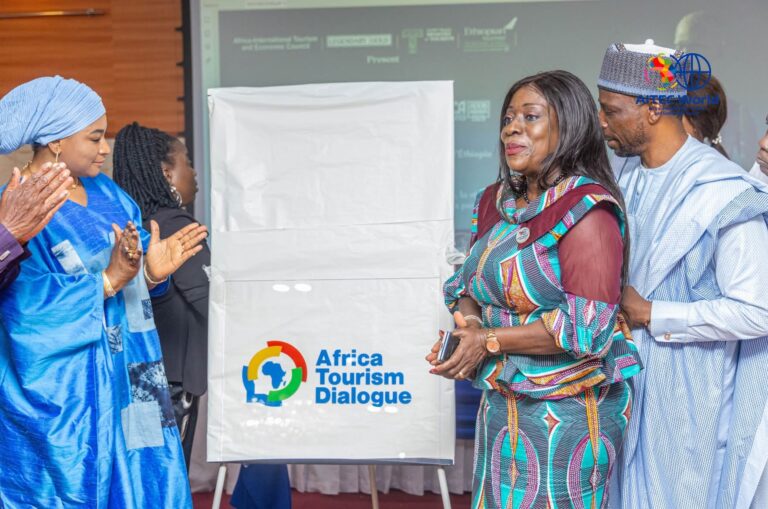
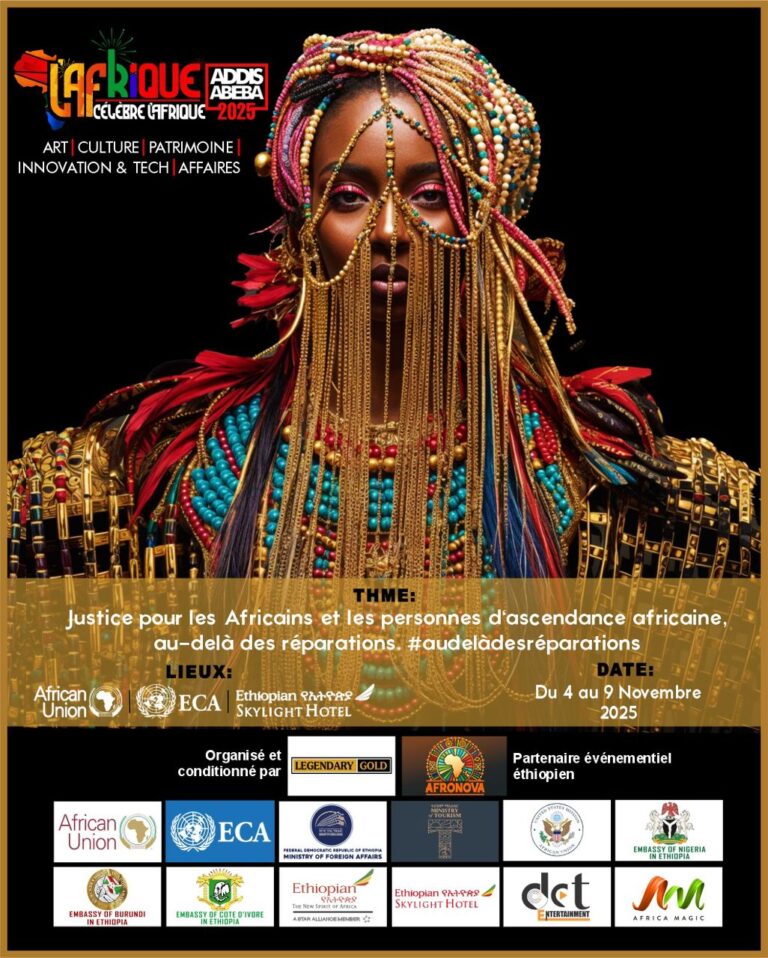
The call was a central outcome of the 2nd Africa Tourism Dialogue (ATD 2026), the tourism component of Africa Celebrates, held on 12 November 2026 at the Medium Conference Hall, African Union Headquarters, Addis Ababa, Ethiopia.
Convened under the theme, “Unlocking Africa’s Tourism Potential Through Visa Exemption, Seamless Air Connectivity and Sustainable Economic Development,” the high-level gathering brought together prominent voices from Africa and beyond to deliberate on practical strategies for unlocking the continent’s enormous tourism, cultural and investment opportunities.
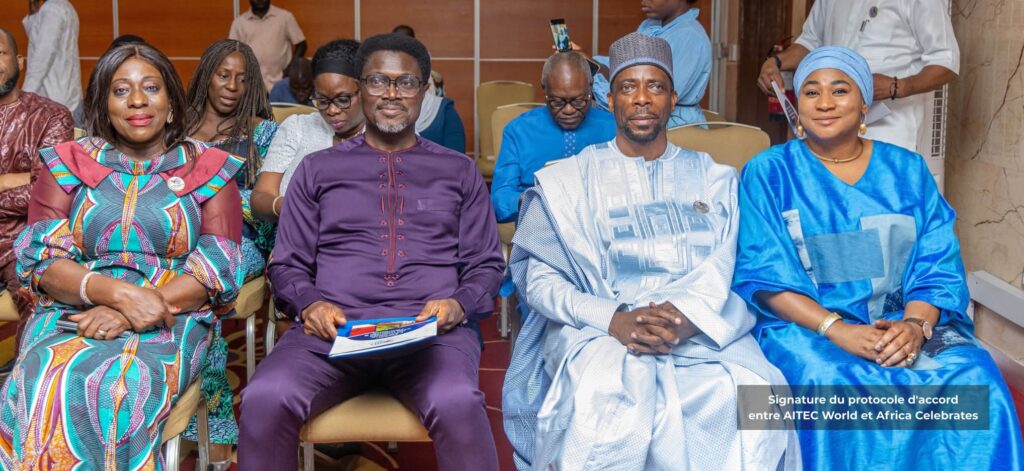
Organised by the Africa-International Tourism and Economic Council (AITEC World) and Legendary Gold Limited, the dialogue provided a strategic platform for policy engagement, industry exchange, traditional leadership participation and international cooperation.
The discussions centred on a fundamental proposition: Africa cannot fully realise its tourism potential, attract meaningful investments or maximise the economic benefits of its cultural and natural assets without addressing the barriers that restrict the movement of people, capital, services and ideas across its borders.
African Tourism Leaders Call for a New Era of Continental Collaboration
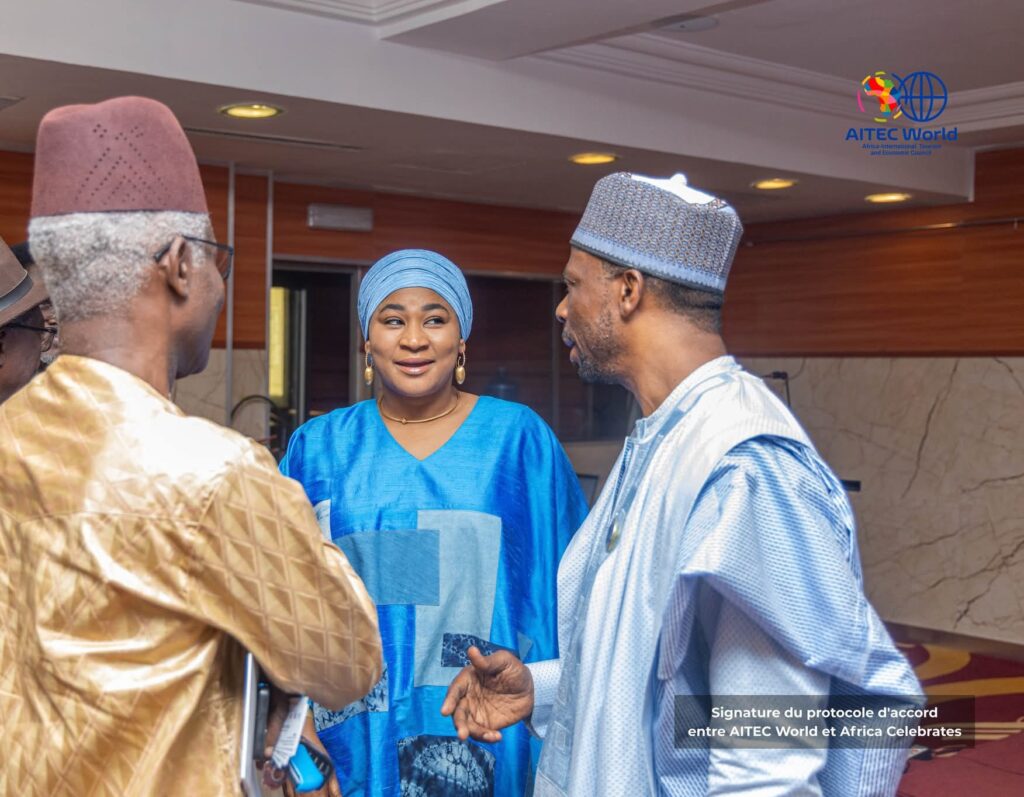
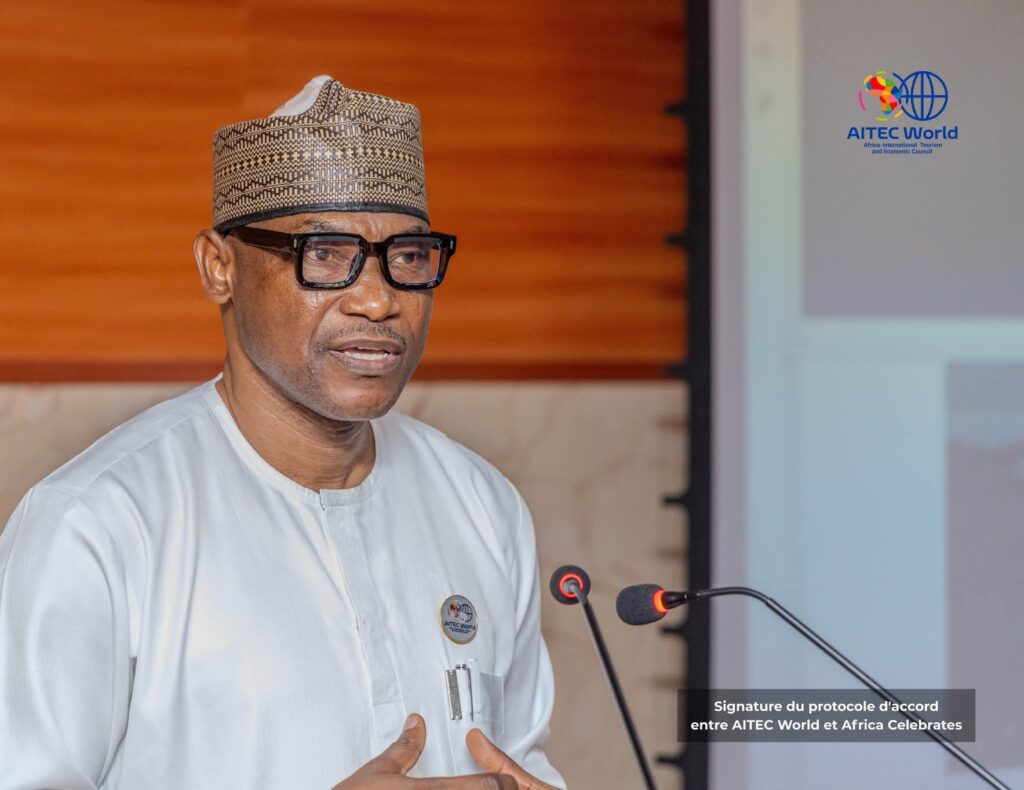
The dialogue opened with a joint welcome address by Amb. Dine Bouraima, President of AITEC World, and Mr. Lexy Mojo-Eyes, President of Legendary Gold Limited and Founder of Africa Celebrates.
Both leaders welcomed delegates and highlighted the importance of tourism as a vehicle for connecting African nations, strengthening cultural relationships, promoting international understanding and stimulating economic development.
Amb. Bouraima emphasised the urgent need for seamless travel within Africa, noting that the continent must make it easier for Africans and international visitors to move between destinations if it is to become a competitive global tourism region. He encouraged African governments and tourism stakeholders to embrace policies that promote accessibility, facilitate cross-border movement and create an enabling environment for tourism investment.
They both encouraged delegates to use the gathering to build meaningful relationships, celebrate African heritage and advance the continent’s creative, cultural and tourism industries.
Keynote Speakers Challenge Africa to Move From Tourism Potential to Practical Action
Three distinguished keynote speakers brought different but complementary perspectives to the dialogue. Dr. Memunatu Pratt, former Minister of Tourism and Cultural Affairs of Sierra Leone, delivered the first keynote address, challenging African tourism stakeholders to move beyond discussions about the continent’s potential and embrace practical approaches to tourism development.
She stressed that meaningful progress would require the commitment, participation and collective responsibility of governments, private-sector operators, communities and individuals across the tourism value chain.
The second keynote address was delivered by Joy B. Smith, Vice Mayor of the City of West Park, Florida, USA, who highlighted the global relevance of the African diaspora in tourism development.
Her contribution underscored the potential of diaspora networks to promote African destinations, strengthen cultural connections, facilitate international partnerships and stimulate tourism-related investments.
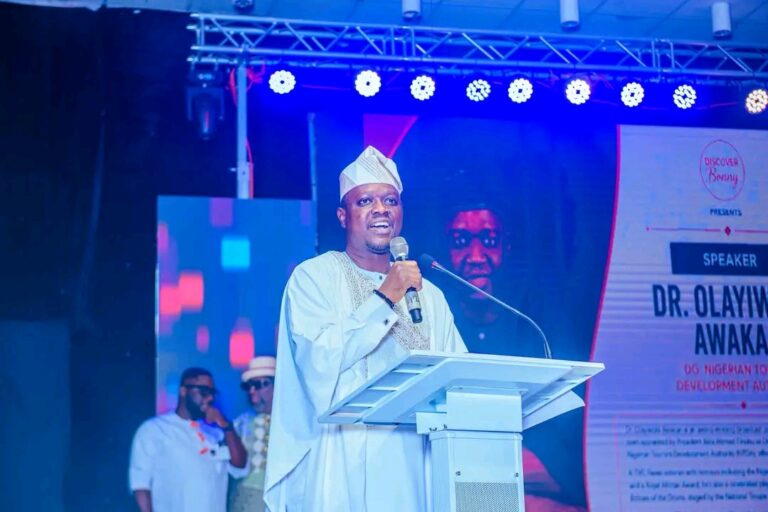
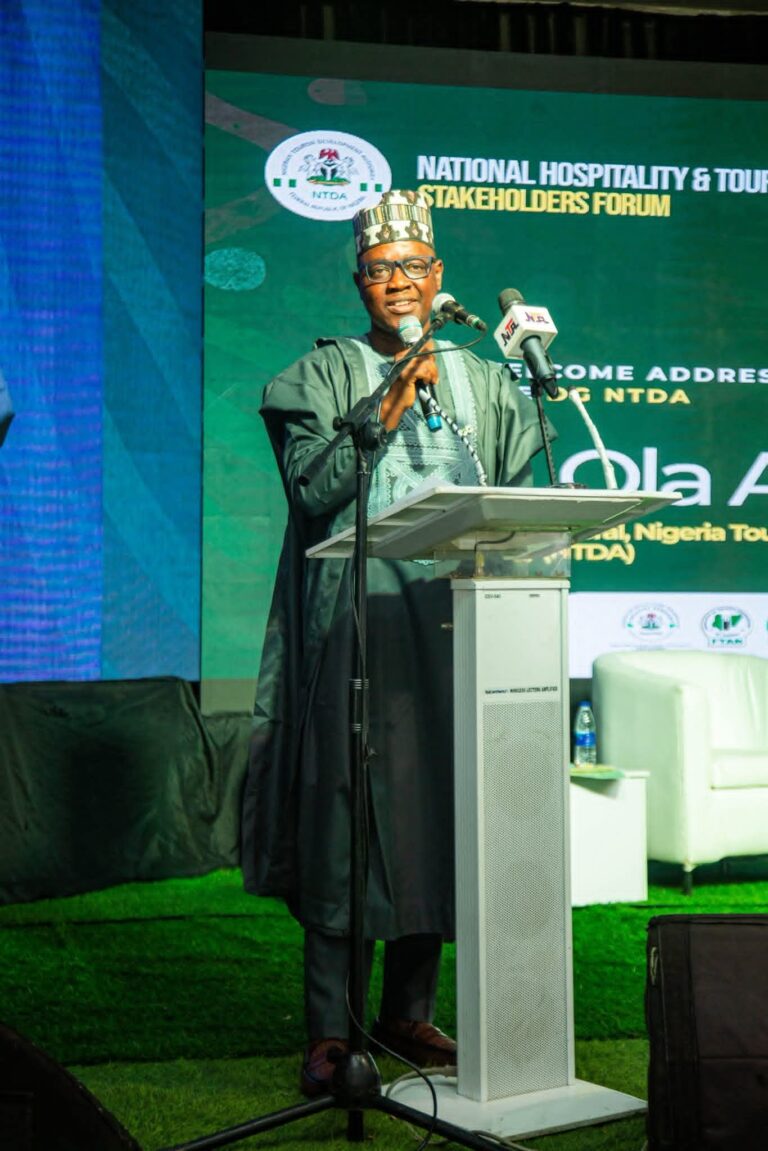
The third keynote speaker, Dr. Olayiwola Awakan, Director General of the Nigerian Tourism Development Authority, called for greater synergy among African destinations.
He emphasised that African countries must work together rather than operate independently, particularly in destination promotion, tourism product development and international market engagement. Stronger collaboration, he noted, would help African destinations become more competitive in the global tourism marketplace.
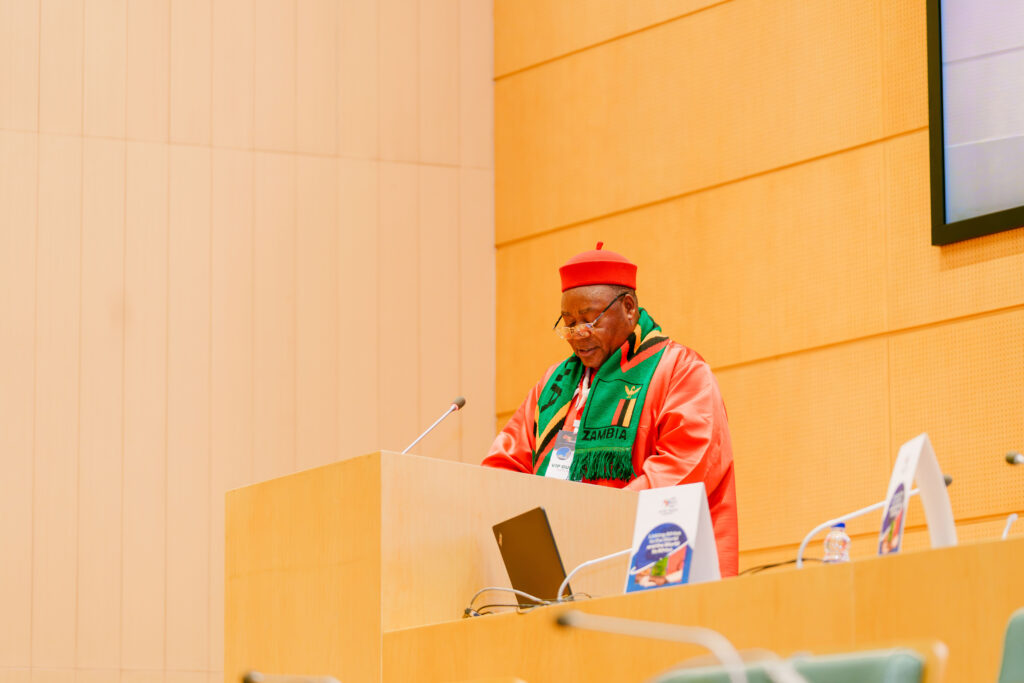
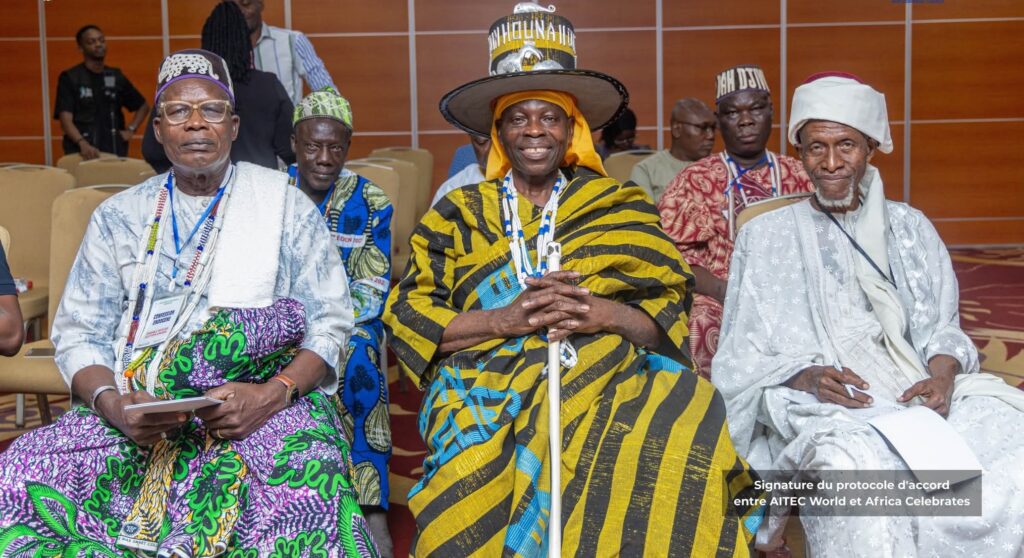
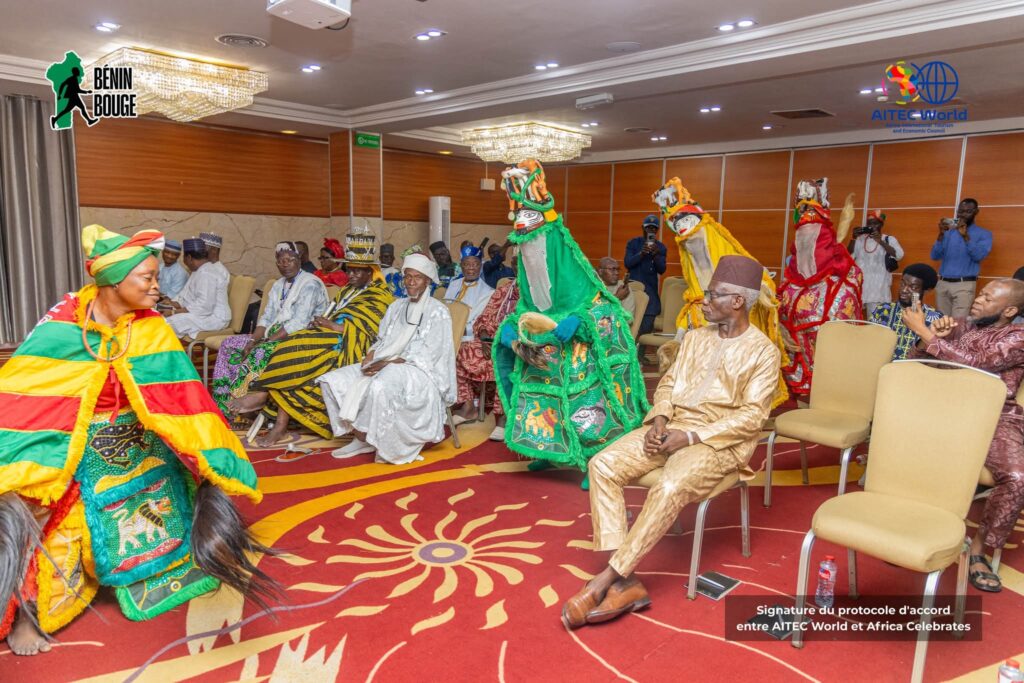
A special royal address was also delivered by HRH Dr. Chisunka, Traditional Ruler in Luapula Province, Zambia, who presented the aspirations of traditional institutions in positioning African tourism and culture as important instruments of identity, heritage preservation, diplomacy and economic development.
Ministerial Roundtanle: Tourism as an Engine of Afrivan Prosperity
One of the major highlights of the dialogue was the Ministerial Roundtable, themed:”Tourism as an Engine of African Prosperity: Aligning Policies, Governance and Investment for Sustainable Growth.” The session was anchored by Dr. Anthony Elumelu, National Representative of AITEC World – Nigeria and former ECOWAS Director.
The distinguished panel comprised Dr. Memunatu Pratt, former Minister of Tourism and Cultural Affairs of Sierra Leone; Dr. Olayiwola Awakan, Director General of the Nigerian Tourism Development Authority; Michelina Sanquest, Co-Founder of the Africa-Europe Tourism Exchange Forum; Abiodun Odusanwo, President of the Institute of Tourism Professionals of Nigeria; and Mrs. Bea Hackula, President of Africa for Women.
The discussion examined the importance of effective tourism policies, institutional coordination, good governance and strategic investment frameworks in positioning tourism as a major contributor to African prosperity.
Panellists also highlighted the need for inclusive participation, women’s empowerment, international partnerships, infrastructure development and stronger collaboration between governments and private-sector operators.
The session reinforced the position that tourism must be recognised not merely as a leisure activity but as a strategic economic sector capable of creating employment, stimulating entrepreneurship, attracting foreign direct investment and strengthening regional integration.
Traditional Rulers Asserts Their Role as Custodians of African Tourism and Cultural Heritage
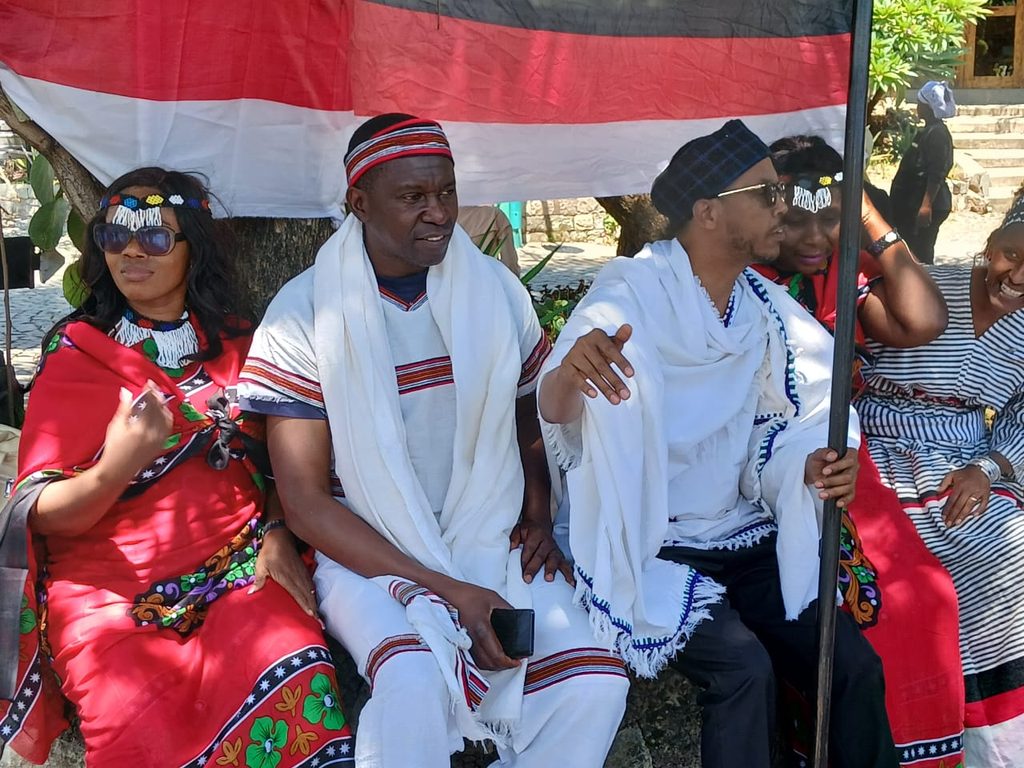
In a significant engagement that brought traditional institutions to the forefront of continental tourism conversations, the Traditional Rulers’ Roundtable examined the theme: “Mobilising Traditional Leadership for Cultural Diplomacy, Tourism Investment, and African Unity.” The session was anchored by Princess Dr. Nikiwe Bam, Coordinator/CEO of the African Traditional Leaders Forum.
The distinguished royal panellists included His Eminence Engr. Dr. Eberechukwu Oji, Eze Aro of Arochukwu Ancient Kingdom, Nigeria; His Majesty Sultan Bezo IV Mahamat Moussa, Vice President of the African Alliance of Traditional and Customary Authorities, Chad; His Royal Highness Chief Kyalo Muli I, Chief of Anzauni Chiefdom, Akamba Tribe, Kenya; and HRH (Ndabezitha) Sipho Mahlangu, Custodian of Ndebele Culture, South Africa.
A central position emerging from the discussion was that traditional rulers are among the foremost custodians of Africa’s cultural identity, indigenous knowledge, heritage sites, festivals, traditional institutions and community-based tourism assets.
The traditional leaders called attention to the importance of recognising their institutions as strategic partners in tourism policy development, cultural preservation, destination promotion and investment decision-making.
The session further explored how traditional authorities can facilitate cultural diplomacy, strengthen community participation, attract tourism investment and contribute to African unity.
Industry Experts Champion Semless Air Connectivity and Visa-Free Mobility
The dialogue also featured a specialised industry panel on: “Advancing Seamless Air Connectivity, Visa-Free Regime, and Perfecting General Mobility Across Africa and Beyond.” Anchored by Mr. Ayo Omotoso, Director of Communications and Membership, AITEC World, the panel featured Amb. Nancy Q. Sam, CEO of Staple Travel and Tours; Mr. Busayo Shoremekun, CEO of DND Travel and Tours; Ms. Sarah Nta, CEO of Hoteloy; Amb. Michelina Sanquest of Globe Trotters SA; and Prof. Emmanuela Scarponi, International Journalist.
Drawing from their professional experiences in international travel, tourism, hospitality and destination development, the panellists examined the practical difficulties associated with travelling across African countries and beyond.
They highlighted the need for more coordinated immigration policies, improved airline connectivity, accessible travel systems and stronger collaboration among tourism and aviation stakeholders.
The discussion emphasised that Africa must aspire towards a travel environment in which tourists, investors, business travellers and African citizens can move more conveniently across the continent without unnecessary administrative and mobility barriers.
The panellists also underscored the importance of positioning seamless mobility as a fundamental requirement for tourism growth, regional trade, business development and international competitiveness.
Blue Economy: Unlockinh Africa’s Water-Based Tourism and Economic Opportunities
Expanding the dialogue beyond conventional tourism, Dr. Mrs. Chizoba Anyinka, Director of the Nigerian Maritime Administration and Safety Agency (NIMASA), Nigeria, delivered a presentation titled: “Africa’s Blue Economy Prowess: Activation, Sustainability and Development.” Her presentation examined the relationship between water resources, maritime activities, tourism and sustainable economic development, drawing particular relevance from the African Union’s 2026 thematic focus on water.
She highlighted the enormous opportunities available to African countries through coastal and marine tourism, inland waterways, maritime transportation, aquatic resources and marine conservation.
The presentation reinforced the need for African governments and tourism stakeholders to integrate the blue economy into broader national and continental development strategies.
AITEC World Announces Four Countries for the 2027 African Mobility Excellence Awards
In one of the major announcements of the dialogue, Amb. Dine Bouraima, President of AITEC World, unveiled four African countries nominated for the forthcoming 2027 African Mobility Excellence Awards.
The nominated countries are:
Republic of Benin
Republic of Rwanda
Republic of Kenya
Republic of The Gambia
The initiative is designed to encourage and recognise African destinations demonstrating commitment to more accessible travel environments, seamless entry and exit procedures and policies that welcome international visitors.
Amb. Bouraima reaffirmed that AITEC World would continue to inspire African destinations to adopt progressive mobility policies that facilitate tourism, strengthen continental integration and improve Africa’s competitiveness as a global destination.
The announcement also reinforced AITEC World’s commitment to making visa accessibility and seamless mobility central considerations in the future of African tourism development.
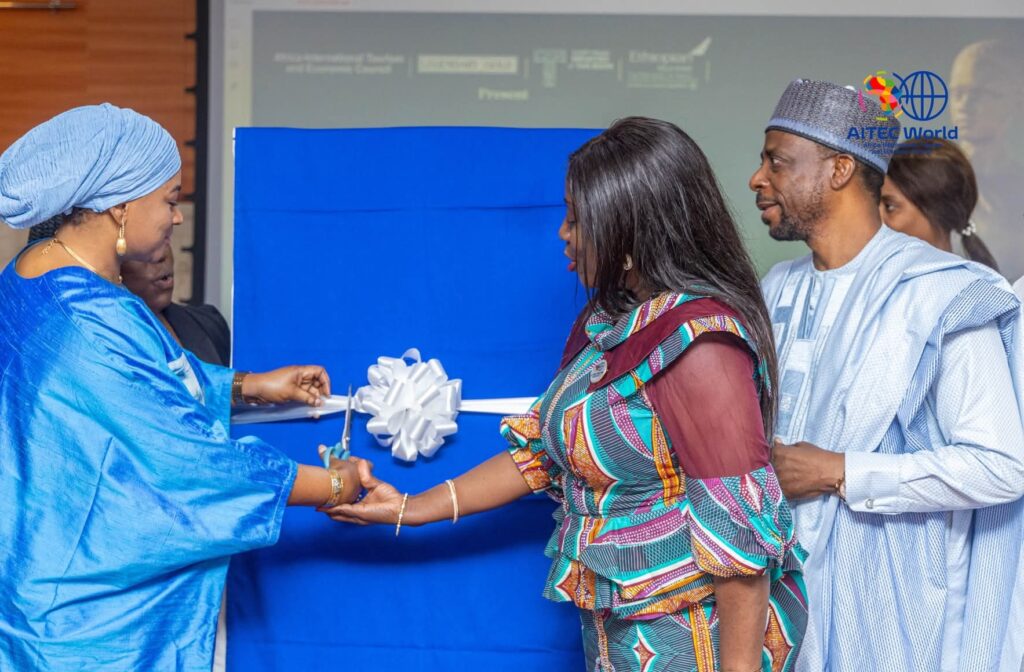
AITEC World Inaugurates Its Global Team, Presents Certificates to Key Members
Another significant milestone was the formal inauguration of AITEC World team members and the presentation of certificates to members present.
The inauguration and certificate presentation were conducted by Dr. Olayiwola Awakan, Director General of the Nigerian Tourism Development Authority, and Amb. Dine Bouraima, President of AITEC World.
The exercise represents an important step in strengthening the organisation’s institutional structure, national representation and continental engagement as it expands its activities across Africa and internationally.
Speaking on behalf of the inaugurated members, Mr. Assefa Gebeye, National Representative of AITEC World – Ethiopia, delivered the acceptance speech and expressed appreciation for the confidence placed in the members.
He reaffirmed their commitment to supporting AITEC World’s vision and advancing its mission through effective national and international collaboration.
Africa Tourism Dialogue COMMUNIQUÉ 2026 Presented
The dialogue concluded with the presentation of the Africa Tourism Dialogue Communiqué 2026, delivered by Dr. Anthony Elumelu, National Representative of AITEC World – Nigeria.
The communiqué captured the principal aspirations, recommendations and collective positions emerging from the day’s deliberations.
Its key areas of focus included visa-free, accessible travel, seamless air connectivity, tourism investment, policy coordination, cultural diplomacy, the participation of traditional leadership in tourism development and sustainable economic growth.
The communiqué provides a platform for continued engagement with African governments, tourism institutions, regional organisations, development partners and private-sector stakeholders towards advancing a more integrated and competitive African tourism economy.
AITEC World Reafirms its Commitment to Connecting Africa to the World
The 2nd Africa Tourism Dialogue further demonstrated the growing importance of tourism as an instrument of economic transformation, international cooperation, cultural preservation and continental integration.
The engagement of policymakers, tourism professionals, traditional rulers, international partners and private-sector representatives reinforced the understanding that unlocking Africa’s tourism potential requires more than destination marketing.
It demands progressive policies, accessible borders, stronger air connectivity, strategic investment, effective governance and the collective commitment of African institutions and stakeholders.
The programme was anchored by Ayodele Oginni, AITEC World member representing Benin Republic, who served as Master of Ceremony. Overall programme coordination and direction was provided by Amb. Kazeem Balogun, Vice President of AITEC World on Communications and International Relations.
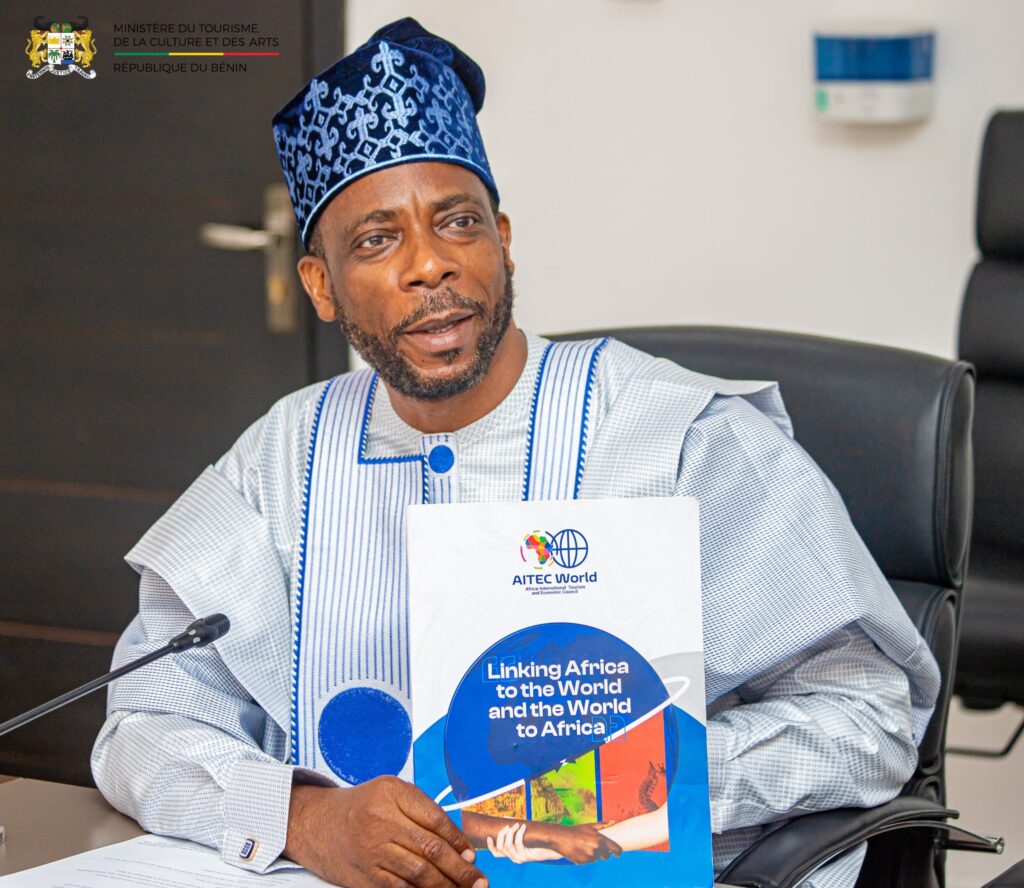
For AITEC World and its partners, the 2nd Africa Tourism Dialogue represents another important milestone in advancing the organisation’s continental and international vision of “Linking Africa to the World and the World to Africa.”
The organisers reaffirmed their determination to sustain the Africa Tourism Dialogue as an annual platform for policy engagement, knowledge exchange, strategic partnerships and practical solutions capable of positioning tourism as a powerful driver of African prosperity.
ABOUT AITEC WORLD
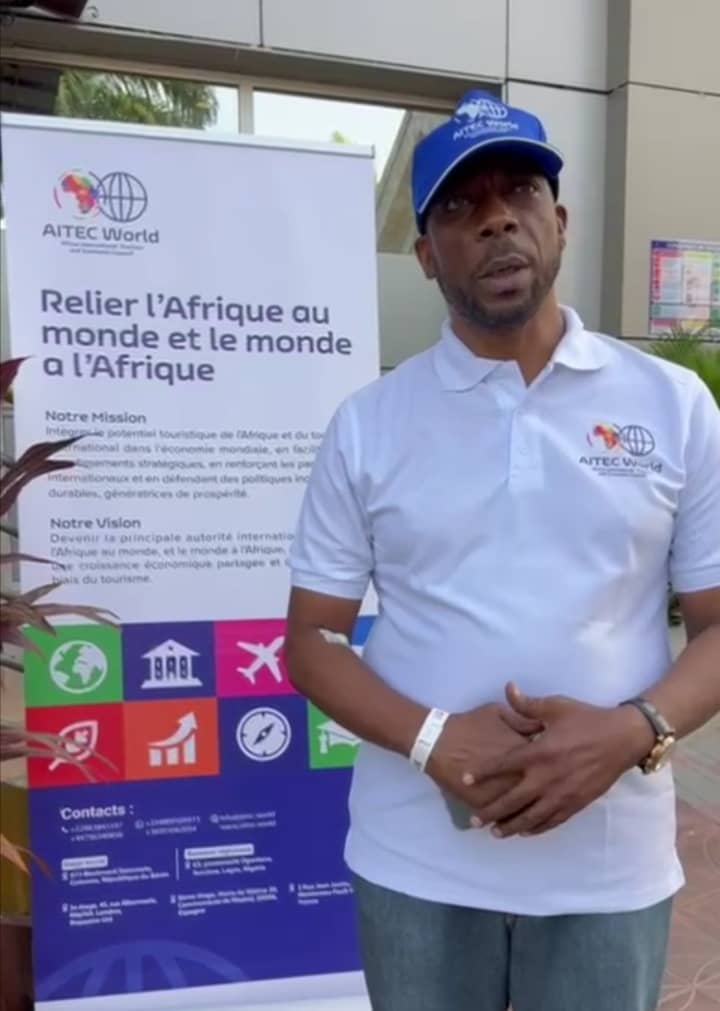
The Africa-International Tourism and Economic Council (AITEC World) is an and international organisation committed to advancing tourism, economic cooperation, investment, mobility, connectivity and sustainable development through strategic partnerships. Its guiding philosophy is: “Linking Africa to the World and the World to Africa.”
ABOUT AFRICA TOURISM DIALOGUE
The Africa Tourism Dialogue (ATD) is an annual continental engagement and platform dedicated to advancing conversations, partnerships and practical solutions for Africa’s tourism development. It brings together policymakers, tourism professionals, traditional institutions, investors, development partners and international stakeholders to promote tourism, cultural heritage, economic opportunities and African global competitiveness.
Ambassador Dine Bouraima challenges African leaders to translate the vision of “One Africa, One People” into reality through free movement, tourism and economic integration.
Addis Ababa-
The President of the Africa-International Tourism and Economic Council (AITEC World), Ambassador Dine Bouraima, has called on African leaders and policymakers to accelerate efforts towards visa-free movement across the continent, describing freedom of movement as a fundamental requirement for achieving African unity, cultural integration and shared economic prosperity.
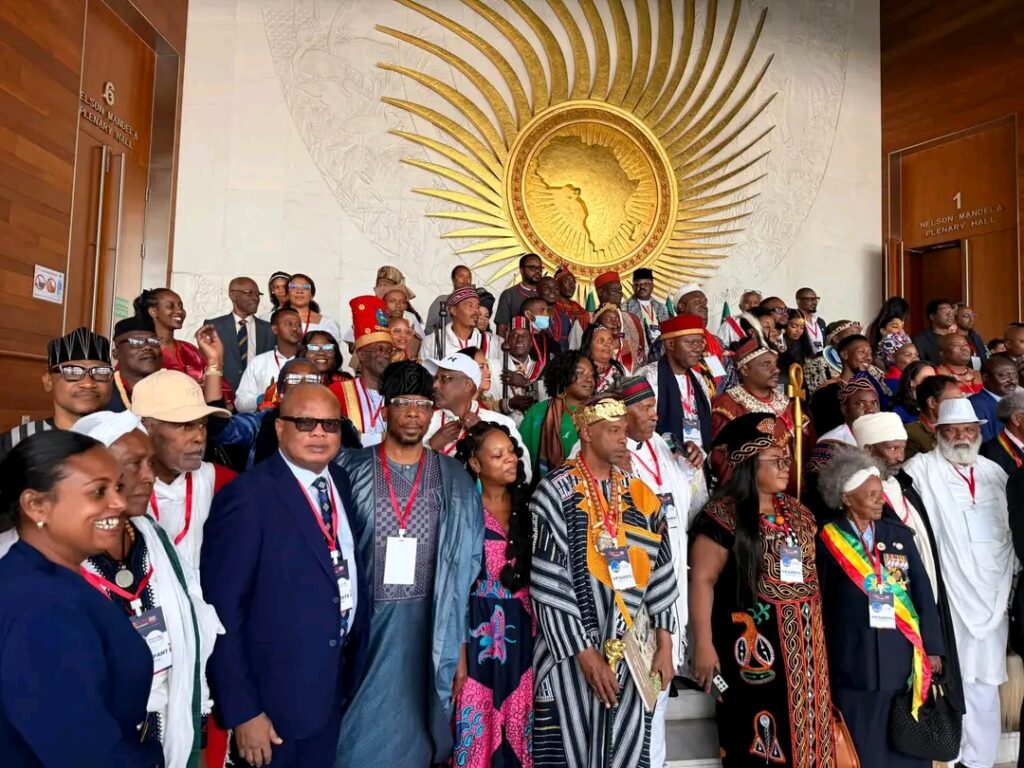
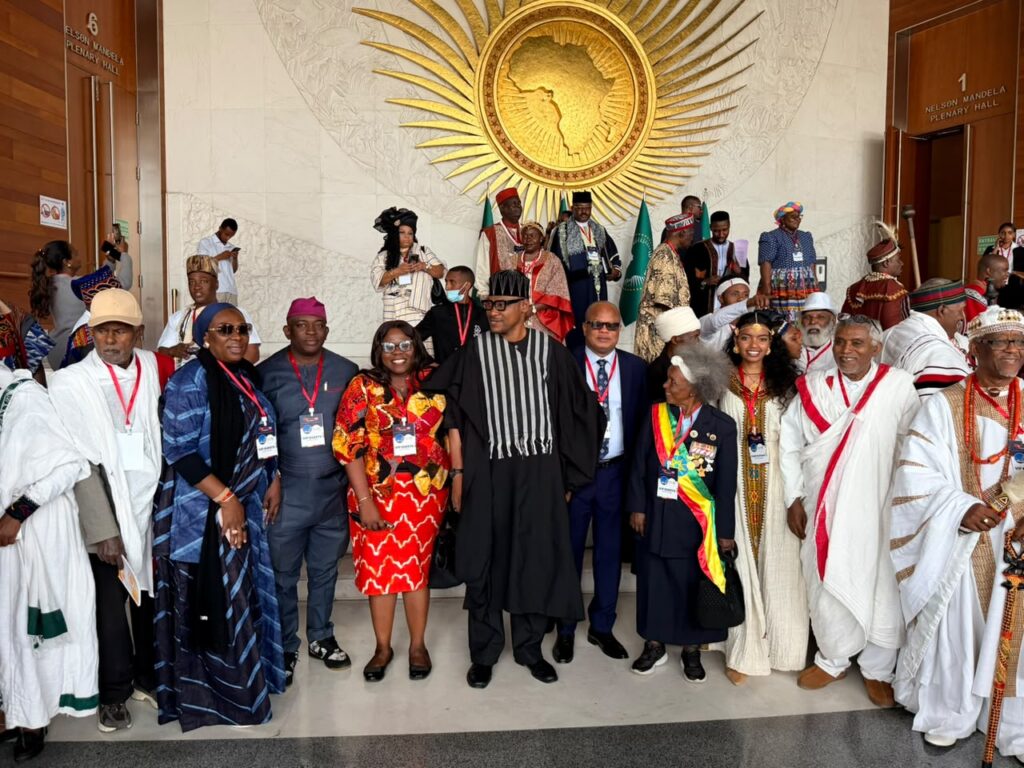
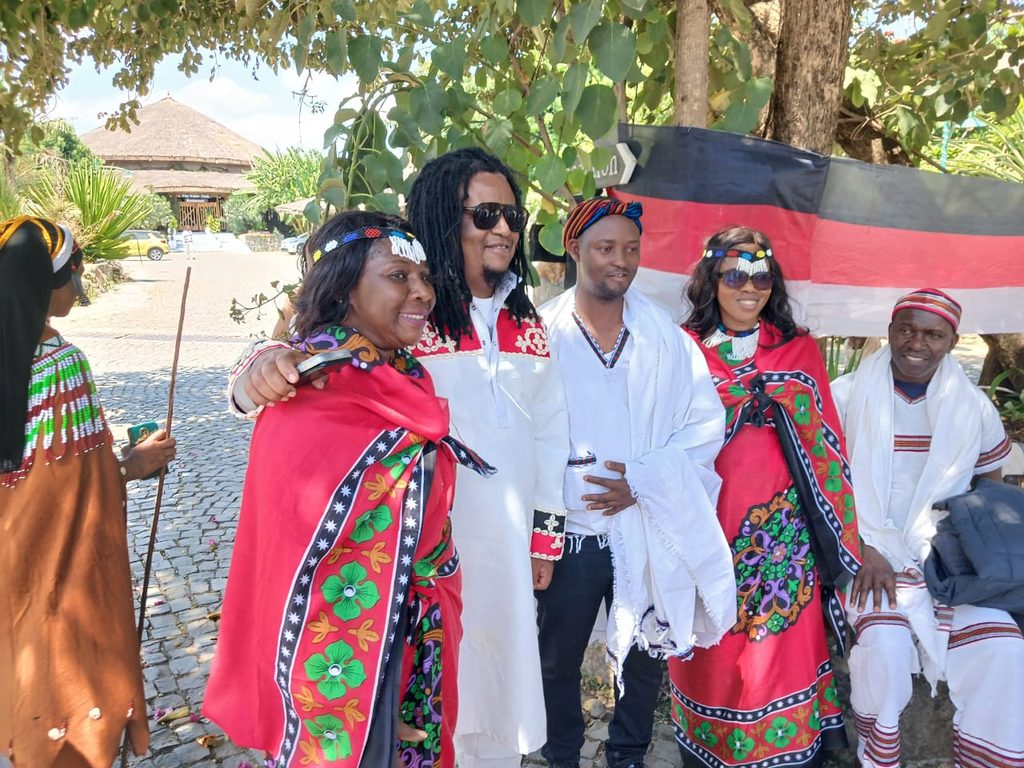
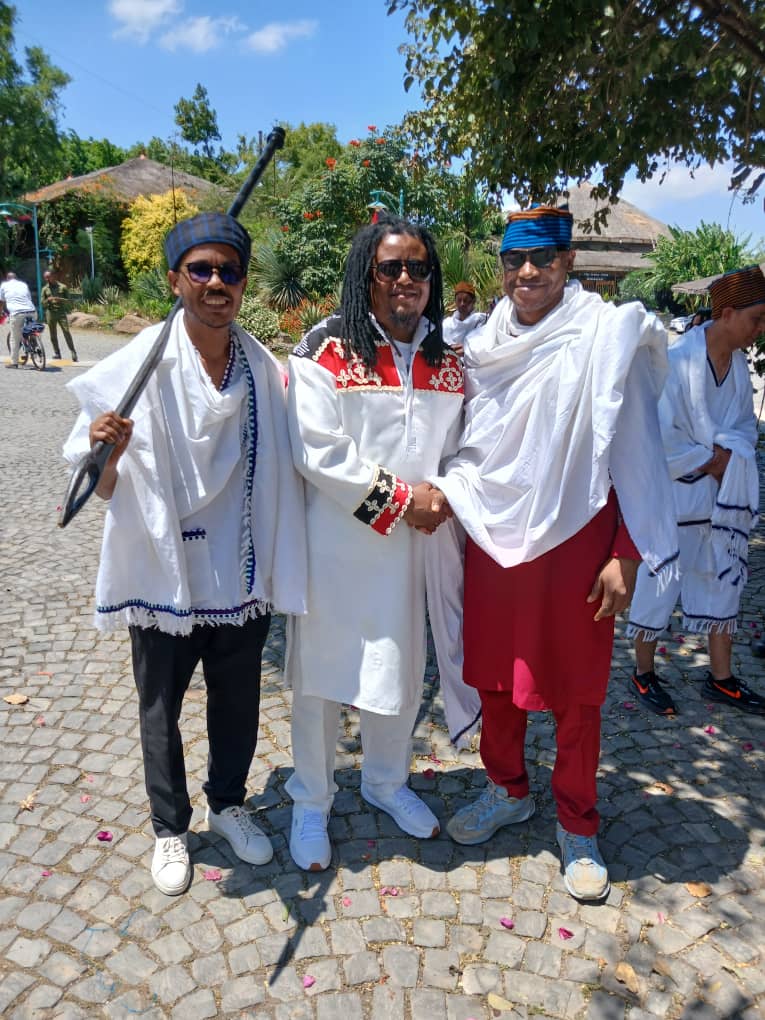
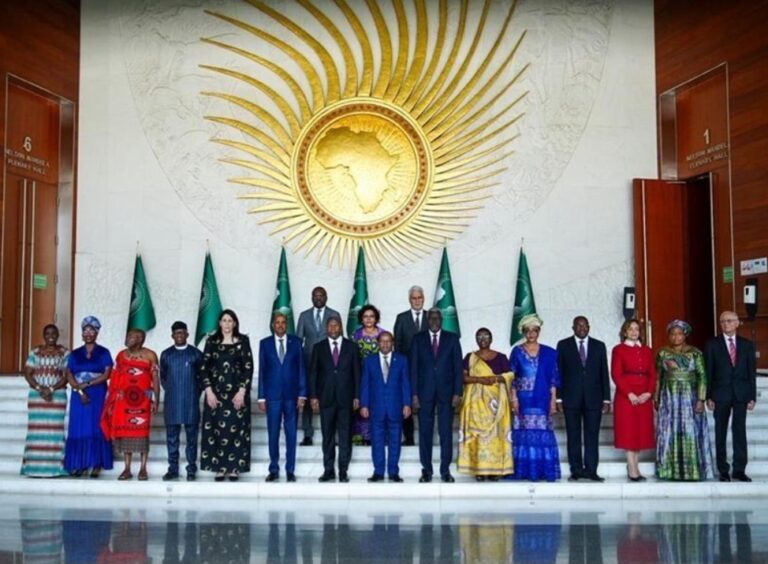
Ambassador Bouraima made this compelling call while delivering his remarks at the opening ceremony of the just concluded Africa Celebrates 2026, held inside the prestigious Nelson Mandela Hall at the African Union Headquarters in Addis Ababa, Ethiopia, on 11 November 2026, where the colourful and high-profile gathering brought together eminent personalities, government representatives, traditional rulers, policymakers, diplomats, business leaders, cultural icons and distinguished guests from across Africa and other parts of the world.
The opening ceremony, organised under the theme “One Africa, One People: Uniting Culture, Innovation and Enterprise for a Shared Prosperous Future,” provided a significant platform for reflecting on Africa’s collective identity, cultural heritage, economic opportunities and the importance of strengthening connections between the continent and its global diaspora.
In his address, Ambassador Bouraima commended the Government and people of Ethiopia for their hospitality and enduring contribution to African unity, describing Addis Ababa as the home of African unity.
However, he challenged the gathering to look beyond the inspirational language of continental unity and confront one of the major obstacles to African integration: restrictions on the movement of Africans within their own continent.
“Can we truly be one people if we cannot move freely across our own continent?” he asked, drawing attention to the contradictions between Africa’s aspirations for unity and the practical difficulties Africans face when travelling between countries.
He explained that culture travels with artists, innovation travels with young entrepreneurs, while enterprise moves through traders, investors and tourists. According to him, when borders remain closed to fellow Africans, opportunities for cultural exchange, business collaboration, investment and tourism development are equally restricted.
The AITEC World President further highlighted the limited opportunities for visa-free travel within Africa, observing that only approximately three out of every ten journeys between African countries can be undertaken without a visa.
He described this situation as inconsistent with the vision of Africa Celebrates 2026 and called for deliberate continental action to transform the current reality.
AITEC World introduces Excellence Awards to recognise African leadership
A major highlight of Ambassador Bouraima’s address was the introduction of the AITEC World Excellence Awards, an initiative established to recognise, celebrate and promote outstanding contributions to Africa’s tourism, economic development, integration and international engagement.
He explained that the awards are conceived as permanent distinctions that will identify and honour African excellence, encourage progressive policies and inspire governments and institutions to embrace initiatives that advance the continent’s collective prosperity.
The first category, the African Mobility Excellence Award, is designed to recognise African countries that have demonstrated leadership and commitment by opening their borders to visa-free mobility for fellow Africans.
Ambassador Bouraima emphasised that African countries making practical efforts to facilitate the movement of African citizens deserve recognition and should serve as examples for others to follow.
The initiative, therefore, represents more than an awards programme. It is also an advocacy instrument aimed at encouraging policy reforms, promoting regional cooperation and advancing the broader objectives of African integration.
First nominees to be announced at the Africa Tourism Dialogue
Providing further details about the initiative, Ambassador Bouraima announced that the first nominees for the African Mobility Excellence Award would be unveiled at the second edition of the Africa Tourism Dialogue, scheduled to take place at the African Union Headquarters the following day.
He disclosed that the eventual award recipients would be determined by an independent jury, with the distinctions to be presented at a dedicated ceremony.
He consequently extended an invitation to participants at Africa Celebrates 2026, diplomatic representatives, tourism stakeholders, policymakers and members of the international community to attend the dialogue and witness the unveiling of the first nominees.
The announcement positioned the Africa Tourism Dialogue as an important platform for advancing conversations around visa facilitation, seamless air connectivity, tourism development and sustainable economic cooperation across Africa.
Strengthening Africa’s global connections
Ambassador Bouraima also acknowledged the Founder of Africa Celebrates, Mr. Lexy Mojo-Eyes, whom he described as his brother, for providing a platform that continues to bring Africans together from across the continent and the diaspora.
He commended the initiative for creating opportunities to showcase Africa’s cultural richness, celebrate its achievements and strengthen relationships among people of African heritage and the international community.
His remarks reinforced AITEC World’s commitment to promoting tourism as a strategic instrument for economic transformation, cultural diplomacy, international cooperation and continental integration.
The intervention also reflected the Council’s broader vision of connecting Africa with the rest of the world while creating opportunities for the world to engage meaningfully with Africa.
As Africa Celebrates 2026 continues to provide a meeting point for culture, innovation, enterprise and international collaboration, the AITEC World President’s message introduced an important dimension to the celebrations: that the dream of one Africa must be supported by practical policies that allow Africans to connect, travel, trade, invest and build together.
For Ambassador Bouraima, the vision of a united Africa cannot remain a ceremonial expression or political aspiration. It must become a lived experience for ordinary Africans through accessible borders, stronger connectivity and mutually beneficial partnerships.
He concluded his address by reaffirming AITEC World’s guiding philosophy:
“AITEC World — Linking Africa to the World and the World to Africa.”
His message at the Nelson Mandela Hall was ultimately a call for Africa to move beyond celebrating its unity in words and begin demonstrating that unity through action, opportunity and freedom of movement.
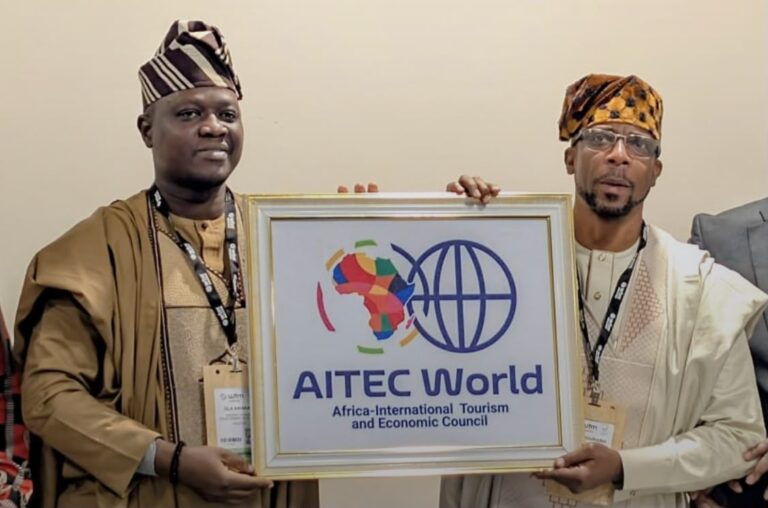
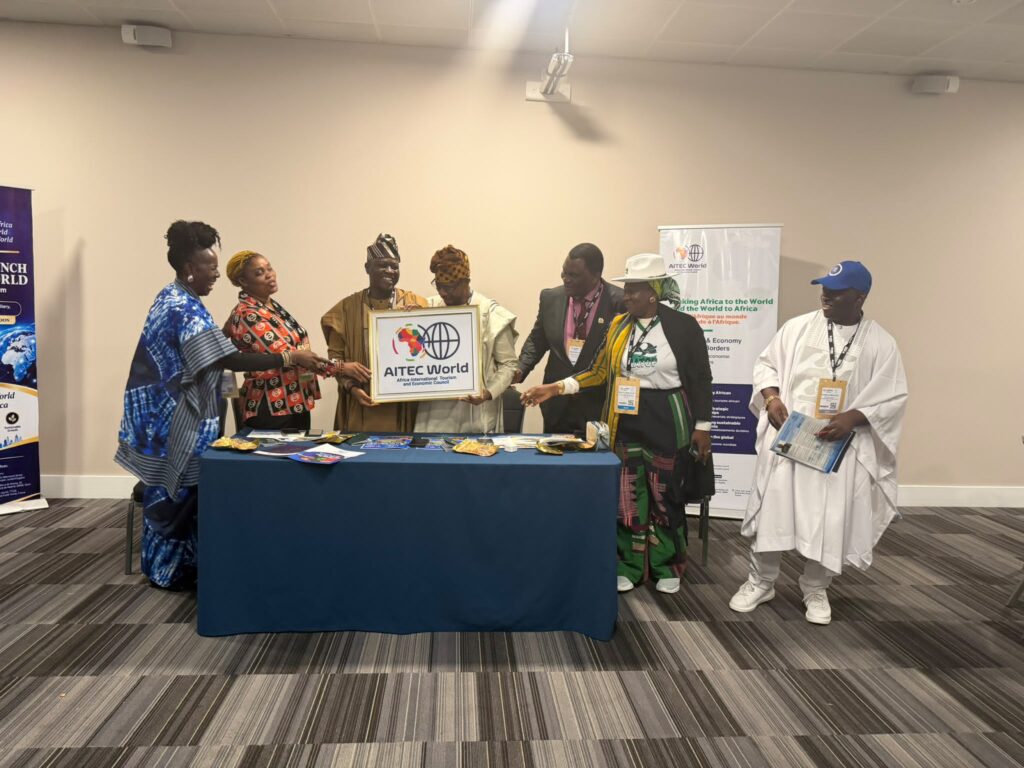
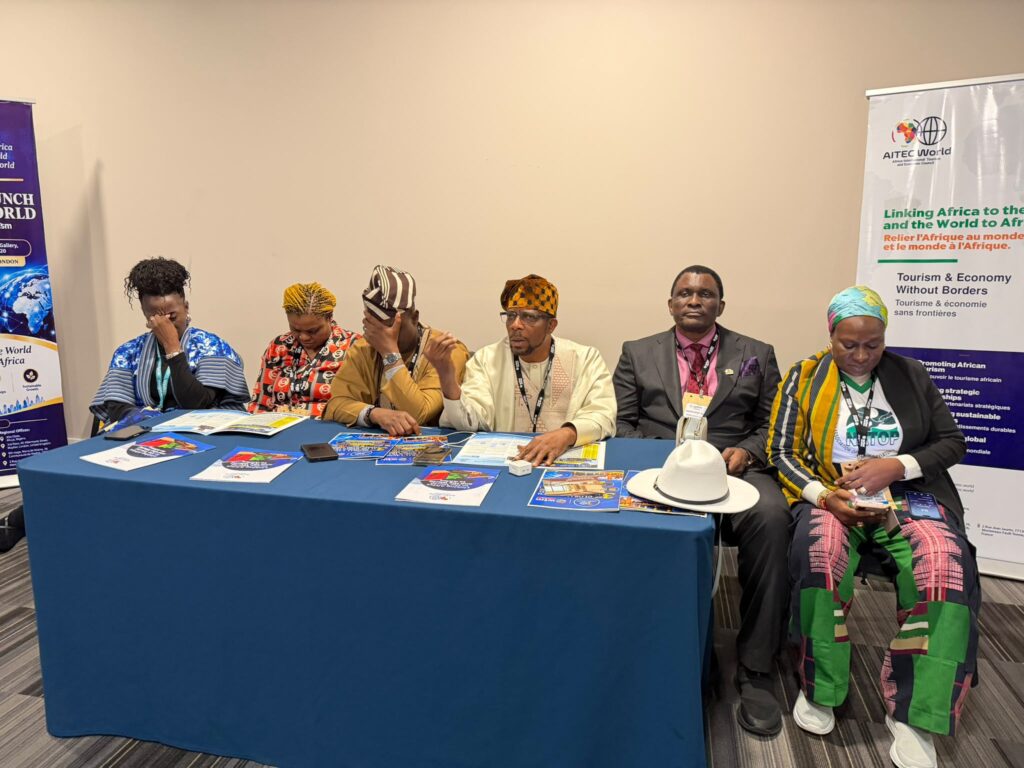
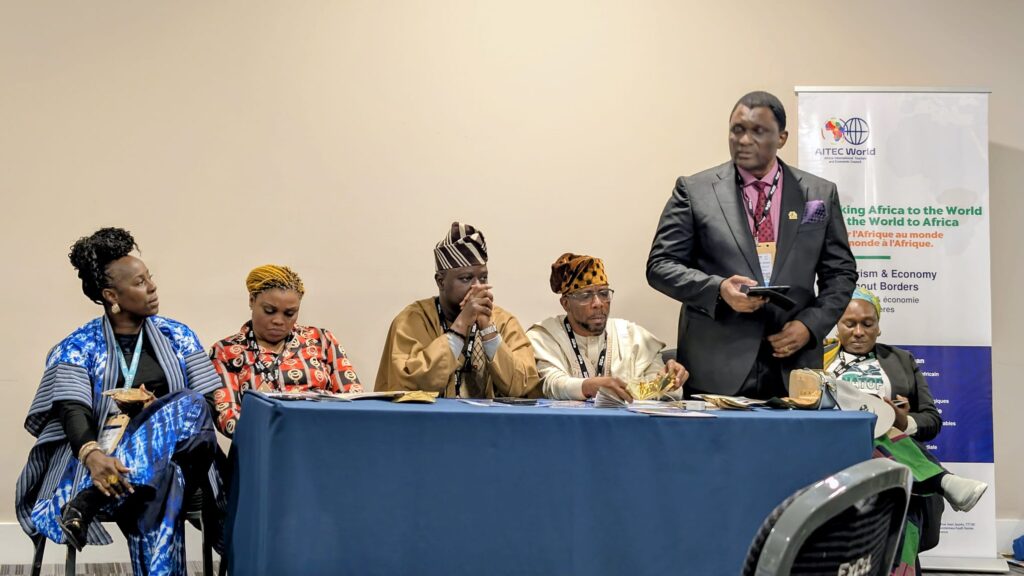
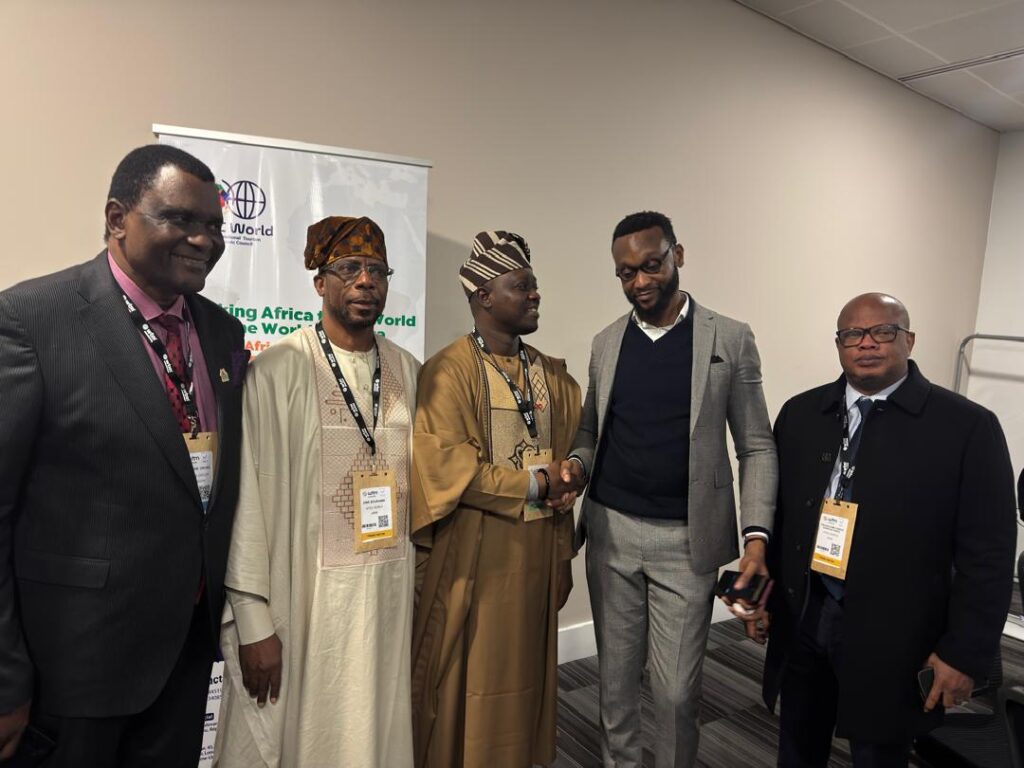
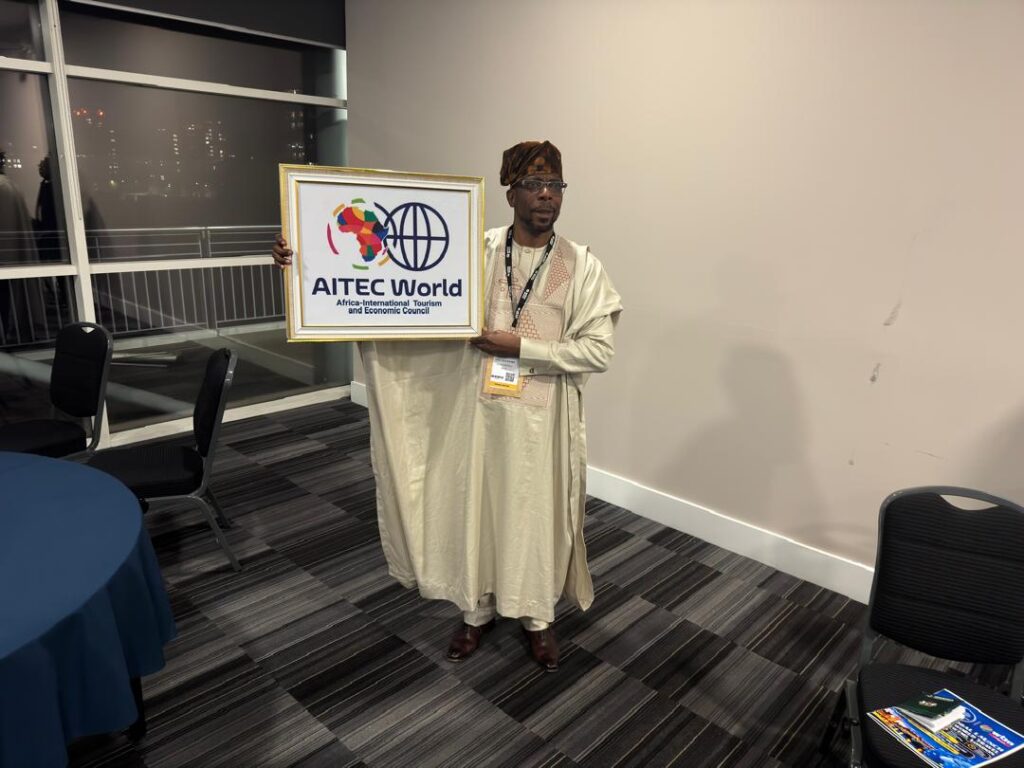
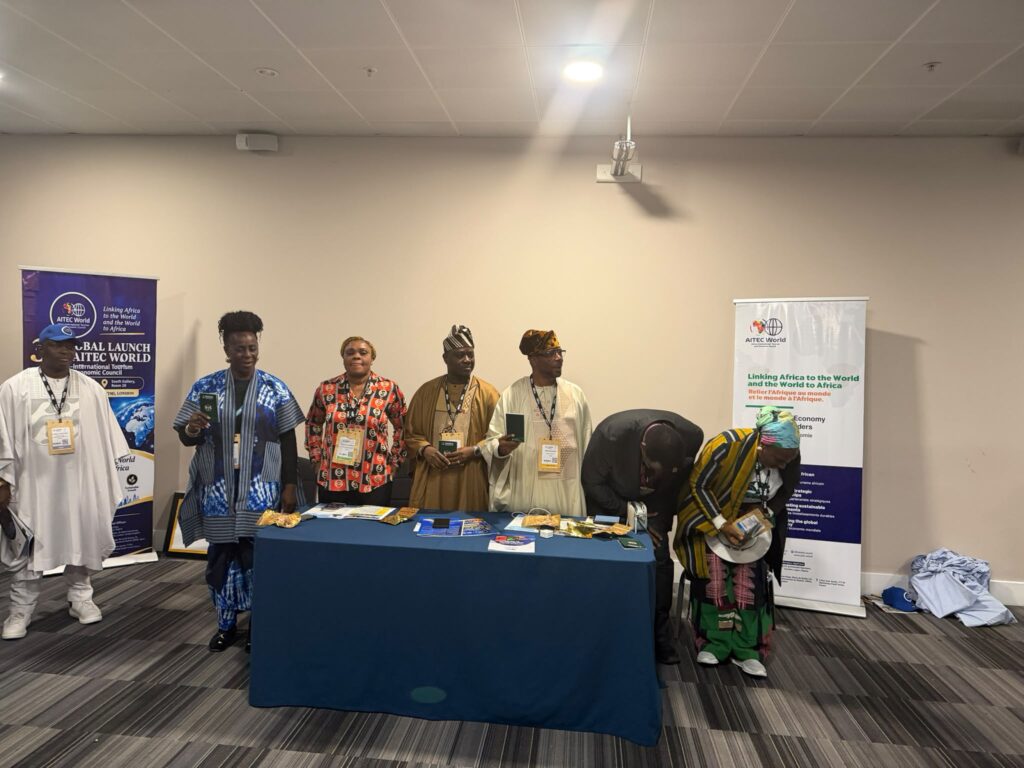
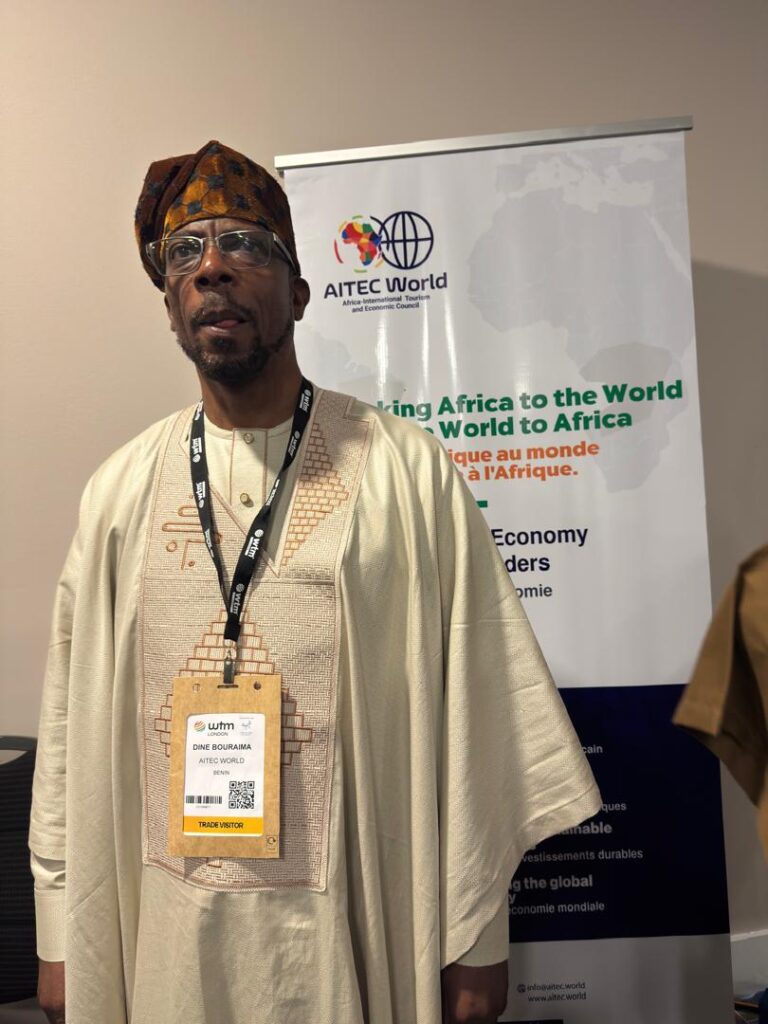
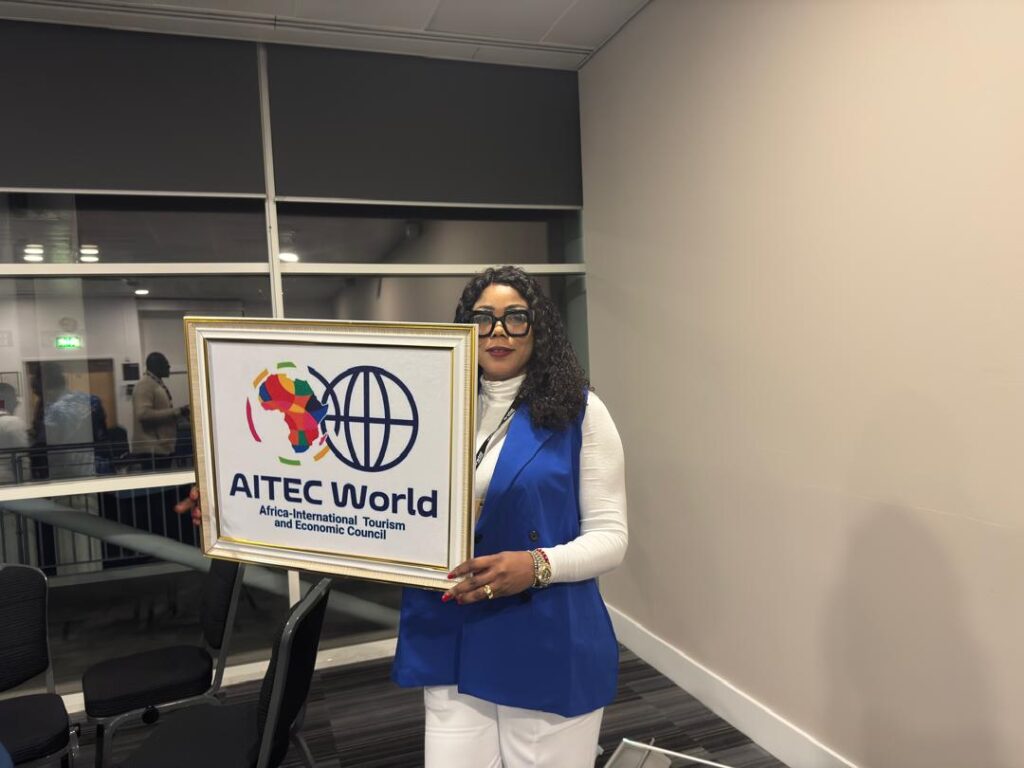
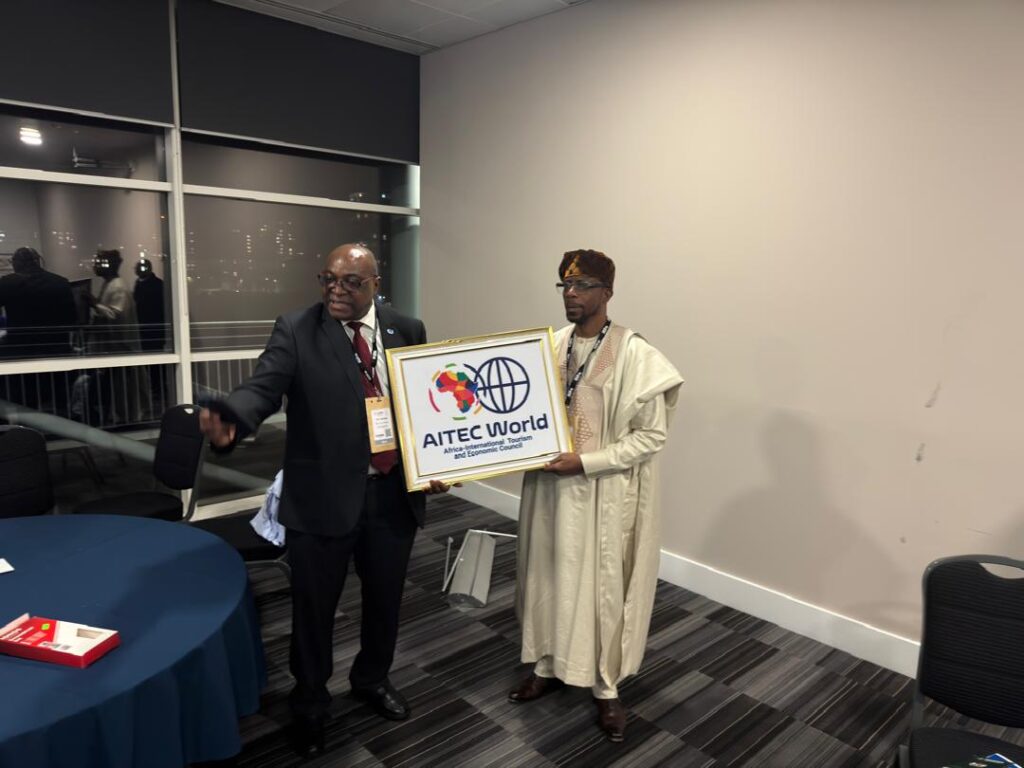
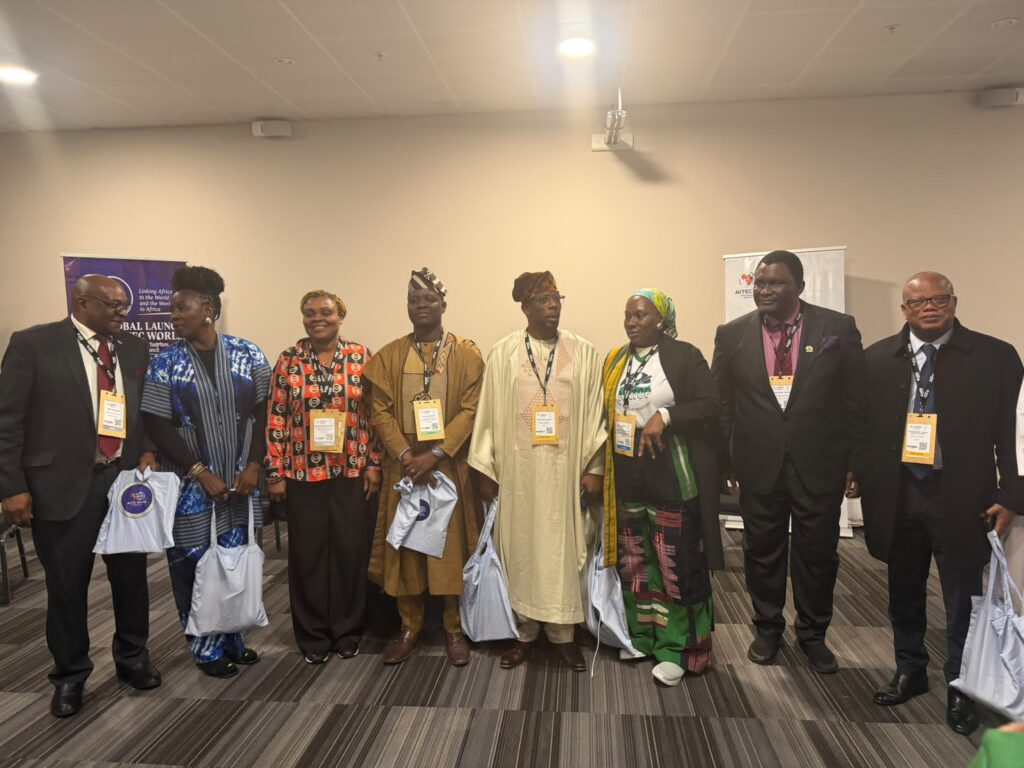
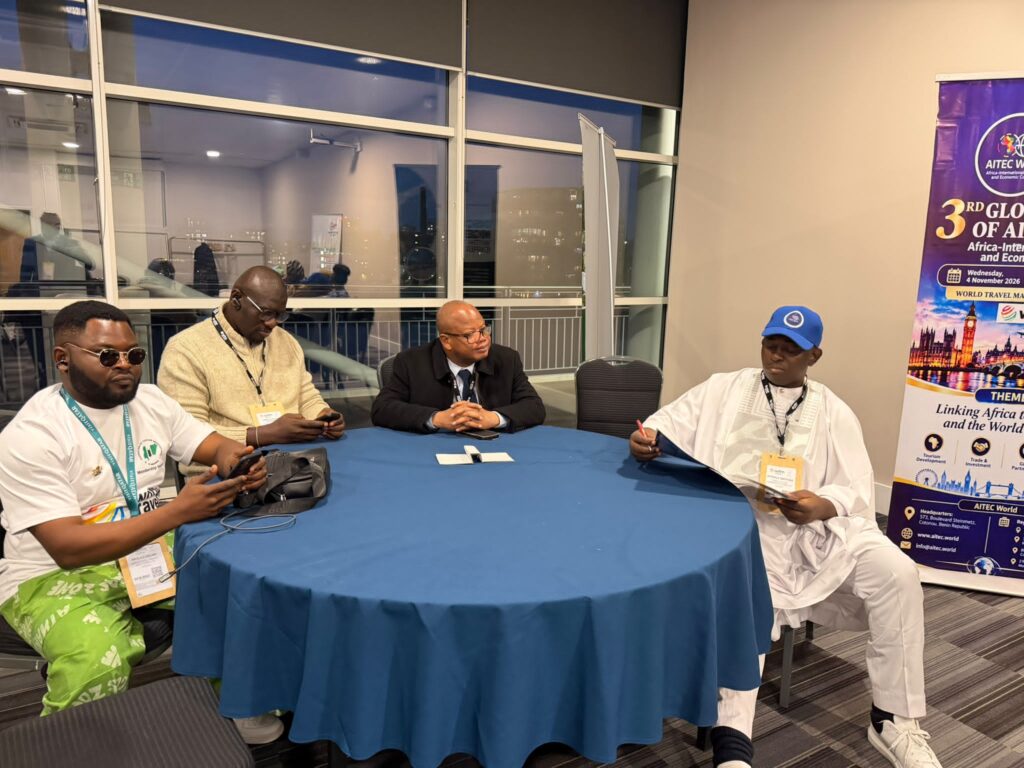
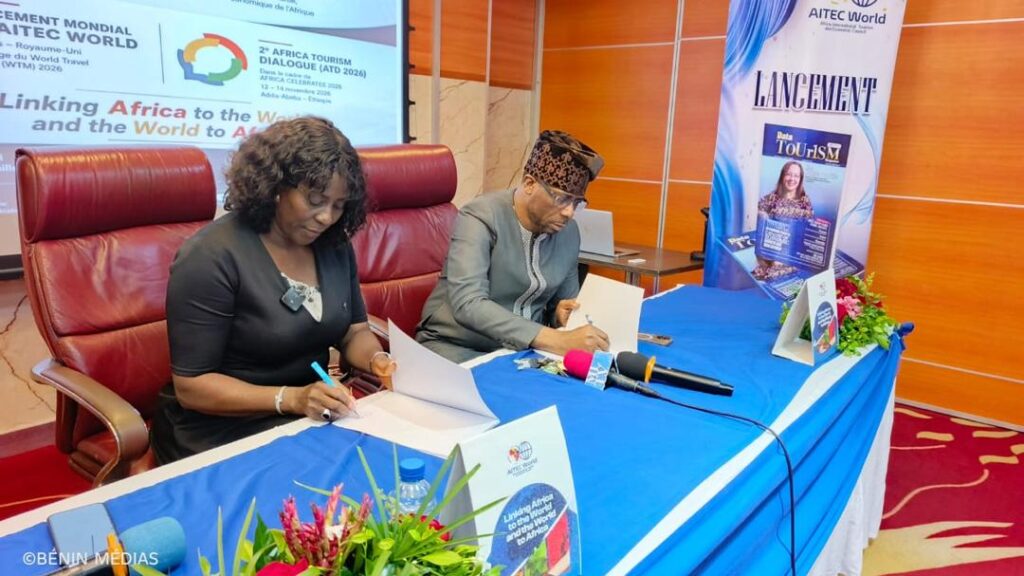
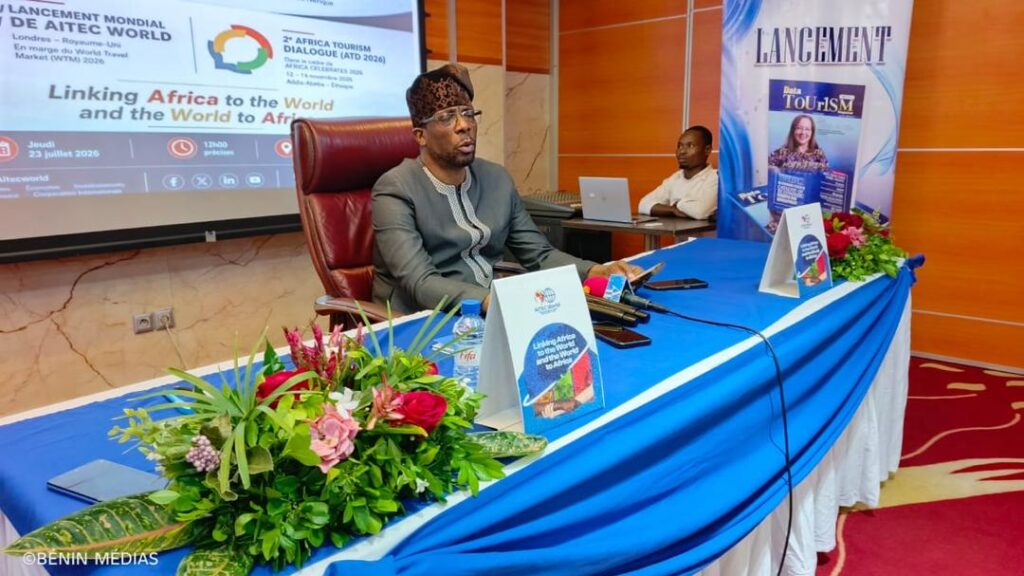
Africa-International Tourism and Economic Council (AITEC World) has successfully organised its third launch, indicating readiness for international operations at the World Travel Market (WTM) London 2026, unveiling the organisation’s global mission, with its President, Ambassador Dine Bouraima calling for stronger global partnerships, responsible investment and improved tourism connectivity to accelerate participation in the global tourism economy.
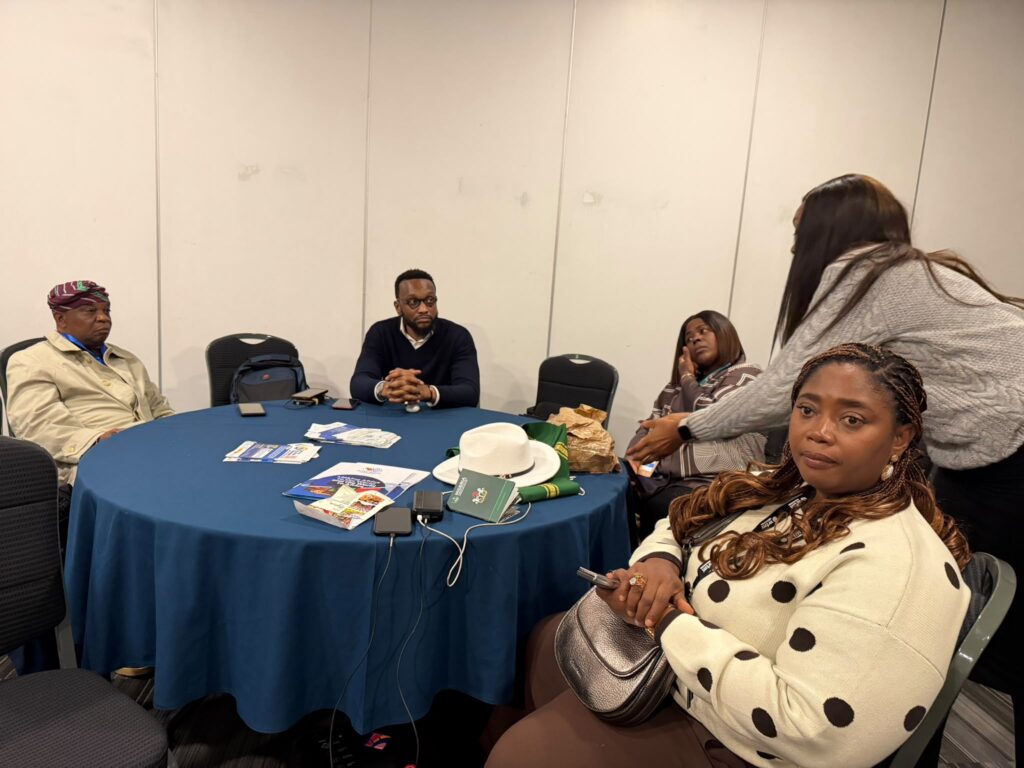
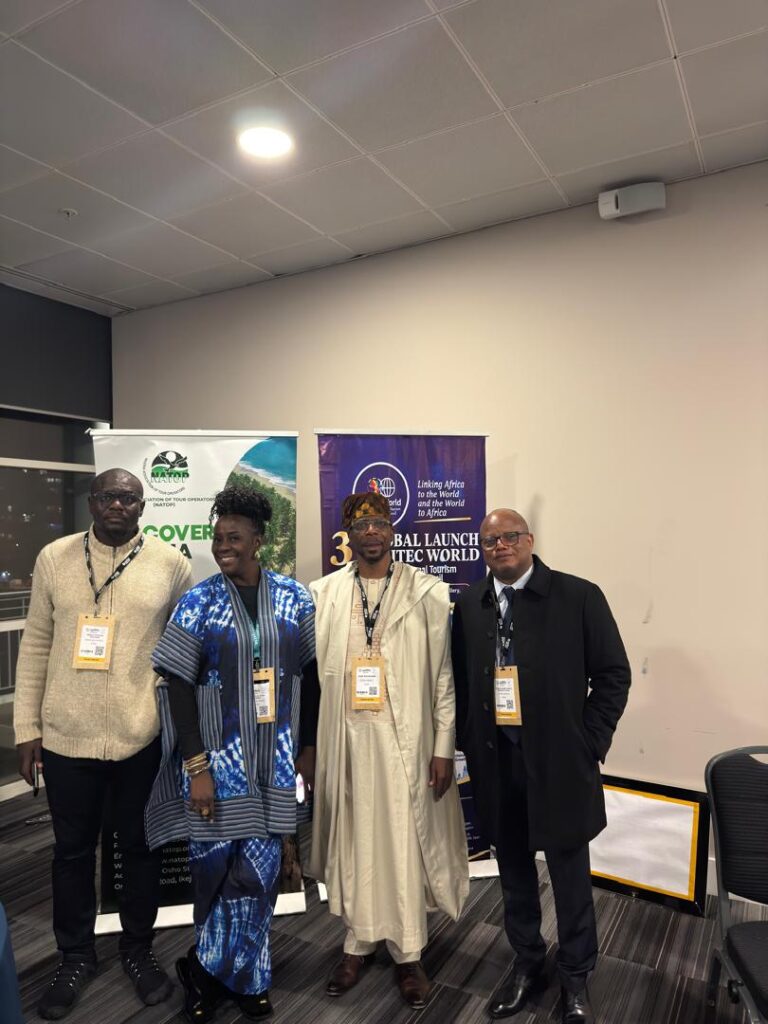
The global launch, held at South Gallery, Room 20, ExCeL London, marked a significant milestone in the organisation’s development and its ambition to establish a platform connecting African tourism destinations, businesses, investors and institutions with international markets.
Speaking at the event, Ambassador Bouraima reaffirmed AITEC World’s commitment to its founding theme, “Linking Africa to the World and the World to Africa,” describing tourism as a strategic instrument for economic development, cultural understanding and international cooperation.
He said the organisation was established on the conviction that Africa deserved more than recognition for its natural beauty, cultural diversity and heritage, stressing the need for meaningful participation in the global tourism economy.
According to him, Africa requires greater investment in tourism infrastructure, destinations, enterprises and human capital, alongside improved air connectivity, accessible travel and expanded opportunities for young people and entrepreneurs.
“Our mission is not to build a one-way bridge. It is to create a two-way relationship of opportunity, trust and shared prosperity,” Bouraima declared.
From Abuja to Addis Ababa and London
The London launch represents the third major milestone in AITEC World’s international development journey. Tracing the organisation’s evolution, Bouraima recalled that its first regional launch took place on August 14, 2025, at the Intercontinental Hotel in Abuja, Nigeria, where the foundation was laid for an international platform bringing together governments, private enterprises, tourism professionals, investors and development partners.
The second continental launch followed on November 6, 2025, at the United Nations Economic Commission for Africa in Addis Ababa, Ethiopia, extending the organisation’s vision into a broader continental framework. He noted that the Addis Ababa engagement reinforced the importance of regional integration, cooperation and connectivity in building Africa’s tourism future.
The London international launch, he said, represents the next phase of AITEC World’s development, moving from its founding journey towards broader international engagement and practical implementation.
“From Abuja to Addis Ababa, and from Addis Ababa to London, our journey reflects the very essence of our mission: Linking Africa to the World and the World to Africa,”.
Six Strategic Priorities
In outlining AITEC World’s global strategic direction, the President identified six interconnected priorities designed to strengthen tourism cooperation and create economic opportunities.
These include enhancing the international visibility and competitiveness of tourism destinations; improving mobility and connectivity through dialogue on visa facilitation, air transport and regional travel; mobilising investment and expanding business opportunities; strengthening knowledge, policy dialogue and innovation; promoting sustainable and inclusive tourism; and connecting tourism ecosystems across Africa and the wider world.
Bouraima explained that the organisation intends to support stronger destination branding, market access and connections between African tourism operators and international buyers. He also emphasised the importance of responsible investment, research, professional expertise and technological innovation in improving tourism development and decision-making.
On sustainability, he stressed that tourism growth must protect cultural heritage, respect the environment and generate meaningful opportunities for local communities, women, young people and small enterprises. He described the six priorities as the foundation for future programmes, partnerships and measurable achievements.
WTM London Provides Platform for Global Engagement
The President highlighted the significance of AITEC World’s participation in WTM London, describing the international tourism marketplace as an important opportunity to engage stakeholders capable of transforming Africa’s tourism potential into commercial opportunities and practical cooperation.
He called on travel dealers to strengthen connections between African destinations and international markets. Airlines and transport stakeholders were also encouraged to work towards improved access and connectivity, while investors and financial institutions were urged to consider Africa’s tourism opportunities through responsible investment and long-term partnerships.
Bouraima also appealed to governments and international institutions to strengthen cooperation, encourage enabling policies and remove unnecessary barriers on tourism development.
He stressed that AITEC World was not established to replace existing institutions but to complement their work, connect their strengths and translate shared objectives into practical cooperation.
“Our purpose is collaboration, not competition. Our ambition is impact, not prestige. Our measure of success is progress, not publicity,” he said.
Africa Tourism Dialogue to Sustain Momentum
Looking beyond the London launch, Bouraima announced that AITEC World intended to continue its international engagement through the Africa Tourism Dialogue scheduled for November 12–14, 2026, in Addis Ababa, Ethiopia as a tourism component of Africa Celebrates which takes place from 10-15 November.
The dialogue is conceived as a platform for deliberations involving policymakers, tourism industry leaders, investors, development institutions and other stakeholders. Its objective is to attempt proffering practical solutions to some of the challenges facing African tourism and strengthen the continent’s connections with the global economy.
According to the President, the London launch should therefore be regarded not as the conclusion of AITEC World’s founding journey but as the beginning of a new chapter focused on international engagement, partnerships and delivery.
Calls for MeasurableResults
Bouraima cautioned that the organisation must be judged by the opportunities it creates and the impact of its activities rather than the number of ceremonies, speeches or titles associated with its development.
He said AITEC World’s partnerships must produce tangible results, its meetings must generate opportunities, and its commitments must be followed by implementation. The organisation, he added, would seek to demonstrate its value through practical initiatives that support tourism businesses, strengthen international cooperation and improve opportunities for destinations and communities.
He also expressed appreciation to AITEC World’s leadership, executive board, advisory, representatives, global ambassadors, technical commissioners, members, partners and supporters for their contributions to the organisation’s development, describing institution-building as a collective responsibility, that organisation’s progress depended on shared belief, sustained commitment and collaboration.
A New Chapter forAfrica’s Tourism
The President concluded by urging stakeholders to transform tourism potential into shared prosperity through stronger partnerships, responsible investment and international cooperation.
He challenged participants to focus on creating opportunities for African entrepreneurs, facilitating international travel, attracting investment, supporting destinations and preserving cultural identities and heritage.
“Let us build bridges where others see barriers. Let us create partnerships where others see distance. Let us turn Africa’s potential into shared prosperity,” he said.
Bouraima formally declared the third international launch of AITEC World accomplished, reaffirming its commitment to connecting Africa with global markets and bringing international opportunities closer to African destinations, businesses and travellers.
Other Speakers and Dignitaries
Joining AlTEC World President for the unveilling was the Director General of Nigerian Tourism Development Authority, Dr. Ola Awakan, who was a Keynote Speaker, delivered an engaging message on the need to create synergy between Africa and the rest of the world in the tourism space.
Other speakers at the event were Dr. Memunatu Pratt, Former Minister of Tourism and Cultural Affairs, Republic of Sierre Leone; Dr. Badaki Aliyu, the President of the Federation of Tourism Association of Nigeria, (FTAN), represented by Mrs. Susan Akporiaye, the First Deputy President of (FTAN) ; Mr. Nkereuwem Onung, the Senior Special Adviser to the Governor of Akwa Ibom State, Nigeria and Special Adviser to AlTEC World; Mrs. Bolaji Mustapha, President of Nigeria Association of Tour Operators (NATOP); Dr. Olanma Ojukwu, National Representative of AlTEC World- Benin Republic who also presented AITEC World’s International Strategic Vision, Mission and Objectives among other prominent tourism stakeholders, who all expressed their support for AITEC World’s mission of “linking Africa to the world and the world to Africa”.
Another highlight of the event was the London Declaration, delivered by Mr. Nkereuwem Onung, the Special Adviser to AITEC World.
The event was Directed by Mr. Ayo Omotoso, Director of Communication and Membership, AITEC World Nigeria and the Vote of Thanks was handled by Mrs. Abiosoye Odeyemi, Director of Culture and Creative Industries- AITEC World Nigeria.
The launch concluded with a renewed call for tourism to serve as a catalyst for economic development, cultural understanding, international friendship and a more connected world.
AITEC World’s international launch at WTM London marks a transition from its establishment phase to a broader programme of global engagement, with the organisation seeking to build partnerships that deliver practical benefits for Africa and its international tourism partners.
The visit of United Nations Secretary-General António Guterres to the headquarters of UN Tourism in Madrid marks a historic moment for the global tourism industry and reinforces the growing recognition of tourism as an important instrument for international cooperation, economic development and sustainable progress.
For the first time in the history of the organisation, a serving UN Secretary-General has visited UN Tourism Headquarters, where he was received by the organisation’s Secretary-General, Shaikha Al Nuwais.
The visit, coming as Guterres approaches the conclusion of his ten-year tenure as UN Secretary-General, provides an opportunity to acknowledge his commitment to multilateralism, global collaboration and sustainable development. It also highlights the increasing relevance of tourism within the broader United Nations development agenda.
Beyond its traditional role as a driver of travel, hospitality and leisure, tourism has evolved into a powerful economic sector capable of creating employment, attracting foreign investment, promoting cultural understanding and strengthening relationships between nations.
For developing economies, particularly across Africa, tourism presents significant opportunities for economic diversification, infrastructure development, entrepreneurship and international trade. Its capacity to connect people, markets and cultures makes it a valuable instrument for advancing the Sustainable Development Goals.
The meeting also reinforces the importance of stronger collaboration between UN Tourism, governments, the private sector, development institutions and international partners in ensuring that tourism growth translates into tangible benefits for local communities.
As the global tourism industry continues to expand and confront challenges relating to sustainability, connectivity, investment and inclusive development, the recognition of tourism at the highest level of the United Nations is particularly significant.
This historic visit is therefore more than a ceremonial engagement. It is a reaffirmation that tourism deserves a stronger place in global development conversations and international policy cooperation.
Ultimately, the future of tourism must be measured not only by visitor arrivals and revenue, but also by its ability to create opportunities, promote peace, preserve cultural heritage and improve the livelihoods of people across the world.
The four-day gathering will convene leading voices from film, music, fashion, sport, publishing, gastronomy and business to advance trade, investment and commercial opportunities across Africa’s creative economy
Lagos-
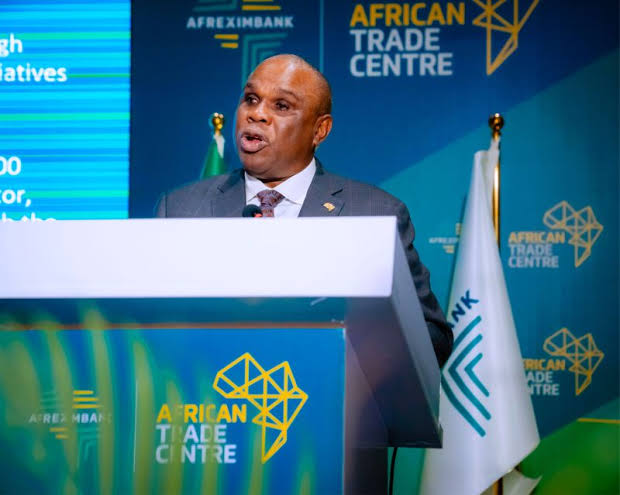
Creative Africa Nexus (CANEX) WKND 2026 has opened yesterday in Lagos, bringing together leading creatives, investors, policymakers, business leaders and cultural figures from across Africa and the diaspora for four days of conversations, deal-making, performances, exhibitions and industry-focused sessions.
Hosted by the Federal Government of Nigeria and organised by African Export-Import Bank (Afreximbank) through its Creative Africa Nexus (CANEX) programme, this year’s event runs from 5 to 8 November under the theme “One People, United in Culture, Creating for the World.” The 2026 programme spans film and television, music, fashion, sport, literature and publishing, gastronomy and visual arts, with a strong focus on finance, intellectual property, technology, skills, investment and market access.
Across the four-day programme, CANEX WKND will provide platforms for deal-making, industry dialogue and sector-specific engagement, including the CANEX Deal Room, with the aim of turning creative talent and ideas into stronger businesses, partnerships and commercial opportunities.
That ambition reflects the evolution of Afreximbank’s commitment to Africa’s creative and cultural industries in 2020, subsequently doubling this to US$1 billion before quadrupling the original commitment financing available to US$2 billion.
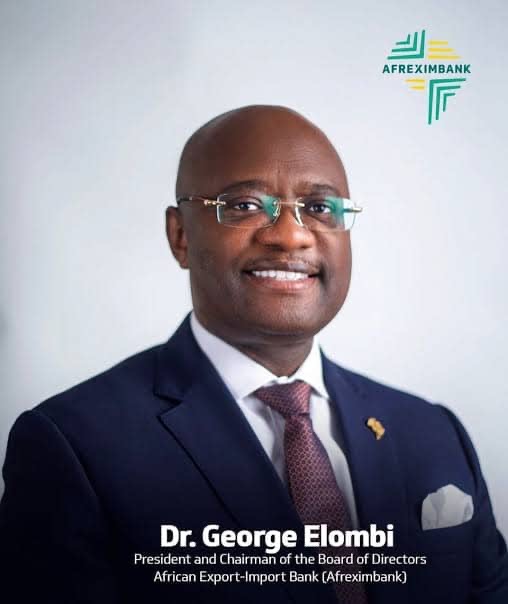
The expansion reflects Afreximbank’s wider objective of helping African creators and creative businesses build scalable enterprises, strengthen ownership of intellectual property and retain more of the economic value generated by African culture and creativity. The opening ceremony is expected to feature addresses by Ministers of Culture and Creative Industries across 11 African countries, Dr George Elombi, President and Chairman of the Board of Directors of Afreximbank, H.E. Dr Olajumoke Omoniyi Oduwole, Nigeria’s Minister of Industry, Trade and Investment, H.E. Wamkele Mene, Secretary-General of the African Continental Free Trade Area Secretariat, and H.E. Babajide Sanwo-Olu, Governor of Lagos State among other dignitaries.
The programme will bring together some of Africa and the diaspora’s most influential cultural and industry figures. Participants include Nobel Laureate, writer and playwright Professor Wole Soyinka; Emmy Award-winning actor Uzo Aduba; filmmaker and actor Funke Akindele; actors Richard Mofe-Damijo and Thuso Mbedu; former professional footballers Didier Drogba and Jay-Jay Okocha; alongside leading figures from Africa’s music, film, fashion, sport and creative business sectors.
The event will also include performances and appearances from musicians and entertainers such as Davido, Fally Ipupa, Flavour, Libianca and Charlotte Dipanda, reflecting CANEX WKND’s combination of industry engagement with live cultural programming. Beyond the headline names, the programme places a strong emphasis on the business of Africa’s creative economy.
On 6 November, a high-level conversation titled “One Market, One Culture: Building the Creative Economy of Global Africa” will examine the steps required to convert the growing global influence of African culture into stronger creative businesses, exports and investment. Speakers include Professor Wole Soyinka; ministers responsible for culture and the arts from Côte d’Ivoire, South Africa and Rwanda; International Finance Corporation representatives; and from Afreximbank.
Financing will also be central to the programme. The Creative Economy Finance Summit, presented by Afreximbank in partnership with the Creative Economy Practice at Co-Creation Hub, will bring financial institutions and investors together to examine how creative-economy transactions can be structured, financed and de-risked.
CANEX Creations Inc. will lead discussions on unlocking investment in African intellectual property, while the CANEX Deal Room and Creative Pitch Sessions will connect creative entrepreneurs directly with financiers and investors considering opportunities across film and television, music, fashion, sport, publishing, gastronomy, visual arts and creative infrastructure. Technology and the changing economics of creative production will feature prominently. Sessions will examine artificial intelligence, authorship and intellectual property; the use of technology to reshape creative businesses; and how African creators can use digital tools to develop globally competitive products.
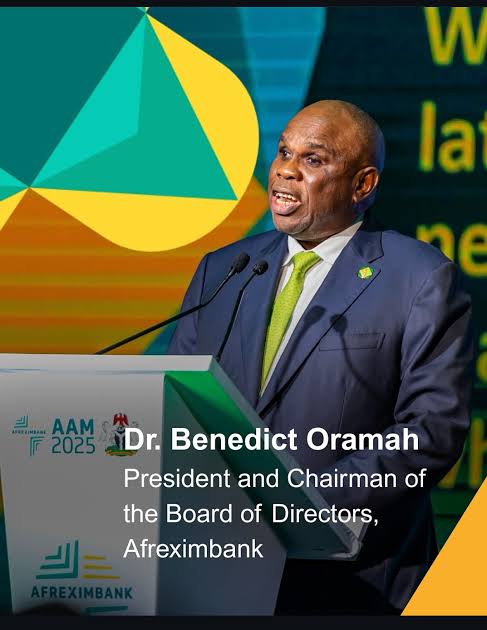
The CANEX CreaThon, delivered with pan-African technology company Gebeya, will bring creators, developers and innovators together around projects in music, video and gaming, supported by African-built digital tools, mentorship, computing resources and a US$50,000 prize pool. Film and television programming will explore both storytelling and the commercial infrastructure required to take African content to wider audiences. Sessions include “Stories Without Borders: Africa, Hollywood & the Global Diaspora”, featuring former Afreximbank President Professor Benedict Oramah, and “Made in Africa, Watched in Africa”, which will examine research into film distribution, audiences and financing across Egypt, Kenya, Nigeria, Rwanda, Senegal and South Africa.
Sport will form another major strand of CANEX WKND 2026. Discussions will examine athlete development, management, commercialisation and the links between sport and the broader creative economy. Didier Drogba and Jay-Jay Okocha are scheduled to participate in “When Giants Speak: The Business of the Game,” while the weekend will conclude with a Legends Football Match at Onikan Stadium on 8 November. Fashion programming will include masterclasses on building profitable African brands, textile value chains, market access and intellectual property, alongside the CANEX Fashion Show and Awards Night.
In gastronomy, the CANEX Junior Chefs Competition, Africa Jollof Wars Competition and a series of live demonstrations and conversations will explore how African food, ingredients and culinary traditions can become stronger commercial propositions across domestic, continental and global markets. Publishing and literature will feature through the CANEX Book Factory, Book Fair, writers’ workshops, manuscript pitching and the CANEX Prize for Publishing, while visual arts programming will combine exhibitions, collector engagement and practical sessions for artists navigating Africa’s growing art ecosystem.
On 7 November, CANEX WKND 2026 will host a major concert bringing together artists from across Africa and the diaspora, before the programme continues into its final day on 8 November with cultural excursions, gastronomy activities, the CANEX Music Factory Songwriting Camp and the Legends Football Game.
About Afreximbank African Export-Import Bank (Afreximbank) is a Pan-African multilateral financial institution mandated to finance and promote intra- and extra-African trade. For over 30 years, the Bank has been deploying innovative structures to deliver financing solutions that support the transformation of the structure of Africa’s trade, accelerating industrialisation and intra-regional trade, thereby boosting economic expansion in Africa. A strong supporter of the African Continental Free Trade Agreement (AfCFTA), Afreximbank has launched a Pan-African Payment and Settlement System (PAPSS) that was adopted by the African Union (AU) as the payment and settlement platform to underpin the implementation of the AfCFTA. Working with the AfCFTA Secretariat and the AU, the Bank has set up a US$10 billion Adjustment Fund to support countries effectively participating in the AfCFTA. At the end of December 2025, Afreximbank’s total assets and contingencies stood at over US$48.5 billion, and its shareholder funds amounted to US$8.4 billion. Afreximbank has investment grade ratings assigned by China Chengxin International Credit Rating Co., Ltd (CCXI) (AAA), GCR (A), Japan Credit Rating Agency (JCR) (A-), Moody’s (Baa2) and S&P Global Ratings (BBB+). The Bank is headquartered in Cairo, Egypt.
By RAED BADAVVI- Kalo Africa Media Correspondent – Doha, Qatar
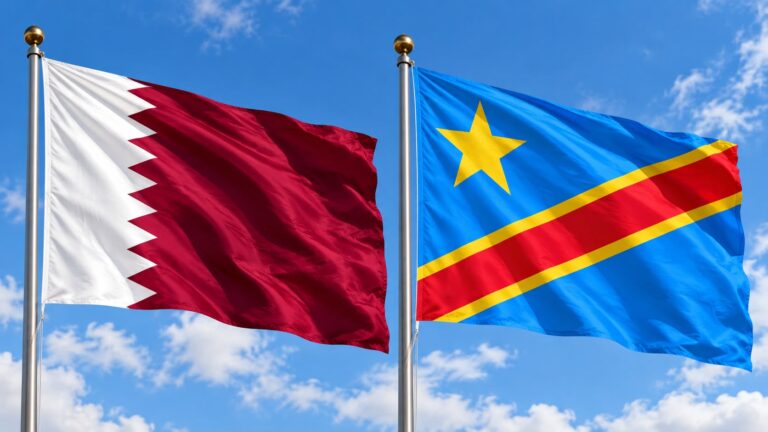
Qatar’s Minister of State for International Cooperation, Dr. Mariam bint Ali bin Nasser Al Misnad, has held talks in Geneva with Djibouti’s Permanent Representative to the World Trade Organization, Ambassador Kadra Hassan, as Doha steps up its engagement on trade-related development assistance for the world’s least developed countries.
Hassan also chairs the Executive Board of the Enhanced Integrated Framework (EIF), an international partnership supporting trade capacity and economic development in least developed countries. According to Qatar’s Ministry of Foreign Affairs, the two officials reviewed prospects for cooperation and exchanged views on issues of mutual interest. The ministry did not disclose specific projects or announce any new financial commitments or agreements.
Trade Development and International Cooperation The meeting took place alongside the WTO’s 10th Global Review of Aid for Trade, where Al Misnad participated in a high-level discussion on how international assistance can deliver measurable economic results for least developed countries. In her address, the Qatari minister highlighted the limited progress achieved since the United Nations established the least developed country category in 1971.
She noted that only eight countries had graduated from the category over more than five decades, while 44 countries remained classified as least developed. Al Misnad argued that international development cooperation must move beyond commitments towards practical results, supported by stronger institutions, productive investment and sustainable financing.
Doha’s Development Agenda The minister emphasised the importance of the Doha Programme of Action for the Least Developed Countries for 2022–2031, describing it as a framework for addressing structural development challenges. She also drew attention to the comprehensive midterm review of the programme, scheduled to take place in Doha in March 2027.
The meeting is expected to assess implementation progress, identify outstanding gaps and consider measures to strengthen international support. Among the priorities outlined by Al Misnad were nationally tailored development strategies, technical assistance, institutional capacity-building and long-term concessional financing.
She also highlighted the importance of digital infrastructure, technology transfer, innovation and improved access to emerging technologies. Djibouti’s Role in Multilateral Trade Diplomacy Ambassador Hassan’s participation in the Geneva discussions reflects Djibouti’s involvement in international efforts to strengthen the position of least developed economies within the global trading system. Her dual responsibilities as Djibouti’s WTO representative and Chair of the EIF Executive Board place her at the intersection of African trade diplomacy and broader international development cooperation. The meeting with Qatar’s minister focused on cooperation in this multilateral context, rather than a newly announced bilateral trade agreement between Doha and Djibouti. No specific funding arrangement, project launch or implementation timetable was disclosed. Nevertheless, the engagement highlights the continued diplomatic attention being given to trade capacity, economic resilience and sustainable development as international partners prepare for the Doha review in 2027.
Qatar and Senegal have held ministerial discussions on bilateral energy cooperation in Moscow, bringing together senior officials from the two countries during an international gathering of natural gas producers. Qatar’s Minister of State for Energy Affairs, Saad bin Sherida Al-Kaabi, met Senegal’s Minister of Energy, Petroleum and Mines, Dr. El Hadji Abdourahmane Diouf, on Monday, October 26. The meeting took place on the sidelines of the 28th Ministerial Meeting of the Gas Exporting Countries Forum (GECF).
According to Qatar News Agency (QNA), the discussions explored energy cooperation between the two countries and addressed issues on the forum’s agenda, including developments in global gas markets. Senegal’s Growing Role in Natural Gas The meeting comes as Senegal seeks to strengthen its position in the international natural gas industry. The West African country has been developing its gas sector, including production associated with the Greater Tortue Ahmeyim project, and has maintained dialogue with the GECF on energy development and security.
Earlier this month, GECF Secretary-General Philip Mshelbila met Diouf during African Energy Week in Cape Town, where discussions covered shared energy priorities and opportunities for further cooperation between Senegal and the organisation. Bilateral Dialogue Without Announced Agreements Al-Kaabi’s meeting with the Senegalese minister formed part of a series of separate bilateral discussions with energy officials attending the Moscow gathering.
QNA reported that the Qatari minister also met counterparts from Algeria, Libya and Venezuela. The official announcement did not identify any newly signed agreements, investment commitments or specific energy projects resulting from the Qatar-Senegal discussions.
Nevertheless, the meeting provided a diplomatic channel for both countries to examine potential cooperation in a sector of growing importance to Senegal’s economy.
Further official announcements would be required to determine whether the discussions lead to concrete bilateral initiatives.
Primary source: Qatar News Agency, October 26, 2026.
African Export-Import Bank (Afreximbank) and its subsidiaries (the “Group”) delivered a satisfactory financial performance for the nine months ended 30 September 2026, demonstrating resilient growth, sound asset quality and continued support for trade and economic development across Africa and the Caribbean Community (CARICOM).
Net income rose by 24% to US$813.5 million, compared with US$654.3 million in the corresponding period of 2025, driven by growth in lending activities, improved interest income and disciplined cost management, despite a challenging global operating environment.
The Group’s total assets and contingencies increased by 12% to US$54.1 billion, from US$48.5 billion FY’2025. This growth was underpinned by an expansion of the Bank’s lending portfolio, with net loans and advances increasing by 8% to US$36.2 billion, compared to US$33.5 billion at year end 2025.
Gross income increased to US$2.7 billion in 9M’2026, up 11% from the prior period, supported by continued balance sheet growth and strong earnings generation. This performance was largely driven by a 9.1% increase in interest income to US$2.4 billion, from US$2.2 billion in 9M’2025, underpinned by growth in average loan balances, which increased from US$28.9 billion in 9M’2025 to US$34.8 billion in 9M’2026, reflecting sustained demand for trade and project financing across the Bank’s member countries. Net interest income also strengthened by 15% to US$1.5 billion.
Fees and commission income from unfunded business activities, including guarantees, letters of credit and advisory services, increased to US$136.9 million, from US$117.2 million in the prior-year period.
The Group maintained strong operational efficiency, with its cost-to-income ratio improving to 20%, compared with 21% for the nine months ended September 2025, remaining comfortably below the Bank’s strategic ceiling of 30%. Return on average shareholders’ equity (ROAE) remained robust at 12%, while return on average assets (ROAA) improved to 2.48%, from 2.34% compared to the 9M’2025.
Asset quality remained sound, with the non-performing loans (NPL) ratio at 2.48%, compared with 2.43% as at 31 December 2025. Provisions for expected credit losses amounted to US$537.6 million, compared with US$481.3 million in the corresponding period of 2025.
The Group’s liquidity position remained strong, with liquid assets totalling US$6.1 billion, representing 13% of total assets, compared with 15% at the end of 2025. The capital adequacy ratio stood at 22%, compared with 23% at the end of 2025, underscoring the resilience of the Bank’s balance sheet and alignment with its long-term capital management objectives.
Shareholders’ funds increased to US$9.0 billion, from US$8.4 billion at the end of 2025, supported by internally generated profits and US$195.2 million in new equity contributions under the Bank’s General Capital Increase programme.
Commenting on the results, Mr. Denys Denya, Afreximbank’s Senior Executive Vice President, commented:
“This performance underscores Afreximbank’s ability to deliver strong and sustainable performance while continuing to fulfil its development mandate across Africa and the Carribean. Our expanded lending portfolio, robust profitability and strong capital position demonstrate the effectiveness of our strategy and the growing relevance of our interventions across our target markets. As global economic and geopolitical uncertainties persist, Afreximbank remains committed to providing the financing, trade facilitation and strategic investments needed to strengthen regional value chains, support industrialisation and accelerate the continent’s economic transformation.”
During the period, Afreximbank further strengthened its access to international debt capital markets, successfully completing a US$1.5 billion dual-tranche bond issuance in July 2026. The transaction comprised US$750 million in 5.5-year notes and US$750 million in 10-year notes and was approximately two times oversubscribed. As a result, debt securities in issue increased to US$4.4 billion, from US$3.4 billion at the end of 2025, further supporting the diversification of the Group’s funding base.
The Bank continued to demonstrate its countercyclical role in response to geopolitical and economic disruptions. Its US$10 billion Gulf Crisis Response Programme was established to provide critical liquidity support, facilitate trade and payment flows, and help member countries maintain access to essential imports, including energy products, fertilisers, food and other strategic commodities.
In line with its commitment to transformative development, the Group’s high-impact investments also increased by 23% to US$1.6 billion, from US$1.3 billion at the end of 2025, supporting strategic development projects that advance industrialisation, trade competitiveness and economic resilience.
Highlights of the results for Afreximbank Group
Financial Performance Metrics
Financial Performance Metrics 9M’2026 9M’2025 Gross Income (US$ billion) 2.7 2.4 Net Income (US$ million) 813.5 654.3 Return on average equity (ROAE) 12% 12% Return on average assets (ROAA) 2.48% 2.34% Cost-to-income ratio 20% 21%
Financial Position Metrics
Financial Position Metrics 9M’2026 FY’2025 Total Assets and Contingencies (US$ billion) 54.1 48.5 Total Assets (US$ billion) 45.9 42.3 Total Liabilities (US$ billion) 36.9 33.9 Shareholders’ Funds (US$ billion) 9.0 8.4 Non-performing loans ratio (NPL) 2.48% 2.43% Liquidity position 13% 15% Capital Adequacy ratio (Basel II) 22% 23%
About Afreximbank
African Export-Import Bank (Afreximbank) is a Pan-African multilateral financial institution mandated to finance and promote intra- and extra-African trade. For over 30 years, the Bank has been deploying innovative structures to deliver financing solutions that support the transformation of the structure of Africa’s trade, accelerating industrialisation and intra-regional trade, thereby boosting economic expansion in Africa.
A strong supporter of the African Continental Free Trade Agreement (AfCFTA), Afreximbank has launched a Pan-African Payment and Settlement System (PAPSS) that was adopted by the African Union (AU) as the payment and settlement platform to underpin the implementation of the AfCFTA. Working with the AfCFTA Secretariat and the AU, the Bank has set up a US$10 billion Adjustment Fund to support member countries effectively participate in the AfCFTA.
At the end of September 2026, Afreximbank’s total assets and contingencies stood at over US$54.1 billion, and its shareholder funds amounted to US$9.0 billion.
Afreximbank has investment grade ratings assigned by China Chengxin International Credit Rating Co., Ltd (CCXI) (AAA), GCR (A), Japan Credit Rating Agency (JCR) (A-), Moody’s (Baa2) and S&P Global Ratings (BBB+). The Bank is headquartered in Cairo, Egypt.
By RAED BADAVVI- Kalo Africa Media Correspondent – Doha, Qatar
A high-level Turkish delegation led by the Vice President of the Turkish Space Agency has arrived in Somalia for meetings and field visits, marking a new development in bilateral cooperation involving space technology, advanced industries and defence-related capabilities.
According to the Somali National News Agency (SONNA), the delegation is headed by Fatih Dulkan, Vice President of the Turkish Space Agency, and includes representatives from Türkiye’s Ministry of Industry and Technology, defence industry institutions and aerospace and defence manufacturer ROKETSAN.
The official Somali news agency reported on Sunday that the delegation had held meetings and inspected ongoing activities in Mogadishu and the coastal town of Warsheikh.
Expanding Cooperation Beyond Traditional Sectors
The visit reflects the increasingly diverse nature of cooperation between Türkiye and Somalia.
While bilateral relations have traditionally included security assistance, education, infrastructure and economic development, space technology and advanced industrial activities are becoming additional areas of engagement.
The participation of officials from several Turkish institutions highlights the involvement of different sectors in the expanding partnership.
ROKETSAN’s inclusion is particularly relevant because the company is involved in Türkiye’s aerospace and rocket technology industries.
However, the official announcement did not specify the company’s responsibilities during the visit or identify any new contracts.
Field Visits in Mogadishu and Warsheikh
SONNA confirmed that the delegation inspected ongoing activities in Mogadishu and Warsheikh.
The coastal town has attracted attention in connection with Türkiye’s plans to develop space launch infrastructure in Somalia.
Earlier this week, Turkish Industry and Technology Minister Mehmet Fatih Kacır outlined the geographical and economic advantages of establishing launch facilities near the equator.
He estimated that such a location could reduce rocket launch costs compared with launches from Turkish territory.
The latest delegation visit follows those remarks, although SONNA did not explicitly identify the facilities inspected or provide technical details about the activities underway.
Technology and Industrial Partnership
The delegation’s composition reflects the range of Turkish institutions involved in discussions concerning technological and industrial cooperation with Somalia.
The visit also demonstrates continuing official engagement as the two countries explore opportunities in sectors requiring advanced technical expertise.
For Somalia, the development places space technology among the emerging dimensions of its relationship with Türkiye.
For Ankara, cooperation with Somalia forms part of its broader efforts to develop international partnerships supporting technological and industrial ambitions.
Further Announcements Awaited
The Somali National News Agency did not disclose the financial value of any projects discussed during the visit.
It also did not announce new agreements, construction milestones or operational launch schedules.
The immediate significance of the visit therefore lies in the confirmed presence of a senior Turkish technical delegation and its meetings and field inspections.
Further official announcements will be needed to establish whether the discussions result in additional projects or specific implementation commitments.
The visit was reported by the Somali National News Agency on October 25, 2026.
By RAED BADAVVI– Kalo Africa Media Correspondent – Doha, Qatar
Qatar has highlighted its diplomatic mediation efforts in the Democratic Republic of the Congo during a parliamentary gathering in Japan, emphasizing that lasting peace depends not only on reaching agreements but also on ensuring that conflicting parties implement their commitments.
Qatar’s Minister of State at the Ministry of Foreign Affairs, Dr. Mohammed bin Abdulaziz Al Khulaifi, addressed the Parliamentary Association for Peace Mediation at Japan’s House of Representatives in Tokyo on Friday.
According to Qatar News Agency (QNA), the minister outlined Doha’s approach to international mediation, citing the Democratic Republic of the Congo among several conflicts in which Qatar has undertaken diplomatic efforts.
DR Congo Among Qatar’s Mediation Priorities
Al Khulaifi referred to Qatar’s mediation activities in the Democratic Republic of the Congo alongside its diplomatic involvement in Afghanistan and the Gaza Strip.
He presented mediation as a central component of Qatar’s foreign policy, emphasizing the importance of dialogue in protecting lives, reducing humanitarian suffering and promoting regional stability.
The minister said effective mediation requires trust, credibility, patience and respect for commitments.
He also emphasized the importance of maintaining confidentiality during negotiations and helping conflicting parties identify solutions acceptable to all sides.
His remarks placed particular emphasis on the responsibilities of mediators beyond the initial stages of negotiations.
Implementing Agreements Essential for Lasting Peace
A central theme of Al Khulaifi’s address was the distinction between reaching a political agreement and translating that agreement into lasting peace.
The Qatari minister stressed that implementation and compliance with commitments are essential to the success of peace processes.
His comments are relevant to ongoing diplomatic efforts involving the Democratic Republic of the Congo, where Qatar has played a mediation role in negotiations between the Congolese government and the AFC/M23 movement.
However, the minister did not announce a new agreement, ceasefire arrangement or implementation timetable concerning the Congolese conflict during his address in Tokyo.
The remarks instead focused on the broader principles that Qatar considers necessary for successful mediation.
Protecting Diplomatic Channels
Al Khulaifi also highlighted the importance of protecting mediators and preserving communication between conflicting parties.
He emphasized that maintaining channels for negotiation helps keep opportunities for peaceful settlements available, even when disputes remain difficult to resolve.
The minister described diplomacy as an essential instrument for reducing tensions and creating conditions in which political solutions can emerge.
He also referred to Qatar’s humanitarian initiatives related to the reunification of children separated from their families during the war in Ukraine.
These activities, he explained, form part of Doha’s wider approach to reducing humanitarian suffering while supporting diplomatic solutions.
Qatar and Japan Explore Greater Mediation Cooperation
During his address, Al Khulaifi praised the longstanding friendship and strategic partnership between Qatar and Japan.
He expressed hope that the two countries would strengthen cooperation in promoting dialogue, reducing tensions and coordinating humanitarian and development efforts in conflict-affected countries.
The minister also called for greater exchanges of mediation expertise.
The gathering provided Qatar with an opportunity to present its diplomatic experience to Japanese parliamentarians and discuss potential areas for international cooperation.
Implications for African Peace Efforts
For African observers, the reference to the Democratic Republic of the Congo underscores the continued place of the Congolese peace process within Qatar’s international mediation agenda.
The emphasis on implementing agreements is particularly significant in conflicts where political understandings must be followed by practical measures to achieve sustainable stability.
Nevertheless, Friday’s address should not be interpreted as announcing a breakthrough in the Congolese negotiations.
No new commitments involving the Democratic Republic of the Congo were disclosed.
The significance of the statement lies in Qatar’s renewed public emphasis on mediation and its insistence that diplomatic achievements must be supported by implementation and sustained engagement.
The remarks were reported by Qatar News Agency on October 23, 2026, following Al Khulaifi’s address to the Parliamentary Association for Peace Mediation in Tokyo.
Tourism leaders, government representatives, investors and industry stakeholders to explore sustainability, investment and cross-continental collaboration from 11–13 March 2027
ALBANO LAZIALE, ROME, ITALY —
The Africa–Europe Tourism Exchange Forum (AETEF) 2027 is set to bring together tourism leaders, policymakers, government representatives, investors, cultural ambassadors and industry professionals from Africa and Europe for a landmark gathering aimed at strengthening tourism cooperation and unlocking new opportunities for sustainable development across both continents.
Organised by Kalo Africa Media, led by Amb. Kazeem Balogun, Co-Founder for Africa, and Globe Trotters SA Ltd, headed by Amb. Michelina Sanquest, Co-Founder for Europe, in partnership with Africa- International Tourism and Economic Council (AlTEC World). The forum will take place from 11–13 March 2027 in the enchanting city of Albano Laziale, in the Rome Metropolitan Area of Italy.
Under the theme, “Advancing Global Tourism: Africa–Europe Synergy for Sustainability,” AETEF 2027 seeks to establish a stronger platform for dialogue, partnerships, investment, cultural exchange and practical cooperation between African and European tourism stakeholders.
The forum is designed to move beyond conventional tourism discussions by encouraging meaningful engagement between public and private sector actors, promoting investment opportunities, facilitating business connections and advancing a shared vision for a more sustainable, inclusive and interconnected tourism industry.
Building a New Era of Africa–Europe Tourism Cooperation
Africa and Europe share longstanding historical, cultural, economic and people-to-people connections. Tourism offers an important avenue for deepening these relationships, creating employment, empowering young people, supporting local communities and encouraging investment in destinations, infrastructure, hospitality, transportation, creative industries and tourism technology.
AETEF 2027 will provide a meeting point for stakeholders to examine how both continents can translate their shared interests into practical initiatives that deliver measurable economic and social benefits.
Discussions and engagements are expected to address sustainable tourism development, destination promotion, investment opportunities, cultural diplomacy, tourism enterprise development, trade, arts and creativity, and stronger institutional partnerships.
The organisers envision a forum where African destinations can connect with European markets and investors while European tourism businesses and institutions can explore opportunities for collaboration with African destinations, enterprises and tourism organisations.
By bringing together decision-makers and industry practitioners, the event aims to encourage partnerships that extend beyond the forum itself and contribute to long-term cooperation.
Michelina Sanquest: Albano Laziale Ready to Welcome Africa and Europe
Amb. Michelina Sanquest, Director of Globe Trotters SA Ltd and Co-Founder for Europe of AETEF, has expressed her enthusiasm and readiness to welcome participants to Albano Laziale, which holds special significance as her hometown.
Sanquest described the forthcoming gathering as an opportunity to bring people, ideas and opportunities together in an atmosphere of hospitality, cultural discovery and international cooperation.
She expressed confidence that participants would experience the warmth and charm of Albano Laziale while engaging in meaningful discussions on the future of tourism and Africa–Europe relations.
According to her, participants should look forward not only to productive professional engagements but also to an exciting experience that celebrates the city’s character, hospitality and cultural appeal.
Her commitment to hosting the gathering reflects the importance of local participation in international tourism events and the role that destination communities can play in welcoming visitors, fostering cultural exchange and creating memorable experiences.
The choice of Albano Laziale also presents an opportunity to showcase the appeal of destinations beyond the traditional centres of international tourism and to highlight the contribution of local communities to the wider tourism economy.
Kazeem Balogun: Advancing a Shared Vision for Two Continents
Amb. Kazeem Balogun, Managing Editor of Kalo Africa Media and Co-Founder for Africa of AETEF, has also expressed his excitement about bringing African and European tourism stakeholders together for the 2027 edition.
Balogun sees the forum as an opportunity to strengthen connections between the two continents and encourage tourism to serve as a catalyst for economic cooperation, cultural understanding, investment and sustainable development.
He emphasised the importance of creating platforms where tourism professionals, government institutions, destination managers, investors, media organisations and private enterprises can meet, exchange ideas and develop partnerships with the potential to deliver lasting benefits.
For Africa, the forum offers an opportunity to showcase the continent’s diverse tourism assets, cultural heritage, creative industries and investment potential to European stakeholders. For Europe, it provides a platform to deepen engagement with African destinations, businesses and institutions while exploring opportunities for mutually beneficial cooperation.
The organisers believe that closer collaboration can help address shared industry challenges, improve destination visibility, encourage responsible investment and support the development of tourism products that appeal to an increasingly connected global market.
Balogun’s participation in the initiative reflects Kalo Africa Media’s wider interest in using media, international engagement and strategic partnerships to promote tourism development and strengthen Africa’s connections with the global tourism community.
Who Is Expected to Participate?
AETEF 2027 is expected to attract a diverse range of participants from across Africa and Europe, including:
National and regional tourism boards and destination management organisations.
Government ministries, departments and agencies responsible for tourism, culture, investment and trade.
Tourism associations, hospitality operators, tour operators and travel agencies.
Investors, entrepreneurs, tourism developers and private sector businesses.
Airlines, travel technology companies and tourism service providers.
Cultural institutions, creative industry professionals and heritage organisations.
Tourism educators, researchers, media organisations and development partners.
Youth-led enterprises and other stakeholders interested in sustainable tourism and employment creation.
The organisers anticipate that the diversity of participants will encourage cross-sector dialogue and create opportunities for business-to-business and government-to-business engagement.
Tourism, Investment and Sustainability at the Centre
The theme, “Accelerating Tourism: Africa–Europe Synergy for Sustainability,” underscores the need for stronger collaboration in responding to the changing demands of the global tourism industry.
Sustainability will be an important consideration, with opportunities to explore responsible destination development, heritage preservation, community participation, environmental protection and tourism models that generate benefits for local economies.
Investment and enterprise development are also expected to feature prominently. Through stronger links between tourism institutions, investors and business operators, the forum aims to encourage the exchange of expertise, partnerships and ideas capable of supporting tourism growth on both continents.
Cultural diplomacy will provide another important dimension, recognising the ability of tourism to promote mutual understanding, celebrate diversity and strengthen relationships between peoples and nations.
The organisers will also recognise some important personalities that have contributed to the progression of tourism from both continents.
Also, the growing importance of communication, digital visibility and innovation in connecting destinations with international audiences, media and industry collaboration that can help improve the presentation of tourism products, expand market reach and strengthen the competitiveness of destinations will be analysed at the panel session during the forum.
Ultimately, AETEF 2027 seeks to encourage a shift from dialogue alone towards practical collaboration, with partnerships that can continue to develop after the event.
Albano Laziale: A Destination for Dialogue and Discovery
Located in the Rome Metropolitan Area, Albano Laziale will provide the setting for this Africa–Europe gathering. The city offers participants an opportunity to engage with the Italian destination while exploring the connections between tourism, culture, hospitality and local economic development.
Hosting the forum in Sanquest’s hometown adds a personal and community dimension to the event, reinforcing the organisers’ intention to combine international professional engagement with a warm local welcome.
The gathering is expected to place the host destination in the spotlight while creating opportunities for participants to experience its local character and consider the role of smaller cities and communities in the wider European tourism landscape.
A Platform for Lasting Partnerships
As preparations continue, the organisers are encouraging tourism institutions, public authorities, private sector operators, investors, cultural organisations and other interested stakeholders to begin considering their participation and potential contributions by registering via info@kaloafricamedia.com.
AETEF 2027 is being positioned as a platform for developing new relationships, strengthening existing partnerships and identifying opportunities for collaboration across tourism, investment, trade, culture and diplomacy.
The central message is clear: Africa and Europe can achieve more by working together to build a tourism industry that is competitive, sustainable, inclusive and responsive to the needs of communities and future generations.
Through the combined efforts of Kalo Africa Media and Globe Trotters SA Ltd, the forum aims to create a meaningful space for engagement and cooperation, bringing the two continents closer through tourism.
With Albano Laziale preparing to welcome participants from across Africa and Europe, AETEF 2027 is poised to become an important meeting point for advancing shared ambitions and exploring a new chapter in Africa–Europe tourism relations.
EVENT DETAILS
Event: Africa–Europe Tourism Exchange Forum (AETEF) 2027 Theme: Accelerating Tourism: Africa–Europe Synergy for Sustainability Dates: 11–13 March 2027 Venue: Albano Laziale, Rome Metropolitan Area, Italy Organisers: Kalo Africa Media and Globe Trotters SA Ltd Co-Founder for Africa: Amb. Kazeem Balogun Co-Founder for Europe: Amb. Michelina Sanquest
By RAED BADAVVI- Kalo Africa Media Correspondent – Doha, Qatar
Turkish prefabricated construction company Karmod has announced the completion of a 150-home residential project in Nigeria, expanding its construction activities in West Africa through a development combining modular housing technology, infrastructure improvements and solar-supported electricity systems.
The project comprises 150 single-storey homes distributed equally across Ibadan, Kaduna and Calabar, with 50 houses constructed in each city.
According to a company statement published by Anadolu Agency on Wednesday, the houses have been completed and prepared for handover.
Karmod General Manager Uğur Kadir said the development was designed to demonstrate how prefabricated construction could help address Nigeria’s housing needs through faster building methods and reduced labour requirements.
Housing Development Across Three Cities
Each residential unit follows a two-bedroom layout with a living room, providing accommodation within a single-storey structure.
The company said its construction teams worked simultaneously across the three Nigerian cities to complete the project.
In addition to the residential buildings, the development includes access roads, supporting infrastructure and electricity systems backed by solar power installations.
Karmod said the integrated approach was intended to provide a practical model for residential development.
Faster Construction Methods
Kadir emphasized the advantages of prefabricated building technology in addressing housing shortages.
According to the company, a three-person construction team can complete the on-site assembly of an individual prefabricated house within two to three days.
The manufacturing process also reduces the amount of construction work required at the building site, potentially lowering labour costs and shortening project completion times.
Kadir identified Nigeria’s growing population and substantial housing requirements as important factors supporting demand for alternative construction methods.
Solar Energy and Infrastructure
The inclusion of solar-supported electricity systems represents another component of the Nigerian project.
According to Karmod, the residential developments incorporate electricity infrastructure designed to support continuous power availability.
The company also reported completing access roads and associated infrastructure works alongside the houses.
However, the announcement did not specify the installed solar generation capacity or provide technical details about the electricity systems.
Turkish Construction Presence in Nigeria
The project reflects the participation of Turkish construction companies in Nigeria’s residential development sector.
Prefabricated housing offers an alternative to conventional construction methods, particularly where shorter installation periods and standardized building designs are priorities.
The latest announcement adds to Karmod’s reported construction activities in the Nigerian market.
The company did not disclose the project’s financial value, identify its contracting partners or provide details of the intended beneficiaries.
It also did not specify whether the completed houses had already been occupied.
Nevertheless, the announcement highlights the potential role of modular construction technologies in expanding housing capacity in African markets.
The African Union Sports Council (AUSC) Sports Advisory Board has concluded its two-day meeting in Kampala, Uganda, with the election of a new Bureau and renewed commitments to advancing sport governance, development, and continental integration across Africa. This was made available to the media through an official press release yesterday.
The meeting, held from 19-20 October 2026 at the Mestil Hotel, brought together representatives of AUSC Regions, African Union Member States, and key stakeholders from across the continent to review progress on continental sport priorities and chart the way forward for African sport.
Opening the meeting, Mr Ambrose Tashobya, Chairperson of the Board of the National Council of Sports of Uganda, welcomed delegates and highlighted Uganda’s growing role as a destination for major sporting events. He emphasized the importance of sport as a catalyst for economic growth, social development, and youth empowerment, calling for increased investment in sports infrastructure and systems that create opportunities for Africa’s young population.
A major outcome of the meeting was the election of a new AUSC Sports Advisory Board Bureau:
Chairperson: Mr Julios Ambali Mendes (Mozambique) Vice Chairperson: Mr Zenon Kasongo Kabamba (Democratic Republic of Congo) Rapporteur: Mr Abas Bah (The Gambia) Mr Mendes, who serves as Permanent Secretary in the Ministry of Education and Sports of Mozambique and Chairperson of the AUSC Region 5 Board of Advisors, succeeds Dr Bernard Patrick Ogwel of Uganda, whose tenure as Chairperson concluded after two successful terms of office.
Board members paid tribute to Dr Ogwel for his dedicated leadership and contribution to strengthening the visibility, effectiveness, and governance of the AUSC. In his farewell remarks, he urged the incoming Bureau to continue providing strategic direction and strong support to the AUSC Secretariat in driving Africa’s sport development agenda.
During the meeting, the Board reviewed progress in implementing recommendations of previous Advisory Board sessions, decisions of the African Union Executive Council, and resolutions of the Specialized Technical Committee on Youth, Culture and Sports (STC-YCS).
Discussions focused on the implementation of the AUSC Strategic Plan 2024-2028, governance reforms for the African Games, safeguarding initiatives, anti-doping programmes, and preparations for future editions of the Games. Members also considered measures to strengthen governance and accountability within AUSC structures, operationalise the Technical Committees established under the AUSC Statute, and enhance collaboration among Member States and AUSC Regions.
The Board welcomed ongoing preparations for the 15th African Games and reaffirmed its commitment to strengthening the institutional framework required for the successful delivery and sustainability of future editions of the continent’s premier multi-sport event.
In his acceptance remarks, Mr Mendes pledged to promote dialogue, collaboration, and coordinated action among Member States, Regions, and partners to strengthen sport systems and expand opportunities for participation in sport across Africa.
The meeting concluded with a strong commitment to harnessing sport as a vehicle for youth empowerment, social inclusion, economic development, peace-building, and continental integration, in line with the aspirations of Agenda 2063: The Africa We Want.
By RAED BADAVVI Kalo Africa Media Correspondent – Doha, Qatar
Qatar has highlighted Somalia among the countries benefiting from its humanitarian and diplomatic engagement, while calling for stronger international cooperation to protect water infrastructure and essential civilian services during armed conflicts.
Qatar’s Minister of State for International Cooperation, Maryam bint Ali bin Nasser Al Misnad, made the remarks during a panel discussion at the Global Security Forum 2026 in Doha on Monday.
The session, titled “Bridging Humanitarian Diplomacy to Water Security,” examined how diplomatic engagement and international cooperation can help protect access to essential water services in conflict-affected communities.
According to Qatar’s Ministry of Foreign Affairs, Al Misnad emphasized that humanitarian diplomacy plays an important role in reducing the consequences of armed conflicts for civilian populations.
Somalia Among Countries Supported by Qatar
During her remarks, the minister identified Somalia among several countries where Qatar has contributed to humanitarian responses through assistance, diplomatic engagement, mediation, reconstruction support and assistance to displaced civilians.
She also referred to Qatar’s humanitarian engagement in Gaza, Sudan, Afghanistan, Lebanon and Syria.
The reference to Somalia reaffirmed the country’s place within Qatar’s broader international humanitarian activities.
However, the minister did not announce additional funding or a new water-related project in Somalia during the session.
Protecting Essential Water Services
Al Misnad warned that damage to water infrastructure during armed conflicts can have severe consequences for public health, sanitation and the resilience of affected communities.
She emphasized the importance of protecting desalination facilities, water treatment plants and distribution networks, particularly in areas experiencing instability.
The minister argued that international humanitarian law must be accompanied by effective implementation and international cooperation to ensure the protection of essential civilian infrastructure.
She also highlighted the importance of preventive diplomacy and mediation in reducing the humanitarian impact of conflicts.
Humanitarian Diplomacy and International Law
The Qatari minister stressed that the protection of water resources during armed conflicts is supported by international humanitarian law, human rights law and environmental law.
She called for stronger collective efforts to encourage parties involved in armed conflicts to respect essential civilian infrastructure.
Al Misnad also emphasized the importance of sharing knowledge and experience on strengthening resilience in communities affected by instability.
The session was organized with the participation of the Geneva Water Hub and the Embassy of Switzerland in Qatar.
Qatar’s Humanitarian Engagement
The remarks come as Qatar continues to emphasize humanitarian diplomacy as an important component of its international engagement.
For countries such as Somalia, where humanitarian needs and development challenges remain significant, the protection of essential services is an important element of civilian welfare and long-term resilience.
The minister’s reference to Somalia did not constitute a new bilateral agreement or a specific funding commitment.
It nevertheless highlighted Qatar’s continued recognition of the country’s humanitarian needs within its wider international assistance and diplomatic efforts.
The Global Security Forum 2026 is being held in Doha from October 19 to 21, bringing together government officials, policymakers and security experts to discuss international cooperation and emerging global challenges.
By RAED BADAVVI- Kalo Africa Media Correspondent – Doha, Qatar
Guinea has reaffirmed its commitment to expanding political, economic, cultural and scientific cooperation with Qatar, highlighting major investment opportunities and the role of young people in national development as its embassy celebrated the country’s 68th Independence Anniversary in Doha.
The celebration, held on Sunday at the Drama Theatre of Katara Cultural Village, brought together senior Qatari officials, ambassadors, representatives of international organisations and members of the Guinean community.
Among the prominent guests were Qatar’s Minister of Awqaf and Islamic Affairs, Ghanem bin Shaheen bin Ghanem Al Ghanim; Minister of State and President of Qatar National Library, Dr. Hamad bin Abdulaziz Al Kuwari; Director of Protocol at the Ministry of Foreign Affairs, Ambassador Ibrahim Yousif Fakhro; and General Manager of Katara Cultural Village, Professor Khaled Ibrahim Al Sulaiti.
Addressing the gathering, Guinea’s Ambassador to Qatar, Thierno Abdoulaye Sow, reaffirmed his government’s determination to strengthen bilateral relations and explore new opportunities for cooperation.
He described the relationship between Guinea and Qatar as one built on mutual trust and shared values.
Guinea Praises Qatar’s Diplomatic Role
Conveying greetings from Guinean President Mamadi Doumbouya to Qatar’s Amir, Sheikh Tamim bin Hamad Al Thani, Ambassador Sow expressed his country’s appreciation for Qatar’s diplomatic engagement in promoting peace, dialogue and stability.
He praised Doha’s efforts in the Middle East and internationally, emphasizing Qatar’s contribution to bringing nations and peoples closer together.
The ambassador said Guinea was committed to building on its existing friendship with Qatar and developing partnerships that could contribute to economic and social progress.
Major Investment Opportunities
A central part of the ambassador’s address focused on Guinea’s economic transformation and its ambition to attract greater international investment.
Sow highlighted the Simandou 2040 development programme, presenting it as a major component of the country’s long-term economic strategy.
He said the Simandou iron ore megaproject represented an investment of approximately $20 billion and included a 760-kilometre multipurpose railway connecting the mining area to the deep-water port of Morébaya.
According to the ambassador, the infrastructure is designed to support annual iron ore production of between 100 million and 120 million tonnes while facilitating the transportation of goods and passengers.
Citing projections attributed to the International Monetary Fund, Sow said the Simandou project could increase Guinea’s gross domestic product by 26% by 2030 and contribute to projected economic growth of 11.6% in 2027.
He also outlined investments exceeding $6 billion in three major alumina refinery projects, alongside plans to expand domestic mineral processing and steel production.
The ambassador presented these initiatives as opportunities for industrial development, technology transfer, employment and international partnerships.
Beyond mining, he emphasized Guinea’s agricultural potential, pointing to more than 13.7 million hectares of identified arable land and extensive water resources.
He said the country was seeking investment in agriculture, agro-industry and livestock production as part of efforts to diversify its economy.
Youth at the Centre of National Development
This year’s independence celebration was held under the theme “Drawing Inspiration from the Past to Build the Future Together: Our Youth.”
Ambassador Sow said young people, whom he estimated to represent nearly 70% of Guinea’s population, were central to the country’s economic and social transformation.
He highlighted their contributions to innovation, technology and entrepreneurship, describing youth development as a national priority.
The ambassador also emphasized the importance of Guineans living abroad, noting their contribution to the country’s development and their role in strengthening relations with host nations.
A New Direction for Economic Diplomacy
Sow outlined Guinea’s efforts to strengthen its international engagement through a foreign policy focused on economic diplomacy, strategic partnerships and attracting foreign investment.
He said the government’s approach sought to transform diplomatic relations into practical opportunities for development, trade and international cooperation.
The ambassador also referred to Guinea’s political and institutional reforms, presenting them as part of efforts to reinforce international confidence and encourage investment.
He highlighted the forthcoming Simandou Mining Summit, scheduled for November 11-14, 2026, as a platform for promoting investment opportunities and international partnerships.
Remembering Guinea’s Independence
The ambassador recalled October 2, 1958, when Guinea gained independence from France and became the first independent French-speaking country in sub-Saharan Africa.
He paid tribute to the national figures whose sacrifices secured the country’s independence and emphasized the responsibility of preserving their legacy for future generations.
The celebration also provided an opportunity for the Guinean community in Qatar to commemorate its national history and maintain connections with its homeland.
Concluding his address, Sow expressed appreciation to the embassy’s staff and members of the Guinean community for their contributions to the celebrations.
The anniversary gathering underscored Guinea’s intention to strengthen its diplomatic and economic engagement with Qatar while presenting its development priorities and investment potential to an international audience in Doha.
By RAED BADAVVI– Kalo Africa Media Correspondent – Doha, Qatar
Three East African countries, Somalia, Djibouti and Kenya, have been included in a major humanitarian campaign launched by Qatar Charity, which aims to raise approximately $33 million to assist vulnerable communities affected by severe weather conditions and prolonged humanitarian crises.
The Qatar-based humanitarian organization announced its 2026-2027 “Winter Heroes” campaign on Sunday, setting a fundraising target of QAR 120 million for relief operations, humanitarian projects and assistance to disadvantaged communities in Qatar and abroad.
Of that amount, QAR 70 million, equivalent to approximately $19.2 million, is targeted for international assistance across 12 countries.
Somalia, Djibouti and Kenya are the three sub-Saharan African countries included in the programme.
East Africa Among Humanitarian Priorities
Aisha Abdulrazzaq Al Kuwari, Director of Humanitarian Operations at Qatar Charity, outlined the campaign’s international priorities during a press conference in Doha.
According to the announcement published by Qatar News Agency, the initiative will prioritize vulnerable populations affected by humanitarian emergencies, displacement, poverty and difficult climatic conditions.
The international programme will cover Afghanistan, Bangladesh, Pakistan, Lebanon, Sudan, Somalia, Djibouti, Kenya, Kyrgyzstan, Bosnia and Herzegovina, Albania and Kosovo.
The inclusion of the three East African countries reflects the geographical reach of Qatar Charity’s humanitarian operations.
However, the organization has not announced how much funding will be allocated individually to Somalia, Djibouti or Kenya.
Food Security and Essential Assistance
The campaign will provide essential supplies intended to help vulnerable families cope with seasonal hardship.
Planned assistance includes food packages, blankets, winter clothing, tents, heating equipment and other basic household necessities.
The initiative will also support food security projects designed to improve access to essential supplies and strengthen the livelihoods of vulnerable communities.
Particular attention will be given to families affected by prolonged humanitarian emergencies, as well as orphans supported through Qatar Charity’s existing sponsorship programmes.
The organization said assistance would be distributed according to humanitarian priorities and conditions in the countries concerned.
Early Preparations for Humanitarian Response
Abdulaziz Jassim Hejji, Executive Director of Communications and Community Impact at Qatar Charity, explained that the campaign was being launched in October to allow sufficient time for preparing and delivering assistance before the most difficult winter conditions.
The organization is also encouraging children and young people to participate in awareness activities intended to promote volunteerism and social responsibility.
Alongside its international programme, Qatar Charity aims to raise more than QAR 50 million for assistance within Qatar.
The domestic component is expected to benefit approximately 23,000 people, including low-income families, workers and orphan households.
Funding and Implementation
Although the campaign has established an overall fundraising target, Qatar Charity has not yet published country-specific allocations for the three East African beneficiaries.
The number of people expected to receive assistance in Somalia, Djibouti and Kenya has also not been specified.
The announcement therefore represents a commitment to include these countries in the organization’s forthcoming humanitarian programme rather than confirmation that assistance has already been distributed.
The campaign adds another dimension to Qatar’s humanitarian engagement with East Africa, where food security, displacement and the protection of vulnerable communities remain important development concerns.
Its eventual impact will depend on the funds raised, the assistance delivered and the needs identified by humanitarian teams operating in the beneficiary countries.
The Convener and Founder of the Africa Blue Economy Roundtable (ABER), Dr. Piriye Kiyaramo, has congratulated the Deputy Chairperson of the Women’s Forum and Director of Blue Sovereignty & Traditional Ocean Governance, HRH Queen Nosipho Mthembu, on her conferment of the Outstanding Pan-African Mining Sector Leader and Visionary Award – the highest honour at the Africa Mining Convention Awards (AMCA) in Victoria Falls, Zimbabwe.
The congratulatory message was contained in a statement issued by the Director of Communication & Public Affairs, Hajiya Medina Dauda Nadabo, in Abuja on Friday.
Dr. Kiyaramo described HRH Queen Mthembu as an invaluable asset to Africa, stating that her recognition is a testament to her ingenuity, visionary leadership and forward-looking enterprise in the blue economy.
Jury Citation
In its citation, the AMCA Jury stated: “On the sacred soil of Zimbabwe, a nation whose mineral wealth has shaped Pan-African history – the Africa Mining Convention Awards Jury proudly confers its highest honour on Her Royal Highness Queen Nosipho Mthembu.
In the land of Great Zimbabwe, built on gold and vision, we honour a Queen whose own vision has built bridges between mines and oceans, between policy and people, between wealth beneath the soil and prosperity in the community.
She is honoured for her outstanding Pan-African leadership in transforming how Africa governs its mineral resources – championing beneficiation over extraction, inclusion over exclusion, and community prosperity over enclave development.
Through her leadership at the ABER Women’s Forum and her pioneering concepts of the Africa Blue Ocean Economy Institute (ABOEI) and Pan-African Coastal Community College (PACC), she has given Africa a practical roadmap to domesticate the Africa Mining Vision and empower women and youth in mining communities from Durban to Lake Victoria to the Zambezi.
For embodying the spirit of Ubuntu in mining leadership and for making Zimbabwe proud as host of this historic recognition, she is hereby inducted into the Pan-African Mining Leaders Hall of Fame.”
About ABER’s Mandate and Scope
The Africa Blue Economy Roundtable (ABER) is a pan-African, multi-stakeholder platform established to accelerate the domestication and implementation of the African Union’s Africa Blue Economy Strategy, the Africa Mining Vision, Agenda 2063, the Lomé Charter on Maritime Security and Safety, and the UN Sustainable Development Goals, particularly SDG 14 – Life Below Water.
ABER’s broad mandate and scope cover four strategic pillars: Policy Advocacy and Institutional Alignment: Advocating for an integrated approach that merges mining, maritime, and ocean governance into one sustainable development framework. Inclusive Growth – Women and Youth at the Centre: Driving the AU’s agenda for inclusive growth through the ABER Women’s Forum and Youth in Blue Economy Initiative, with a deliberate focus on access to leadership, ownership, finance and markets for women and youth in coastal and mining communities.
Capacity Building, Research and Innovation: Through its knowledge institutions, ABER provides research, vocational training, and innovation in ocean governance, sustainable fisheries and aquaculture, green shipping, mineral beneficiation, and the preservation of traditional ocean knowledge systems.
Investment Facilitation and Community Prosperity: Promoting value addition and value retention through the REMAP AFRICA doctrine – moving Africa from exporting raw minerals to producing finished goods – under the principle of ‘From Pit to Port, From Mine to Market.’
Dr. Kiyaramo noted that HRH Queen Mthembu’s induction into the Pan-African Mining Leaders Hall of Fame affirms ABER’s integrated model as the future of Africa’s sustainable development.
In her acceptance remarks, HRH Queen Mthembu dedicated the honour to women in mining and coastal communities across Africa and to the people of Zimbabwe as host nation.
By RAED BADAVVI Kalo Africa Media Correspondent – Doha, Qatar
DOHA-
Qatar and Mozambique have signed a bilateral labour recruitment agreement aimed at opening new employment opportunities for Mozambican workers in the Gulf state while strengthening legal protections and establishing more structured recruitment procedures.
The agreement was signed during the Second Doha Dialogue on Labour Mobility between Africa and the Gulf Cooperation Council countries, held in Dar es Salaam, Tanzania, on October 5-6.
Qatar’s Minister of Labour, Dr. Ali bin Samikh Al Marri, signed the agreement with Mozambique’s Minister of Labour, Gender and Social Action, Ivete Alane.
The initiative establishes a framework for facilitating the recruitment and employment of Mozambican nationals in Qatar through regulated procedures designed to protect workers throughout the migration and employment process.
New Employment Opportunities for Mozambican Workers
According to an announcement published on the Mozambican government’s official website on October 7, the agreement creates a legal framework for expanding employment opportunities abroad while promoting safe, regular and orderly labour migration.
The government said the arrangement seeks to strengthen safeguards for Mozambican workers and improve monitoring mechanisms during recruitment and employment.
The agreement also provides a basis for closer cooperation between the two countries in matching available employment opportunities with the qualifications of prospective workers.
Qatari newspaper Lusail reported on October 15 that the agreement includes the establishment of a joint committee responsible for reviewing employment opportunities in Qatar and assessing their compatibility with the skills and professional qualifications available in Mozambique.
The initiative is intended to help meet demand for qualified workers in Qatar’s private sector while creating additional employment pathways for Mozambican citizens.
Worker Protection and Recruitment Procedures
Worker protection is a central component of the new arrangement.
Mozambique’s government emphasized that overseas employment opportunities should be developed through formal recruitment channels that safeguard workers’ dignity, security and legal rights.
The agreement is expected to provide a framework for monitoring recruitment procedures and employment conditions.
However, the Mozambican authorities have not yet announced specific recruitment requirements, application procedures or the number of workers who could benefit from the arrangement.
The government said these details would be communicated through official institutions and authorized channels.
It also warned prospective applicants against responding to unauthorized employment advertisements or dealing with unapproved recruitment intermediaries.
Expanding Africa-Gulf Labour Cooperation
The agreement was concluded during a regional gathering focused on strengthening cooperation between African labour-sending countries and Gulf employment markets.
The Second Doha Dialogue brought together ministers, government representatives and international organizations to discuss practical approaches to labour mobility.
The discussions addressed issues including fair recruitment, skills development, employment opportunities and the protection of migrant workers.
For Qatar, the agreement with Mozambique aligns with efforts to strengthen its workforce and attract qualified professionals in accordance with the country’s National Development Strategy 2024-2030.
For Mozambique, it provides an additional framework for pursuing overseas employment opportunities under government-supervised arrangements.
Implementation Remains the Next Step
The agreement establishes a foundation for future recruitment cooperation, but its practical impact will depend on the procedures adopted by the two governments.
The number of workers to be recruited, the sectors in which they may be employed and the timetable for implementation have not yet been publicly specified.
The planned joint committee will have a role in identifying employment opportunities and aligning them with the qualifications of Mozambican workers.
The agreement nevertheless marks a development in bilateral relations, extending cooperation between Qatar and Mozambique into the management of labour mobility and overseas employment.
For Mozambican workers, its significance will ultimately depend on the availability of actual job opportunities and the effectiveness of the safeguards established to protect their rights.
By RAED BADAVVI– Kalo Africa Media Correspondent – Doha, Qatar
DOHA-
A Senegalese entrepreneur is helping bring West African cuisine into Istanbul’s diverse culinary landscape, demonstrating how African-owned businesses can create opportunities for cultural exchange and economic cooperation in Türkiye.
Khodia M’Baye, who has lived in Türkiye for approximately 15 years, runs Kara Lounge Restaurant in Istanbul’s Tophane district, where traditional African dishes are attracting growing interest from Turkish customers.
According to a report published by Türkiye’s Anadolu Agency on Friday, M’Baye began developing the idea of introducing African cuisine to the Turkish market about a decade ago, eventually opening her restaurant during the COVID-19 pandemic.
What initially attracted mainly international visitors has gradually developed into a dining destination for Turkish customers interested in discovering African culinary traditions.
Connecting African Traditions with Turkish Business
The restaurant combines African culinary traditions with locally sourced products and Turkish expertise.
Basic ingredients, including rice, fish and other food products, are purchased from suppliers in Türkiye, while certain ingredients associated with African cooking are imported from the continent.
The business also employs Turkish personnel, illustrating how African entrepreneurship can contribute to local economic activity while maintaining connections with African food traditions.
Ceren Mansuroğlu, the restaurant’s Turkish manager, told Anadolu Agency that Turkish and African cuisines share several similarities, particularly in their use of meat, fish and traditional cooking methods.
She explained that customers who are initially unfamiliar with African food often discover flavours and preparation techniques that resemble elements of Turkish cuisine.
Senegalese Cuisine Finds New Audiences
Among the dishes featured at the restaurant are Senegalese specialities such as thiéboudienne, a traditional rice and fish dish, alongside mafe and yassa.
These dishes introduce customers to culinary traditions that form an important part of West African cultural identity.
The growing interest among Turkish diners reflects the ability of food to encourage interaction between communities and introduce consumers to cultures they may know relatively little about.
For M’Baye, the restaurant represents both a business venture and an opportunity to share African culture with the wider Turkish public.
Entrepreneurship Beyond Government Agreements
Economic relations between Türkiye and African countries are often discussed in terms of major investments, trade agreements and diplomatic initiatives.
Yet smaller businesses established by African entrepreneurs represent another dimension of these relationships.
By purchasing from Turkish suppliers, employing local workers and introducing African products to new customers, such enterprises can establish practical commercial and social connections between the two regions.
Kara Lounge offers an example of how these connections can develop through individual initiative rather than formal government programmes.
Although the Anadolu Agency report did not disclose the restaurant’s revenues, employment figures or import volumes, its experience illustrates the contribution that diaspora entrepreneurship can make to cultural understanding and everyday economic exchange.
For African entrepreneurs seeking opportunities abroad, M’Baye’s experience also highlights the potential of introducing distinctive cultural products to established consumer markets.
By RAED BADAVVI -Kalo Africa Media Correspondent – Doha, Qatar
His Highness Qatar’s Amir, Sheikh Tamim bin Hamad Al Thani, has called for greater cooperation among Asian nations to address shared challenges and transform the continent’s economic potential into tangible development gains.
The Qatari leader made the remarks in a statement published on his official X account during the seventh summit of the Conference on Interaction and Confidence Building Measures in Asia (CICA), held in Baku, Azerbaijan, on Thursday.
Sheikh Tamim welcomed the convening of the summit and expressed hope that its outcomes would contribute to strengthening security across Asia and promoting prosperity for its people.
According to the Qatar News Agency (QNA), the Amir emphasized that the common interests and challenges facing Asian countries require closer coordination and cooperation.
He also stressed the importance of translating the continent’s considerable resources and opportunities into practical development achievements that benefit its populations.
The summit, hosted at the Heydar Aliyev Center at the invitation of Azerbaijani President Ilham Aliyev, brought together heads of state and government, senior officials and representatives of regional and international organizations.
Qatar’s delegation included Prime Minister and Minister of Foreign Affairs Sheikh Mohammed bin Abdulrahman bin Jassim Al Thani and Chief of the Amiri Diwan Abdullah bin Mohammed Al Khulaifi.
The gathering provided a platform for participating countries to discuss regional cooperation and confidence-building measures amid evolving security and economic challenges.
The Amir’s statement highlighted Qatar’s support for multilateral cooperation and its emphasis on linking regional stability with economic development.
Although the summit focused on Asia, the remarks reflect Doha’s broader diplomatic emphasis on cooperation, development and dialogue in international relations.
By RAED BADAVVI Kalo Africa Media Correspondent – Doha, Qatar
ISTANBUL-
Türkiye has brought together nearly 2,000 business representatives from 54 African countries and more than 400 Turkish companies at a major international trade forum in Istanbul, as Ankara seeks to expand its commercial and investment partnerships across the African continent.
The 15th World Cooperation Industries Forum (WCI Forum), held on October 14-15 at the WOW Convention Center, provides a platform for direct negotiations between Turkish manufacturers, exporters, African importers and investors.
Addressing the opening ceremony, Turkish Deputy Trade Minister Özgür Volkan Ağar said trade between Türkiye and African countries had increased from $5.5 billion in 2003 to approximately $40 billion in 2025.
He added that bilateral trade had already exceeded $28 billion in 2026, reflecting the expanding economic relationship between Türkiye and the continent.
Ağar also highlighted Türkiye’s growing diplomatic and commercial presence in Africa, noting that the country now operates 44 embassies and 31 commercial counsellor offices across the continent, compared with 12 embassies and four commercial offices in 2003.
The opening ceremony brought together senior government officials and business representatives, including Bernard Ahiafor, First Deputy Speaker of Ghana’s Parliament, and Segun Bolaji, Vice President of the Nigerian Chamber of Commerce, Industry, Mines and Agriculture.
Their participation underscored the involvement of West African institutions in efforts to strengthen commercial relations with Turkish businesses.
WCI Forum Chairman Utku Bengisu outlined an ambitious strategy to expand trade between Türkiye and Africa, setting an initial target of $50 billion before pursuing a longer-term objective of $100 billion.
Bengisu said the forum had developed into an international platform connecting Turkish manufacturers with African business communities through direct commercial contacts and investment opportunities.
He noted that the organization had also held business forums in African countries, including Ghana, Kenya and Nigeria, bringing Turkish business delegations into direct contact with local companies and investors.
The Istanbul gathering covers a broad range of economic sectors, including construction, agriculture, food production, textiles, machinery, energy, mining and infrastructure.
Over the two-day event, participating companies are holding business-to-business meetings designed to identify potential commercial partners, explore new export markets and develop long-term investment relationships.
The forum reflects Türkiye’s broader efforts to strengthen economic engagement with African markets through trade promotion, private-sector partnerships and an expanding network of diplomatic and commercial representations.
For African businesses, the gathering offers opportunities to establish direct relationships with Turkish manufacturers and suppliers across several industrial sectors.
While the organizers have outlined ambitious trade expansion targets, no specific new commercial agreements were announced in the reports available at the time of publication.
Left H.E. Dr. Eyob Tekalign, Governor of the National Bank of Ethiopia, on the right Mike Ogbalu III, Chief Executive Officer of PAPSS at the press conference in Addis Ababa to announce PAPSS COWRY 2026.
The National Bank of Ethiopia (NBE) and the Pan-African Payment and Settlement System (PAPSS) today announced that Ethiopia has officially joined the PAPSS network, marking an important milestone in the country’s integration into Africa’s financial and payments ecosystem.
PAPSS was established under the auspices of Afreximbank, the African Union and the African Continental Free Trade Area (AfCFTA) Secretariat as a critical infrastructure supporting the continent’s economic integration and intra-African trade ambitions.
Ethiopia’s participation in PAPSS will enable financial institutions in the country to connect to the PAPSS network and participate in cross-border payments with financial institutions across Africa, creating new opportunities for Ethiopian businesses and consumers to transact with the rest of the continent.
The announcement was made by H.E. Dr. Eyob Tekalign, Governor of the National Bank of Ethiopia, and Mike Ogbalu III, Chief Executive Officer of PAPSS, during a joint press conference held on the sidelines of the Ethiopia Finance Forum (EFF) in Addis Ababa.
During the press conference, NBE and PAPSS also officially announced that Ethiopia will host PAPSS COWRY 2026, Africa’s Payments Conference, on 26–27 November 2026 at the Ethiopian Skylight Hotel in Addis Ababa, co-hosted by PAPSS and the National Bank of Ethiopia.
Held under the theme “Scaling Africa’s Sovereign Payments: From Continental Connectivity to Global Integration”, COWRY 2026 will bring together the leaders shaping the future of payments in Africa and connect the continent’s payments ecosystem with leading players from around the world.
H.E. Dr. Eyob Tekalign, Governor of the National Bank of Ethiopia, said:
“Ethiopia’s integration into the PAPSS network represents an important step in our continued efforts to modernise our financial system and deepen our economic connections with the rest of Africa. It creates new opportunities for Ethiopian financial institutions and businesses to participate more actively in cross-border payments and intra-African trade. We are equally pleased to co-host PAPSS COWRY 2026 and welcome Africa and the global payments community to Addis Ababa at an important time in the transformation of Ethiopia’s financial sector.”
Mike Ogbalu III, Chief Executive Officer of PAPSS, said:
“Participating in the Ethiopia Finance Forum has allowed me to witness first-hand a dynamic and innovative financial ecosystem, with institutions and entrepreneurs eager to embrace new technologies, build new partnerships and play a greater role in Africa’s financial transformation. Ethiopia joining the PAPSS network is an important milestone. It connects Ethiopian financial institutions to a growing continental payments infrastructure and opens new opportunities for cross-border payments with the rest of Africa.
“I would like to thank Governor Eyob for his vision and support for PAPSS, and for accepting to co-host PAPSS COWRY 2026 with us. Our ambition is to deliver an African-owned conference to the standards of any leading international payments conference, bringing together the people who are shaping the future of payments in Africa and globally.”
Africa’s payments landscape is evolving rapidly. Payment systems are becoming increasingly interconnected, fintech innovation is accelerating, new technologies are changing how money moves, and growing intra-African trade is creating greater demand for efficient cross-border payments. COWRY will provide a platform to bring the public and private sectors together to address these developments and turn them into practical opportunities for Africa.
Over two days, discussions will cover cross-border payments, local currency settlement, interoperability, financial infrastructure, artificial intelligence, stablecoins, digital assets, cybersecurity and Africa’s integration with global payment networks.
PAPSS COWRY 2026 is expected to welcome more than 1,000 delegates, feature over 60 speakers and host more than 35 exhibition booths. Central Bank Governors, bank CEOs, fintech founders, payment switches, global payment networks, technology companies, regulators, corporates and other industry leaders from Africa and beyond are expected to participate.
Alongside its high-level conference programme, COWRY will offer extensive opportunities for networking, bilateral engagements, partnerships, business development and an exhibition showcasing solutions and innovations from across the payments industry.
The PAPSS COWRY Awards will also be presented during the PAPSS COWRY Gala Dinner on the evening of 26 November, recognising outstanding contributions across Africa’s payments ecosystem.
Financial institutions, fintechs, payment and technology companies, corporates, policymakers and payments professionals from Africa and around the world are invited to attend PAPSS COWRY 2026 in Addis Ababa.
Further information about PAPSS COWRY 2026 and registration to attend can be found on the site:
https://papss.com/cowry2026
PAPSS COWRY 2026 | Africa’s Payments Conference
26–27 November 2026 | Ethiopian Skylight Hotel, Addis Ababa, Ethiopia
One Africa. Connected by Payments. Open to the World.
About PAPSS
The Pan-African Payment and Settlement System (PAPSS) is the brainchild of Afreximbank, Africa’s pre-eminent trade finance institution, whose mission includes stimulating the expansion, diversification, and development of African trade. PAPSS enables the efficient flow of money securely across African borders, minimizing risk and contributing to financial integration across the regions.
About the National Bank of Ethiopia
The National Bank of Ethiopia is the central bank of the Federal Democratic Republic of Ethiopia. Established in 1963 and headquartered in Addis Ababa, the National Bank operates under the National Bank of Ethiopia Proclamation No. 1359/2025, which sets price stability as its primary objective while supporting sustainable and inclusive growth. NBE formulates and implements monetary policy through its Monetary Policy Committee, regulates and supervises banks and other financial institutions to keep the financial system safe and sound, oversees the national payment system, and manages the country’s foreign exchange reserves. NBE is also committed to expanding financial inclusion and literacy across Ethiopia.
The Africa Blue Economy Roundtable (ABER) – The Blue Council Africa, has announced the appointment of Her Royal Highness Queen Nosipho Mthembu of Durban, South Africa, as Director for Blue Sovereignty & Traditional Ocean Governance, with concurrent designation as Deputy Vice Chairperson, ABER Women Forum.
The appointment, which takes immediate effect, was conveyed in a letter signed by the Convener and Chairman of ABER, Dr. Piriye Kiyaramo.
The appointment is in recognition of HRH Queen Mthembu’s distinguished profile as a Royal Diplomat and Pan-African Economic Stateswoman. She currently serves as National Coordinator of the African Royal Traditional Leadership Council (ARTLC); Deputy Director, Africa Royal Kingdoms for International Cooperation; Head of Protocol and Diplomacy, State of the African Diaspora (SOAD); Partner, Pan-African Parliament; and Minister of Mining and Blue Economy, Alkebulan Hieratic Government.
Background to the Mandate
Africa’s 38 coastal states and vast inland waters hold immense blue wealth, yet more than 70% of coastal communities remain excluded from formal ocean governance. Traditional rulers remain custodians of over 80% of customary coastal lands, sacred marine sites and indigenous knowledge systems, but have never been formally integrated into Africa’s Blue Economy architecture.
ABER was established to close this critical gap. The Directorate of Blue Sovereignty & Traditional Ocean Governance is the cornerstone of ABER’s uniqueness.
The mandate was created to achieve four strategic objectives: To Legitimize Traditional Authority in Ocean Governance: For centuries, Royal Kingdoms have governed oceans through customary marine tenure, taboos and seasonal conservation practices. The Directorate will formally integrate these systems into national and continental policy, in line with AU Agenda 2063 and the Africa Blue Economy Strategy.
To Develop Africa’s First Charter on Traditional Marine Stewardship: Under HRH Queen Mthembu’s leadership, ABER will draft and adopt a continental Charter that codifies indigenous knowledge, community ownership and heritage conservation as legal foundations for blue investment.
To Secure Royal Endorsement as a Continental Standard: As the first Blue Economy body in Africa officially endorsed by Traditional Rulers, ABER secures unmatched community trust, social licence for investors and grassroots delivery capacity.
To Link Heritage to Livelihoods: The Directorate will drive community-based blue projects that convert heritage conservation into tangible livelihoods for women and youth in fisheries, aquaculture, marine tourism and blue trade.
In her dual role, HRH Queen Mthembu will support the Chairperson of the ABER Women Forum in championing women royal leaders in maritime logistics, fisheries and blue trade, and in mobilising Queens and women traditional leaders for inclusive ocean governance.
Her Royal Highness will work directly with the Office of the Convener and is expected to uphold ABER’s core principles of diligence, integrity, transparency and professionalism, anchored on the Council’s 3Ds – Dialogue, Deal-making and Delivery.
The management and Board of Trustees of BRACED Tourism Promotion & Development Initiative (BTPDI) sponsors of ABER warmly welcome Her Royal Highness to The Blue Council Africa and express confidence in her capacity to advance a secure, inclusive, climate-resilient and investable Blue Economy for Africa and the Diaspora.
Hajiya Medina Dauda Nadabo Director, Communication & Public Affairs Africa Blue Economy Roundtable (ABER).
By RAED BADAVVI Kalo Africa Media Correspondent – Doha, Qatar
Nearly 15,000 vulnerable people in Rwanda have gained access to essential healthcare services through a Qatar-funded initiative designed to ease the financial burden of medical treatment and strengthen social protection for low-income families.
The project, implemented by Qatar Charity with financial support from Qatar’s Ministry of Endowments and Islamic Affairs, has benefited 14,904 people over a one-year period, according to the Qatar News Agency (QNA).
Developed in coordination with Rwandan government institutions, the initiative covers contributions to the country’s community-based health insurance scheme, enabling eligible families to access essential and specialized medical services.
The programme focuses on households facing financial difficulties that could otherwise prevent them from obtaining necessary medical treatment.
Godfrey Kayigana, Director General of Social Affairs and Community Development at Rwanda’s Ministry of Local Government, welcomed the initiative and praised Qatar Charity’s commitment to transparency in selecting beneficiaries.
During follow-up visits, Kayigana highlighted the project’s contribution to expanding healthcare access among vulnerable communities and supporting sustainable development.
He also described Qatar Charity as a trusted partner in humanitarian and development cooperation.
Beneficiaries were identified in coordination with Rwanda’s Ministry of Local Government and the country’s Mufti, Sheikh Musa Sindayigana, using criteria designed to prioritize families facing the greatest financial hardship.
According to QNA, several beneficiaries told visiting project representatives that healthcare expenses had previously prevented them from obtaining the treatment they needed.
The insurance coverage has helped address those financial barriers while supporting household stability and improving access to medical services.
The initiative illustrates Qatar’s continuing humanitarian engagement in Africa, particularly through programmes that work alongside national institutions to expand essential services.
By supporting Rwanda’s existing health insurance system, the project also highlights an approach to international development assistance that seeks to strengthen established social protection mechanisms.
The programme forms part of Qatar Charity’s broader efforts to improve living conditions and promote sustainable development among vulnerable populations.
By RAED BADAVVI Kalo Africa Media Correspondent – Doha, Qatar
Turkish President Recep Tayyip Erdoğan received the credentials of the newly appointed ambassadors of Mali and Nigeria during an official ceremony at the Presidential Complex in Ankara, marking a new chapter in diplomatic representation between Türkiye and the two West African nations.
Mali’s Ambassador Oumarou Maiga and Nigeria’s Ambassador Saidu Usman Nasamu Dakingari were among five newly appointed ambassadors who presented their letters of credence to the Turkish president.
According to the Turkish Presidency, Erdoğan subsequently held separate meetings with the ambassadors, including the representatives of Mali and Nigeria.
The presidency did not disclose details of the discussions or announce any new bilateral agreements.
The appointments come as Türkiye continues its diplomatic engagement with African countries, including Mali and Nigeria, across political and economic fields.
The arrival of the two ambassadors provides an opportunity for further dialogue on bilateral priorities and future cooperation between Ankara and the two West African capitals.
As Rwanda prepares to bring Formula 1 to Africa, a bigger question deserves our attention: Are we investing in our own future, or spending hundreds of millions of dollars to strengthen somebody else’s brand?
Personally, I am not enthused about Rwanda’s decision to bring Formula 1 to Africa. I understand the excitement, the global visibility and the prestige associated with hosting one of the world’s most recognisable motorsport competitions. I also appreciate Rwanda’s ambition to position itself as a leading destination for international events, tourism and investment.
But beyond the glamour, the international headlines and the promise of economic opportunities, I believe we must ask a difficult question: What exactly is Africa gaining, and at what cost?
Rwanda deserves credit for thinking big. However, thinking big should not prevent us from thinking strategically about ownership, sustainability and the long-term economic interests of our continent.
The $600 Million Question ?
Estimates surrounding the proposed Formula 1 project suggest that the overall financial commitment could reach approximately $600 million or more over ten years, depending on construction costs, annual hosting fees, maintenance and other operational expenses. This is an illustrative estimate, not a confirmed Rwandan government budget.
A substantial portion of such expenditure could go towards hosting fees, circuit maintenance, event operations and payments to international commercial stakeholders. And what happens after the ten-year agreement expires?
Will Rwanda have built a sustainable African sporting institution with lasting commercial value, or will it have spent hundreds of millions of dollars hosting a global brand whose commercial ownership remains elsewhere? These are not questions against Formula 1. They are questions about priorities.
A country can benefit from hosting an international event, but the real measure of success should be what remains after the spectators have departed, the cameras have gone off and the global attention has moved elsewhere.
Will local businesses have grown? Will African engineers, technicians and entrepreneurs have acquired valuable skills? Will the infrastructure generate revenue throughout the year? Will the country have developed an intellectual property asset that continues to create wealth long after the contract ends? Or will Rwanda need to negotiate another expensive agreement to maintain its place on the international sporting calendar? These are questions worth answering before the excitement becomes a questioned celebration.
Why Must Africa Always Buy Into Other People’s Dreams?
One of the most troubling aspects of Africa’s development story is our tendency to believe that global recognition must come through association with established foreign brands.
We welcome international competitions, adopt imported entertainment formats, promote overseas franchises and spend considerable resources bringing established institutions to our shores.
There is nothing inherently wrong with international partnerships. They can transfer knowledge, attract visitors and open doors to global markets. But why is the partnership model so often built around bringing other people’s brands to Africa, rather than building African brands that the rest of the world will pay to experience?
Why should Africa always be the host, the market or the destination, while the intellectual property, commercial rights and long-term brand value remain in foreign hands? At what point do we move from being customers of the global economy to becoming creators and owners of globally competitive products?**
If Rwanda can mobilise the ambition, resources and international partnerships required to attract Formula 1, surely that same determination can be directed towards creating an African-owned sporting or cultural institution with global appeal. The challenge is not whether Africa can dream. It is whether we are prepared to own the dream.
Why Not Build an African Tradition Games Village in Bugesera?
Rather than focusing exclusively on Formula 1, why not explore the creation of a world-class African Tradition Games Village in Bugesera?. Imagine a purpose-built destination celebrating Africa’s indigenous sports, traditional games, cultural heritage, music, fashion, food, arts and contemporary creativity.
Imagine a recurring international festival where African countries compete in traditional wrestling, athletics, archery, canoeing, indigenous board games, strength competitions and other culturally grounded sporting activities, with each discipline developed responsibly and governed by clear standards.
Imagine an event that brings together Africa’s traditional rulers, cultural custodians, athletes, artists, entrepreneurs, tourism professionals, young innovators and members of the African diaspora. Such a project could become a meeting point for culture, sport, tourism and enterprise. With the right investment, governance and international marketing, Rwanda could explore an African sporting and cultural institution with ambitions comparable to major global event brands—not by copying the Olympics or Formula 1, but by offering something distinctive that the world cannot find anywhere else.
The proposal would require serious feasibility studies, international standards, reliable financing and a compelling commercial model. It would not automatically be cheaper or more successful than Formula 1.
But it would give Africa an opportunity to develop an event whose identity, intellectual property and long-term commercial value could be owned by Africans.
A Festival Strictly for Africans—with Global Appeal
There is another possibility: a major annual African festival designed first and foremost for Africans. Not another event that merely displays Africa to foreign visitors, but one that brings Africans together to celebrate themselves, their heritage, creativity, ingenuity and shared aspirations.
Such a festival could rotate between African countries or establish a permanent home in Rwanda, with participation from every region of the continent. It could feature traditional and modern sports, cultural performances, African cuisine, tourism exhibitions, investment forums, youth innovation showcases, fashion, film, music and trade.
Its commercial ecosystem could support airlines, hotels, tour operators, transport companies, small businesses, creative professionals and local manufacturers. The festival could also develop educational programmes, youth exchanges and entrepreneurship initiatives, creating opportunities beyond the event itself. And why should it remain exclusively African in its audience forever? Its founding mission could prioritise Africans while welcoming international visitors who wish to experience the continent on African terms. Over time, the event could become a recognisable global attraction, generating recurring demand for African destinations and products. The ultimate ambition should be to create an institution that does not merely attract visitors to Africa, but strengthens connections among Africans and encourages them to travel, trade and invest across the continent.
Sustainability Is More ThanKeeping a Circuit Busy
Supporters of the Formula 1 project will rightly argue that international motorsport can bring tourism, media exposure, jobs and investment. Rwanda may also gain infrastructure that can be used for other events. Those potential benefits deserve consideration.
However, the economic case must be demonstrated rather than assumed. International publicity does not automatically translate into increased local income, and high visitor spending does not mean the host government will recover its investment. A proper assessment must account for public expenditure, commercial revenues, operating costs, opportunity costs and the proportion of economic benefits retained by Rwandan and other African businesses.
An African-owned festival or sporting institution would face many of the same challenges. It would need professional management, strong governance, dependable sponsorship, compelling content and consistent audience development. But ownership changes the long-term equation. If Africans own the brand, the rules, the format and the commercial rights, the institution can potentially reinvest its earnings, expand across borders and develop new revenue streams without depending entirely on renewing a foreign commercial agreement, that is the strategic opportunity we should be discussing.
The Real Cost Is the Opportunity We May Lose
The most important question is not simply whether Rwanda can afford Formula 1. It is what else Rwanda and Africa could achieve with the same resources. Could that investment support tourism infrastructure, regional transport, vocational training, sports academies, creative industries and African-owned event platforms?
Could it help build a continental tourism circuit connecting cultural festivals, heritage destinations, nature-based tourism and major sporting events?
Could it create opportunities for thousands of African young people to become event producers, engineers, sports administrators, hospitality professionals and entrepreneurs?
These alternatives also require investment and must demonstrate their own economic value. Nevertheless, they deserve the same seriousness and financial scrutiny as an international motorsport deal. Every major investment involves a choice. The cost of choosing one project includes the opportunities that may be delayed or abandoned because the money, attention and institutional capacity have been committed elsewhere. That is why the debate must go beyond prestige.
Rwanda Can Do Better—and Africa Must Think Bigger
Let me be clear: I love Rwanda. I admire the country’s ambition and its determination to establish itself as a destination for global business, tourism and major events.
My concern is not with Rwanda’s right to host Formula 1. It is with the broader development philosophy that too often treats foreign recognition as the ultimate measure of success. Africa must be confident enough to welcome the world without surrendering its ambition to create, own and export its own globally competitive brands.
We should be asking how international partnerships can strengthen African ownership, not simply how Africa can become a more attractive market for international commercial interests.
If Rwanda proceeds with Formula 1, the country should negotiate the strongest possible local employment commitments, technology and skills transfer, opportunities for African suppliers, transparent financial reporting and a clear legacy plan, not like what happened in Lagos when S1 took.place and nothing to show for it. I was there for you to know that l love those stuffs, but, l am more concerned about sustainability.
At the same time, Rwanda and its continental partners should explore the feasibility of an African-owned sporting and cultural institution that could grow into a major international attraction in its own right.
The objective should not be to reject everything foreign. It should be to ensure that international partnerships serve a clear African development strategy.
My Final Thought: When Will Africa Own the Game?
Formula 1 is a powerful global brand. Its success demonstrates what decades of investment, commercial development, media strategy and international audience building can achieve.
But that should inspire Africa to build its own enduring institutions, not convince us that our greatest ambition must always be to host somebody else’s.
Rwanda has an opportunity to do more than bring a race to Africa. It can help open a serious continental conversation about African ownership, tourism innovation, cultural diplomacy and the economics of global events. Let us imagine an Africa whose sporting competitions, festivals and cultural institutions are so compelling that the world comes to us—not only because a global brand has arrived, but because we have created something of our own.
We must stop measuring progress only by the foreign brands we attract but start measuring it by the African brands we build, own and pass on to future generations. The question is no longer whether Africa can host the game, the question is hen will Africa own the it’s own real global game?
Turkish Ambassador to Qatar, H.E Yakup Caymazoğlu has praised the address delivered by His Highness Sheikh Tamim bin Hamad Al Thani, Amir of the State of Qatar, before the Shura Council, describing it as a reflection of the country’s resilience, institutional strength and determination to overcome regional challenges while safeguarding its sovereignty and pursuing peaceful solutions.
In a statement following the Amir’s address at the opening of the Shura Council’s 55th annual session, Ambassador Caymazoğlu said Qatar had demonstrated its ability to confront exceptional circumstances through responsible leadership, economic resilience and forward-looking policies designed to prepare for crises and mitigate their consequences.
“What particularly struck me in HH the Amir’s address was the confidence he expressed in Qatar’s ability to overcome this phase and continue its journey with determination, despite the exceptional circumstances the region has experienced,” the Ambassador said.
He added: “His assurance that Qatar will emerge from this crisis more resilient and better equipped to adapt to global changes reflects the country’s commitment to learning from challenges and preparing for the future”.
The Turkish diplomat highlighted Qatar’s remarkable transformation over recent decades, attributing its progress to the vision of its leadership and its sustained commitment to building a modern, prosperous and capable state.
He noted that the foundations of development and modernization established by His Highness the Father Amir, Sheikh Hamad bin Khalifa Al Thani, continue to guide the country’s advancement under the leadership of Sheikh Tamim bin Hamad Al Thani.
Addressing the security and diplomatic dimensions of the Amir’s speech, Caymazoğlu emphasized the importance of balancing national defense with efforts to prevent further regional escalation.
He said the Amir’s determination to protect Qatar’s sovereignty and security, while maintaining diplomatic initiatives aimed at restoring dialogue and negotiations, demonstrated an approach that combines firmness in defending national interests with a commitment to regional peace.
The Ambassador also underscored Qatar’s strategic importance to international energy security.
As a major supplier of liquefied natural gas, Qatar plays a significant role in global energy markets, he noted, adding that the country’s stability has implications extending far beyond the Gulf region.
Any disruption to Qatar’s security or energy production, he explained, could affect international markets, the broader global economy and the safety of maritime navigation.
Turning to regional developments, the Ambassador welcomed the positions expressed by the Amir regarding the Palestinian question.
He stressed the importance of protecting the Palestinian people, ending violations in Gaza and the occupied West Bank, upholding international law and ensuring accountability for those responsible.
Caymazoğlu also highlighted the need for sustained international efforts to reach comprehensive political settlements in Sudan, Libya, Yemen and Somalia.
Such settlements, he emphasized, must preserve the territorial integrity and unity of these countries while creating the conditions for lasting peace, security and stability for their peoples.
On domestic development, the Turkish Ambassador welcomed the priority given by Qatar’s leadership to education and investment in human capital.
He stressed that meaningful development cannot be measured solely by economic indicators, but must also be reflected in the ability of societies to prepare future generations for emerging challenges.
Providing young people with knowledge, practical skills and opportunities to contribute to national progress, he said, remains essential to achieving sustainable prosperity.
Concluding his statement, Ambassador Caymazoğlu reaffirmed his appreciation for Qatar’s diplomatic and humanitarian engagement.
“HH the Amir’s address reflects Qatar’s determination to safeguard its security and sovereignty, sustain its development, and continue playing its diplomatic and humanitarian role in the region,” he said.
“We appreciate Qatar’s efforts to promote dialogue and resolve conflicts through peaceful means, and hope these efforts will help overcome the current crises, strengthen regional security and stability, and give the peoples of the region greater hope for a peaceful future”.
The Ambassador’s remarks come as Qatar continues to navigate the consequences of regional instability while seeking to maintain its economic momentum and diplomatic engagement.
His statement underscores the importance attached by Türkiye to Qatar’s stability, regional dialogue and peaceful conflict resolution, reflecting priorities that have long shaped cooperation between Ankara and Doha.
As the region faces continuing political and security challenges, the Turkish envoy’s assessment places particular emphasis on Qatar’s ability to reconcile the protection of national sovereignty with economic resilience, human development and sustained diplomatic efforts.
Qatar’s Amir, His Highness Sheikh Tamim bin Hamad Al Thani, delivered a wide-ranging address on Tuesday at the opening of the 55th annual session of the Shura Council, outlining the country’s response to unprecedented regional challenges, its economic priorities, and its determination to defend national sovereignty while pursuing diplomacy and peaceful solutions.
Speaking before senior government officials, members of the Shura Council and foreign diplomats, the Amir presented a comprehensive assessment of Qatar’s political, economic and security situation, while setting out priorities for the next phase of national development.
The address began with a tribute to the late Father Amir, Sheikh Hamad bin Khalifa Al Thani, who passed away earlier this year. Sheikh Tamim highlighted his father’s contribution to Qatar’s transformation, including the modernization of state institutions, the advancement of education, women’s empowerment and the strengthening of Qatar’s international standing.
Turning to regional security, the Amir condemned Iranian attacks on Qatari territory as a violation of the country’s sovereignty and international law.
He praised Qatar’s armed forces and security agencies for protecting the country during the conflict and paid tribute to those who lost their lives in its defense.
The Amir emphasized that Qatar’s response to the crisis had been guided by three fundamental responsibilities: defending its sovereignty, maintaining its contribution to global energy security and keeping diplomatic channels open.
He explained that Qatar had sought to prevent the conflict from escalating while maintaining essential public services, protecting economic activity, supporting ceasefire initiatives and encouraging a return to negotiations.
On the economy, Sheikh Tamim acknowledged the considerable impact of the regional conflict, particularly on Qatar’s energy exports.
He said the closure of the Strait of Hormuz, combined with damage to energy facilities in Ras Laffan Industrial City, had disrupted a significant portion of the country’s exports.
According to the Amir, government revenues declined by 42 percent during the first half of 2026, while public expenditure fell by 14 percent. Nevertheless, essential public services and major development priorities were preserved.
He noted that Qatar’s economy had recorded real growth of 2.9 percent in 2025, with average inflation of just 0.5 percent. He also highlighted the continued growth of non-hydrocarbon sectors, whose contribution reached approximately 80 percent of real gross domestic product.
Looking ahead, the Amir announced a portfolio of projects and investment opportunities worth approximately 221 billion Qatari riyals over the next five years.
These opportunities include infrastructure development, public-private partnerships, real estate and hospitality investments, reflecting the country’s commitment to economic diversification and private-sector participation.
The Amir also reaffirmed Qatar’s commitment to expanding its energy production capacity through the North Field expansion project and the Golden Pass project in the United States, alongside investments in petrochemicals, renewable energy and water security.
Education and human development occupied a prominent place in the address.
Sheikh Tamim stressed that investment in people remains central to Qatar’s development strategy. He called for educational institutions to equip young people with the skills demanded by the labor market while preserving the Arabic language, national identity and cultural values.
He also emphasized the importance of improving education in public and private schools and meeting the needs of people with disabilities.
On government modernization, the Amir reported the development of more than 360 digital services and called for stronger institutional coordination, improved performance evaluation, administrative accountability and greater efficiency in public spending.
In foreign policy, the Amir reaffirmed Qatar’s commitment to dialogue and diplomacy, stressing that peaceful engagement does not diminish the country’s determination to defend its territory.
He underscored the importance of Gulf Cooperation Council unity, particularly in protecting regional security, maritime navigation, energy facilities and essential infrastructure.
Addressing the Palestinian question, Sheikh Tamim reiterated Qatar’s position that the events in Gaza constitute genocide and insisted that those responsible must be held accountable.
He also condemned Israeli actions against Palestinians in the occupied West Bank and repeated incursions into the Al-Aqsa Mosque compound.
The Amir further called for comprehensive political settlements to the conflicts affecting Sudan, Libya, Yemen and Somalia, emphasizing the importance of preserving territorial integrity and achieving lasting security and stability.
In concluding his address, Sheikh Tamim underlined that national resilience depends on long-term preparedness, economic diversification, effective institutions, social solidarity and individual responsibility.
His message combined determination to protect Qatar’s sovereignty with confidence in the country’s capacity to overcome regional turbulence, accelerate economic reforms and maintain its role as a diplomatic actor.
At a time of significant uncertainty across the Middle East, the address offered a clear statement of Qatar’s priorities: strengthening national security, safeguarding economic stability, investing in its people and pursuing peaceful solutions without compromising its sovereignty.
Lulit Gaaddisa emerged as the new Miss Tourism Oromia 2026, following a keenly contested competition among her peers at the recently held Oromia Gala and Awards of Excellence.
Her emergence was celebrated during a glamorous night of awards and recognition at the Skylight Hotel, Addis Ababa, following days of deliberations.
Beyond the crown, Lulit’s new role offers an exciting opportunity to showcase Oromia’s breathtaking landscapes, rich Oromo culture, vibrant festivals and remarkable tourism attractions to a wider international audience.
As Miss Tourism Oromia 2026, she has the potential to become a compelling voice for destination marketing, cultural preservation and youth participation in tourism, inspiring travellers to discover the region’s unique experiences.
With the right support and strategic partnerships, Lulit Gaaddisa can help position Oromia as a destination of choice, connecting its tourism potential with new visitors, investment opportunities and global recognition.
Her journey has just begun—and the world is invited to discover Oromia through her eyes.
The Africa Blue Economy Roundtable (ABER), also known as The Blue Council Africa, has commenced high-level engagement with the African Union Agenda 2063 Diplomatic Mission in Abuja to explore a strategic partnership to accelerate Africa’s Blue Economy agenda.
The meeting was convened to establish a framework for institutional collaboration, joint programme development, resource mobilisation and coordinated implementation under the AU Agenda 2063 framework.
Delivering a technical presentation on Blue Economy Development in Africa, Chief of Staff to the Converner of ABER and Head, Abuja Liaison Bureau, Dr. Amena Kartay highlighted Africa’s opportunity to leverage its marine, coastal, freshwater and aquatic resources as drivers of sustainable economic growth, employment creation, innovation and inclusive development. He underscored the need for stronger continental cooperation to translate Africa’s blue potential into measurable economic and social outcomes.
Speaking during the engagement, ABER Director of Communication and Public Affairs, Hajiya Medina Dauda Nadabo, outlined ABER’s mission, vision and strategic objectives, reaffirming its commitment to advancing sustainable Blue Economy development and strengthening continental collaboration.
The delegation also briefed the AU Mission on ABER’s planned strategic engagements with key government stakeholders in the blue economy sector, including the Senior Special Adviser to the President on Marine & Blue Economy, just as it formally invited the Mission to serve as a strategic partner in the development and implementation of joint Blue Economy programmes.
The proposed partnership will focus on programme planning, technical cooperation, stakeholder mobilisation, capacity development, investment promotion and the delivery of scalable Blue Economy interventions across the continent.
In his response, the President of the AU Agenda 2063 Diplomatic Mission, Abuja, Nigeria, Ambassador Dr. Stephen Ben-Joel, welcomed the initiative and expressed strong interest in formalising the relationship.
He conveyed the Mission’s readiness to enter into a Memorandum of Understanding with ABER covering joint programme development, partnership and implementation, and pledged support for collaborative initiatives to advance the continent’s Blue Economy agenda.
Also present were the Vice President of the Mission, Ambassador Architect Felix Arome, and Ambassador Adaji Onu-Ura.
The Pan-African AU Agenda 2063 Diplomatic Mission in Abuja works to localise and accelerate the African Union’s 50-year framework for socio-economic transformation. Its core objectives include peacebuilding and institutional cooperation, water diplomacy and infrastructure, digital innovation and economic integration, in line with Agenda 2063’s goals of boosting intra-African trade, youth and women empowerment and sustainable community development.
Two strategic agreement signed to strengthen international and continental collaboration in Africa’s MICE industry
The Africa MICE ecosystem has adopted the Mombasa MICE Declaration 2026, an industry framework setting out six strategic pillars for advancing the Meetings, Incentives, Conferences and Exhibitions (MICE) industry across Africa. The declaration was adopted at the conclusion of the ninth Africa MICE Summit & Awards, held from 1–2 October 2026 at the Tembo International Convention Centre in Mombasa, Kenya.
Convened by the Africa MICE Hub and its partners, the Summit brought together policymakers, global MICE industry leaders, convention bureaux, destinations, venues, hosted buyers, investors, innovators, sustainability advocates, young professionals and media representatives from more than 20 countries and markets.The gathering provided a platform for policy dialogue, practical learning, youth mentorship, international showcases and matched networking.
The Mombasa MICE Declaration 2026 provides a shared roadmap for coordinated action and is built around five strategic pillars: Investment and Infrastructure and intra-africa trade Destination Competitiveness; people, Talent and Professionalism; lnnovation, Technology and Sustainability Global Market Access.
Inter and Intra Africa Collaboration: Speaking during the Summit, the convener of the Africa MICE Summit & Awards, Kezy Mukiri, said: “The Mombasa MICE Declaration 2026 moves our industry from conversation to coordinated action.
Its five pillars reflect the priorities that will determine Africa’s competitiveness in the global MICE economy, from infrastructure and investment to talent, innovation, sustainability and market access.
The Declaration gives the ecosystem a shared direction and a basis for partnerships that can deliver measurable progress.”
The Summit also announced two strategic partnership between the Africa MICE Summit and the International Congress and Convention Association (ICCA), and between the Africa MICE Summit and Incentives, Business Travel and Meetings (IBTM) Americas
ICCA officially becomes the Knowledge Partner of the Africa MICE Summit, strengthening access to industry insights, expertise and learning opportunities for Africa’s business events community.
Our collaboration dialogue with IBTM Americas will focus on connecting Africa’s MICE ecosystem with buyers and industry networks across the Americas, creating opportunities for destination visibility, knowledge exchange and business development.
The Africa MICE Summit & Awards 2026 has demonstrated the value of bringing the MICE ecosystem together around a common agenda.
The Mombasa MICE Declaration 2026, the signed partnerships and the announcement of Zambia as the 2027 host destination collectively mark an important step towards a more connected, competitive, sustainable and globally engaged African MICE industry.
The event culminated with the Africa MICE Awards, celebrating excellence, innovation and leadership in Africa’s MICE industry.
About the Africa MICE Summit & Awards The Africa MICE Summit & Awards is a policy-driven and recognition platform advancing the Meetings, Incentives, Conferences and Exhibitions industry across Africa. The ninth edition was held at the Tembo International Convention Centre in Mombasa, Kenya, from 1–2 October 2026, bringing together the African MICE ecosystem to connect, collaborate and shape the future of business events on the continent.
The Oromia Tourism Bureau has signed a strategic Memorandum of Understanding (MoU) with the Africa International Tourism and Economic Council (AITEC World), marking a significant step towards strengthening tourism cooperation, destination promotion, investment, cultural exchange and international market access for Oromia.
The agreement was signed today at the Visit Oromia Office in Addis Ababa by Mrs. Heldiana Suleyman, Head of the Oromia Tourism Bureau, and Amb. Kazeem Balogun, Vice President, Communications and International Relations, AITEC World.
The partnership establishes a framework for closer collaboration between Oromia and AITEC World, with a shared objective of positioning Oromia more prominently within the African and global tourism economy.
Under the MoU, both institutions will explore opportunities in destination marketing and promotion, tourism investment, knowledge and expertise exchange, B2B networking, joint participation in international tourism events, cultural exchange, capacity development and multi-destination tourism initiatives.
Mrs. Heldiana Suleyman, Head of Oromia Tourism Bureau and Amb. Kazeem Balogun, Vice President of AITEC World doing the signing in Addis Ababa
The partnership is expected to create new channels for connecting Oromia with tourism businesses, investors, tour operators, destination management organisations, governments and other stakeholders across Africa and international markets.
Oromia: A Destination ofNature , Culture and Opportunity
Oromia is one of Ethiopia’s most diverse tourism destinations, offering an extraordinary combination of natural landscapes, wildlife, cultural heritage, adventure and living traditions.
Through the official Visit Oromia platform, the destination showcases attractions ranging from the Bale Mountains, Awash National Park and Abijata-Shalla National Park to Wanchi-Dandi, Dendi Crater Lake, Babile Elephant Sanctuary, Sof Omar Cave and historic cultural sites such as Abba Jifar Palace.
Beyond its natural attractions, Oromia’s tourism proposition is deeply rooted in its people, traditions, festivals, food, music, crafts, history and community-based experiences.
The Oromia Tourism Bureau describes its approach as one focused on protecting biodiversity and cultural heritage, promoting authentic experiences and creating economic opportunities within tourism communities.
With its proximity to Addis Ababa, extensive landscapes and rich cultural and natural assets, Oromia has significant potential for leisure tourism, eco-tourism, adventure tourism, cultural tourism, heritage tourism, MICE, community-based tourism and investment-led destination development.
The new partnership with AITEC World is therefore expected to contribute to greater international visibility for Oromia while opening new opportunities for tourism enterprises and communities across the region.
AITEC World: Linking Africa to the World and the World to Africa
The Africa International Tourism and Economic Council (AITEC World) is an international tourism and economic development organisation dedicated to strengthening the relationship between Africa and the global economy through tourism, trade, investment, culture, innovation and strategic partnerships.
AITEC World seeks to promote sustainable tourism and economic growth through partnerships, innovative solutions and inclusive development, while helping to position Africa as a stronger participant in the global tourism economy. Its core areas include tourism development, economic development, culture and heritage, research and innovation, investment promotion, capacity building, economic partnerships and policy advocacy.
The organisation’s vision is to become a leading international platform for promoting sustainable tourism and economic growth between Africa and the global community, while its mission focuses on creating economic opportunities, strengthening tourism development and enhancing bilateral and multilateral cooperation between Africa and the rest of the world.
AITEC World operates around the philosophy of “Linking Africa to the World and the World to Africa,” using tourism as a bridge for investment, trade, cultural exchange, connectivity and economic cooperation.
The organisation also convenes the Africa Tourism Dialogue (ATD), bringing together policymakers, tourism leaders, investors, private-sector stakeholders and international partners to address opportunities and challenges affecting Africa’s tourism and economic development.
A Strategic Gateway for Oromia
The new Oromia–AITEC World partnership comes at a time when African destinations are increasingly seeking to transform tourism from a leisure activity into a major instrument for investment attraction, employment creation, community development, cultural diplomacy and sustainable economic growth.
For Oromia, the collaboration offers an opportunity to take its rich tourism assets beyond traditional destination promotion and connect them with international markets, investors, travel businesses and strategic partners.
For AITEC World, the partnership strengthens its growing network of destination and institutional partners and reinforces its commitment to supporting African destinations in unlocking the economic value of tourism.
Speaking on the significance of the collaboration, Amb. Kazeem Balogun emphasised the importance of building practical partnerships that translate Africa’s tourism resources into greater economic opportunities, stronger international connections and increased visibility for destinations.
On her part, Mrs. Heldiana Suleyman expressed her organisation’s unflinching commitment to cementing the partnership with enthusiasm.
The partnership is expected to facilitate joint promotional campaigns, tourism business exchanges, investment engagement, participation in international tourism platforms, cultural initiatives and the development of multi-destination tourism routes connecting Oromia with other African and international destinations.
A New Chapter for Oromia Tourism
The signing of the MoU represents more than an institutional agreement. It is a commitment to building stronger bridges between Oromia’s tourism potential and the global tourism marketplace.
As the two organisations begin implementing the partnership, the collaboration is positioned to create new opportunities for tourism businesses, investors, communities, cultural practitioners, tour operators and destination stakeholders.
With its exceptional natural beauty, rich cultural heritage and growing tourism ambitions, Oromia is poised to tell its story to a much wider global audience.
The partnership with AITEC World opens a new chapter, focused on stronger tourism connections, increased investment, knowledge exchange, international visibility and shared economic opportunities.
The Vice President for Communication and International Relations of the Africa-International Tourism and Economic Council (AITEC World), Amb. Kazeem Balogun, has visited the Ethiopian News Agency (ENA) and Pulse of Africa (POA) in Addis Ababa, Ethiopia where he held discussions on strengthening media collaboration and showcasing the forthcoming Africa Tourism Dialogue (ATD)
The visit, which followed an invitation from the two Ethiopian government-established media institutions, provided an opportunity for Amb. Balogun to discuss the Africa Tourism Dialogue, scheduled to take place from 12–14 November at the African Union Headquarters in Addis Ababa, as well as other issues concerning tourism, media, communication and Africa’s economic development.
Amb. Kazeem Balogun with some of the management team members of ENA/POA inside one of the studios of POA in Addis Ababa
Amb. Balogun, who is also the Chief Executive Officer of Kalo Africa Media, used the visit to explore opportunities for collaboration between AITEC World, ENA and Pulse of Africa, particularly around the Africa Tourism Dialogue and future initiatives designed to strengthen Africa’s tourism and economic narrative.
Exploring Ethiopia’s Media Heritage
During the visit, Amb. Balogun was taken on a tour of the facilities of the Ethiopian News Agency, including its museum, which houses important historical materials and relics documenting aspects of Ethiopia’s rich media and national heritage.
The tour provided an opportunity to appreciate the role of journalism and public communication in preserving Africa’s history and shaping the continent’s contemporary narrative.
He subsequently toured the facilities of Pulse of Africa, gaining an insight into its modern broadcasting and production infrastructure.
The facility includes three standard studios, a conference hall, multiple editing suites, a professional control room and a gym**, among other facilities designed to support broadcasting, content production and media operations.
Pulse of Africa and the African Narrative
Pulse of Africa represents an important platform for contemporary African storytelling, with a focus on bringing African issues, developments, people, culture and opportunities to wider audiences.
For AITEC World, stronger engagement with media organisations such as POA is seen as an opportunity to increase visibility for Africa’s tourism destinations, investment opportunities, cultural assets and economic potential.
The proposed collaboration around the Africa Tourism Dialogue would also create opportunities for greater media engagement before, during and after the event, helping to amplify conversations on tourism development, regional integration, investment, youth empowerment and the role of tourism in Africa’s economic transformation.
A Call for Greater Collaboration
During his engagements, Amb. Balogun formally expressed AITEC World’s interest in developing a partnership with ENA and Pulse of Africa around the Africa Tourism Dialogue,, while also exploring broader areas of cooperation for future projects.
He noted the importance of bringing together tourism institutions, governments, the private sector, media organisations, development partners and other stakeholders to build stronger connections across Africa’s tourism ecosystem.
He also expressed his appreciation to the management of both organisations for the warm reception and hospitality extended to him during the visit, assuring them of his continued support and commitment to initiatives that contribute to Africa’s tourism and economic development.
Amb. Balogun particularly appreciated Mr. Ashenafi Habte for facilitating the visit, as well as members of the Oromia Tourism Team and the management representatives of ENA and Pulse of Africa who received him.
The visit further underscored the growing importance of media-tourism partnerships in promoting Africa to the world and connecting the world more effectively with Africa’s tourism, cultural and economic opportunities.
The Africa Blue Economy Roundtable (ABER) is pleased to announce the appointment of veteran journalist, Hajiya Medina Dauda Nadabo, as Substantive Director of Communication & Public Affairs of its Continental Executive Council (CEC), with immediate effect.
The appointment was conveyed in a letter with reference number ABER/CEC/APP/001/2026 dated 2nd October, 2026, signed by the Convener/Founder of ABER and Chairman of BRACED Tourism Promotion and Development Initiative (BTPDI), Dr. Piriye Kiyaramo.
Hajiya Nadabo is a highly respected international broadcast journalist with over four decades of distinguished service in journalism and public communication. She currently serves as Bureau Coordinator and Programme Officer for the Voice of America (VOA) Nigeria, a position she has held with distinction since 1998 across the English and Hausa Services.
According to Dr. Kiyaramo, Hajiya Nadabo’s credibility, global exposure and vast media network will be invaluable in advancing ABER’s mandate for an inclusive and gender-responsive Blue Economy in Africa.
“Hajiya Medina’s appointment comes at a time when women’s voices remain underrepresented in maritime, fisheries and ocean governance. Her expertise will help amplify the voices of women in fisheries, aquaculture and maritime enterprise, bridge policy and grassroots realities, and strengthen partnerships with government, diplomatic and development stakeholders,” he stated.
In her new role, Hajiya Nadabo will lead ABER’s communication strategy and brand identity, serve as official spokesperson, manage national, regional and international media and digital platforms, and coordinate all publicity and stakeholder engagement for ABER programmes and roundtables.
ABER is a Pan-African platform dedicated to promoting sustainable Blue Economy development, inclusive growth and coastal community resilience across the continent.
The Oromia Tourism Commission has been transformed into the Oromia Tourism Bureau, marking a significant new chapter in the development, promotion and management of tourism in the Oromia Regional State of Ethiopia.
The announcement was made by the former Commissioner, Lesile Dhugga, during her speech at the recently held Oromia Tourism Awards of Excellence, organised as part of the Oromia Tourism Week at Skylight Hotel in Addis Ababa, Ethiopia.
Addressing tourism stakeholders, government representatives, industry professionals and guests gathered for the awards ceremony, Dhugga announced the institutional transition and introduced Mrs. Heldiana Suleyman as the new Commissioner to lead the newly transformed Oromia Tourism Bureau.
The transformation from a Commission to a Bureau is being viewed as an important step in strengthening the institutional framework for tourism development in Oromia. The move comes at a time when Oromia is placing increasing emphasis on tourism as a driver of economic development, cultural preservation, investment, employment and international engagement.
Heldiana Suleyman Takes Charge
The new Commissioner, Mrs Heldiana Suleyman, brings years of experience in the tourism sector and is expected to provide strategic leadership as the Oromia Tourism Bureau enters its new phase. Her appointment comes against the backdrop of growing efforts to position Oromia as one of Ethiopia’s leading tourism destinations, with its rich cultural heritage, spectacular landscapes, historical attractions, wildlife and vibrant communities offering significant opportunities for both domestic and international tourism.
Under the new structure, the Bureau is expected to build on the achievements of the former Commission whose successful tenure expired while strengthening partnerships with tourism businesses, communities, international organisations, investors, travel professionals and other stakeholders.
The change also provides an opportunity to further enhance the visibility of Oromia on the global tourism map and to develop new tourism products capable of attracting visitors from across Africa and the wider world.
A New Chapter for Oromia Tourism
The announcement at the Oromia Tourism Awards of Excellence added significance to an event dedicated to recognising individuals and organisations contributing to the growth and promotion of tourism in the region.
The awards, held as part of Oromia Tourism Week, brought together a broad cross-section of the tourism industry within and outside of Ethiopia highlighted the region’s growing ambition to use tourism as a platform for economic opportunity, cultural exchange and international connectivity.
The transition to the Oromia Tourism Bureau, coupled with the appointment of Heldiana Suleyman, therefore represents more than a change in institutional identity. It signals the beginning of a new phase in which stronger coordination, innovation, investment and international partnerships could play an increasingly important role in shaping Oromia’s tourism future.
With its enormous tourism potential and growing international visibility, Oromia now looks ahead to a new era under the leadership of Mrs Heldiana Suleyman, as the newly transformed Bureau seeks to further connect the region’s destinations, people and culture with visitors and opportunities from across Ethiopia, Africa and the world.
Amb. Kazeem Balogun, Vice President for Communications and International Relations of Africa International Tourism and Economic Council (AITEC World) joined the Oromia Tourism Bureau and other dignitaries from across the world, cultural leaders, and festival participants to celebrate the colourful Irreecha Festival on the 3rd and 4th November in both Addis Ababa and Bishoftu, Ethiopia.
Balogun expressed his satisfaction with the celebration, describing it as a powerful demonstration of Ethiopia’s rich cultural heritage, unity, hospitality, and tourism potential. His participation underscored AITEC World’s commitment to promoting cultural tourism, strengthening African identity, and building bridges between Africa and the international community through tourism and cultural exchange.
Speaking to the media during the celebrations, Amb. Balogun seized the opportunity to invite visitors, tourism professionals, investors, cultural enthusiasts, and the international community to discover Ethiopia, experience its cultural diversity, and explore its outstanding tourism attractions.
He noted that the Irreecha Festival resonates strongly with AITEC World’s cultural affinity and mission of promoting Africa’s heritage as a valuable resource for tourism development, economic cooperation, and people-to-people connections.
Amb. Kazeem Balogun, speaking to journalist in Bishotfu at the recently held Irrechaa Festival
Irreecha: A Celebration of Thanksgiving, Peace, Unity and Renewal
Irreecha is one of the most significant cultural celebrations of the Oromo people of Ethiopia. It is traditionally observed at the end of the rainy season and the beginning of Birraa, a season associated with renewal, abundance, and harvest. The festival provides an opportunity for the Oromo people to express gratitude to Waaqa (God) for life, blessings, peace, and the natural resources that sustain their communities.
The celebrations in Addis Ababa, at Hora Finfinne, and in Bishoftu, at Hora Arsadi, bring together large numbers of people dressed in colourful traditional attire. Participants carry fresh green grass and flowers to the water, where they perform thanksgiving rituals, offer prayers, sing traditional songs, and celebrate their shared heritage.
Beyond its spiritual significance, Irreecha represents peace, reconciliation, unity, cultural identity, and the preservation of traditions across generations. It also serves as a major cultural tourism attraction, providing international visitors with an opportunity to experience the richness of Oromo culture and Ethiopia’s diverse heritage.
AITEC World’s Commitment to Cultural Tourism
Amb. Balogun’s participation in the festival reflects AITEC World’s broader commitment to advancing cultural tourism as a driver of economic growth, international cooperation, youth empowerment, and sustainable tourism development across Africa.
AITEC World recognises that Africa’s cultural festivals, historical landmarks, traditional practices, and indigenous knowledge systems are essential assets in promoting the continent to the global tourism market. Through international partnerships, cultural exchanges, and tourism promotion, the organisation continues to advocate for greater recognition of Africa’s cultural wealth and its contribution to global tourism.
Balogun’s invitation to the international community reinforces the message that Ethiopia is a destination where culture, history, spirituality, nature, and hospitality converge to create memorable experiences for visitors.
As Ethiopia continues to position itself as a leading destination for cultural tourism, the Irreecha Festival offers a compelling example of how indigenous traditions can strengthen cultural identity while creating opportunities for tourism investment, international engagement, and community development.
For AITEC World, celebrating Irreecha is more than participating in a cultural festival; it is an affirmation of the organisation’s commitment to connecting Africa to the world and the world to Africa through tourism, culture, and economic cooperation.
Africa MICE Summit 2026 Unveils Comprehensive Four-Day Programme FeaturingWorld-Class Training, Continental Summit, and Prestigious Awards Gala in Mombasa, Kenya.
The business-events economy is worth over USD 1.3 trillion in direct spending globally , and this October, the conversation around Africa’s place in that economy heads to Mombasa, Kenya.
The 9th edition of the Africa MICE Summit & Awards 2026 will be hosted at the Tembo International Convention Centre in Mombasa, Kenya.
The summit’s wider programme will run from 29th September to 2nd October 2026, with the main Summit taking place from 1st – 2 nd October. Organised by the Africa MICE Hub, the gathering will bring together government leaders, tourism authorities, investors, corporate decision-makers, event procurement professionals and hospitality stakeholders for a high-level continental conversation on the future of Africa’s MICE industry.
This year’s theme,”Building Africa’s MICE Ecosystem for Trade, Investment & Innovation,” delivers an unprecedented combination of professional development, high-level dialogue, business matchmaking, and industry recognition, positioning destination Mombasa as the epicentre of Africa’sbusiness events conversation.
According to the latest reports on MICE, business events generated a significant USD 1.3 trillion indirect spending globally in 2025.
Further, total business sales came in at a colossal USD 3.1 trillion with global GDP contribution at USD 1.8 trillion and 24.2 million jobs supported worldwide.
The Africa MICE Summit will focus on how the continent can capture more value from this global economy by strengthening destinations, developing professional capacity, improving international bidding capability, attracting investment, increasing supplier competitiveness, and creating stronger connections between corporate buyers and the MICE supply chain.
Industry remarks Kezy Mukiri, Founder Africa MICE Hub and Convener, Africa MICE Summit.“Business events are not simply gatherings; they are economic platforms.
The scale of the global opportunity is clear. The Africa MICE Summit & Awards 2026 will create a practical space for African destinations, investors, suppliers, corporate buyers, policymakers, and professionals to convert that opportunity into stronger businesses, jobs, investment, innovation, and international partnerships while recognizing the efforts already in place to advance the industry.
From Training to Transformation
The programme begins with a series of pre-summit development sessions on 29–30 September.The SITE Incentive Planner Master Class, delivered in partnership with the Society for Incentive Travel Excellence (SITE), will focus on “Mastering Incentive Travel in Africa”.
The ICCA Workshop, delivered in partnership with the International Congress and Convention Association (ICCA) on 30 September, will address “Bidding for International Events.’’The Main Summit: Dialogue, Deal-Making, and Destination Development. The programme will feature a high level opening ceremony and ministerial dialogue, a MICE Investors Roundtable, Destination Spotlights, Hosted Buyer Meeting, curated Business-to-Business Meetings through pre-scheduled matchmaking opportunities, International Exhibition and the Future Leaders Innovation Forum.
The summit will adopt the Mombasa Declaration, a collective commitment document intended to outline actionable priorities for strengthening Africa’s MICE ecosystem.
Africa MICE Awards Gala and The summit will culminate on the evening of 2 a red-carpet celebration recognising excellence, business-events industry.
October with the Africa MICE Awards Gala, innovation, and leadership across Africa’s Registration and Media Access Registration is open to trainees, www.africamicesummit.org.delegates, exhibitors, sponsors, partners, and media
About Africa MICE Hub
Africa MICE Hub is the continent’s first integrated digital Business-to-Industry (B2I) platform dedicated to the MICE industry.
The platform connects venues, professionals, and opportunities across Africa’s business events landscape. It serves as a sustainability and innovation hub supporting start-ups and growth-stage businesses within the MICE sector.
The platform’s flagship initiatives include the Africa MICE Summit & Awards. Explore for Africa MICE Hub www.africamicehub.org ABOUT THE AFRICA MICE SUMMITThe Africa MICE Summit & Awards is Africa’spremier platform dedicated to advancing the Meetings, Incentives, Conferences and Exhibitions (MICE) industry as a driver of tourism, trade, investment and economic growth. Founded in 2018 the Summit annually convenes key MICE stakeholders to fostercollaboration, share knowledge and unlock opportunities that strengthen business events ecosystem.
African Export-Import Bank (Afreximbank) hosted a Local Content Development Forum in Luanda, Angola, on 9 September 2026, bringing together government institutions, financial institutions, indigenous companies and industry players to explore financing opportunities across Angola’s oil and gas value chain. Held at the Centro de Convenções de Talatona, the forum focused on how financing, partnerships and transaction structures could support the growth of Angolan companies across the sector, including opportunities in project finance, trade finance, downstream infrastructure and industrial development.
Angola remains one of Africa’s most significant energy markets, with Afreximbank having invested close to US$2 billion in the country’s oil and gas sector. The forum built on that engagement by examining how more Angolan companies could progress from participation into ownership and scale, when the right financing, partnerships and structures are made available to them.
Commenting on Afreximbank’s ambition to support the next generation of Angolan energy companies, Mr. Haytham Elmaayergi, Executive Vice President, Global Trade Bank, Afreximbank, said: “Angola has built a strong platform for its energy sector, with Afreximbank playing a longstanding role in structuring, financing and mobilising capital to support its development at scale.
The next phase is about enabling more Angolan companies to move from participation and service provision towards ownership and scale, drawing on the experience of successful indigenous African operators to turn that ambition into bankable transactions and build the next generation of national and regional champions.”
Speaking at the Forum, Berta Rodrigues Issa, President of ASSEA (Association of Indigenous Companies for the Oil Industry of Angola), congratulated Afreximbank on hosting the event, and for placing Local Content where it truly belongs: “A country does not industrialise merely by exporting more than it imports. It industrialises when it transforms its resources, develops productive capacity and builds companies capable of competing beyond its borders. That is why Afreximbank’s theme- “From Resources to Value” – is so deeply aligned with Angola’s Local Content agenda. “For ASSEA, Local Content cannot be limited to the participation of Angolan-owned companies in one-off contracts. It must be a deliberate path towards capacity building, industrialization and competitiveness.”
The forum examined practical constraints facing indigenous companies, including access to appropriate financing, bankability, execution capability and market access, and considered how Afreximbank’s financing and advisory capabilities could help address these barriers.
Participants also drew lessons from Nigeria, where indigenous companies such as Oando and Heirs Energies have expanded their ownership and operating positions through significant acquisition transactions. Oando’s US$783 million acquisition of Nigerian Agip Oil Company increased its interests in OMLs 60–63 from 20% to 40%, while Heirs Energies acquired a 45% interest in OML 17 and assumed operatorship of the asset. The examples illustrated how indigenous African companies can scale into larger ownership and operating roles.
The forum also highlighted significant pipeline of opportunities across Angola’s oil and gas sector, including US$2.5 billion for Lobito Oil, US$1 billion for Sonangol, US$1.4 billion for Amufert and US$280 million for Itracom.
Discussions centred on how public institutions, local banks, industry operators and investors could work together to advance these opportunities towards implementation.
About Afreximbank African Export-Import Bank (Afreximbank) is a Pan-African multilateral financial institution mandated to finance and promote intra- and extra-African trade. For over 30 years, the Bank has been deploying innovative structures to deliver financing solutions that support the transformation of the structure of Africa’s trade, accelerating industrialisation and intra-regional trade, thereby boosting economic expansion in Africa. A strong supporter of the African Continental Free Trade Agreement (AfCFTA), Afreximbank has launched a Pan-African Payment and Settlement System (PAPSS) that was adopted by the African Union (AU) as the payment and settlement platform to underpin the implementation of the AfCFTA. Working with the AfCFTA Secretariat and the AU, the Bank has set up a US$10 billion Adjustment Fund to support countries effectively participating in the AfCFTA. At the end of December 2025, Afreximbank’s total assets and contingencies stood at over US$48.5 billion, and its shareholder funds amounted to US$8.4 billion. Afreximbank has investment grade ratings assigned by China Chengxin International Credit Rating Co., Ltd (CCXI) (AAA), GCR (A), Japan Credit Rating Agency (JCR) (A-), Moody’s (Baa2) and S&P Global Ratings (BBB+). The Bank is headquartered in Cairo, Egypt.
‘Visit Ghana’ set to feature on Sunderland shirts as country turns English football into a global tourism platform
Ghana is taking its tourism promotion to one of the world’s biggest sporting stages, using English Premier League football to strengthen its global image and attract more international visitors.
Through its “Visit Ghana” tourism brand, Ghana is set to feature on the shirts of Sunderland, in what is being described as a major sports-tourism marketing partnership reportedly valued at around £10 million annually.
The partnership is expected to make its official debut around Sunderland’s Premier League fixture against Arsenal, placing Ghana’s tourism brand before a massive international television and digital audience.
Football as a Tourism Billboard
The move reflects the growing recognition among African destinations that football can serve as much more than sport. The global reach of Europe’s major football leagues provides countries with an opportunity to promote their destinations, culture, heritage, hospitality and investment opportunities to millions of potential visitors.
For Ghana, the Sunderland partnership provides an opportunity to position the country beyond traditional tourism advertising and place “Visit Ghana” directly within the global entertainment and sporting ecosystem.
The initiative is reportedly being driven and financed by the private sector, with support from the Ghana Football Association and the Ministries of Sports and Finance. The private-sector-led structure also provides clarity around the financing of the partnership and helps distinguish the initiative from direct government expenditure.
Learning from Rwanda and Mauritius
Ghana is not the first African country to recognise the marketing power of European football.
Rwanda’s “Visit Rwanda” campaign with Arsenal became one of the continent’s most talked-about destination-marketing partnerships, demonstrating how football clubs can become powerful ambassadors for national tourism brands.
The campaign subsequently expanded its visibility through partnerships involving major European clubs, including Paris Saint-Germain, Bayern Munich and Atlético Madrid.
Mauritius has similarly explored the power of football partnerships, including its association with Liverpool, further demonstrating the growing competition among African and island destinations to secure global visibility through international sport.
A New Era for African Tourism Marketing
Ghana’s entry into this space highlights a broader transformation in destination marketing. African countries are increasingly looking beyond conventional tourism fairs, billboards and traditional advertising to reach global consumers through sport, entertainment, culture, fashion and digital media.
With the English Premier League attracting a worldwide audience, the Sunderland partnership could provide Ghana with an exceptional platform to showcase its beaches, cultural heritage, festivals, cuisine, historical sites, creative industries and business opportunities.
The strategy also reflects a growing understanding that tourism is not simply about selling attractions. It is about building a country’s brand, emotional connection and global visibility.
For Ghana, the message is clear: the road to attracting the next generation of international visitors may run as much through the football stadium as through the traditional tourism marketplace.
The development could also encourage other African destinations to explore innovative partnerships with global sporting institutions as competition for international tourists intensifies.
Ghana is taking its tourism brand to the Premier League — and putting the destination firmly in front of the world.
The African Union Commission has welcomed the adoption by the United Nations General Assembly of a landmark resolution calling for fairer and more accurate cartographic representation of Africa and other regions of the world. The resolution, sponsored by Togo on behalf of the African Group, received overwhelming support at the United Nations, with 164 countries voting in favour, one country—the United States—voting against, and six countries abstaining.
In a statement following the vote, the Chairperson of the African Union Commission, H.E. Mahmoud Ali Youssouf, described the adoption as a significant step towards correcting the way Africa is visually represented on world maps.
The Chairperson particularly commended the Republic of Togo and its leadership for advancing the initiative on behalf of the African continent. He also recognised the commitment of Togolese President H.E. Faure Essozimna Gnassingbé, whose leadership helped drive the initiative and mobilise broad international support. The African Union Commission further congratulated AU Member States and the African Group in New York for demonstrating unity and determination in supporting the resolution.
Beyond a Map: Correcting Africa’s Visual Representation
At the centre of the initiative is the long-standing use of the Mercator projection, a 16th-century cartographic system originally developed primarily to facilitate navigation.
While the Mercator projection has played an important role in maritime navigation and global mapping, it significantly distorts the relative size of land masses as they move away from the equator. As a result, Africa—and particularly its size in comparison with regions in the Northern Hemisphere—can appear considerably smaller than it actually is.
The issue has therefore evolved beyond a technical debate among cartographers. For the African Union, the question is also about how the continent is perceived, taught and represented around the world. Africa is the world’s second-largest continent by land area, yet many commonly used world maps create a visual impression that does not accurately reflect its geographical scale.
The new UN resolution seeks to encourage a more scientifically accurate approach to cartographic representation, potentially influencing the maps used in classrooms, publications, institutions and digital platforms.
A Call for Action
The Chairperson of the African Union Commission urged international institutions, educational authorities, publishers and digital technology companies to progressively embrace map projections that provide a more faithful representation of the actual areas of the world’s continents and regions.
For Africa, the initiative is being viewed as part of a broader effort to challenge outdated narratives and ensure that the continent is presented according to objective and scientifically established realities. The African Union Commission said it will continue working with Togo, AU Member States and relevant partners to support efforts aimed at implementing the initiative.
The adoption of the resolution also highlights the growing ability of African countries to work collectively on issues that extend beyond traditional political and economic concerns.
For the African Union, the message is clear: Africa must be represented as it is—in its true dimensions and in its rightful place in the world.
Seychelles’ Ambassador At Large receives 2026 Clevenard Global Award in Alicante
ALICANTE-
In a fitting recognition of a career dedicated to tourism, cultural diplomacy and international cooperation, Ambassador Alain St.Ange, Ambassador At Large of the Republic of Seychelles and former Minister of Tourism, Civil Aviation, Ports and Marine, has been honoured with the 2026 Clevenard Global Award on the 30th August, 2026 in Alicante, Spain.
The prestigious honour was presented at the Palacio de Congresos Alicante during a four-day international conference held from August 27 to 30 under the theme, “A Global Celebration of Business, Culture, Creativity and Human Connection.”
The award placed St.Ange among an international gathering of professionals, innovators and thought leaders from different sectors, celebrating individuals whose work has contributed to building bridges across cultures, economies and communities.
The citation read before delegates captured the essence of his decades-long contribution:
“Clevenard Global Award 2026 — Honouring Global Vision and Impact. Awarded to Ambassador Alain St.Ange, in recognition of exceptional leadership in tourism and cultural diplomacy, advancing sustainable development, international partnerships, heritage preservation, and global cooperation through visionary service.”
Tourism beyond an industry
Accepting the award, St.Ange used the occasion not simply to reflect on his personal journey but to reiterate a message that has consistently shaped his approach to tourism: destinations must understand, protect and confidently promote what makes them unique.
For Seychelles, he stressed, tourism is far more than another economic activity.
“I am indeed humbled to be recognised here in Spain for my work in tourism, which is not seen as just an industry for Seychelles because it has been, is and will remain the economy of our islands,” he said.
He further urged destinations to protect the very characteristics that distinguish them in an increasingly competitive global tourism marketplace.
“We must all remain true to our unique selling points and preserve them like we protect our very own eyes,” St.Ange emphasised.
His words reflected a philosophy that has become closely associated with Seychelles’ tourism story: that the natural environment, culture, heritage and people are not merely tourism products, but valuable assets that must be protected for future generations.
A career built around tourism diplomacy
St.Ange’s recognition in Spain is also a reflection of a career that has extended well beyond the traditional boundaries of tourism administration.
As Seychelles’ former Minister responsible for tourism, he became one of the Indian Ocean region’s most recognisable tourism personalities, advocating for stronger destination branding, cultural exchange, sustainable tourism and greater international collaboration.
His work has also positioned him as a prominent voice for African and island tourism, particularly in promoting the idea that tourism can serve as a platform for diplomacy, economic development and cultural understanding.
In his current role as Ambassador At Large for the Republic of Seychelles, St.Ange continues to engage with international tourism and diplomatic communities, promoting partnerships and opportunities for Seychelles while championing broader cooperation within the global tourism family.
Recognition of Seychelles on the global stage
For St.Ange, the Alicante honour was also an opportunity to acknowledge the role of Seychelles itself in the global tourism conversation.
The island nation has built an internationally recognised tourism identity around its beaches, marine environment, biodiversity, Creole culture and distinctive island heritage. Maintaining that identity while responding to the demands of sustainable development has remained central to the country’s tourism narrative.
St.Ange noted that the award therefore carried significance beyond the individual recipient, reflecting the continued visibility of Seychelles within the international tourism community.
He expressed appreciation to the Clevenard Global Award organisers for the recognition and for creating a platform that brought together professionals from diverse fields to exchange ideas, build relationships and advance international cooperation.
Building bridges through tourism
The Alicante conference theme — business, culture, creativity and human connection — closely mirrors the increasingly important role tourism plays in international relations.
Tourism is no longer viewed solely through the lens of visitor arrivals and hotel occupancy. It is increasingly recognised as a mechanism for cultural diplomacy, investment, employment, heritage preservation and people-to-people connections.
It is within this broader landscape that St.Ange’s contribution has continued to attract international attention.
His advocacy has consistently promoted the belief that successful tourism must create connections: between destinations and travellers, between cultures and communities, and between tourism and the wider economic development agenda.
The 2026 Clevenard Global Award in Spain consequently represents more than a personal accolade. It is a recognition of a sustained commitment to using tourism as a force for international friendship, sustainable development, cultural preservation and global cooperation.
As Seychelles continues to project its unique identity to the world, Ambassador Alain St.Ange remains one of the voices reminding the international tourism community of a simple but powerful principle: the greatest tourism assets of any destination are those that make it uniquely itself.
The passing of His Majesty, King Oyo of Tooro Kingdom, Uganda, at just 34 years of age, is one of those moments.
I struggle to find the right words because King Oyo was not merely a traditional ruler, he represented something much bigger—a generation of African leaders who understood that our culture, heritage, natural wonders and tourism resources are not relics of the past, but powerful instruments for economic transformation, national pride and global engagement.
I personally followed his trajectory over the years, and what struck me most was the extraordinary affection his people had for him.
He ascended the throne at the tender age of three following the death of his father, yet he grew into a monarch who carried the identity and aspirations of his people with remarkable dignity. From a child king watched by the world, he became a respected African cultural figure and an increasingly passionate advocate for the importance of tourism and the environment.
For me, one moment stands above many others.
King Oyo and the Mountain
In 2022, King Oyo made the remarkable journey to the summit of Mount Rwenzori, one of Africa’s most spectacular natural treasures.
That was not simply a royal expedition.
It was a statement.
It was a king physically climbing one of Africa’s great mountains to draw attention to tourism, conservation and the growing threat of climate change.
I remember following that journey with great admiration.
What better way could there be for a king to tell the world: Come and see Africa. Come and experience its mountains. Come and understand why these places must be protected.
Mount Rwenzori was not just a destination for King Oyo. It became a platform from which he could speak about the future of his kingdom, Uganda and Africa.
At a time when many speak about tourism from conference halls, King Oyo took the message to the mountain itself.
He demonstrated that leadership in tourism is not always about making speeches. Sometimes, it is about walking the terrain, standing on the summit and allowing the world to see what is worth protecting.
A King Who Understood the Power of Tourism
My personal appreciation of King Oyo comes from my own conviction that tourism must become one of Africa’s strongest engines of economic and social development.
King Oyo at the top of Mount Rwenzori – Margherita Peak
He understood that tourism is not simply about visitors arriving in a country. It is about communities, culture, identity, employment, conservation, investment and the telling of Africa’s own story.
His support for tourism was therefore important beyond the boundaries of Tooro Kingdom.
It was a message to other traditional rulers, political leaders, private-sector players and communities across Africa:
Embrace tourism. Own your story. Protect your heritage. Showcase your natural resources. Invite the world to experience Africa.
Africa possesses mountains, forests, wildlife, rivers, ancient kingdoms, living cultures, music, cuisine, festivals and extraordinary people. Yet too often, we have failed to give these treasures the attention and investment they deserve.
King Oyo showed us that a traditional institution can become a powerful ambassador for tourism.
His Legacy Must Not Die With Him
At only 34, King Oyo still had so much more to give.
That is perhaps the most painful part of this loss.
But perhaps his greatest responsibility now belongs to us—the people who admired him, followed his work and believed in the causes he championed.
We must not allow his journey to end with his passing.
We must continue the conversation he helped advance.
We must continue climbing the mountains.
We must continue promoting Africa’s destinations.
We must continue warning the world about climate change.
And, above all, we must continue using tourism to create opportunities for African communities and to tell the African story from an African perspective.
I hope other African traditional rulers will look at King Oyo’s example and ask themselves how they can use the influence of their thrones to promote tourism, culture, conservation and sustainable development.
Because a king does not have to wait for government to create a tourism campaign.
A king can become the campaign.
King Oyo became one.
Thank You, Your Majesty
Your Majesty, I never had to sit on your throne to understand your heart for your people.
I saw it in the way your people loved you.
I saw it in the way you carried the heritage of Tooro.
I saw it in your commitment to tourism.
And I saw it most powerfully when you climbed Mount Rwenzori and used that historic journey to remind the world that Africa’s natural treasures are priceless—and that climate change threatens them all.
Today, Tooro mourns.
Uganda mourns.
Africa mourns.
The tourism community mourns.
But beyond mourning, we must celebrate a life that, though tragically short, carried a powerful message.
A king climbed a mountain so that the world could see Africa.
May that message continue to rise.
May his passion for tourism inspire a new generation of African leaders.
May the people of Tooro find strength and comfort.
And may the mountains, forests and wild places he loved continue to speak for him.
Rest in peace, His Majesty King Oyo of Tooro Kingdom.
Your crown may have been laid down, but your legacy will continue to climb.
— Amb. Kazeem Akinola Balogun Tourism and Culture Advocate | Travel Journalist | African and lnternational Tourism Promoter
The picturesque mountain town of Monteleone di Spoleto, in the heart of Italy’s Umbria region, became the setting for a remarkable summer sporting encounter that brought together football, tourism, culture and international friendship.
Led by Marisa Angelini, Mayor of Monteleone di Spoleto, and renowned football coach Roberto Landi, the initiative welcomed young Ghanaian footballers to the historic Italian community, creating an inspiring bridge between Africa and Europe.
Situated at approximately 978 metres above sea level, Monteleone di Spoleto is regarded as the highest town in Umbria. Beyond its breathtaking mountain landscape and historic character, the town is particularly renowned for the ancient Etruscan Chariot of Monteleone, an extraordinary archaeological treasure discovered in the area and now preserved at the Metropolitan Museum of Art in New York.
Football Meets Culture and Tourism
The sporting initiative attracted considerable attention across the region, with visitors and residents coming from neighbouring villages to watch the training sessions and experience the international atmosphere created by the arrival of the Ghanaian players.
The team, Steadfast F.C., is a Ghanaian professional football club based in Tamale in Ghana’s Northern Region. The club was founded by Ghanaian politician Haruna Iddrisu.
Mayor Marisa Angelini with Coach Roberto Landi (Middle) with others in Monteleone di Spoleto
Rather than travelling to Dubai for their training programme, Italian football coach Roberto Landi proposed that Ghanaian footballers experience Italy, with Monteleone di Spoleto selected as their base.
The town offered excellent sporting facilities, while Mayor Marisa Angelini warmly welcomed the young athletes. Their presence quickly became much more than a football story. It became an opportunity for cultural exchange and tourism promotion.
During their stay, members of the team and visitors also explored the town’s heritage and museum, discovering the fascinating history surrounding the ancient Etruscan civilisation.
Roberto Landi: A Football Career Across Continents
Roberto Landi, born in Forlì in 1956, brings extensive international experience to the initiative. He began his football career as a goalkeeper and played for several Italian and international clubs, including Piacenza, Siena and the New York Cosmos.
He later developed a distinguished career as a coach and manager, working in different parts of the world. Among his international assignments were responsibilities with Georgia’s youth teams and the senior national team of Liberia.
Citizens of Monteleone di Spoleto with the footballers from Ghana showing their happiness together
Landi is currently preparing Steadfast F.C. for upcoming matches in Rimini, continuing an association with African football that has taken him across borders and cultures.
Monteleone and Ghana: A New Tourism Connection
What began as a sporting opportunity has developed into something much larger.
The initiative has opened the door to stronger cultural and tourism relations between Monteleone di Spoleto and Ghana. Following the successful experience, the Ghanaian government has expressed its intention to invite a delegation from Monteleone di Spoleto to Accra.
There are also plans for the sporting exchange to return to Monteleone next July, creating what could become an annual meeting point for football, tourism and cultural diplomacy.
For Mayor Marisa Angelini, the arrival of the Ghanaian team has offered an opportunity to demonstrate that even a small Italian mountain community can play a role in international cooperation.
Sport as a Language Without Borders
The partnership between Marisa Angelini and Roberto Landi demonstrates how sport can become a powerful instrument of international friendship.
From Monteleone di Spoleto to Accra, from Italy to Ghana, and from Europe to Africa, football is creating connections that extend beyond the pitch.
Sport brings young people together, encourages cultural understanding and opens doors for tourism, investment and friendship. It provides a universal language through which people from different backgrounds can communicate and learn from one another.
The Monteleone experience therefore represents more than a football training camp. It is a small but meaningful example of how grassroots initiatives can contribute to stronger relations between Africa and Europe.
As the next edition approaches, the dream is already taking shape: more exchanges, more visitors, more cultural discovery and a stronger relationship between Ghana and Italy.
Bonny Island, historically known as Okoloama Kingdom, is positioning itself to become one of Nigeria’s most distinctive and internationally recognised tourism destinations, building on its rich history, vibrant culture, maritime heritage, natural beauty and hospitable people.
The emerging destination vision was at the centre of the 2026 Bonny Island Tourism and Investment Summit, organised by the Bonny Chamber of Commerce, Industry, Mines and Agriculture (BCCIMA) under the theme, “Bonny Island: Transforming into a Premier Global Destination.”
Representing the Honourable Minister of Arts, Culture, Tourism and the Creative Economy, Barrister Hannatu Musa Musawa, the Director-General of the Nigerian Tourism Development Authority (NTDA), Dr Olayiwola Awakan GrPr, reaffirmed the Federal Government’s commitment to working closely with the Bonny Kingdom, the Rivers State Government, traditional institutions, local communities, investors and development partners to unlock the island’s vast tourism and investment potential, and there is indeed much to build upon.
Bonny’s strategic island location, centuries-old maritime history, traditional institutions, cultural heritage, festivals, cuisine, waterways, beaches, music, arts and coastal and mangrove ecosystems provide a remarkable foundation for the development of a world-class destination.
The task ahead, however, is to transform these individual assets into a coherent and compelling destination experience — one that encourages visitors to stay longer, spend more, return and share their experiences with others.
This will require sustained investment in connectivity, accommodation, visitor facilities, entertainment, events, cultural experiences, safety and security, digital visibility, destination marketing and tourism infrastructure.
Sustainability at the Heart of Development
As Bonny moves towards greater tourism development, sustainability must remain at the heart of the process. The island’s fragile coastal and mangrove ecosystems, waterways, land, traditions and cultural heritage constitute some of its greatest tourism assets. Their protection must therefore go hand in hand with infrastructure development and investment.
Tourism development should not come at the expense of Bonny’s environment or cultural identity. Rather, it should create a model where economic development, environmental protection and cultural preservation reinforce one another. For the people of Bonny, tourism must also mean much more than an increase in visitors.
It should create employment, strengthen local businesses, empower young people and women, preserve culture and heritage, attract infrastructure, stimulate entrepreneurship and open new economic opportunities. Most importantly, the people of Bonny must remain the beneficiaries, custodians and ambassadors of their destination.
Reclaiming the Okoloama Identity
His Majesty, King Edward Asimini William-Dappa Pepple III, Amanyanabo of Grand Bonny Kingdom, highlighted the kingdom’s remarkable history of trade, diplomacy and maritime relations, noting that its waterways, beaches, festivals, regattas, historic sites, cuisine, music, arts and traditions provide a strong foundation for a thriving tourism economy.
The monarch also emphasised the importance of ensuring that investment and development are undertaken responsibly, with respect for Bonny’s land, waterways, traditions, heritage and community values.
During the panel session, the NTDA Director-General further underscored the importance of telling Bonny’s story through the voices, heritage and experiences of its people.
He advocated greater use of the name Okoloama Kingdom in describing Bonny Island, stressing that the name reflects the historical identity, heritage and story of its people.
This cultural identity could become an important component of the destination’s international positioning, giving Bonny a distinctive narrative within Nigeria’s and Africa’s tourism landscape.
Tourism as an Engine of Local Development
The President of BCCIMA, Dr Constance Nwokejiobi, also highlighted Bonny’s enormous tourism potential and strategic position, noting that tourism can become a powerful driver of local economic development, job creation, cultural preservation and investment.
The summit therefore served not only as a platform for dialogue but also as a call to action for government, the private sector, traditional institutions, communities and investors to work together in shaping Bonny’s tourism future.
Launch of Discover Bonny
A major highlight of the summit was the official launch of Discover Bonny, an initiative dedicated to telling Bonny’s story, showcasing its culture, heritage, attractions, experiences and investment opportunities, while changing the way the destination is perceived by audiences in Nigeria and around the world.
The initiative comes at an important moment as Bonny seeks to move from being known primarily for its historical and economic significance to being recognised as a destination for culture, leisure, heritage, adventure, investment and authentic coastal experiences.
There is a much bigger story to tell about Bonny — a story of heritage, culture, resilience, enterprise, maritime history and hospitality. The journey towards positioning Bonny Island, or Okoloama Kingdom, as a premier global tourism destination has begun.
With strategic collaboration, responsible investment, strong destination branding, community participation and sustainable tourism development, Bonny has the potential to emerge as one of Nigeria’s and Africa’s most remarkable coastal tourism destinations.The opportunity is no longer simply to visit Bonny.
It is to discover Okoloama, experience its heritage, invest in its future and become part of its story.
Nigeria has reaffirmed its commitment to protecting indigenous peoples, preserving cultural heritage and advancing sustainable community development as stakeholders gathered in Abuja to commemorate the International Day of the World’s Indigenous Peoples on August 13, 2026.
The high-level event was organised by Green Time Ecology and Sustainable Initiative, led by its host, Dr. Charity Akpamgbo, in strategic collaboration with UNESCO, the Federal Ministry of Arts, Culture, Tourism and Creative Economy, and the Ministry of Environment.
The gathering brought together senior government officials, international organisations, traditional institutions, civil society groups, cultural custodians and indigenous community representatives to advance conversations around indigenous rights, environmental sustainability, cultural preservation and inclusive development.
Among the dignitaries in attendance were the Ministers of the Federal Capital Territory, Health, Defence and Foreign Affairs, alongside representatives of the National Council for Arts and Culture (NCAC), Nigerian Television Authority (NTA), Women Development Center, National Council for Women Societies (NCWS), the Esuk of Kwali and other stakeholders.
Indigenous Knowledge as a Tool for Sustainable Development
In her welcome address, Dr. Charity Akpamgbo highlighted the mission of Green Time Ecology and Sustainable Initiative, particularly its commitment to grassroots ecological action, the protection of indigenous knowledge systems and the relationship between environmental conservation and the survival of indigenous identities.
Delivering the keynote address, Mr. Ifeanyi, UNESCO Cultural Sector Head, reaffirmed UNESCO’s commitment to protecting indigenous languages, territories and cultural expressions.
He emphasised the important role indigenous communities play as custodians of biodiversity, noting that traditional ecological knowledge should form an integral part of contemporary climate action and environmental sustainability frameworks.
Culture and Tourism as Drivers of Inclusive Growth
The Honourable Minister of Arts, Culture, Tourism and Creative Economy used the occasion to outline government efforts aimed at mapping, protecting and promoting Nigeria’s indigenous creative assets, cultural heritage and tourism resources.
The Minister underscored the economic potential of Nigeria’s diverse cultural assets, particularly their capacity to generate employment, stimulate tourism, empower communities and contribute to inclusive national development.
The emphasis placed on indigenous heritage also reinforces the growing recognition that Nigeria’s cultural diversity is not merely a historical resource but a significant component of the country’s tourism economy and international cultural diplomacy.
Stakeholders Call for Greater Protection of Indigenous Communities
Goodwill messages at the event further broadened the conversation.
The Director-General of NTA stressed the importance of the media in amplifying indigenous voices, local narratives and cultural traditions through national broadcasting.
The Director-General of NCAC highlighted the importance of arts, crafts and traditional expressions in strengthening Nigeria’s cultural identity and projecting the country’s cultural soft power globally.
The Women Development Center drew attention to the crucial role of indigenous women in seed preservation, family welfare, environmental stewardship and community development, while the National Council for Women Societies advocated policies that protect vulnerable indigenous families and promote grassroots socio-economic advancement.
The Esuk of Kwali provided traditional perspectives on land custodianship, local governance and heritage protection within the Federal Capital Territory.
Mr. Ikenna Nwosu also called for stronger partnerships, unity and sustained civic advocacy in support of indigenous communities.
Climate Justice, Land Rights and Indigenous Healthcare Take Centre Stage
A major highlight of the celebration was an interactive panel discussion involving experts, environmentalists and cultural custodians.
Discussions focused on critical issues including climate justice, land rights, preservation of indigenous healthcare systems and the protection of cultural heritage from the pressures of rapid urbanisation.
The discussions underscored the need for indigenous communities to be active participants in policy development, particularly on issues affecting their ancestral lands, environment, culture and livelihoods.
Abuja Declaration Emerges as Major Outcome
One of the defining moments of the event was the formal signing of the communiqué for the Abuja Declaration, providing a framework for actionable policy recommendations and commitments involving government institutions, civil society organisations, international partners and indigenous communities.
The declaration is expected to serve as a foundation for continued collaboration towards strengthening indigenous rights, environmental sustainability, cultural preservation and community development.
Beyond the policy discussions, the event also featured a colourful food exhibition and cultural showcase featuring traditional indigenous cuisines, native attire, historical artefacts, music and cultural dances.
The exhibition provided participants with an opportunity to experience the diversity of Nigeria’s indigenous heritage while demonstrating the potential of culture and indigenous traditions to contribute to tourism development and community-based economic opportunities.
A New Platform for Indigenous Heritage and Sustainable Development
The Abuja gathering demonstrated the importance of bringing government, international organisations, traditional institutions and grassroots communities together around a common development agenda.
With the Abuja Declaration providing a framework for future action, the event represents an important step towards strengthening national dialogue on indigenous rights while positioning Nigeria’s cultural heritage, traditional knowledge and environmental resources as critical assets for sustainable development.
For Nigeria, protecting indigenous communities and their heritage is increasingly becoming more than a cultural responsibility—it is also an opportunity to strengthen tourism, promote environmental sustainability, empower local communities and build a more inclusive national economy.
Nigeria’s tourism industry is set to receive a major boost as government agencies, private-sector operators, creatives, technology companies and other stakeholders rally behind “Ember to Remember” 2026, an initiative designed to position Nigeria as a year-round tourism destination.
At the National Press Conference for the 2026 edition, stakeholders, including the Honourable Minister of Art, Culture, Tourism and the Creative Economy, Barrister Hannatu Musa Musawa; Director-General of the National Institute for Hospitality and Tourism (NIHOTOUR), Aare Abisoye Fagade; Dr. Ola Awakan, Director General Nigerian Tourism Development Authority (NTDA) and the CEO of MyCityApp, Ifeoma Mbonu expressed support for the initiative and its potential to strengthen Nigeria’s tourism economy.
At the heart of Ember to Remember is a simple but powerful idea: Nigeria has much more to offer than the traditional December travel season.
The initiative seeks to connect Nigeria’s diverse tourism experiences, destinations, festivals, hospitality offerings, cultural heritage and creative industries, while encouraging both Nigerians and international visitors to explore more of the country.
For the Nigerian Tourism Development Authority, the initiative aligns strongly with ongoing efforts to promote authentic Nigerian stories and increase the visibility of destinations and tourism experiences across the country.
Among these initiatives are the upcoming Naija Flavour International Tourism Expo (NAFITOE), the Tour Ride initiative, and NITOUREY, Nigeria’s first tourism-dedicated streaming hub. Together, these platforms are designed to provide greater exposure for Nigeria’s destinations, tourism businesses, cultural assets and experiences.
The Ember to Remember National Stakeholders Conference, scheduled for 14 September 2026 in Lagos, is expected to mark another significant milestone. A major highlight of the conference will be the unveiling of the National Ember to Remember Calendar, bringing together key tourism activities and experiences in a more coordinated and accessible format.
The conference is expected to attract government representatives, tourism operators, private-sector investors, creatives, technology companies, media organisations and other stakeholders with a shared interest in developing Nigeria’s tourism economy.
Beyond creating awareness, the initiative has the potential to generate tangible economic benefits. Greater domestic and international travel can translate into increased spending across hotels, restaurants, transportation, attractions, entertainment, retail, tour operations and local communities.
It can also create opportunities for small businesses, artisans, cultural entrepreneurs, young creatives and destination-based enterprises to participate more actively in the tourism value chain.
The growing collaboration around Ember to Remember reflects a broader recognition that tourism development requires a connected ecosystem in which government, businesses, communities, technology and the media work together.
Nigeria possesses extraordinary tourism assets—from beaches, mountains, forests and waterfalls to historic sites, festivals, cuisine, fashion, music, film and diverse cultural traditions. Yet many of these experiences remain relatively unknown to both domestic travellers and international audiences.
By bringing these experiences together under a national tourism calendar and storytelling platform, Ember to Remember could help change the narrative and encourage more people to discover Nigeria beyond the familiar December festivities.
The initiative therefore represents more than a seasonal campaign. It presents an opportunity to build a stronger, more connected and more commercially sustainable Nigerian tourism ecosystem, where destinations receive greater visibility, businesses attract more visitors, communities benefit from tourism spending and travellers discover new reasons to explore the country.
As Nigeria moves towards a more coordinated approach to tourism promotion, Ember to Remember 2026 offers a compelling message to Nigerians and the world: the Nigerian tourism experience does not end in December—it is waiting to be discovered all year round.
UYO, AKWA IBOM — The League of African Ambassadors Fundraising Golf Tournament is set to bring together diplomats, government leaders, corporate executives, business leaders and golf enthusiasts in Uyo, Akwa Ibom State, in an event expected to showcase the state’s growing potential as a destination for sports tourism, business networking, culture and investment.
The Minister of State for Foreign Affairs, Ambassador Sola Enikanolaiye, is among the high-profile dignitaries confirmed for the tournament, alongside members of the diplomatic community, Senate President Godswill Akpabio, Imo State Governor Hope Uzodimma and Akwa Ibom State Governor Umo Eno.
Chairman of the Central Planning Committee, Ambassador Ben Okoyen, said more than 150 golfers are expected to participate, while total attendance is projected at approximately 350 people, comprising African diplomats, corporate executives, government officials, business leaders and representatives of public and private-sector organisations.
Beyond the competition itself, Okoyen said the tournament is designed to create an informal but strategic platform for networking, diplomacy, business development and conversations on Africa’s socioeconomic advancement.
“The aspect of interaction is more than the game. We expect far more than 150 persons. We are expecting in the neighbourhood of 350 or thereabouts,” Okoyen said.
The programme will feature an opening ceremony, golf tournament, closing ceremony, fundraising and award dinners, alongside cultural presentations designed to give visitors an opportunity to experience the rich heritage, hospitality and creative traditions of Akwa Ibom.
Participants are expected to arrive on August 28, with the opening game scheduled for August 29 and the finals taking place on August 30.
Akwa Ibom’s Tourism Moment
For Akwa Ibom, the tournament represents more than another sporting event. It provides a valuable opportunity to position the state before an influential international audience comprising ambassadors, diplomats, investors, corporate executives and decision-makers.
Hosting a gathering of this calibre can strengthen Akwa Ibom’s profile in the emerging global market for sports tourism, diplomatic tourism, business events and investment tourism.
The presence of African ambassadors and senior government officials also creates opportunities for the state to promote its tourism assets, hospitality industry, cultural heritage, cuisine, creative economy and investment opportunities.
Such events can generate direct economic benefits through hotel accommodation, restaurants, transportation, entertainment, shopping and local services, while also creating longer-term value by encouraging visitors and investors to return to the state.
The tournament therefore offers Akwa Ibom an opportunity to demonstrate that tourism can serve not only as a leisure activity but also as a platform for economic diplomacy, business connectivity, cultural exchange and destination branding.
Why Uyo?
The choice of Uyo as the host city has attracted commendation from stakeholders in the golfing community, particularly because of the quality and ambience of the Ibom Golf Course.
Chairman of the FCT Golf Association, Akabom Enobong, recently described the facility as one of the finest golf resorts in West Africa, highlighting its serene environment and suitability for high-level engagements.
According to him, the resort provides an atmosphere conducive to relaxation, strategic thinking and meaningful conversations—qualities that make golf particularly attractive for diplomatic and corporate networking.
The setting also gives Uyo an advantage in promoting itself as a destination for meetings, incentives, conferences and exhibitions (MICE), as well as premium leisure and sports tourism.
Golf as a Platform for African Diplomacy
Okoyen explained that the tournament is not simply a fundraising initiative but part of a broader League of African Ambassadors effort to promote solidarity, dialogue and the advancement of the African cause.
“Business leaders, corporate bodies and government officials will take advantage of the platform golf is providing to interact with the diplomatic community,” he said.
This interaction could have significance beyond the golf course. Informal engagements among diplomats, policymakers and business leaders can open doors for partnerships in tourism, trade, investment, culture, aviation, infrastructure and other sectors critical to Africa’s development.
For Akwa Ibom, this creates an opportunity to place its tourism and investment proposition directly before influential African and international stakeholders.
Culture Meets Sports and Diplomacy
A major attraction of the tournament will be the planned showcase of Akwa Ibom’s cultural heritage.
The integration of culture into an international sporting event gives the state an opportunity to turn visitors into tourism ambassadors by allowing them to experience its traditions, food, music, fashion, hospitality and creative expressions.
This combination of golf, diplomacy, business and culture reflects the growing global recognition of sports tourism as a powerful driver of destination development.
The event can also help strengthen the connection between tourism and other sectors of the local economy, particularly hospitality, transportation, entertainment, fashion, crafts and the creative industries.
Gateway to Greater Tourism Opportunities
The tournament comes at a time when destinations across Africa are increasingly using international sporting and business events to attract visitors, stimulate investment and strengthen their global image.
Akwa Ibom has significant potential to benefit from this trend. Its relatively peaceful environment, hospitality infrastructure, cultural attractions, coastline and growing reputation for hosting major events provide a foundation for a broader tourism strategy.
The League of African Ambassadors Golf Tournament can therefore serve as a showcase for what Akwa Ibom can offer beyond the golf course—an invitation to diplomats, investors, tourists and event organisers to discover the state more fully.
Prizes, Partnerships and Global Connections
The tournament remains open to registration and corporate partnerships, with trophies to be presented to outstanding performers across various categories.
Additional attractions include return flight tickets to destinations such as London, Barbados and Ghana, provided through participating airlines including Ibom Air, Air Peace and Arik Air.
With hundreds of influential participants expected in Uyo, the tournament has the potential to leave a legacy that extends beyond the final round of golf.
For Akwa Ibom, the bigger prize may be the opportunity to convert an international sporting gathering into a tourism, investment and diplomatic showcase, reinforcing Uyo’s emerging reputation as a city capable of hosting high-level African and international events.
In this regard, the League of African Ambassadors Golf Tournament is not merely about who wins on the course. It is also about how Akwa Ibom can win the attention of the continent—and transform that attention into lasting tourism, business and investment opportunities.
Steadfast FC’s historic pre-season camp in Monteleone di Spoleto demonstrates how football can become a powerful bridge for tourism, culture, youth development and international cooperation
The arrival of Ghanaian football club Steadfast FC in the picturesque Italian municipality of Monteleone di Spoleto, in the Province of Perugia, is much more than a sporting event. It is a practical demonstration of how tourism, arts, culture, sports and creativity can help bridge the gap between Africa and Europe and create meaningful relationships between communities thousands of kilometres apart.
For the first time in Italy, Steadfast FC has chosen Monteleone di Spoleto as the venue for its pre-season training camp, scheduled for 14–27 August 2026. The Ghanaian club, which competes in the Division One League, will use the town’s sporting facilities while staying locally and preparing its players for the new season.
The initiative, supported by the Municipality of Monteleone di Spoleto, places a Ghanaian sporting institution at the centre of an European community and creates an opportunity for direct interaction between people, cultures and institutions.
Football as a Bridge Between Continents
Sport has always possessed a unique ability to bring people together. Unlike many traditional diplomatic channels, sport speaks a universal language understood by young people, communities and nations.
In this case, a football team from Ghana has travelled to a small Italian community in Umbria, transforming a training camp into an opportunity for cultural exchange, tourism promotion, youth development and international friendship.
Mayor Marisa Angelini expressed the significance of welcoming an international team to the municipality, describing it as an important opportunity for a small community and emphasising the desire to make the experience one of sport, mutual understanding and promotion of the territory.
The Mayor’s position reflects a broader reality: international tourism does not have to be built only around major cities, famous monuments or large events. Small communities can also become international destinations when they create meaningful experiences around sport, culture, hospitality and human connection.
Ghana Meets Umbria
The partnership between Steadfast FC and Monteleone di Spoleto establishes a direct connection between Ghana and Umbria.
It brings together two places with different geographical, historical and cultural backgrounds, yet with shared interests in community, youth, sport and human development.
For the Italian municipality, the presence of the Ghanaian team provides an opportunity to introduce Monteleone di Spoleto and the wider Valnerina region to an international audience.
For Steadfast FC, the training camp provides its young footballers with access to a different sporting and cultural environment while preparing for the new season.
The result is a two-way exchange.
Africa comes to Europe, while Europe opens its communities to Africa.
That is the essence of people-to-people diplomacy.
Beyond Football
The importance of the initiative goes beyond the football pitch.
According to the municipality, the Ghanaian club is particularly focused on the growth and development of its young players. Their time in Italy therefore represents not only sporting preparation but also an educational and cultural experience.
The players have the opportunity to experience Italian society, interact with local residents, discover a different environment and understand another culture.
At the same time, the local community gets an opportunity to learn about Ghana, its people, its football culture and its contemporary identity.
This is precisely where tourism, sport and culture intersect.
A football camp can become a cultural exchange. A cultural exchange can become tourism. Tourism can create business opportunities. Business relationships can create investment. And relationships between young people can create friendships that last for generations.
The Creative Power of Tourism
Africa-Europe relations should not be defined solely by government-to-government engagements.
There is enormous potential in building connections through creative industries, music, film, fashion, gastronomy, festivals, heritage, sport, tourism and the arts.
Africa possesses one of the world’s youngest populations and an extraordinarily rich cultural heritage. Europe, meanwhile, has extensive infrastructure, tourism markets, sporting institutions and cultural networks.
Connecting these strengths can create a new form of international partnership—one based not simply on aid or traditional diplomacy, but on mutual opportunity and shared value creation.
The Steadfast FC experience demonstrates this principle at community level.
A small town in Umbria is hosting young Africans. A Ghanaian club is training in Italy. Local businesses benefit from international visitors. Young people experience another culture. And both communities have an opportunity to tell their stories to a wider world.
This is tourism diplomacy in action.
Small Destinations, Global Connections
One of the most compelling aspects of the initiative is the role of Monteleone di Spoleto itself.
The municipality is a relatively small community, but its location, natural environment, sporting facilities, hospitality and high-altitude climate provide the conditions for international sporting activities.
The initiative shows that smaller destinations can compete for international attention by developing specialised experiences.
Rather than waiting for tourists to discover them, destinations can create reasons for people to come.
Sports tourism is one such reason.
Training camps, tournaments, sporting conferences, youth competitions and international sporting exchanges can generate visitor arrivals outside traditional tourism seasons while creating opportunities for hotels, restaurants, transport operators, cultural attractions and local businesses.
The Haruna Iddrisu Vision
The involvement of Haruna Iddrisu, President of Steadfast FC, Ghanaian Minister of Education and owner of the club, further underlines the potential of the initiative.
The decision to take the team outside Ghana for its preparation reflects an ambition that extends beyond football.
It creates an avenue for building relationships and collaborations capable of moving beyond the traditional boundaries of sport.
That is particularly important for Africa-Europe relations.
The future of international cooperation will increasingly depend on creating multiple points of connection—government, business, education, tourism, sport, culture, media and the creative industries.
A Model for Africa-Europe Tourism Cooperation
The Steadfast FC experience could become a model that other African and European destinations can replicate.
Imagine African football clubs conducting training camps in Europe while European clubs visit Africa.
Imagine African artists participating in European festivals while European artists tour African cultural destinations.
Imagine African filmmakers, fashion designers, musicians and creative entrepreneurs partnering with European counterparts.
Imagine tourism boards promoting sporting, cultural and creative exchanges as part of destination marketing.
These initiatives can create a continuous flow of people, ideas, talent, investment and culture between the two continents.
That is how bridges are built.
From Tourism to Investment
Tourism should no longer be viewed simply as people travelling from one destination to another.
Modern tourism is increasingly about experiences, relationships, knowledge, creativity and economic opportunities.
When international visitors arrive, they spend money on accommodation, food, transportation, entertainment and services. But the deeper value comes when those visits create lasting relationships.
A Ghanaian player who trains in Italy may return as a tourist.
A Ghanaian club official may establish an Italian business relationship.
An Italian visitor may decide to travel to Ghana.
A young footballer may pursue an educational opportunity in Europe.
A cultural exchange may lead to a tourism partnership.
A sporting relationship may eventually produce investment.
The possibilities are enormous.
Africa-Europe Exchange Forum
Just like the way Steadfast FC training camp represents something larger than a pre-season football programme. It was the same initiative that Michelina Sanquest and myself, Kazeem Balogun thought of when we started Africa-Europe Tourism Exchange Forum last year which had policymakers, tourism experts, media and other investment and development partners joined the forum in Rome. One significant aspect of the forum was that, all participants from Africa stayed in the outskirt of Rome, at La Cerquetta Agriturismo Centro Benessere, Fonto Nove, just to have a feel of the rural area which really exposed us to a different beautiful realities about Italy.
It is a reminder that Africa and Europe are not distant worlds; they are neighbouring regions with enormous potential for collaboration.
The challenge is to move beyond occasional conferences and formal declarations and create more practical programmes that bring people together.
Tourism can provide the platform.
Sport can provide the connection.
Arts and culture can provide the identity.
Creativity can provide the innovation.
Youth can provide the future.
And business can provide the sustainability.
The experience unfolding between Ghana and Monteleone di Spoleto demonstrates what can happen when these elements come together.
A New Generation of Africa-Europe Relations
As Steadfast FC trains in the hills of Umbria, its players are doing more than preparing for a football season. They are participating in a small but significant experiment in international engagement.
Their presence creates a human connection between Ghana and Italy.
It gives Monteleone di Spoleto an opportunity to welcome Africa.
It gives Ghanaian young people an opportunity to experience Europe.
And it demonstrates how a football pitch can become a meeting point for tourism, culture, education, friendship and economic cooperation.
This is the kind of Africa-Europe relationship that should be encouraged and expanded.
Because the future of the two continents should not only be about governments meeting across conference tables.
It should also be about young people meeting on football fields, artists meeting on stages, entrepreneurs meeting in business forums, tourists discovering new destinations, filmmakers telling each other’s stories, and communities opening their doors to one another.
From Ghana to Umbria, Steadfast FC is showing that sport can build bridges—and that those bridges can lead to tourism, culture, creativity, investment and lasting friendship between Africa and Europe.
Nigeria’s fashion industry is preparing for a major international showcase as Nigeria Fashion Week 2026 returns to Abuja from 2–4 October 2026, with a renewed ambition to transform fashion from a celebration of style into a powerful engine of tourism, investment, manufacturing, employment and cultural diplomacy.
That ambition has received a significant boost from the Federal Government, with the Honourable Minister of Art, Culture, Tourism and the Creative Economy, Barr. Hannatu Musa Musawa, reaffirming the Ministry’s support for the 2026 edition.
The Minister gave the assurance when she received a delegation from Legendary Gold Limited, organisers of Nigeria Fashion Week, led by its CEO and President, Lexy Mojo-Eyes, alongside Qualitrend Group, the event’s Official Strategic Partnerships, Government Relations, Tourism & Investment Integration Partner, and members of the organising committee.
The meeting underscored a growing recognition within government and the private sector that Nigeria’s creative industries can play a much larger role in the country’s economic transformation.
From Catwalks to Economic Opportunities
For decades, fashion has often been viewed primarily through the lens of glamour, entertainment and personal expression. But Nigeria Fashion Week 2026 is seeking to tell a bigger story.
It is positioning fashion as an economic ecosystem connecting designers, textile producers, manufacturers, retailers, investors, tourism operators, media organisations and consumers.
Speaking during the engagement, Lexy Mojo-Eyes described fashion as a powerful expression of Nigeria’s cultural identity and a significant economic sector stretching across textiles, garments, leather, footwear, hair, beauty, manufacturing and related creative businesses.
The Nigeria Fashion Week team led by Mr. Lexy Mojo-Eyes with the Honourable Minister of Art, Culture, Tourism and the Creative Economy, Barr. Hannatu Musa Musawa at her office in Abuja recently
He argued that, if properly harnessed, these interconnected enterprises could generate millions of opportunities for young Nigerians.
The Federal Ministry’s support therefore carries significance beyond the staging of a fashion event. It reflects a broader national objective of using culture and creativity to drive entrepreneurship, exports, job creation and international competitiveness.
A Fashion Week With a Bigger Mission
Under the theme, “Beyond the Runway: Fashion and Culture at the Heart of the Green & Blue Economy (Going Green 5),” the 2026 edition will place sustainability, innovation, environmental responsibility and cultural heritage at the centre of its programme.
The event is expected to bring together designers, buyers, retailers, investors, manufacturers, policymakers, diplomats, development partners, media professionals and creative entrepreneurs from Nigeria, Africa and other parts of the world.
Rather than functioning solely as a showcase for new collections, the organisers are building Nigeria Fashion Week as a business platform where creativity meets commerce.
That means creating opportunities for Nigerian brands to find buyers, manufacturers to connect with retailers, entrepreneurs to meet investors and local businesses to explore international markets.
Six Runways, One Global Fashion Conversation
One of the major attractions of Nigeria Fashion Week 2026 will be six major runway showcases featuring designers from Nigeria and around the world.
The collections will highlight the diversity of African creativity while embracing contemporary design, craftsmanship, technology and sustainable fashion practices.
Beyond the runway, an extensive exhibition will showcase textiles, garments, accessories, footwear, leather products, beauty products, manufacturing technologies, fashion services and other creative innovations.
For businesses, the exhibition is expected to provide a direct platform for engagement with buyers, distributors, retailers, investors and consumers.
The Nigeria Fashion Awards will add another dimension to the programme by recognising individuals and organisations whose contributions have helped shape the country’s fashion and creative industries.
Going Green: When Fashion Meets Climate Action
Sustainability will be one of the defining features of the 2026 edition.
At the heart of this effort is the Going Green Collection, a signature runway dedicated to designers working with recycled, upcycled, eco-friendly and sustainable materials.
The organisers are also expanding their environmental message through the Trees for Nigeria Campaign, which will bring together designers, government officials, diplomats, development partners, celebrities, students, delegates and other participants to plant trees.
The initiative seeks to leave behind more than photographs from a fashion event. It aims to create a physical environmental legacy while drawing attention to the fashion industry’s responsibility in the fight against climate change.
Through these programmes, Nigeria Fashion Week is promoting ideas around circular production, responsible consumption, sustainable manufacturing and environmentally conscious design.
From Nigerian Creativity to Walmart’s Global Marketplace
Perhaps one of the most commercially significant developments surrounding Nigeria Fashion Week 2026 is its strategic collaboration with Bizness Group, which seeks to create pathways for selected Nigerian fashion brands and manufacturers towards international retail opportunities.
The initiative will expose participating businesses to issues such as export readiness, international retail standards and supply-chain development, while creating potential pathways towards Walmart’s global retail ecosystem through Bizness Group’s business facilitation platform.
For Nigerian designers, the significance is considerable.
The challenge facing many African fashion businesses is no longer simply whether they can create world-class products. Increasingly, the question is whether they can manufacture consistently, meet international standards, build reliable supply chains and reach consumers beyond their domestic markets.
The collaboration seeks to help bridge that gap.
It represents the kind of transition the organisers believe African fashion needs — moving from creativity to commerce and from local recognition to global competitiveness.
Fashion as Tourism and Cultural Diplomacy
Nigeria Fashion Week 2026 also carries a strong tourism and cultural dimension.
International designers, buyers, retailers, journalists, investors and fashion enthusiasts travelling to Abuja will not only encounter Nigerian fashion but also Nigeria’s culture, hospitality, heritage and tourism attractions.
In this sense, fashion becomes a vehicle for destination promotion.
Every international participant represents a potential visitor, investor, business partner or cultural ambassador. Every Nigerian designer represents a potential storyteller capable of communicating aspects of the country’s identity to global audiences.
With participation expected from Africa, Europe, North America, Asia, the Caribbean and other regions, the event aims to strengthen Abuja and Nigeria’s position as destinations for fashion business, creative investment and cultural exchange.
International media organisations, journalists, photographers, broadcasters, bloggers, influencers and digital creators are also expected to amplify the event and the Nigerian brands taking part.
Women and Young People at the Centre
Another important dimension of the fashion economy is its potential to empower women and young entrepreneurs.
Across Nigeria, fashion supports a vast network of small businesses and informal enterprises — from tailoring and textile production to modelling, photography, beauty, logistics, marketing, retail and digital commerce.
With stronger investment, training, market access and infrastructure, these businesses can become more competitive and create sustainable livelihoods.
This aligns with the Federal Government’s broader objective of positioning the creative economy as a contributor to economic diversification, employment and inclusive growth.
Building a Creative Economy That Works
The partnership between the Ministry, Legendary Gold Limited and Qualitrend Group is therefore more than an arrangement to support a three-day fashion event.
It represents an attempt to connect government policy with private-sector creativity and international business opportunities.
The objective is to strengthen Nigeria’s fashion value chain, promote local manufacturing, support SMEs, encourage investment and create stronger bridges between Nigerian creative entrepreneurs and global markets.
As Nigeria seeks to diversify its economy, the creative sector offers an opportunity that combines culture with enterprise.
Fashion sits directly at that intersection.
It can preserve heritage while creating modern businesses. It can promote tourism while generating exports. It can celebrate identity while opening international markets.
“Beyond the Runway”
For Lexy Mojo-Eyes, the vision is straightforward: Nigeria Fashion Week must become much more than a catwalk.
“Nigeria Fashion Week is no longer just about beautiful clothes and spectacular runway shows,” he said, stressing its wider objectives of creating jobs, opening international markets, promoting sustainability, preserving cultural heritage, empowering women and youth, strengthening local manufacturing and positioning Nigeria as Africa’s fashion capital.
He also highlighted the significance of the Bizness Group collaboration, describing it as part of a broader movement to connect African creativity with global commerce.
The ambition, he said, is for Nigerian designers to move beyond being celebrated on runways to having their products stocked on international shelves and recognised as world-class brands.
That vision captures the changing character of Nigeria Fashion Week.
In 2026, the runway may still provide the spectacle, but the real story will be what happens beyond it — the business deals, investment opportunities, export connections, jobs, tourism flows, partnerships, environmental initiatives and global relationships that can emerge when Nigerian creativity is connected to the world.
A New Chapter for Nigerian Fashion
Nigeria Fashion Week 2026 comes at a time when Africa’s creative economy is attracting increasing international attention.
For Nigeria, the opportunity is particularly significant. The country possesses a vast pool of creative talent, a large consumer market, a strong cultural identity and an increasingly influential global diaspora.
The challenge is converting that creative energy into sustainable economic value.
Nigeria Fashion Week is betting that fashion can be one of the platforms through which that transformation takes place.
From 2–4 October in Abuja, designers, entrepreneurs, investors, policymakers, buyers and creative professionals will gather not simply to admire what Nigerian fashion can produce, but to explore what Nigerian fashion can become.
And that may ultimately be the most important runway of all — the journey from culture to commerce, creativity to investment, and Nigerian talent to the global marketplace.
Today, August 18, 2026, the world of music will witness a landmark moment for Africa as Beninese music icon Angélique Kidjo becomes the first Black African artist to receive a star on the Hollywood Walk of Fame.
The five-time Grammy Award winner will be honoured with the 2,854th star on the legendary Hollywood Boulevard, marking a remarkable milestone in a career that has spanned more than four decades, nearly 20 albums and an extraordinary journey from West Africa to the global stage.
For Kidjo, the honour is much more than a personal achievement. It is a powerful recognition of the creativity, cultural richness and global influence of African music.
From Benin to the World
Born in Benin, Kidjo emerged as one of Africa’s most distinctive musical voices, building a career around an ability to transcend borders, languages and musical genres.
Her sound draws deeply from the rhythms and traditions of West Africa while embracing jazz, funk, R&B, pop and other international influences. Rather than choosing between Africa and the rest of the world, Kidjo has consistently demonstrated that African music can engage confidently with global sounds while retaining its identity.
That musical philosophy has made her one of the continent’s most respected cultural ambassadors.
Over the years, Kidjo has shared creative spaces with some of the biggest names in international music, including Burna Boy, Sting, Alicia Keys and Bono. Her collaborations have helped create a musical bridge between Africa and the rest of the world, demonstrating the power of culture to connect people across continents.
A New Generation Joins the Journey
Kidjo’s influence has also extended to a new generation of African musicians.
Her latest album, HOPE!!, released in April 2026, features some of the most prominent names in contemporary African and global music, including Davido, Ayra Starr and Pharrell Williams.
The album represents another chapter in Kidjo’s continuing evolution as an artist. It also reflects the changing position of African music in the global entertainment industry—moving from the margins of international popular culture to the centre of the conversation.
The presence of artists such as Davido and Ayra Starr alongside Kidjo illustrates a fascinating musical continuum: from the pioneers who carried African sounds to international audiences decades ago to a new generation now shaping global pop culture.
Beyond Music: A Cultural Ambassador
Kidjo’s significance cannot be measured solely by Grammys, albums or collaborations.
Her career has helped redefine what an African artist can represent on the international stage. She has used music as a vehicle for cultural diplomacy, social engagement and African storytelling.
At a time when Africa’s creative economy is increasingly recognised as a major driver of tourism, investment, employment and international cultural exchange, Kidjo’s journey offers a compelling example of the economic and diplomatic power of creativity.
Her Hollywood Walk of Fame recognition therefore arrives at an important moment for Africa.
The continent is experiencing an extraordinary global appetite for its music, fashion, film, food, festivals, heritage and contemporary culture. Afrobeats has become a worldwide phenomenon, African filmmakers are commanding growing international attention, and African artists are increasingly performing on some of the world’s biggest stages.
Kidjo was among the generation that helped build the bridge.
A Star for Africa
The Hollywood Walk of Fame is one of the world’s most recognisable symbols of entertainment achievement. For an African artist to receive such recognition carries significance far beyond the pavement of Hollywood Boulevard.
Kidjo’s star can be seen as a symbol of Africa’s growing cultural visibility—and of the increasingly important role African creativity plays in defining global culture.
From Cotonou to Paris, London, New York and now Hollywood, her journey demonstrates how culture can travel where politics and economics sometimes struggle to go.
Her story is particularly relevant to the emerging conversation about strengthening Africa-Europe and Africa-global connections through tourism, arts, culture, sports and creativity. Artists such as Kidjo are not merely entertainers; they are cultural bridges, opening doors for people to discover places, traditions, histories and contemporary African identities.
A Legacy Still Being Written
After more than 40 years in the industry, Angélique Kidjo is still creating, collaborating and inspiring.
Her Hollywood star does not represent the conclusion of her journey. Instead, it marks another milestone in a career that continues to connect generations and continents.
For Benin, it is a moment of national pride.
For West Africa, it is a celebration of its extraordinary musical heritage.
For Africa, it is a reminder that the continent’s greatest export is not only its natural resources, but also its people, ideas, stories and creativity.
And for the global music industry, Angélique Kidjo’s star is a recognition that African voices are no longer simply participating in the global cultural conversation—they are helping to shape it.
Today, Hollywood honours Angélique Kidjo. But her star shines far beyond Hollywood. It shines for Benin, for Africa and for generations of African creatives who continue to take the continent’s stories, rhythms and dreams to the world.
Analysts believe stronger implementation of ECOWAS trade protocols could significantly boost intra-regional commerce, strengthen MSMEs, reduce poverty and unemployment, and enhance economic stability across West Africa
The Parliament of the Economic Community of West African States (ECOWAS) has thrown its weight behind the imposition of sanctions on member states that fail to comply with regional trade protocols, saying stronger enforcement is critical to achieving economic integration and unlocking the full potential of the sub-region.
The position was echoed recently by lawmakers on the sidelines of the delocalised meeting of the ECOWAS Parliament’s Joint Committee on Industry and Private Sector, Macroeconomic Policy and Economic Research, Administration, Finance and Budget, and Public Accounts in Cotonou, Republic of Benin.
The development follows a recommendation by Dr. Tony Luka Elumelu of the ECOWAS Business Council Secretariat, who had earlier urged the regional bloc to introduce sanctions for countries that undermine agreements designed to facilitate the free movement of goods, services and people across West Africa.
Speaking with journalists afterwards,, Nigerian lawmaker, Hon. Bashiru Dawodu, said ECOWAS member states must move beyond rhetoric and begin implementing protocols that promote regional trade and economic cooperation.
According to him, the region’s estimated population of more than 400 million represents a vast economic market whose full potential remains untapped because member states continue to operate in isolation.
“I buy into this idea because we are about 400 million people in West Africa generating billions of dollars, but our challenge is that we are not integrated. We are all operating in silos,” Dawodu said.
“We already have the laws, but sometimes people need to be compelled to do the right thing. If countries know there are consequences for failing to comply, they will perform better.”
He argued that the effective implementation of ECOWAS protocols on the free movement of people, goods and services remains indispensable to improving intra-African trade and accelerating economic growth across the region.
Dawodu also stressed the need to integrate micro, small and medium-sized enterprises (MSMEs) into the formal economy, noting that a significant proportion of businesses in West Africa continue to operate outside formal regulatory and financial systems.
He said bringing these enterprises into regional value chains would improve their access to financing, expand cross-border trade and strengthen the region’s economic competitiveness.
“It is extremely important to integrate small and medium-sized businesses into the value chain. In ECOWAS countries, about 90 per cent of our people operate in the informal sector. Many traders are not captured within the formal economy, making it difficult for them to access financing and other opportunities,” he said.
“The essence of this meeting is to strengthen regional integration, facilitate trade in goods and services, improve infrastructure and create better financing opportunities for small businesses.”
Also speaking, Liberian lawmaker Hon. Taa Wongbe urged ECOWAS institutions and member state governments to move beyond policy declarations and enforce existing regional agreements.
He lamented that despite decades of regional integration efforts, traders and travellers continue to face numerous roadblocks, border delays and administrative bottlenecks that increase the cost of doing business across West Africa.
Drawing from personal experience, Wongbe recalled travelling across several West African countries as a child and said many of the same barriers still exist today.
“Unfortunately, after all these years, we are still experiencing the same challenges. Our mothers and traders continue to spend days and sometimes weeks moving goods across borders. These delays make goods and services more expensive across our countries,” he said.
The Liberian legislator proposed the establishment of a parliamentary fact-finding committee to undertake on-the-spot assessments of border operations across the region.
According to him, firsthand experience of the challenges confronting traders would strengthen the Parliament’s advocacy and place greater pressure on member state governments to dismantle unnecessary trade barriers.
“I have consistently pushed for a committee that will travel across our borders and experience exactly what our people go through. Once we see these challenges ourselves, we will be in a stronger position to push our governments to remove the roadblocks hindering regional trade,” Wongbe added.
The deliberations come as ECOWAS intensifies efforts to deepen regional integration through the implementation of the ECOWAS Trade Liberalisation Scheme (ETLS) and other protocols aimed at promoting the free movement of people, goods and services.
Observers say the success of those initiatives will depend largely on the willingness of member states to fully implement agreed policies and remove longstanding administrative and logistical barriers that continue to hinder cross-border commerce.
With lawmakers and the ECOWAS Commission now aligned on the need for stricter enforcement measures, attention is expected to shift to the Authority of Heads of State and Government, which will ultimately determine whether sanctions become part of the bloc’s strategy for improving compliance with regional trade obligations.
Analysts believe stronger implementation of ECOWAS trade protocols could significantly boost intra-regional commerce, strengthen MSMEs, reduce poverty and unemployment, and enhance economic stability across West Africa.
The President of the Africa-International Tourism and Economic Council (AITEC World), Amb. Dine Bouraima, has been honoured with the prestigious Pan– African Tourism Leadership and Impact Award at the 9th National Tourism Transportation Summit and Expo 2026, organised by the Institute of Tourism Professionals of Nigeria (ITPN).
The award was presented on 28 July 2026 during the Gala Night held at Nicon Luxury Hotel, Abuja, Nigeria, following the successful conclusion of the two-day summit themed “Tourism and Transportation: Building Connectivity and Mobility for Sustainable Development.”
Receiving the award, Amb. Dine Bouraima expressed profound appreciation to the organisers for the recognition. He described the honour as both humbling and inspiring, pledging to remain steadfast in his commitment to advancing tourism, economic cooperation, and sustainable development across Africa.
“I dedicate this award to everyone working tirelessly to position Africa as a leading global tourism destination. This recognition strengthens my resolve to continue promoting tourism as a catalyst for economic transformation, regional integration, investment, and prosperity across our continent,” he said.
Amb. Dine Bouraima with the plaque of his Pan- African Tourism Leadership and Impact Award at the gala night in Abuja
Presenting the award, the President of the Institute of Tourism Professionals of Nigeria, Ayo Olumoko, Board of Director of the institute andchief Abiodun Odusanwo described Amb. Dine Bouraima as a deserving recipient whose remarkable contributions have significantly advanced tourism development, regional collaboration, and international partnerships across Africa.
The latest recognition adds to a growing list of continental honours received by Amb. Dine Bouraima for his outstanding leadership in tourism and economic development. Earlier this month, he was also honoured at the EcoFinance Enterprises Awards in Dakar, Senegal, where both he and Benin Royal Hotel, Cotonou, were recognised for their outstanding contributions to Africa’s tourism and hospitality industry.
About Amb. Dine Bouraima
Amb. Dine Bouraima is the President of AITEC World (Africa-International Tourism and Economic Council), President of CTM-Benin (Consortium Touristes par Millions au Bénin), and Chief Executive Officer of Benin Royal Hotel.
He is a distinguished Beninese tourism leader recognised for his unwavering commitment to advancing tourism, investment, and economic cooperation across Africa. For nearly two decades, he has championed tourism as a strategic driver of sustainable economic growth, job creation, regional integration, and international collaboration.
As President of Africa- International Tourism and Economic Council (AITEC World), he leads an international organisation that unites public and private sector stakeholders to promote tourism, trade, investment, and economic diplomacy under the vision of “Linking Africa to the World and the World to Africa.”
He also serves as President of CTM-Benin, the umbrella organisation representing key stakeholders within Benin’s tourism industry, where he continues to strengthen public-private collaboration, promote professionalism, and support the sustainable growth of the country’s tourism sector.
As the Chief Executive Officer of Benin Royal Hotel, one of Benin’s leading indigenous four-star hotels, Amb. Dine has played a significant role in developing the nation’s hospitality industry by hosting major international conferences while promoting service excellence, human capital development, and high-quality standards.
Amb. Dine Bouraima also serves as an Administrator of COPITOUR-ECOWAS and previously held the position of Vice President of the African Tourism Board (ATB), where he contributed immensely to strengthening continental tourism cooperation and fostering strategic global partnerships.
Throughout his career, he has consistently advocated policies that encourage travel facilitation, tourism investment, public-private partnerships, regional economic integration, and the preservation and promotion of Africa’s rich cultural heritage.
Under his visionary leadership, AITEC World is rapidly emerging as a leading international platform bringing together governments, international organisations, financial institutions, national tourism boards, investors, and private sector leaders to promote sustainable economic development through tourism, trade, and investment.
Through his dedication, strategic vision, and exemplary leadership, Amb. Dine Bouraima continues to position Africa as a globally competitive destination for tourism, business, investment, and innovation while strengthening enduring partnerships between Africa and the rest of the world.
Olori Dr. Amb. Omolara Fashola-MacGregor has been officially installed as the National Patron and Peace Ambassador of the World Human Rights and Peace Commission during a colourful investiture ceremony held on the 31st July 2026 at The Lusso Hotel, Abuja, Nigeria. The event, which attracted distinguished personalities from across different sectors, celebrated her outstanding contributions to humanity, peacebuilding, women’s empowerment and the promotion of justice.
In her acceptance speech, Olori Fashola-MacGregor expressed profound gratitude to the leadership of the World Human Rights and Peace Commission for finding her worthy of such a prestigious honour. She described the appointment as both a privilege and a responsibility, pledging to use her new position to advocate for global peace, unity, tolerance and the protection of fundamental human rights. She reaffirmed her commitment to promoting dialogue, inclusion and sustainable development while encouraging individuals and institutions to work collectively towards building a more peaceful and equitable world.
Olori Dr. Amb. Omolara Fashola-MacGregor delivering her acceptance speech at the investiture ceremony in Abuja
Speaking during the ceremony, representatives of the World Human Rights and Peace Commission expressed confidence in their decision to appoint Olori Fashola-MacGregor, noting that her impressive record of humanitarian service, leadership and advocacy for social development made her the ideal choice. They stated that the Commission looks forward to working closely with her in advancing peace initiatives and strengthening the global human rights agenda.
Amb. Kazeem Balogun, making his goodwill message at the event
Delivering a goodwill message, Amb. Kazeem Balogun, Chief Executive Officer of Kalo Africa Media and Vice President of the Africa-International Tourism and Economic Council (AITEC World), congratulated Olori Fashola-MacGregor on the well-deserved recognition. He described her as an exceptional leader whose passion for humanity, culture and community development continues to inspire many across Africa and beyond. Amb. Balogun also commended the Commission for selecting what he described as “the right person for the noble responsibility” and extended warm birthday wishes to the celebrant, as the investiture coincided with her birthday celebration.
Joined by the dignitaries present to cut her birthday cake at the event
Several eminent personalities also delivered goodwill messages in honour of the newly installed National Patron and Peace Ambassador. Among them were Dr. Kareem Folawiyo, Hon. Annette Mubarak, Dr. Maryam Shetty, Hon. Zainab Buba Galadima, Hon. Sulaiman Abubakar, Ms. Ejiro Joan, Amb. Sunmisola Roberts and Hon. Muhammad Kuta among others. They unanimously praised Olori Fashola-MacGregor’s remarkable achievements and unwavering dedication to peace, humanitarian service and national development, expressing confidence that she would excel in her new role.
Olori Dr. Amb. Omolara Fashola-MacGregor is the Queen of Ilawo Kingdom in Ogun State, Nigeria, a distinguished maritime lawyer, a Global Ambassador of the Africa-International Tourism and Economic Council (AITEC World), and a respected leader affiliated with numerous national and international institutions. She is widely recognised for her commitment to humanitarian causes, youth and women empowerment, cultural preservation and international cooperation.
The memorable ceremony concluded with the cutting of a birthday cake in celebration of Olori Fashola-MacGregor’s special day. Friends, family members, dignitaries and well-wishers joined in the colourful celebration, marking not only another year in her life but also the beginning of a new chapter in her service to humanity as National Patron and Peace Ambassador of the World Human Rights and Peace Commission.
Nigeria’s Minister of Solid Minerals Development, Dr. Dele Alake, has called for a decisive shift in Africa’s mineral development strategy, urging the continent to move beyond the long-standing practice of exporting raw mineral resources while importing expensive finished products.
Speaking at the African Development Bank Ministerial Forum in Abidjan, Côte d’Ivoire, Alake stressed that Africa must take greater control of its vast mineral wealth by investing in local processing, value addition and industrialization. According to him, the time has come for African nations to transform their abundant natural resources into engines of economic growth, employment and sustainable development.
“For decades, Africa has exported raw minerals only to import finished products at a premium. This cycle must end,” Alake declared while addressing fellow ministers and development partners. He emphasized that processing more mineral resources within Africa would not only create millions of jobs but also strengthen local industries, boost manufacturing capacity and enable African countries to retain a greater share of the value generated from their natural resources.
The minister also advocated for Africa to take ownership of the systems used to evaluate and report its mineral resources. He highlighted the importance of the Pan African Resource Reporting Code (PARC), noting that the continent should establish and manage its own reporting standards to accurately determine the value of its mineral assets rather than relying solely on external frameworks.
Alake described the adoption of the Abidjan Declaration during the ministerial forum as a landmark achievement that demonstrates Africa’s collective commitment to deeper regional cooperation and accelerated industrial development. He explained that the declaration promotes improved financing mechanisms, practical investments and the establishment of cross-border mineral processing hubs that will enable African countries to process critical minerals locally, expand intra-African trade and strengthen regional value chains.
The Nigerian minister further stated that the declaration represents a shared vision for transforming Africa from a supplier of raw materials into a competitive global producer of value-added mineral products. He noted that such a transformation would significantly enhance economic resilience, increase export earnings and reduce dependence on imported manufactured goods.
As Chair of the Africa Mineral Strategy Group, Alake reaffirmed his commitment to working closely with governments, regional institutions, investors and development partners across the continent to ensure that Africa’s abundant mineral resources become catalysts for inclusive economic growth and long-term prosperity.
He concluded that by embracing local beneficiation, harmonized reporting standards, strategic investments and stronger regional collaboration, Africa can unlock the full potential of its mineral wealth, generate sustainable employment opportunities, stimulate industrialization and build stronger economies that benefit present and future generations.
The second day of the National Tourism Transportation Summit & Expo 2026 built impressively on the momentum created by its successful opening ceremony, reaffirming the event’s position as one of Nigeria’s foremost platforms for advancing tourism, transportation and sustainable development. Following the official declaration of the summit by the Honourable Minister of Tourism, Arts and Creative Economy, Barr. Hannatu Musa Musawa, on Monday, 27 July 2026, participants gathered once again at the Nicon Luxury Hotel, Abuja, for another day of robust engagements under the theme, “Tourism and Transportation: Building Connectivity and Mobility for Sustainable Development.”
The day’s programme featured a series of thought-provoking keynote presentations, technical paper sessions and interactive panel discussions that brought together policymakers, industry experts, academics and private sector stakeholders. Deliberations focused on strengthening capacity across critical sectors including tourism, transportation, aviation, culture and the creative industries. Speakers explored innovative approaches to improving infrastructure, seamless mobility, destination accessibility, skills development, digital transformation and stronger collaboration among stakeholders to unlock Nigeria’s vast tourism potential.
Panel discussions provided participants with practical insights into how integrated transportation systems can drive tourism growth, regional connectivity and economic development. Experts emphasised the need for strategic investments, supportive government policies, public-private partnerships and sustainable mobility solutions capable of positioning Nigeria as a competitive tourism destination. The sessions also highlighted the indispensable roles of aviation, cultural heritage, arts and hospitality in building a resilient and globally competitive tourism ecosystem.
Another major highlight of the day was the delivery of goodwill messages by distinguished guests of honour, who commended the organisers for creating a platform that promotes dialogue, professional development and cross-sector collaboration. They applauded the summit’s commitment to nurturing future leaders while encouraging stronger partnerships among government institutions, professional bodies, academia and the private sector to accelerate the growth of Nigeria’s tourism and transportation industries.
In line with its commitment to professional excellence, the summit also witnessed another round of inductions for students, new members, fellows and corporate bodies into the relevant professional institutes. The colourful induction ceremonies reflected the organisers’ dedication to developing a highly skilled workforce capable of driving innovation, professionalism and international best practices within the tourism and transportation sectors.
The day’s activities culminated in a glamorous Gala and Awards Night, where distinguished personalities and organisations that have made remarkable contributions to the advancement of tourism were celebrated for their outstanding achievements. The award ceremony recognised visionary leaders, industry pioneers and dedicated professionals whose commitment has significantly enhanced tourism development, destination promotion, capacity building and sectoral growth in Nigeria. The evening concluded on a high note, with participants expressing optimism that the summit would continue to inspire transformative policies, stronger partnerships and sustainable initiatives that will shape the future of Nigeria’s tourism and transportation industries.
The Africa-International Tourism and Economic Council (AITEC World) has officially unveiled two major international tourism events that are set to strengthen Africa’s position in the global tourism economy while promoting investment, trade, regional integration and sustainable economic development.
The announcement was made during an International Press Conference held on 23 July 2026 at the Benin Royal Hotel, Cotonou, under the theme:
“Tourism as a Catalyst for Global Sustainable Economic Development.”
The press conference brought together government officials, diplomats, tourism leaders, investors, development partners, airline executives, hotel operators, international organisations and members of the media from across Africa and beyond.
During the event, AITEC World officially announced:
The 3rd Official Global Launch of AITEC World, scheduled for 2 November 2026 at the Hilton London, United Kingdom, on the sidelines of the World Travel Market (WTM) London 2026.
The 2nd Africa Tourism Dialogue (ATD 2026), which will take place from 12–14 November 2026 at the Headquarters of the African Union and the United Nations Economic Commission for Africa (UNECA) in Addis Ababa, Ethiopia, as the official tourism component of Africa Celebrates 2026.
The conference also featured official presentations by Amb. Kazeem Balogun, Vice President for Communications and International Relations of AITEC World, highlighting the organisation’s global vision and the strategic importance of the forthcoming Africa Tourism Dialogue.
AITEC World’s Vision
AITEC World reaffirmed its commitment to positioning tourism as a powerful engine for:
Sustainable economic growth
Investment promotion
Trade facilitation
Regional integration
Cultural diplomacy
Innovation
Public-private partnerships
Free movement of people, goods and services across Africa
The organisation stressed that tourism must be recognised not merely as a leisure industry but as one of Africa’s strongest economic transformation tools capable of creating jobs, attracting foreign direct investment and accelerating continental development.
President’s Keynote Address
Delivering the keynote address, President of AITEC World, Amb. Dine Bouraima, described the press conference as the beginning of a continental movement aimed at redefining Africa’s tourism and economic future.
He said:
«”Today, we are not gathered simply to announce two events. We are here to launch a movement—a movement for a better-connected Africa, where Africans travel more freely, investors move with greater ease, businesses trade without unnecessary barriers, and tourism becomes a true catalyst for sustainable economic development.”»
Amb. Bouraima noted that the London Global Launch and the Africa Tourism Dialogue share one common ambition:
«”To position tourism as a catalyst for investment, trade, job creation, international cooperation and Africa’s sustainable economic development.”»
Highlighting Africa’s enormous opportunities, he pointed out that the continent is home to nearly 1.5 billion people, with projections reaching 2.5 billion by 2050, while the African Continental Free Trade Area (AfCFTA) has created the world’s largest free trade area by number of participating countries.
He also cited global tourism statistics, noting that the world recorded over 1.52 billion international tourist arrivals in 2025, while Africa welcomed nearly 100 million international visitors. According to projections, Africa’s Travel and Tourism sector is expected to contribute approximately US$241 billion to the continent’s economy in 2026 and support more than 31 million jobs.
Despite these encouraging figures, Amb. Bouraima lamented the persistent barriers confronting African travellers.
«”We continue to make travel difficult. We continue to have some of the highest airfares in the world. We continue to require visas from our own African brothers and sisters. How can we speak of economic integration when travelling between two African countries is sometimes more difficult than travelling to another continent?”»
Quoting renowned African industrialist Aliko Dangote, he remarked:
«”If somebody like myself needs 38 visas to travel across Africa, how can I invest?”»
He described the statement as reflecting the frustrations of millions of Africans and stressed that without mobility there can be no meaningful trade, investment or regional integration.
The AITEC World President applauded the recent ECOWAS initiative to reduce the cost of air transport within West Africa and congratulated President Alassane Ouattara and the Government of Côte d’Ivoire for becoming the first country to implement the regional decision.
He called on other ECOWAS Member States to follow suit while advocating for broader continental reforms.
«”We must build an Africa where air travel is affordable. An Africa where Africans move freely across their own continent. An Africa fully aligned with Agenda 2063, the African Passport initiative, the Protocol on the Free Movement of Persons and the African Continental Free Trade Area.”»
Amb. Bouraima equally commended African countries that have adopted visa-free or highly liberal entry policies for fellow Africans, including Benin, Rwanda, Seychelles, The Gambia, Ghana, Togo and Kenya.
He announced AITEC World’s aspiration that by 2031, at least 27 African countries would have fully implemented visa-free travel for all African citizens.
«”When Africans move freely, investment increases. Trade expands. Tourism grows. Businesses flourish. Jobs are created. Our continent becomes stronger.”»
Reaffirming AITEC World’s philosophy, he declared:
«”Tourism is not an end in itself. Tourism is the gateway to investment, trade, economic cooperation and sustainable development.”»
He concluded with a passionate call for continental unity.
«”Africa’s future will depend on our ability to build a continent where people move freely, where businesses invest without unnecessary barriers, and where tourism becomes a powerful driver of shared prosperity. This is the Africa that AITEC World has chosen to serve—a more integrated Africa, a more connected Africa and a more prosperous Africa. Together, let us link Africa to the world… and the world to Africa.”»
About AITEC World The Africa-International Tourism and Economic Council (AITEC World) is an international organisation dedicated to positioning tourism as a strategic driver of global sustainable economic development.
AITEC World serves as a platform connecting governments, investors, development partners, international organisations and the private sector to unlock Africa’s immense tourism and economic potential through investment, trade, innovation, cultura andl diplomacy .
Nigeria is preparing to host one of the continent’s most influential fashion and creative industry gatherings as Nigeria Fashion Week 2026 takes centre stage from 2–4 October 2026 in Abuja, bringing together the best of African creativity, innovation, sustainability and global commerce.
With the inspiring theme, “Beyond the Runway: Fashion and Culture at the Heart of the Green & Blue Economy (Going Green 5),” this year’s edition is set to redefine the role of fashion as a catalyst for economic transformation, environmental sustainability, cultural diplomacy and international trade.
Over the years, Nigeria Fashion Week has evolved from a glamorous runway event into a world-class business platform that connects designers with buyers, manufacturers with investors, and local creativity with global markets. The 2026 edition promises to be its biggest yet, attracting fashion designers, retailers, manufacturers, investors, policymakers, diplomats, development partners, media organisations and fashion enthusiasts from across Africa, Europe, North America, Asia and the Caribbean.
At the heart of the event is a commitment to positioning Nigeria as Africa’s leading fashion and creative economy hub, while showcasing the country’s immense talent and manufacturing potential to the world.
The three-day event will feature six spectacular runway showcases presenting collections from renowned Nigerian and international designers. These showcases will celebrate African heritage, contemporary fashion trends, innovation, craftsmanship and sustainable design while demonstrating the continent’s growing influence on the global fashion landscape.
Beyond the runway, an expansive fashion and creative industry exhibition will provide opportunities for businesses to showcase textiles, garments, accessories, footwear, beauty products, manufacturing technologies and innovative fashion solutions. The exhibition is expected to facilitate valuable business-to-business engagements, connecting exhibitors directly with buyers, distributors, retailers and investors.
Recognising excellence within the industry, the prestigious Nigeria Fashion Awards will honour outstanding designers, entrepreneurs, organisations and stakeholders whose contributions have significantly advanced Nigeria’s fashion and creative sectors.
Environmental sustainability remains a defining pillar of Nigeria Fashion Week. Through its signature Going Green Collection, designers will unveil collections created from recycled, upcycled and eco-friendly materials, reinforcing the importance of sustainable fashion production and responsible consumption.
The event will also feature the Trees for Nigeria Campaign, a symbolic initiative that will bring together government officials, diplomats, celebrities, students, designers and international delegates to plant trees in support of climate action and environmental conservation. The campaign underscores the event’s commitment to promoting the circular economy and reducing the environmental footprint of the fashion industry.
One of the most anticipated highlights of Nigeria Fashion Week 2026 is its strategic collaboration with Bizness Group, designed to create pathways for selected Nigerian fashion brands and manufacturers to access Walmart’s global retail ecosystem.
Through this partnership, participating businesses will gain valuable exposure to international retail standards, export readiness programmes, supply chain development and potential access to one of the world’s largest retail marketplaces. The initiative represents a major milestone in expanding Nigeria’s fashion exports, strengthening local manufacturing, creating employment opportunities and increasing foreign exchange earnings.
By bridging the gap between creativity and commerce, the collaboration reinforces the belief that African fashion deserves not only global recognition but also meaningful participation in international value chains.
Nigeria Fashion Week also aligns with the Federal Government’s broader vision of expanding the creative economy as a key driver of economic diversification, entrepreneurship, tourism development and inclusive growth. By empowering women, supporting youth-led enterprises, strengthening small and medium-sized businesses and encouraging innovation, the event continues to demonstrate that fashion is a powerful economic sector capable of transforming lives and contributing significantly to national development.
Speaking on the vision behind this year’s event, Lexy Mojo-Eyes, President of Nigeria Fashion Week, described the platform as a movement that extends far beyond beautiful garments and spectacular runway presentations.
He noted that Nigeria Fashion Week is focused on creating jobs, opening international markets, promoting sustainability, preserving cultural heritage, empowering women and young entrepreneurs, strengthening local manufacturing and firmly positioning Nigeria as Africa’s fashion capital.
According to him, the collaboration with Bizness Group marks an important shift in the evolution of African fashion—from creativity to commerce and from local success to international competitiveness. He expressed confidence that Nigerian designers would increasingly move beyond the runway to become globally recognised brands featured on international retail shelves and digital marketplaces.
As anticipation continues to build, Nigeria Fashion Week 2026 is inviting designers, buyers, retailers, manufacturers, investors, exhibitors, development partners, government agencies, sponsors, media organisations and fashion lovers from around the world to participate in what promises to be one of Africa’s most impactful fashion and creative economy events.
More than a celebration of style, Nigeria Fashion Week 2026 represents a bold vision for Africa’s future—where fashion drives sustainable development, creates employment, attracts investment, strengthens cultural identity and positions Nigeria at the forefront of the global creative economy.
When the world gathered to witness the FIFA World Cup Final—the biggest and most celebrated sporting event on the planet—Africa was not just watching. Africa was on the stage, in the spotlight, and on the pitch.
The halftime show delivered a breathtaking celebration of music and culture as Uganda’s renowned Ghetto Kids captivated millions with their electrifying dance performance. Sharing the global stage with Nigeria’s Grammy-winning superstar Burna Boy, popularly known as the African Giant, and international music icon Shakira, the young Ugandan dancers reminded the world that talent has no boundaries and dreams can emerge from the most humble beginnings.
Their appearance was more than entertainment. It was a powerful symbol of hope, resilience and the limitless possibilities that exist across Africa. From the streets of Kampala to the world’s grandest sporting spectacle, the Ghetto Kids demonstrated that determination, discipline and belief can transform lives.
Burna Boy and Shakira embrassing the Ghetto Kids after the impressive performance at the New York City Stadium, in the USA
Burna Boy’s commanding performance further reinforced Africa’s growing influence in global music and popular culture. Together with the Ghetto Kids, they showcased the richness, creativity and confidence of a continent whose voice continues to resonate across the world.
Africa’s presence extended beyond the halftime show. On the field, players of African heritage continued to shape football history. Spain’s young stars, Nico Williams and Lamine Yamal, once again highlighted the invaluable contribution of African roots to world football, inspiring millions of young people across the continent who dream of wearing the jerseys of the world’s biggest teams.
The message from the World Cup Final is unmistakable: Africa will always be there. Whether through music, dance, sport, innovation or enterprise, Africans are proving that they belong wherever excellence is celebrated.
This moment should inspire a new generation of African youth. Success rarely begins on the biggest stages—it starts with courage, consistency and the determination to keep moving despite obstacles. The Ghetto Kids began by dancing in their local community. Burna Boy’s journey was built on years of persistence before global recognition. Today, they stand before billions as ambassadors of African excellence.
Africa’s greatest asset has always been its people—their resilience, creativity, courage and unwavering belief that anything is possible. The continent’s youth should embrace this spirit, pursue their dreams relentlessly and seize every opportunity to compete on the global stage.
The FIFA World Cup Final was not only a celebration of football; it was a reminder that Africa’s story is one of possibility. Wherever the world gathers to celebrate greatness, Africa will be present—not merely as a participant, but as a force that inspires the world.
Spain have etched their name into football history by becoming the first nation in the modern era to simultaneously hold both the FIFA Men’s and FIFA Women’s World Cup titles after defeating Argentina 1–0 in the FIFA World Cup 2026 final.
The hard-fought victory over the South American giants crowned Spain as world champions and reaffirmed the country’s status as the dominant force in international football. The triumph comes just a few years after Spain captured the FIFA Women’s World Cup, making them the reigning champions in both the men’s and women’s competitions.
The final lived up to expectations as two of football’s most technically gifted nations battled for the sport’s biggest prize. Argentina, inspired by another impressive tournament campaign, fought with determination and created several scoring opportunities. However, Spain’s disciplined defence, patient possession play, and clinical finishing proved decisive as the Europeans secured the only goal of the match to lift the coveted trophy.
Throughout the tournament, Spain showcased consistency, tactical intelligence and remarkable teamwork. Their journey to the title included victories over some of the world’s strongest football nations, highlighting the depth of talent produced by Spain’s renowned football development system.
For Argentina, the defeat was heartbreaking after an outstanding World Cup campaign that saw the Albiceleste eliminate several top contenders on their way to the final. Despite falling just short, Argentina earned widespread admiration for their resilience, attacking flair and competitive spirit.
Spain’s latest achievement marks a defining moment in football history. Holding both the men’s and women’s FIFA World Cup trophies at the same time reflects years of investment in youth development, coaching excellence and a unified football philosophy that has delivered sustained success across both the men’s and women’s games.
The victory also reinforces Spain’s place among football’s greatest nations, adding another World Cup title to an already illustrious football legacy. Fans across the country celebrated the historic triumph, hailing the team for bringing global glory back to Spain.
As the celebrations continue, Spain’s remarkable double world championship will be remembered as one of the greatest achievements ever accomplished in international football, setting a benchmark that other footballing nations will aspire to reach for years to come.
President Bassirou Diomaye Faye of Senegal has assumed the chairmanship of the Authority of Heads of State and Government of the Economic Community of West African States (ECOWAS), succeeding Sierra Leone’s President Julius Maada Bio at the conclusion of the 69th Ordinary Summit of the regional bloc held in Freetown, Sierra Leone.
His emergence marks a significant leadership transition at a time when West Africa faces some of the most pressing challenges in its history, including insecurity, terrorism, political instability, economic recovery, and the need to strengthen regional integration.
President Faye takes over the mantle of leadership from President Bio, whose tenure focused on promoting democratic governance, enhancing regional security cooperation, and preserving the unity of ECOWAS amid the withdrawal of Mali, Burkina Faso, and Niger from the bloc.
In his new capacity, President Faye is expected to provide strategic leadership in advancing ECOWAS’ core objectives of peace, stability, economic integration, and sustainable development across its member states. His appointment has generated optimism among regional observers who believe his reputation as a reform-minded leader could inject fresh momentum into efforts aimed at rebuilding confidence in the regional organisation.
One of the immediate priorities before the new chairman will be addressing the persistent security threats posed by terrorism and violent extremism across the Sahel and coastal West Africa. Equally important will be efforts to deepen economic cooperation, facilitate trade under the ECOWAS framework, improve infrastructure connectivity, and promote the free movement of people and goods within the region.
Another major challenge will be strengthening dialogue with the Alliance of Sahel States (AES), comprising Mali, Burkina Faso, and Niger, with the aim of fostering regional cooperation despite their withdrawal from ECOWAS. Many analysts believe President Faye’s diplomatic approach could help create new opportunities for engagement and reduce tensions between the regional bloc and the three countries.
The new chairman is also expected to champion institutional reforms that will enhance ECOWAS’ effectiveness in responding to political crises, unconstitutional changes of government, youth unemployment, climate change, and economic transformation.
The summit in Freetown reaffirmed the commitment of member states to maintaining regional solidarity and accelerating integration despite evolving geopolitical and security challenges. Leaders underscored the importance of collective action in safeguarding democracy, promoting inclusive economic growth, and improving the welfare of the over 400 million citizens of the ECOWAS community.
President Faye’s assumption of office comes at a critical moment when West Africa requires visionary leadership capable of balancing diplomacy, security, and economic development. His tenure will be closely watched as ECOWAS seeks to reinforce its relevance, restore regional confidence, and position itself as a stronger institution capable of addressing contemporary challenges while advancing prosperity and integration throughout West Africa.
The Nigeria Association of Tour Operators (NATOP) successfully concluded its 2026 Annual General Meeting (AGM) in Lagos recently with a resounding call for stronger collaboration, innovation, and sustainable destination development to unlock Nigeria’s vast tourism potential.
The five-day event, held from July 8 to 12, 2026, attracted an impressive turnout of tourism stakeholders from within and outside Nigeria, including government officials, tourism professionals, private sector operators, international partners, destination marketers, hospitality executives, travel agencies, airlines, development organisations, and members of the diplomatic community. The strong participation reflected the growing confidence in NATOP’s leadership and its strategic role in shaping the future of Nigeria’s tourism industry.
Delivering his keynote remarks during the AGM/Conference, the Chairman of the Board of Trustees of NATOP, Mr. Nkereuwem Onung described the AGM as more than a statutory gathering, saying it represented a strategic platform for redefining Nigeria’s tourism future.
Onung paid glowing tribute to the founding fathers and former presidents of the association for laying a solid foundation upon which NATOP continues to grow. He also commended the immediate past administration for sustaining the association and applauded the current National President, Mrs. Bolaji Mustapha, for what he described as unprecedented achievements recorded within a short period.
The BOT Chairman of NATOP, Mr. Nkereuwem Onung(2nd L) joining other dignitaries to cut the 10th anniversary cake at the recently held AGM in Lagos, Nigeria
Among the milestones highlighted were the successful rebranding of NATOP, the launch of a modern website, the unveiling of the innovative “Your Tourism Passport” handbook, the introduction of a Unified Identity Card Scheme for certified tour operators, and the historic commissioning of NATOP’s first-ever permanent National Secretariat in Lagos.
According to the BOT Chairman, the commissioning of the secretariat marked a defining moment in the association’s history, symbolising institutional growth, stability, and a renewed commitment to serving members more effectively.
Speaking on the conference theme, “Unlocking Nigeria’s Tourism Potential: Strengthening Tour Operators for Sustainable Destination Development,” Onung noted that while Africa continues to experience remarkable tourism growth, Nigeria is yet to fully harness its enormous tourism assets. He observed that despite the country’s rich cultural heritage, breathtaking natural attractions, diverse cuisine, festivals, and warm hospitality, Nigeria still contributes less than three percent to its Gross Domestic Product through tourism. He stressed that the challenge facing Nigeria is not the absence of demand but the inability to present tourism as a coordinated national product. He urged tour operators to become stronger ambassadors of the country by delivering quality experiences, promoting professionalism, embracing sustainability, and working collectively to position Nigeria competitively on the global tourism map.
Onung further identified digital transformation, artificial intelligence, online booking systems, strategic partnerships, and policy advocacy as critical areas that must be embraced to drive the industry’s next phase of growth.
He also drew attention to the upcoming commissioning of the Arise Palm Resort in Uyo, Akwa Ibom State, describing the world-class tourism development as a major opportunity for tour operators to expand their destination offerings and attract both domestic and international visitors.
Throughout the AGM, participants engaged in robust discussions, networking sessions, business meetings, and strategic exchanges aimed at strengthening the capacity of Nigerian tour operators while exploring new partnerships across Africa and beyond.
The event concluded with renewed optimism and a shared commitment among stakeholders to work together in transforming Nigeria into one of Africa’s leading tourism destinations through innovation, collaboration, sustainable practices, and destination-focused development. The successful hosting of the 2026 NATOP AGM reaffirmed the association’s position as the leading voice of Nigeria’s tour operating industry and underscored the collective determination of stakeholders to unlock the immense opportunities within the country’s tourism sector.
Benin Royal Hotel, one of West Africa’s leading hospitality establishments, has been honoured with the prestigious “Most Dynamic Hospitality Company in West Africa” award at the ECO Finance Awards 2026, held at the iconic King Fahd Palace Hotel in Dakar, Senegal.
The distinguished recognition celebrates the hotel’s outstanding contribution to the hospitality industry, its commitment to excellence, innovation, and the delivery of world-class services across the West African region. The award was received by the Chief Executive Officer of Benin Royal Hotel, Amb. Dine Bouraima, during a colourful ceremony that brought together business leaders, policymakers, and executives from across Africa to celebrate excellence in enterprise and leadership.
In his acceptance speech, Amb. Bouraima expressed profound appreciation to ECO Finance for recognising organisations that continue to drive economic growth and innovation on the continent.
Amb. Dine Bouraima, the Chief Executive Officer of Benin Royal Hotel, Cotonou receiving the award on behalf of the organisation in Dakar
He commended Ecofnances Enterprises especially the President and Chief Executive Officer, Mr. Djibril Barry for creating a platform that celebrates excellence, resilience, and corporate achievements, noting that such recognition inspires businesses to raise standards and contribute meaningfully to Africa’s sustainable development.
Amb. Bouraima dedicated the award to the management, staff, and partners of Benin Royal Hotel, acknowledging their unwavering commitment to delivering exceptional hospitality experiences and maintaining the hotel’s reputation as a preferred destination for business and leisure travellers.
The ECO Finance Awards annually recognise Africa’s most dynamic companies and visionary leaders whose contributions continue to strengthen economic development, innovation, and competitiveness across the continent. Benin Royal Hotel’s latest honour further reinforces its growing reputation as one of West Africa’s premier hospitality brands and a benchmark for service excellence in the region.
The President of the Africa-International Tourism and Economic Council (AITEC World), Amb. Dine Bouraima, has reiterated the organisation’s commitment to strengthening collaboration among African tourism institutions, declaring AITEC World’s readiness to establish a strategic partnership with the National Association of Tour Operators of Nigeria (NATOP) as part of broader efforts to accelerate tourism growth and continental integration.
Delivering a speech as an international Special Guest of Honour at the 10th Annual General Meeting (AGM) of NATOP held on 9 July 2026 at the Sen. Oluremi Tinubu Hall, Ikeja, Lagos, Amb. Bouraima congratulated the President of NATOP, Hajia Bolaji Mustapha, the Executive Council and the entire membership on the association’s remarkable ten-year journey of promoting tourism development in Nigeria.
He described NATOP’s decade of service as an outstanding achievement that reflects resilience, visionary leadership and an unwavering commitment to advancing the country’s tourism industry.
The AITEC World President also commended Hajia Mustapha for the successful establishment of the association’s national secretariat in Lagos, describing the development as a major institutional milestone that further strengthens NATOP’s capacity and reinforces its position as one of Africa’s leading professional tourism associations.
Reaffirming AITEC World’s continental mission, Amb. Bouraima noted that the organisation was established to connect Africa to the world and the world to Africa through tourism, trade, investment and economic cooperation.
Amb. Dine Bouraima, President of AITEC World making his speech as an international Special Guest of Honour at NATOP’s Conference and 10th AGM in Lagos, Nigeria, yestersday.
He highlighted the organisation’s rapid expansion since its inaugural global launch in Abuja on 14 August 2025, followed by its successful second global launch in Addis Ababa, Ethiopia. He announced that AITEC World is preparing for its third global launch in London on 2 November 2026, an event expected to attract governments, investors, tourism leaders and international partners from across the globe.
Amb. Bouraima further invited NATOP and the wider African tourism community to participate in the 2nd Africa Tourism Dialogue (ATD), scheduled to take place in Addis Ababa, Ethiopia, from 12 to 14 November 2026. The dialogue will bring together policymakers, investors, development partners and tourism professionals to explore practical solutions for unlocking Africa’s vast tourism potential through seamless travel, strategic investments, stronger partnerships and sustainable economic development.
One of the major highlights of his address was AITEC World’s formal proposal to enter into a Memorandum of Understanding (MoU) with NATOP. He explained that the partnership would create a framework for joint tourism promotion, investment facilitation, professional development, institutional collaboration, knowledge exchange and initiatives that will strengthen Africa’s competitiveness within the global tourism marketplace.
According to him, the future of African tourism depends on stronger collaboration among governments, the private sector, development institutions and industry associations. He called on stakeholders across the continent to continue advocating policies that encourage visa facilitation, seamless air connectivity, infrastructure development, destination marketing, digital innovation and sustainable tourism practices.
The AITEC World delegation to the historic AGM was led by President Amb. Dine Bouraima and comprised Amb. Kazeem Balogun, Vice President for Communications and International Relations; Dr. Anthony Elumelu, National Representative of AITEC World Nigeria; Dr. Olanma Ojukwu, National Representative of AITEC World, Benin Republic; and Amb. Ayo Omotosho, National Publicity Director of AITEC World Nigeria.
The event attracted an impressive gathering of tourism and aviation leaders, including Dr. Aare Abisoye Fagade, Director-General of the National Institute for Hospitality and Tourism (NIHOTOUR); Dr. Allen Onyema, Chairman and Chief Executive Officer of Air Peace; Chief Nkereuwem Onung, Chairman of NATOP’s Board of Trustees and Special Advisor to AITEC World, as well as government officials, members of the diplomatic corps, development partners, tourism professionals and other distinguished guests.
The AGM served as an important platform for industry stakeholders to review the progress of Nigeria’s tourism sector while exploring new opportunities for stronger regional cooperation and continental partnerships capable of positioning Africa as a globally competitive tourism destination.
About AITEC World
The Africa-International Tourism and Economic Council (AITEC World) is a pan-African and global organisation committed to connecting Africa with the world through tourism, trade, investment, culture and sustainable economic cooperation.
Working in partnership with governments, regional institutions, development organisations and the private sector, AITEC World promotes policies and initiatives that advance tourism development, investment promotion, destination branding, capacity building, cultural exchange and economic integration across the African continent.
AITEC World is the convener of the Africa Tourism Dialogue (ATD), one of Africa’s leading tourism policy and investment platforms, bringing together governments, industry leaders, investors, academics and development partners to shape innovative solutions for the sustainable growth of Africa’s tourism economy. Through its expanding global network, AITEC World continues to champion visa openness, seamless air connectivity, youth empowerment, innovation and strategic partnerships that position Africa as a preferred destination for tourism, investment and shared prosperity.
In line with the African Union’s Policy Framework and Reform Strategy for Fisheries and Aquaculture in Africa – PFRS, Dr. Piriye Kiyaramo, Convener of the Africa Blue Economy Roundtable – ABER, has called on all littoral state governors in Nigeria to strategically invest in and sustainably manage the country’s marine and aquatic resources.
Speaking with journalists in Yenagoa, Bayelsa State, at the weekend, Dr. Kiyaramo said this is essential to secure the well-being of present and future generations and to demonstrate a firm commitment to building a sustainable blue economy in their respective states.
“The PFRS provides a clear roadmap for us to transform fisheries and aquaculture into engines of food security, jobs, and climate resilience,” Dr. Kiyaramo stated. “Particularly, South-South governors have a unique opportunity to leverage our oceans, rivers, and coastal ecosystems to secure prosperity for current and future generations, while advancing Nigeria’s commitments under CAADP and the National Blue Economy agenda.”
He urged state governments to prioritize support for artisanal fishers, women, and coastal communities, and to integrate blue economy investments into their state development plans.
The former Senior Special Assistant to the Bayelsa State Government also commended Governor Douye Diri for his pacesetter role in advancing the blue economy in Nigeria, and called on other littoral governors to emulate his example.
The Policy Context: PFRS & CAADP Alignment
Adopted by the African Union in 2014, the PFRS positions fisheries and aquaculture as a core pillar of agriculture under the Comprehensive Africa Agriculture Development Programme – CAADP and the Malabo Declaration.
Its core goals include: End overfishing and IUU fishing through science-based stock management, position fish as central to ending hunger in Africa, protect and formalize artisanal fishers, with deliberate focus on women and youth, increase intra-African trade in fish under AfCFTA, and support coastal communities to adapt to climate change and ocean degradation
By treating fisheries as part of agriculture, PFRS enables states to meet CAADP targets including 6% annual growth in agriculture GDP, job creation, reduced post-harvest losses, and stronger food systems.
Why the South-South Must Lead
The South-South region holds over 60% of Nigeria’s coastline, major estuaries, mangroves, and inland waters. Aligning with PFRS and CAADP gives governors the opportunity to integrate fisheries into state agriculture budgets with a 10% allocation target and attract investments in aquaculture, processing, cold chain, and marine tourism.
Formalize fishing communities, reduce post-harvest losses, and tackle IUU fishing, invest in climate-resilient infrastructure, especially for women in coastal areas, reduce rural poverty and migration by creating decent jobs at the coast, while contributing directly to Nigeria’s National Blue Economy Roadmap and NDC climate goals.
Dr. Kiyaramo’s call is simple: treat the ocean like farmland. Manage it, invest in it, and protect the people who depend on it, just as PFRS and CAADP recommend,” ABER stated.
The 2026 FIFA World Cup has become more than a global football spectacle. For the island nation of Cabo Verde, it is proving to be a powerful platform for international visibility, destination marketing, and economic opportunity.
Although the Blue Sharks narrowly lost 3-2 to the reigning FIFA World Cup champions in one of the tournament’s most captivating matches, Cabo Verde emerged as one of the biggest winners. Their fearless performance demonstrated that African football has entered a new era—one in which the continent’s teams are no longer merely participants but genuine contenders on the world stage.
For a nation of just over half a million people scattered across ten volcanic islands in the Atlantic Ocean, football has become a language that the entire world understands. Millions of viewers who may have known little about Cabo Verde are now asking a different question: Where is Cabo Verde? That curiosity is the beginning of tourism.
Football: The World’s Biggest Tourism Marketing Tool
Major sporting events have consistently transformed destinations into global tourism hotspots. Every memorable performance creates a lasting image of the country behind the team.
For Cabo Verde, the World Cup has become an international showcase, highlighting not only its football talent but also its breathtaking landscapes, pristine beaches, rich Creole culture, vibrant music, and warm hospitality.
Every television broadcast, social media post, and news headline mentioning Cabo Verde is invaluable destination promotion that would otherwise cost millions of dollars in advertising.
The country is now positioned to attract more visitors eager to experience the islands that inspired such determination and resilience on the football pitch.
Tourism Drives Economic Growth
Tourism is already the backbone of Cabo Verde’s economy, contributing significantly to employment, foreign exchange earnings, and national development.
A stronger global profile generated through football can lead to:
-Increased international tourist arrivals.
-Greater investment in hotels and tourism infrastructure.
-Growth in aviation connectivity.
-Expansion of local businesses and cultural enterprises.
-More employment opportunities for young people.
-Increased foreign exchange earnings.
For small island developing states like Cabo Verde, every additional visitor contributes directly to sustainable economic growth, and Africa’s rising football powerhouse. Cabo Verde’s spirited display is also symbolic of a wider African football renaissance.
African nations are proving that they can compete with—and challenge—the traditional football powers. Their technical quality, tactical maturity, and fighting spirit are reshaping global perceptions of African football.This World Cup has become a statement that Africa is producing teams capable of competing at the highest level.Success on the football field is increasingly translating into stronger national brands, greater investor confidence, and enhanced tourism appeal.
My Summer Holiday Destination Is Cabo Verde
Watching Cabo Verde compete with courage and confidence has inspired more than football admiration—it has inspired travel. My summer holiday destination is Cabo Verde. I want to experience its beautiful islands, meet its welcoming people, enjoy its music and cuisine, and contribute, in my own way, to supporting African tourism.
Every African who chooses to travel within the continent helps strengthen local economies, create jobs, preserve cultural heritage, and promote regional integration. Cabo Verde has shown the world that even a small island nation can dream big, compete with the best, and inspire millions.The next chapter of Cabo Verde’s success story should not only be written on the football pitch but also across its beaches, cultural festivals, hotels, restaurants, and tourism attractions.
Football has introduced Cabo Verde to the world.
Tourism can now ensure the world keeps coming back.My summer holiday is Cabo Verde. Supporting African tourism is supporting Africa’s future, what about you?
The stage is set for one of Africa’s most significant tourism gatherings as the President of Seychelles, Patrick Herminie, received the newly appointed Secretary-General of UN Tourism, Shaikha Al Nuwais, during a high-level courtesy visit at the State House in Victoria ahead of the 69th UN Tourism Regional Commission for Africa.
The meeting underscored Seychelles’ determination to strengthen its tourism sector through strategic international partnerships, enhanced air connectivity, and sustainable destination development as the island nation prepares to host African tourism leaders this week.
During the discussions, President Herminie briefed the UN Tourism Secretary-General on the significant impact the ongoing Middle East crisis has had on Seychelles’ tourism industry, noting that while visitor arrivals had been affected, the country was witnessing a gradual recovery. He expressed confidence that with continued international collaboration, Seychelles would regain its targeted tourism performance.
Responding, Ms. Al Nuwais reaffirmed UN Tourism’s unwavering commitment to supporting Seychelles. She encouraged the country to view the recent disruptions as an opportunity to build a stronger, more resilient tourism industry capable of adapting to future global challenges.
A major focus of the meeting was improving international air connectivity. President Herminie reiterated Seychelles’ ambition to secure a permanent direct air link between the island nation and Europe through its national airline while also attracting additional European carriers. Europe remains Seychelles’ largest source market, making improved accessibility a strategic priority for tourism growth. The two leaders also examined opportunities to diversify visitor markets, particularly by increasing arrivals from China. They agreed that Seychelles should continue developing tourism infrastructure and visitor experiences tailored to the expectations of Chinese travelers, thereby strengthening the destination’s competitiveness in Asia.
President Herminie of Seychelles and Ms. Al Nuwais of UN Tourism (Centre) flanked by their teams at the State House in Victoria today
President Herminie congratulated Ms. Al Nuwais on her historic appointment as the first woman to lead UN Tourism in the organization’s 50-year history, following her assumption of office in 2026. He praised her leadership and expressed pride in Seychelles hosting both the 69th UN Tourism Regional Commission for Africa and the accompanying Thematic Conference on Strengthening Human Capital, describing the events as important platforms for shaping the future of African tourism.
For her part, Ms. Al Nuwais described Seychelles as one of Africa’s leading examples of tourism excellence and best practices. She revealed that this year’s Regional Commission would introduce a new collaborative format, encouraging tourism ministers from across Africa to exchange practical experiences and successful policy models that can be replicated across the continent.
She further emphasized that education, skills development, investment promotion, and sustainable tourism would remain central pillars of UN Tourism’s agenda as the organization works to unlock Africa’s immense tourism potential. The meeting was attended by Seychelles’ Minister for Tourism and Culture, Amanda Bernstein, Principal Secretary for Tourism, Sherin Francis, UN Tourism Executive Director Shijun Liu, Regional Director for Africa Elcia Grandcourt, and Senior Project Specialist Kojo Bentum-Williams.
As part of the visit, the UN Tourism Secretary-General’s delegation also met with Seychelles’ First Lady, Veronique Herminie. President Herminie is expected to officially join tourism ministers, policymakers, industry leaders, and development partners on Thursday for the opening ceremony of the 69th UN Tourism Regional Commission for Africa in Victoria, where discussions will focus on strengthening tourism resilience, enhancing human capital, promoting investment, and fostering greater cooperation to drive sustainable tourism development across Africa.
Historic International Conference in Salvador da Bahia Highlights the Enduring Legacy of Yoruba Civilization
A landmark moment in the preservation and promotion of African cultural heritage is unfolding as Nigeria and Brazil come together to celebrate the historical, cultural, and spiritual significance of the ancient city of Oyo. On Monday, June 29, 2026, the Noble Hall of the Federal University of Bahia (UFBA) Rectory in Salvador da Bahia, Brazil, will host an international conference dedicated to the presentation of the acclaimed publication, “OYO: The City of Yoruba Cultural Heritage.” The event forms part of a broader initiative advocating for Oyo to be recognized as a UNESCO World Heritage Site, underscoring its global importance as one of the foremost centers of Yoruba civilization.
The beautifully illustrated publication, produced under Brazil’s National Aldir Blanc Cultural Policy (PNAB Cultura Viva), presents Oyo as a city whose influence extends beyond Nigeria, reaching millions of people of Yoruba descent across the Americas, particularly Brazil. Written by distinguished scholars Fábio Macêdo Velame, Paula Dias Gomes, Oluwatoyin Sogbesan, Tunji Adejumo, and Etnicidades, the work documents the city’s remarkable contributions to history, religion, arts, architecture, traditional governance, and the enduring cultural ties between Africa and the African diaspora.
The conference will be graced by the presence of His Imperial Majesty, Oba Abimbola Akeem Owoade I, the Alaafin of Oyo, who ascended the revered throne in 2025. Accompanied by his royal entourage, the monarch’s attendance symbolizes the living continuity of one of Africa’s oldest and most influential traditional institutions.The Alaafin’s participation is expected to reinforce the importance of preserving Yoruba heritage while strengthening cultural diplomacy between Nigeria and Brazil—two nations deeply connected through centuries of shared history rooted in the transatlantic movement of Yoruba people.
The ceremony will also attract an impressive gathering of dignitaries, including representatives of the Governments of Nigeria and Brazil, UNESCO, partner universities, researchers, diplomats, cultural institutions, heritage experts, and members of the Afro-Brazilian community.
Salvador da Bahia, widely recognized as the cultural heart of Afro-Brazilian heritage, provides an ideal setting for this historic gathering. The city remains one of the world’s strongest custodians of Yoruba traditions outside Africa, where religious practices, music, language, cuisine, festivals, and customs continue to reflect the enduring influence of the Oyo Empire.
Recognition of Oyo as a UNESCO World Heritage Site would represent a major milestone in safeguarding one of Africa’s most treasured cultural landscapes. Such recognition would not only preserve invaluable historical monuments and sacred sites but also stimulate cultural tourism, academic research, international collaboration, heritage conservation, and sustainable economic development within Oyo State and Nigeria as a whole.
Beyond heritage conservation, the initiative further strengthens cultural exchanges between Nigeria and Brazil, encouraging new opportunities in education, tourism, creative industries, and intercultural dialogue. The international conference also serves as a powerful reminder that Yoruba civilization remains a vibrant global heritage, transcending geographical boundaries while inspiring future generations to preserve their shared history and identity.
As scholars, traditional rulers, government officials, and cultural stakeholders gather in Salvador da Bahia, the world will witness another significant step toward securing global recognition for Oyo—the historic city that has shaped Yoruba civilization for centuries and continues to stand as a beacon of African cultural excellence
Top African musicians, filmmakers, music executives, investors, policymakers and creative entrepreneurs have called for stronger collaboration among African countries, more investment in the creative sector and greater cultural exchange to help Africa build a stronger and globally competitive creative industry.
The call was made at the Africa Music Business Conference on Tuesday, June 24, 2026, organised by the All Africa Music Awards (AFRIMA) in partnership with the African Union and key Moroccan partners including the Moroccan Agency for International Cooperation, (AMCI), Royal Air Maroc, BigTime Morocco, Afrobian & Marriott Casablanca.
Hosted at the Marriott Hotel in Casablanca, the conference brought together musicians, producers, filmmakers, investors, policymakers, entertainment executives, creative entrepreneurs and young talents from across Africa and beyond to discuss the future of Africa’s music and creative industries.
Among those who attended were Egyptian-American comedian Bassem Hossad, Moroccan Afrobian star and AFRIMA Ambassador for Northern Africa, Ahmed Soultan, Moroccan rapper Khtek, respected Moroccan producer Bayadis, AFRIMA Regional Director for Eastern Africa, Mike Strano, rapper Young Loun, rapper Real Khalid, artiste manager Tayze, Moroccan singer Inkonnu, Nigerian filmmaker and entrepreneur Kunle Afolayan, Chinese investors interested in Africa’s creative industry, and several other stakeholders. Popular Moroccan DJ Soufiane entertained guests with energetic performances throughout the conference.
The conference hosted by Moroccan On Air Personality, Latis, featured two panel discussions on how the creative industry can promote African unity and the growing influence of Moroccan artists across North Africa and the rest of the continent. The speakers agreed that Africa’s creative industry can only reach its full potential if artists, investors, governments and creative organisations work together more closely.
The experienced panel speakers encouraged African creatives to build stronger partnerships within the continent before looking outside Africa for opportunities. According to them Africa already has the talent, culture and creativity needed to compete with the rest of the world.
L-R: Associate Producer and Jury-in-Charge of the International Jury, All Africa Music Awards, AFRIMA, Olisa Adibua; AFRIMA Regional Director for Central Africa, Nde Ndifonka; Moroccan Music Producer Oldy; Artiste Manager, Tayze; ; President and Executive Producer, AFRIMA, Mike Dada; Moroccan On-Air-Personality & Conference Host, Latis; Renowned Moroccan Rapper, Young Loun; Moroccan Rapper, Khtek, and AFRIMA Regional Director for Eastern Africa, Mike Strano during the Road to 10th AFRIMA Music Business Summit in Casablanca recently
Speaking at the conference, AFRIMA Ambassador for Northern Africa, Ahmed Soultan shared how AFRIMA changed his career.
“I was the first Moroccan and one of the first North African artists to submit my music to AFRIMA. At the time, I never imagined how much that decision would change my life. AFRIMA opened the door for me to connect with the rest of Africa. It introduced my music to new audiences and gave me opportunities to work with people I might never have met,” he said.
Soultan described AFRIMA as an important bridge between North Africa and the rest of the continent.
“Today, AFRIMA connects artistes from every part of Africa and even the African diaspora. Many artists from West, East and Southern Africa want to enter the North African market but don’t know how to begin. At the same time, many North African artistes want to work with musicians from other African countries. AFRIMA makes those connections possible.
“Every year we receive more entries from North Africa, but we want to see even more. We want more artistes, producers and creative entrepreneurs from Morocco and the entire region to work with the rest of Africa. Some of the best collaborations we have seen have involved North African artists working with musicians from other regions. We need many more partnerships like that.”
Award-winning Nigerian filmmaker and entrepreneur Kunle Afolayan
Award-winning Nigerian filmmaker and entrepreneur, Kunle Afolayan urged young African creatives to understand that success comes through hard work and strong relationships.
“Whatever area of the creative industry you choose, always give it your best. But talent alone is not enough. Build relationships because nobody succeeds alone. Where I come from, we say one tree cannot make a forest. Build the right connections, create the right platforms and continue learning from others. Many of the opportunities we enjoy today came through relationships that were built many years ago,” Afolayan said.
He praised AFRIMA, Africa’s global music award platform, for going beyond giving awards.
“AFRIMA is doing much more than celebrating talented people. It has become a platform where musicians, filmmakers, investors, entrepreneurs and government officials meet, share ideas and build businesses together. That is exactly what Africa needs if we want to build a strong creative economy.”
AFRIMA Ambassador for Northern Africa, Ahmed Soultan
Moroccan rap star Khtek also encouraged African musicians to use AFRIMA to build stronger partnerships across the continent, also insisting that Morocco has the potential to become one of Africa’s major creative centres.
“We have already seen how collaborations between North African artists and musicians from other parts of Africa have created powerful cultural connections. Now we need to do even more. We need more collaborations, more joint projects and more opportunities that will help African artists grow together,” she said.
“Imagine artistes from every region of Africa coming to Morocco to make music, exchange ideas and build lasting friendships. That is how we remove barriers. That is how we make African music stronger. AFRIMA gives us that opportunity and we should all take advantage of it.”
AFRIMA Regional Director for Eastern Africa, Mike Strano, said Africa’s music industry is growing rapidly and attracting global attention.
“The African music industry has never received this level of international recognition. But our biggest opportunity is still within Africa. Imagine what can happen when artists from Lagos, Nairobi, Casablanca, Kigali, Dakar and Johannesburg work together, not just creatively but also commercially. That is the kind of music industry AFRIMA is building,” he said.
“This conference shows that Africa’s creative economy is no longer just about potential. Investors are here. Governments are paying attention. Artists are ready to work together. Our next task is to build strong systems that will allow African talents to succeed from within the continent before taking their creativity to the rest of the world.”
In the build up to the 10th AFRIMA Awards, the Music Business Conference in Casablanca forms part of the series of the stakeholders engagement campaign across Africa and the diaspora running up to the week-long Main Awards programmes. , The Road to 10th AFRIMA campaign had earlier in this year held successful activations in Dar es Salaam, Tanzania (January 28) and Abidjan, Côte d’Ivoire (March 17).
AFRIMA, the longest-running African music awards platform, was founded in 2014 by the International Committee of AFRIMA in partnership with the African Union Commission (AUC). The award ceremony is broadcast to millions of people in more than 84 countries across the world.
The Nigeria Association of Tour Operators (NATOP), the foremost professional body representing tour operators and tourism practitioners in Nigeria, has announced plans for its landmark 10th Anniversary Annual General Meeting (AGM), a milestone event that celebrates a decade of impactful leadership, advocacy, and commitment to the growth of the nation’s tourism industry.
Speaking during the briefing ahead of the event slated for 8th-10th July, 2026 at Oluremi Tinubu Hall, Ikeja, Lagos, Mrs. Bolaji Mustafa, President of NATOP highlighted the remarkable journey of the association since inception, emphasizing its unwavering dedication to promoting domestic tourism, strengthening industry collaboration, advocating favorable tourism policies, and positioning Nigeria as a competitive destination on the global tourism map.
“As we celebrate the 10th Anniversary of the NATOP Annual General Meeting, we reaffirm our commitment to promoting tourism as a catalyst for economic growth, cultural preservation, youth empowerment, and national development. Together, we will continue to showcase Nigeria’s rich tourism potential to the world and build a stronger, more resilient tourism industry for future generations,” she stated.
Over the years, NATOP has emerged as a leading voice within the tourism sector, serving as a platform for capacity building, destination marketing, professional networking, and the promotion of sustainable tourism practices. Through its various initiatives, the association has continued to support tourism entrepreneurs while encouraging greater participation in Nigeria’s growing tourism economy.
Mrs. Bolaji Mustafa, NATOP President briefing Journalists on the highlights of the AGM in Lagos
The 10th Anniversary AGM themed “Unlocking Nigeria’s Tourism Potential: Strenthening Tour Operators for Sustainable Destination Development” is expected to bring together an impressive gathering of tour operators, travel professionals, government agencies, tourism investors, hospitality stakeholders, development partners, and industry experts from across Nigeria and beyond. The event will provide a unique opportunity for participants to review the association’s achievements over the past decade while discussing emerging opportunities and addressing the challenges confronting the tourism industry.
The anniversary gathering is designed around several important objectives, including celebrating ten successful years of impactful Annual General Meetings and industry leadership, promoting stronger collaboration among tourism stakeholders, advocating policies that encourage tourism growth and investment, showcasing Nigeria’s rich tourism destinations and cultural assets, empowering tourism entrepreneurs through knowledge sharing and networking opportunities, strengthening the contribution of tour operators to national economic development, and encouraging sustainable and responsible tourism practices.
NATOP noted that its Annual General Meetings have consistently served as important forums for policy dialogue, destination promotion, industry advocacy, and professional collaboration, making this year’s anniversary edition particularly significant as stakeholders collectively chart a new course for the future of Nigerian tourism.
The association expressed confidence that the outcomes of the AGM will further consolidate NATOP’s position as the leading voice of Nigeria’s tour operating industry while facilitating partnerships capable of driving innovation, investment, employment generation, and sustainable tourism development nationwide.
As Nigeria continues to diversify its economy beyond oil, stakeholders believe that tourism remains one of the country’s most promising sectors for generating employment, attracting investment, preserving cultural heritage, and fostering national unity. The 10th Anniversary NATOP AGM is therefore expected to serve not only as a celebration of past achievements but also as a defining moment for shaping the future of Nigeria’s tourism industry and strengthening its contribution to sustainable national development.
More than just another conference, TEDxArada proved to be an intellectually stimulating experience that challenged participants to rethink their perspectives on identity, communication, and the beauty of human diversity. Hosted at the Hyatt Regency, the event brought together remarkable speakers whose thought-provoking presentations left a lasting impression on attendees.
Describing the experience as “a jigsaw puzzle for the brain,” participants reflected on how the conference pushed them beyond their comfort zones and inspired deeper personal reflection.
One of the most memorable presentations came from Prof. Panos Hatziandreas, who posed one of life’s most profound questions: “Who am I?” Through his deeply personal story, the respected professor recounted how being imprisoned stripped away every title and identity he had built over the years—award-winning academic, psychologist, husband, and father.
Without those labels, he was forced to confront the essence of who he truly was. His message reminded the audience that genuine identity is rooted not in professional achievements or societal roles, but in one’s core values and humanity.
Adding a refreshing perspective, Dagmawi Bedilu Degefe of Chewata Awaqi (ጨዋታ አዋቂ) challenged the audience to rethink the seriousness with which many approach life.
“Why are we so serious all the time? Seriousness is a disease.”
His words resonated strongly, highlighting the importance of humor, joy, and playfulness as powerful tools for building relationships, easing life’s pressures, and fostering meaningful human connections.
Another compelling presentation came from Chapi Mwango, who reminded attendees that humanity’s diversity should be celebrated rather than feared. He emphasized that differences in religion, race, ethnicity, and cultural background are not obstacles but unique qualities that enrich society and strengthen communities.
For masters of ceremonies and communication professionals, TEDxArada also served as a valuable learning platform. Beyond the inspiring messages, the event provided an opportunity to observe world-class speakers and study how they engage audiences, communicate complex ideas, and inspire meaningful conversations.
The conference demonstrated that powerful communication extends beyond eloquence—it lies in authenticity, storytelling, vulnerability, and the ability to challenge conventional thinking.
As the event concluded, participants expressed sincere appreciation to the entire TEDxArada organizing team, speakers, volunteers, and partners for delivering an unforgettable experience that encouraged self-discovery, open-mindedness, and lifelong learning.
TEDxArada once again reaffirmed the power of ideas to inspire change, proving that the most meaningful journeys often begin with a single question, a shared laugh, or a new way of seeing ourselves and the world around us.
CAIRO- The African continent is increasingly positioning itself as a major force in the evolving global economy, according to the newly launched African Trade Report 2026 by the African Export-Import Bank (Afreximbank). The report, themed “Leveraging Geopolitics for Trade and Industrialisation in Global Africa,” presents a compelling vision of how Africa can transform current geopolitical disruptions into unprecedented opportunities for industrial development, trade expansion, and economic prosperity.
Released at a critical juncture in global economic history, the report highlights how shifting geopolitical alliances, supply chain realignments, technological innovations, and changing investment patterns are reshaping international commerce. While many regions grapple with uncertainty and economic fragmentation, Africa is emerging as a continent with significant potential to capitalize on these transformations.
Africa Outpaces Global Growth One of the report’s most encouraging findings is the strong performance of African economies despite persistent global challenges. Africa’s real Gross Domestic Product (GDP) growth accelerated from 3.4 percent in 2024 to 4.5 percent in 2025, surpassing the pace of global economic growth and demonstrating the continent’s increasing resilience.
The report also notes remarkable progress in controlling inflation. Aggregate inflation across Africa declined substantially from 21.6 percent to 13.1 percent, with some countries achieving inflation rates as low as 3 percent. This improvement reflects better macroeconomic management, stronger fiscal discipline, and enhanced monetary policy frameworks across several African nations.
Trade performance equally showed positive momentum. Merchandise trade expanded by 6.1 percent, reaching approximately US$1.5 trillion, while intra-African trade increased by 5.5 percent to about US$213.8 billion. These figures underscore growing regional integration, increased cross-border investments, and the strengthening role of African markets in driving economic growth.
Geopolitics Reshaping Global Commerce According to the report, global trade is undergoing profound transformation due to geopolitical tensions, geoeconomic fragmentation, and structural shifts in production and consumption patterns. These developments have disrupted traditional supply chains, increased trade costs, and introduced new risks into global markets.
However, Africa’s position within this evolving landscape offers unique opportunities. As multinational corporations seek to diversify supply chains and reduce dependence on traditional manufacturing hubs, African countries have an opportunity to attract investment, expand manufacturing capabilities, and integrate more deeply into global value chains.
The report emphasizes that technological advancements, particularly in artificial intelligence (AI), digital commerce, and automation, are reshaping logistics systems, customs administration, and production networks worldwide. For Africa, embracing these technologies could significantly improve competitiveness and efficiency across various sectors.
Challenges Remain, But Opportunities Are Greater Despite the positive outlook, Afreximbank acknowledges that several structural barriers continue to limit Africa’s full trade potential. Among the most pressing challenges are: -Persistent trade finance gaps. -lnadequate transport and logistics infrastructure. -Limited industrial capacity and value addition. -High transaction costs for cross-border trade. -Currency and payment system inefficiencies.
Yet, the report argues that these challenges should not be viewed solely as obstacles. Rather, they highlight areas where strategic investment and policy reforms can unlock enormous economic opportunities. With global companies actively searching for resilient and diversified production locations, Africa possesses significant advantages, including a youthful population, abundant natural resources, expanding consumer markets, and growing digital connectivity.
AfCFTA as the Cornerstone of Africa’s Economic Future At the heart of the report’s recommendations is the urgent need to accelerate implementation of the African Continental Free Trade Area (AfCFTA), widely regarded as the world’s largest free trade area by number of participating countries. The report stresses that effective implementation of AfCFTA will require: -Finalizing tariff schedules. -Harmonizing rules of origin. -Strengthening national coordination mechanisms. -Eliminating non-tariff barriers. -Enhancing trade facilitation measures.
By creating a truly integrated continental market, AfCFTA has the potential to significantly boost intra-African trade, stimulate industrial production, and reduce dependence on external markets. Strengthening Africa’s Financial Architecture Afreximbank also calls for stronger support for African development finance institutions. Increased capitalization, fairer international regulatory frameworks, and improved access to long-term financing are identified as essential components of Africa’s industrial transformation agenda.
The report advocates for reforms to the global financial system, including more equitable international rule-making processes and improved debt restructuring mechanisms that better reflect the realities and development aspirations of African economies.
Digital Payments and Infrastructure Key to Success Another major recommendation is the expansion of digital payment infrastructure across the continent. The report highlights the strategic importance of the Pan-African Payment and Settlement System (PAPSS) in reducing dependence on foreign currencies for intra-African trade. A fully operational PAPSS platform could significantly lower transaction costs, improve liquidity, accelerate cross-border payments, and facilitate greater trade among African nations. Similarly, investments in transportation corridors, ports, railways, aviation networks, and logistics systems are identified as critical enablers of industrialization and trade competitiveness.
Building a Resilient Industrial Future for Global Africa The overarching message of the African Trade Report 2026 is that Africa must move swiftly and strategically to convert global uncertainty into long-term economic opportunity.
As geopolitical tensions continue to redefine global supply chains and investment flows, Africa’s future competitiveness will depend on its ability to strengthen industrial ecosystems, expand regional trade, attract productive investment, and deepen financial integration.
The report concludes that a combination of adaptive policies, strategic trade positioning, industrial investment, and regional cooperation can place Africa at the centre of a new era of global economic growth. For policymakers, investors, businesses, and development partners, the call to action is unmistakable: the time has come to accelerate the implementation of AfCFTA, expand trade finance, modernize infrastructure, strengthen digital payment systems, and build the foundations for a resilient, inclusive, and sustainable industrial future. With the right choices and collective commitment, Africa is no longer merely participating in global trade—it is increasingly shaping its future and claiming its place as a major engine of growth in the global economy.
Accra Conference Marks a Defining Moment in the Global Reparations Movement
A new chapter in the global struggle for justice and reparations for Africans and people of African descent has been opened following the successful conclusion of the three-day “Next Step Consultative Conference” held at the historic Christianborg Castle in Accra, Ghana.
The high-level gathering brought together African Heads of State, Caribbean leaders, policymakers, academics, civil society organizations, legal experts, traditional authorities, and representatives of the African diaspora to chart a united pathway toward achieving reparatory justice for centuries of slavery, colonial exploitation, and systemic racial discrimination.
The conference, convened under the framework of the African Union Champion on Advancing the Cause of Justice and Reparations for Africans, was led by John Dramani Mahama, President of Ghana, and Mia Amor Mottley, Prime Minister of Barbados, alongside several notable leaders from Africa, the Caribbean, Latin America, North America, and the wider African diaspora.
The gathering built upon the landmark United Nations Resolution A/RES/80/250, which formally recognized the trafficking of enslaved Africans and racialized chattel enslavement as the “gravest crime against humanity.” The resolution has strengthened international recognition of historical injustices and has provided renewed momentum for demands for reparations and restorative justice.
A Unified African and Caribbean Voice
For decades, advocates of reparatory justice have argued that the legacy of the transatlantic slave trade and colonialism continues to shape the economic realities of many African and Caribbean nations. While former colonial powers accumulated immense wealth through the exploitation of African labor and resources, many nations in Africa and the Caribbean continue to grapple with poverty, underdevelopment, debt burdens, and structural inequalities.
The Accra conference represented a significant turning point by presenting a united front between Africa and the Caribbean. Participants emphasized that the movement for reparations is not merely about addressing historical grievances but about correcting enduring economic injustices that continue to hinder development.
The conference concluded with a strong declaration calling on nations that benefited from slavery and colonial exploitation to take concrete steps toward restorative justice.
Key Demands from the Conference
The leaders issued three major demands that they believe are essential for achieving meaningful reparatory justice:
1. Formal Apologies
Participants called on former colonial powers and countries that profited directly or indirectly from the transatlantic slave trade to issue formal and unequivocal apologies for their roles in the enslavement and exploitation of Africans.
The conference stressed that apologies are not symbolic gestures but important acknowledgements of responsibility and accountability for crimes that devastated millions of lives and reshaped global economic structures.
2. Debt Cancellation
African and Caribbean leaders argued that many countries continue to suffer from economic systems rooted in colonial exploitation and unequal global financial arrangements.
As a result, the conference called for comprehensive debt relief and debt cancellation measures for African and Caribbean nations, describing such action as an important step toward restoring economic justice and creating opportunities for sustainable development.
3. Financial Reparations
The conference also demanded financial reparations to address the long-term economic and social consequences of slavery and colonialism.
Delegates emphasized that reparations should include investments in education, healthcare, infrastructure, technology transfer, cultural restoration, and economic empowerment initiatives designed to repair centuries of damage inflicted upon African and Caribbean communities.
President Mahama’s Powerful Message
One of the most memorable moments of the conference came during the address by President John Dramani Mahama, who highlighted the importance of unity among Africans and the global African diaspora.
Reflecting on decades of fragmented advocacy efforts, President Mahama declared:
“Our voices were fragmented for decades, and some benefited from keeping them that way. Now we are responding to our brothers and sisters in the Caribbean, America, and Latin America with one voice.”
He further emphasized that the struggle for reparatory justice is fundamentally about creating a more equitable world.
“Our work is advocacy for a more equal world, a world that offers opportunity to everyone, a fair and just world.”
His remarks resonated strongly with delegates who viewed the conference as a milestone in building a coordinated global movement for justice and economic transformation.
Speakers throughout the conference stressed that the reparations movement extends beyond financial compensation. They argued that reparatory justice encompasses the restoration of dignity, recognition of historical truth, cultural reclamation, and the restructuring of international systems that continue to disadvantage African and Caribbean nations.
Many participants described the current moment as an opportunity for Africa and the Caribbean to strengthen political cooperation, deepen economic partnerships, and collectively advocate for reforms in global governance institutions.
The conference underscored the growing belief that historical injustices cannot be separated from contemporary development challenges. Addressing the legacies of slavery and colonialism, delegates argued, is essential for achieving sustainable development, social equity, and economic independence.
A Defining Moment for the Global Reparations Movement
The Accra gathering is widely being viewed as one of the most significant milestones in the modern reparations movement. By bringing together leaders from Africa and the diaspora under a common agenda, the conference demonstrated a level of solidarity and determination rarely seen in previous efforts.
Observers note that the movement for reparatory justice is gaining unprecedented international attention, with growing support from governments, scholars, activists, and civil society organizations across the world.
As the conference concluded, one message stood above all others: Africa and the Caribbean are no longer speaking in isolated voices. They are advancing a united and coordinated demand for justice, recognition, and restitution.
The decisions reached at Christianborg Castle may ultimately be remembered as a historic turning point—one where Africa and its global descendants strengthened their collective resolve to secure reparatory justice and reshape the future on their own terms.
For many delegates, the conference was not simply another policy meeting. It was the beginning of a new era in the pursuit of freedom, dignity, equality, and economic sovereignty for Africans and people of African descent worldwide.
For nearly two decades, The Headies has stood as Nigeria’s premier music awards platform, celebrating excellence, creativity, and the remarkable rise of African music. From its humble beginnings in Lagos to becoming one of Africa’s most respected entertainment institutions, The Headies has chronicled the journey of Nigerian and African music from local acclaim to global dominance.
Now, as African music continues its unprecedented ascent on the international stage, The Headies is embarking on a bold new chapter by taking its prestigious awards ceremony to Toronto, Canada. Far from a departure from its roots, this strategic move represents an expansion of Nigeria’s cultural influence and Africa’s growing presence in the global creative economy.
According to the organizers, the decision to host The Headies in Toronto is driven by a clear vision: African music is no longer confined by geography. It has become a global force, commanding audiences, generating billions in economic value, and influencing cultures across continents.
As the music grows, the institutions that celebrate and support it must also evolve to match its international reach and impact.
Toronto provides the ideal platform for this next phase of growth. As one of the world’s most multicultural cities, it offers the partnerships, infrastructure, international visibility, and economic support necessary to stage The Headies on a scale befitting the global stature of African music.
The city also serves as a gateway to North America, home to a large African diaspora and an increasingly influential audience for Afrobeats and other African music genres.
Ayo Animashaun and Carlos Rojas-Arbulú of The Headies
Despite this international expansion, The Headies remains deeply rooted in Lagos, Nigeria, the city where the awards were born, continues to be the spiritual and cultural home of the brand.
The organizers emphasize that this move is not about abandoning Nigeria but about creating new opportunities that will ultimately benefit the country’s creative industry.
“The Headies was born in Nigeria, built in Nigeria, and its roots remain firmly planted in Nigeria,” the organizers affirm. They stress that as global partnerships and opportunities increase, the awards platform will continue to attract greater international attention, investment, and opportunities that can flow back into Nigeria’s music ecosystem.
This perspective reflects a broader trend in Africa’s creative industries, rather than viewing international expansion as an exit strategy, many African institutions are increasingly positioning themselves as global brands while maintaining strong connections to their home markets.
The goal is to ensure that African creators, stories, and cultural products occupy their rightful place at the center of global conversations.
The Headies’ move to Toronto also symbolizes a new era of cultural diplomacy, where music serves as a bridge connecting Africa with the world. It showcases the power of Nigerian creativity and reinforces Africa’s growing role in shaping global entertainment, culture, and commerce.
In a powerful statement that captures the essence of this moment, Carlos Rojas-Arbulú and Ayo Animashaun declared: “The Headies is not moving away from home. The Headies is taking home to the world.”
That sentiment perfectly encapsulates the significance of this historic transition. The Headies is not leaving Lagos behind; it is carrying Lagos, Nigeria, and Africa onto a larger global stage. It is an affirmation that African music has arrived, not as a guest in the global entertainment industry, but as a leading force shaping its future.
As The Headies prepares to light up Toronto, the message resonates far beyond music awards. It is a declaration of confidence in African excellence, a celebration of Nigerian cultural leadership, and a bold step toward a future where African institutions command global recognition while remaining proudly rooted in the continent that gave them life.
The city of Lomé, Togo, became the focal point of Africa’s integration agenda this morning as the African Air Transport Convention & Expo 2026 officially opened under the patronage of Faure Essozimna Gnassingbé, President of Togo. The landmark gathering brought together some of the continent’s most influential leaders and policymakers, including Paul Kagame, President of Rwanda, as Special Guest of Honour and Olusegun Obasanjo, former Head of State, Nigeria among a distinguished array of guests committed to advancing Africa’s economic transformation.
The opening ceremony and subsequent high-level discussions delivered a unified and compelling message: Africa’s economic integration cannot be achieved without greater connectivity, improved mobility, and the dismantling of barriers that continue to divide the continent.
Participants emphasized that while Africa has made significant progress through continental frameworks and trade agreements, challenges related to transportation, visa restrictions, and limited intra-African connectivity remain major obstacles to realizing the continent’s full economic potential. A central theme of the convention was the critical role of air transport in accelerating the implementation of the African Continental Free Trade Area (AfCFTA).
Leaders and industry stakeholders underscored that efficient air connectivity is not merely a transportation issue but a strategic economic imperative capable of driving trade, investment, tourism, innovation and people-to-people exchanges across Africa’s 54 nations. Speaking during the high-level roundtable, Wamkele Mene, AfCFTA Secretary General highlighted the importance of facilitating the temporary movement of businesspersons across African borders. He stressed that entrepreneurs and investors should be able to travel freely within the continent to conduct business without facing cumbersome visa procedures.
According to him, the objective is not permanent migration but rather enabling Africans to seize economic opportunities across borders efficiently and return home without unnecessary bureaucratic hurdles. His remarks resonated strongly with delegates, reinforcing the idea that trade agreements alone cannot deliver prosperity unless supported by practical measures that allow people, goods and services to move freely.
The discussions reflected growing recognition that connectivity and mobility are fundamental pillars for unlocking the full benefits of the AfCFTA and creating a truly integrated African marketplace.
The convention also highlighted the importance of the Single African Air Transport Market (SAATM), a flagship initiative designed to liberalize air transport services across the continent. Advocates argue that a fully operational SAATM would reduce travel costs, increase flight frequencies, enhance competition among airlines, and make it easier for Africans to connect with one another for business, tourism and cultural exchanges.
For many delegates, the vision presented in Lomé was both simple and transformative: one integrated African market supported by seamless connectivity in the skies. The slogan “One Market. One Sky.” emerged as a powerful rallying call, symbolizing the continent’s aspiration to eliminate artificial barriers and create an environment where African businesses and citizens can thrive across borders.
As Africa continues its journey toward economic integration, the African Air Transport Convention & Expo 2026 stands as a reminder that the future of the continent depends not only on trade agreements and policy frameworks but also on the ability of Africans to move, connect and collaborate without restrictions. The discussions in Lomé have once again placed connectivity at the heart of Africa’s development agenda, reaffirming that the path to prosperity lies in creating a truly connected continent.
With renewed political commitment and growing support for initiatives such as AfCFTA and SAATM, the message from Lomé is unmistakable: Africa’s future is interconnected, and the time has come to transform the vision of one market and one sky into reality.
From June 24–29, 2026, the historic island city of Zanzibar will once again become the cultural heartbeat of Africa as it hosts the 29th edition of the Zanzibar International Film Festival (ZIFF), popularly known as the Festival of the Dhow Countries. For nearly three decades, ZIFF has stood as one of Africa’s most influential cultural platforms, bringing together filmmakers, artists, scholars, musicians, and audiences from across the world in a celebration of storytelling, creativity, and cultural exchange.
Established in 1997, ZIFF emerged at a critical moment in African cultural history. The 1990s witnessed a significant decline in cinema across much of the continent. Film theatres were closing, local productions struggled for visibility, and African stories were increasingly absent from the global cinematic conversation. Against this backdrop, ZIFF was founded as a bold response to revive cinema culture in Tanzania and provide a platform where African voices, experiences, and narratives could be seen, heard, and celebrated.
Today, twenty-nine years later, the festival stands as a remarkable success story. It has evolved into one of East Africa’s largest and most respected cultural events, attracting filmmakers and audiences from Africa, the Middle East, Asia, Europe, and the diaspora. More than a film festival, ZIFF has become a movement dedicated to preserving and promoting the rich storytelling traditions of Africa and the Indian Ocean region.
What distinguishes ZIFF from many international film festivals is its philosophy. Rather than replicating Western festival models that often prioritize celebrity glamour and red-carpet spectacle, ZIFF remains deeply rooted in local realities and African values. The festival places emphasis on themes such as peacebuilding, entrepreneurship, social development, women’s empowerment, youth engagement, and cultural preservation. Through this approach, ZIFF provides a platform where cinema becomes an instrument for dialogue, education, and social transformation.
At the heart of the festival lies the belief that cinema is a living library. ZIFF draws inspiration from Africa’s long-standing oral storytelling traditions, where elders gathered communities to share wisdom, history, and life lessons. In the same spirit, film screenings at ZIFF become modern versions of “Bibi’s storytime”—communal experiences that entertain while educating and inspiring audiences. Through powerful narratives, films become repositories of memory, identity, and knowledge passed from one generation to another.
The festival’s unique setting further enhances its appeal. Under the open skies of Zanzibar, surrounded by centuries-old architecture, Indian Ocean breezes, and the island’s rich Swahili heritage, audiences experience cinema in an atmosphere unlike any other. Here, storytelling transcends entertainment and becomes a celebration of cultural identity, community, and shared humanity.
Over the years, ZIFF has generated an extraordinary cultural impact. The festival has welcomed more than 5.2 million audience members, showcased over 4,000 films, and featured more than 1,700 musical performances, making it one of the continent’s most enduring cultural institutions. These achievements reflect not only the festival’s popularity but also its role in nurturing African creative industries and supporting emerging talent.
As a non-governmental organization, ZIFF continues to champion film and cultural industries as catalysts for regional social and economic development. By creating opportunities for filmmakers, actors, producers, musicians, and other creative professionals, the festival contributes significantly to tourism, employment creation, cultural diplomacy, and the broader creative economy.
The 29th edition promises to continue this legacy. For six days, Zanzibar City will transform into a global meeting point where filmmakers and audiences engage in screenings, workshops, panel discussions, cultural performances, and networking opportunities. Participants will explore contemporary challenges and opportunities facing African cinema while celebrating the continent’s rich diversity of stories and perspectives.
As Africa continues to seek greater representation within the global creative economy, institutions like ZIFF remain indispensable. They provide spaces where African stories are told authentically by Africans, preserving cultural heritage while inspiring future generations of storytellers. In a world increasingly shaped by media and narratives, festivals such as ZIFF remind us that the power of storytelling remains one of humanity’s greatest tools for education, understanding, and social progress.
As the festival marks its 29th anniversary from June 24–29, 2026, ZIFF stands not only as a celebration of film but also as a testament to Africa’s resilience, creativity, and cultural richness. Under the stars of Zanzibar, the continent’s stories will once again come alive, affirming that African cinema is not merely surviving—it is thriving, inspiring, and shaping the future of global storytelling.
CAIRO- The Afro-Asian Union (AFASU) has presented its prestigious International Golden Award for Leadership, Entrepreneurship, and Strategic Expansion to Ibrahim El Shayeb, Chairman of Master Company Group, during a ceremony held at Dusit Thani Cairo, Egypt.
The award recognizes El Shayeb’s outstanding leadership and the remarkable growth of Master Company Group, a hospitality and services company that manages international brands across strategic locations and airports. AFASU emphasized that the award is granted free of charge and only after a rigorous assessment by an independent international jury comprising experts, academics, and specialists. A key figure in the selection process was Alain St. Ange, who heads AFASU’s Awards Sector. He highlighted the group’s achievements in management, innovation, and sustainable expansion, noting that the nomination received widespread acclaim from the international jury.
The event attracted prominent government officials, business leaders, and media representatives from Africa, Asia, and the Arab world. Notable attendees included Khaled Fouda, Hossam Darwish, and other senior dignitaries.
During his remarks, St. Ange praised Egypt’s rapid infrastructure development and urged African countries to recognize and celebrate their own achievements. He also highlighted the importance of political maturity, citing his appointment as Seychelles’ Ambassador-at-Large by President Patrick Herminie despite having contested against him in the previous presidential election.
Accepting the award, Ibrahim El Shayeb dedicated the recognition to the entire Master Company Group team and reaffirmed the company’s commitment to continued growth, innovation, and adherence to global quality standards.
The ceremony featured Egypt’s national anthem, speeches by AFASU leaders, a documentary on the company’s growth, and the presentation of the award by Hossam Darwish, Khaled Fouda, and Alain St. Ange. AFASU also recognized several Arab social media influencers and content creators with Certificates of Excellence for their contributions to culture and media.
AFASU is an international platform that promotes cooperation between Africa and Asia while recognizing outstanding achievements through awards judged independently using professional and scientific standards. Master Company Group, led by Ibrahim El Shayeb, is recognized for its expanding footprint in the hospitality sector, with a strong focus on quality, innovation, and sustainable growth.
The recent refusal of the United States government to grant entry to Somali referee, Omar Artan has reignited a painful conversation across Africa and the African diaspora: the enduring use of sports as a subtle but powerful instrument of exclusion.
While sports are often celebrated as a universal language that unites humanity beyond race, nationality and politics, history tells a different story. For Africans, the playing field has rarely been levelled.
The case of Omar Artan is not merely an immigration issue. It represents a broader pattern in which Africans are welcomed when their talents generate entertainment, revenue and prestige, yet frequently face suspicion, restrictions, and institutional barriers when seeking equal participation in global sporting spaces or attaining authority.
The situation is appalling, a qualified referee selected to officiate at an international sporting event is denied access to the very stage where fairness, neutrality and inclusion are supposed to be celebrated?.
For decades, Western nations have projected themselves as champions of equality and diversity. Yet, when Africans seek those opportunities as athletes, officials, coaches, administrators or stakeholders, they often encounter a different reality. From discriminatory visa regimes and racial profiling to unequal media representation and systemic barriers within international institutions, Africans continue to battle obstacles that their Western counterparts seldom face but only in some exceptional cases that they find difficult to play their retrogressive games.
This is not common in sports alone, it is extremely prominent everywhere, only that history of sports is more littered with huge examples of exclusion.
During the colonial era, African athletes were often denied the resources and recognition afforded to European competitors. Even after independence, African nations struggled against structures designed to maintain Western dominance in global sports governance. African football associations, athletes, and officials have repeatedly raised concerns over discriminatory treatment, visa denials and unequal access to international competitions.
What makes the Omar Artan incident particularly troubling is that it occurs in an era when the world claims to have moved beyond such prejudices. Yet, many Africans see the decision as part of a wider pattern in which mobility remains a privilege largely reserved for citizens of powerful Western nations. African passports continue to rank among the least powerful globally, forcing many professionals, athletes, officials and even journalists to endure humiliating visa processes despite international invitations and official accreditation.
The contradiction is glaring, African athletes are celebrated when they score goals in European leagues, win Olympic medals or generate billions of dollars for the global sports industry, which tells you that African talent is actively recruited, marketed, and commercialized. However, when Africans seek equal treatment, leadership roles, or unrestricted movement within the same system, barriers suddenly emerge.
This unequal dynamic has led many Pan-African thinkers to question whether sports have truly escaped the shadows of colonial attitudes. The incident also exposes a deeper challenge facing Africa: dependence on external systems for validation and opportunity. The continent possesses immense sporting potential, yet too many of its athletes and officials remain vulnerable to policies determined elsewhere.
This reality underscores the urgency of strengthening African sporting institutions, investing in world-class infrastructure, hosting more global competitions on African soil and advocating collectively for fair treatment of African professionals worldwide.
From a Pan-African perspective, the Omar Artan case should not be viewed in isolation. It is part of a larger struggle for dignity, respect and equal access in international affairs. Whether in sports, trade, education or diplomacy, Africans continue to confront structures that often place them at a disadvantage. The response, however, should not be despair but unity.
Africa’s growing influence, youthful population and expanding economic footprint provide an opportunity to challenge these inequities through collective action and strategic engagement.
Sports have the power to unite the world, but only when the principles they proclaim are applied universally. The exclusion of a qualified African referee sends the wrong message at a time when global sports should be building bridges, not reinforcing barriers. If the whistle of Omar Artan can be silenced by administrative walls from the United States and FIFA could not challenge such, then the international sporting community must ask itself a difficult question: Is sport truly a global arena of equality or does it still reflect the inequalities of the world it claims to transcend?
Just imagine if South Africa had applied such power of denying entry to a referee from a Western country during the FIFA World Cup in 2010, we all know the kind of narratives that would have emerged from their media, in fact, they would use such to destroy the entire success story of an African country hosting the World Cup for the first time.
This is the reality for us as Africans and the answer remains painfully clear: The struggle for fairness on us can not end. It continues beyond the touchline, in embassies, boardrooms and institutions where decisions about who belongs—and who does not—are still being made.
We will continue to use our platform to speak out against this inequalities, injustices and open prejudices against Africans and people of African descent until the narrative becomes a positive one to be told, until then, “A luta continua, vitoria ascerta”! Viva Africa!.
The FIFA World Cup 2026 in the host nations of Canada, Mexico and the United States is not only showcasing world-class football but also celebrating the rich cultural diversity of Africa. As African teams arrived for the global football spectacle, they captivated fans and media alike with stunning displays of fashion, heritage, and national pride.
The players of DR Congo National Football Team, popularly known as the Leopards, made a bold statement upon arrival, dressed in stylish outfits adorned with distinctive leopard-print sashes. The elegant ensemble paid tribute to the team’s iconic nickname while highlighting the country’s rich cultural identity and creativity. Their arrival quickly became one of the most talked-about moments off the pitch.
Not to be outdone, the Senegal National Football Team showcased sophistication and tradition through beautifully crafted outfits inspired by Senegalese heritage. The Lions of Teranga embodied the spirit of African elegance, blending modern fashion with cultural authenticity in a manner that drew admiration from football fans around the world. Meanwhile, the reigning African champions, Ivory Coast National Football Team, arrived in striking custom-made orange designs that reflected both national pride and contemporary African fashion. Their vibrant appearance turned heads and reinforced the growing influence of African style on the global stage. Beyond the excitement of football, the arrival of these teams has demonstrated that Africa is bringing more than sporting talent to the World Cup.
Through fashion, culture, and identity, African nations are proudly showcasing the continent’s creativity, confidence, and elegance before a worldwide audience. As the tournament unfolds, Africa’s representatives are already proving that they are winners in cultural diplomacy, making an unforgettable impression both on and off the field.
As nearly two million young Ethiopians enter the labor market every year, the challenge of creating sustainable employment opportunities has become one of the country’s most pressing priorities. Amid this growing demand for jobs, tourism is emerging as a powerful engine for economic growth, capable of transforming youthful ambition into meaningful employment while showcasing Ethiopia’s rich cultural and historical heritage to the world.
Demonstrating confidence in the country’s tourism future, the International Finance Corporation and MIDROC Investment Group have announced an $80 million investment to expand hospitality infrastructure in Addis Ababa. The investment is expected to strengthen the city’s accommodation capacity, improve visitor experiences, and create more than 9,400 jobs across the tourism value chain.The project represents more than just hotel development; it signifies a strategic effort to build a resilient tourism economy capable of providing employment opportunities for thousands of young people. From hotel operations and tour guiding to food services, transportation, arts, culture, and digital tourism services, the ripple effects of tourism investment extend far beyond the hospitality sector.
Globally, tourism has proven to be one of the most effective sectors for generating jobs, stimulating investment, and supporting local businesses. Major tourism destinations such as New York City, Paris, and London collectively welcome approximately 60 million visitors annually, creating millions of direct and indirect jobs across hospitality, transportation, entertainment, retail, and cultural industries.
In contrast, the entire African continent attracts only about five percent of global tourist arrivals, highlighting the enormous untapped potential that exists across Africa. With its unique cultural diversity, ancient civilizations, breathtaking landscapes, and world-renowned heritage sites, Africa possesses the assets needed to become one of the world’s leading tourism destinations.
Among the countries poised to capitalize on this opportunity is Ethiopia. Home to iconic attractions such as Lalibela, Simien Mountains National Park, and the historic city of Addis Ababa, Ethiopia is increasingly positioning itself as a major tourism and investment destination.
Experts believe that with targeted investments, improved air connectivity, supportive visa policies, and stronger destination marketing, Ethiopia can significantly increase its share of international tourist arrivals. Such growth would not only boost foreign exchange earnings but also contribute to poverty reduction, entrepreneurship development, and inclusive economic growth.
For Ethiopia’s rapidly growing youth population, tourism offers more than jobs—it provides a pathway to innovation, cultural preservation, and global engagement. As Africa seeks new avenues for sustainable development, Ethiopia’s expanding tourism sector serves as a compelling example of how strategic investment can unlock opportunities for millions while showcasing the continent’s extraordinary heritage to the world.
Tourism is not merely an industry; it is a catalyst for economic transformation. For Ethiopia, the journey toward creating jobs for millions of young people may well begin with welcoming more of the world to its doorstep.
Destination Lagos, Nigeria is fast becoming one of Africa’s most strategically important aviation hubs following the approval of a $500 million modernization and expansion project for the Murtala Muhammed International Airport (MMIA), Lagos.
This optimistic projection was made known by Nigeria’s Minister of Aviation and Aerospace Development, Festus Keyamo, during an impromptu address at the Lagos Invest 3.0 Summit held at Eko Hotels & Suites yesterday.
Speaking before a gathering of investors, policymakers, business leaders, and development stakeholders, Keyamo highlighted the Federal Government’s commitment to transforming Nigeria’s aviation sector into a major catalyst for economic growth, trade, tourism, and foreign investment.
According to the Minister, the approved $500 million investment for the upgrade of the Murtala Muhammed International Airport represents a significant milestone in the government’s efforts to modernize aviation infrastructure and position Lagos as a leading gateway to the world. “Lagos is well positioned in terms of geography in Africa to be the hub for entire Africa,” Keyamo stated, emphasizing that the airport upgrade will improve passenger experience, increase operational efficiency, expand capacity, and enhance the city’s competitiveness as a destination for international business and tourism.
Minister of Aviation and Aerospace Development, Festus Keyamo, speaking at the Lagos Invest 3.0 Summit held at Eko Hotels & Suites yesterday.
The planned modernization which will be completed within 22 months is expected to include the upgrading of terminal facilities, enhanced passenger processing systems, improved airside infrastructure, technological advancements, and better support services that will align the airport with global aviation standards.
Industry observers note that Lagos already serves as Nigeria’s commercial capital and one of West Africa’s most important economic centers. With increasing passenger traffic, growing international connectivity, and a strategic geographic location, the city possesses the potential to emerge as a dominant aviation hub comparable to leading African gateways such as Addis Ababa, Johannesburg, Rabat, Lome and Nairobi.
The airport upgrade is also expected to have a multiplier effect on the economy by stimulating tourism, creating employment opportunities, attracting foreign direct investment, boosting cargo operations, and strengthening Nigeria’s position within regional and global air transport networks.
The announcement came during Lagos Invest 3.0, a platform designed to showcase investment opportunities and reinforce Lagos State’s ambition of becoming a premier destination for business, innovation, infrastructure development, and international partnerships.
For stakeholders in tourism, trade, logistics, and investment promotion, the modernization of Murtala Muhammed International Airport represents more than an infrastructure project—it is a strategic step toward establishing Lagos as a global city and a major gateway connecting Africa to the rest of the world.
As passenger numbers across Africa continue to grow and competition among regional aviation hubs intensifies, the $500 million airport upgrade could prove to be a game-changing development, accelerating Lagos’ emergence as a leading center for air travel, commerce, and tourism on the continent.
The stage was set, the lights dazzled and the future of African music took centre stage as the All Africa Music Awards (AFRIMA) and the African Union Commission (AUC) unveiled seven emerging artistes tipped to become the continent’s next generation of superstars.
During the AFRIMA Diamond Party and Prize Presentation held on Wednesday, June 3, 2026, at Voyage Lagos, Nigeria, AFRIMA Awards, through its Talent Discovery and Promotion programme, formally launched Ellacentric, Black Astro, Yamayeh Vibez, Mayowa Afolabi, DELLFIRE, El Nayaan and Blinkz Baba into the African music space, declaring them the latest talents poised to take African music to greater heights.
The seven artistes, collectively known as the AFRIMA Diamonds, emerged from a continent-wide talent search that attracted entries from aspiring musicians across Africa.
Speaking at the event, the President and Executive Producer, AFRIMA, Mike Dada, delivered a stirring charge to the young talents, predicting that they could become dominant forces in African music within the next two to three years.
Standing before an audience of entertainment executives, artistes, influencers and industry stakeholders at the prestigious Voyage Lagos, Dada said the Diamonds had been carefully selected because of their exceptional talent and potential to shape the future of African music.
“You are not here by accident. You were chosen because we saw something special in you. We saw talent, passion, discipline and the potential to become stars not just in your countries, but across Africa and the world.
“I am challenging you today to go out and dominate the music space in the next two to three years. The opportunity is here. The platform is here. The spotlight is on you. The next move belongs to you,” he said.
Dada said AFRIMA’s vision extends beyond celebrating established stars, stressing that the awards platform was committed to building a pipeline of globally competitive African talents. He noted that Africa’s growing youth population presents a unique opportunity for governments and industry leaders to invest in the creative sector.
“The world is moving towards a content creation economy. Content is the new currency. Young people are creating value every day through music, digital media, fashion and entertainment. Our culture is our competitive advantage. The question is how we can leverage it for economic benefit, job creation and sustainable development. That is the direction AFRIMA is focused on, and we will continue to invest in initiatives that empower young Africans through creativity,” he said.
The seven Diamonds earned their place after a rigorous selection process conducted by AFRIMA’s International Jury before being introduced to a wider audience through performances at the AFRIMA Music Village during the ninth AFRIMA Awards.
At the party in their honour, the Diamonds once again took centre stage, delivering electrifying performances that left guests cheering and offered a glimpse into what could become the next wave of African music stars.
An emotional Black Astro described the initiative as a turning point in his career. “This opportunity has changed everything for me. AFRIMA has given us visibility, confidence and access to people who can help shape our future. We are ready to show the world what we can do,” he said.
Mayowa Afolabi said, “Being named an AFRIMA Diamond is a dream come true. This platform has given us an opportunity that many young artistes spend years searching for.”
Ellacentric also expressed gratitude for the journey, describing the experience as a powerful reminder that perseverance and hard work can eventually pay off.
As part of their rewards, the seven artistes secured participation slots in the Showbiz 101 Workshop and Music Creation Camp organised by bridgeAFRIC, where they will receive mentorship and collaborate with some of Africa’s leading music producers and artistes.
Speaking on behalf of New Media Technologies Nigeria, the national distributor of SE Electronics, Bolaji Onisiwo, while presenting the musical equipment, said, “You have been identified as some of Africa’s brightest emerging talents. With that comes the responsibility to keep learning, improving and representing the continent positively through your music. These are not just gifts but investments, and how you use them will determine how far your careers can go,” Onisiwo said.
The event, which had hospitality and entertainment provided by Voyage Lagos, attracted some of renowned names in the creative and entertainment industry, including Radio personality and Hypeman extraordinaire, Do2dtun Energy Gahd; Head of International Jury of AFRIMA, Olisa Adibua; Principal Consultant, Equally Diverse Solutions, Bolaji Durojaiye; CEO Voyage Lagos, Nader Issa; UK Rapper, SneaKBO; Chief Brand, Communications & Programming Officer, Murphy Ben International, Mark Redgard and CEO, DNMT, Michael Igbelabo, among others.
With the celebrations over, attention now shifts to the seven AFRIMA Diamonds. For them, the journey has only just begun, and if Dada’s prediction proves accurate, Africa may have witnessed the unveiling of its next music sensations.
The global cultural and creative industry has once again turned its attention to Morocco as renowned cultural entrepreneur and festival director, Ebrahim El Mazned, emerged as the winner of the highly prestigious 21st UNESCO-Sharjah Prize for Arab Culture. The award recognizes his exceptional contributions toward promoting Arab arts, African heritage, and Amazigh cultural identity on the global stage.
Widely respected across Africa, the Middle East, and Europe, Ebrahim El Mazned has built an outstanding reputation as one of the leading cultural ambassadors connecting continents through music, arts, and creative industries. His dedication to cultural diplomacy and sustainable creative development has positioned him among the most influential figures in the international cultural landscape.
El Mazned is the Founder and Director of Visa For Music, the first professional music market and festival in Africa and the Middle East, headquartered in Rabat, Morocco. Since its establishment, Visa For Music has become one of the continent’s most important cultural platforms, bringing together artists, festival directors, producers, promoters, and creative industry professionals from across the world. The initiative has significantly contributed to the international visibility of African and Arab music while creating economic opportunities for emerging talents.
In addition to his work with Visa For Music, El Mazned has served as the Artistic Director of the internationally acclaimed Timitar Festival of World Music in Agadir since 2004. The festival is recognized globally for celebrating Amazigh culture and showcasing the rich diversity of world music. Under his artistic leadership, the festival has grown into one of Africa’s most respected cultural events.
Further demonstrating his immense influence within the arts sector, Ebrahim El Mazned was appointed Deputy General Director and Artistic Director of the prestigious Royal Theater of Rabat, one of Morocco’s leading cultural institutions dedicated to advancing artistic excellence and cultural exchange.
His international recognition extends beyond the UNESCO-Sharjah Prize. El Mazned previously served as a member of the EU/UNESCO Bank of Expertise, where he advised on cultural policy development and creative industries. His commitment to advancing arts and culture also earned him the distinguished Insigne d’Officier des Arts et des Lettres from the French Ministry of Culture.
In recognition of his transformative role in sustainable cultural development, he was also featured in the renowned Les Aventuriers de la Culture guide as one of the Top 100 Leaders in sustainable cultural development globally.
Throughout his career, Ebrahim El Mazned has consistently worked to build bridges between African, Arab, Middle Eastern, and Western creative industries. Through his extensive cultural initiatives and international collaborations, he has empowered countless artists by providing access to global networks, performance opportunities, and professional development platforms.
His latest recognition through the UNESCO-Sharjah Prize further solidifies his place as a major force in the promotion of intercultural dialogue, artistic innovation, and cultural heritage preservation. The award not only celebrates his personal achievements but also highlights the growing importance of Africa and the Arab world in shaping the future of global culture and creative economies.
As the founder of Visa For Music, El Mazned continues to inspire a new generation of cultural entrepreneurs and artists, reinforcing the power of music and culture as tools for unity, development, and international cooperation.
ROME- The Enrico Mattei Conference, held as part of the Africa Day 2026 commemoration, provided an engaging platform for intellectual discourse on Italy-Africa relations, energy diplomacy, and the future of collaboration between Europe and the African continent held on the 24th May, 2026 in Rome, ltaly.
The conference opened with a touching presentation by Pina Carbone, who introduced the subject through her book, narrating her personal experiences with her husband, who worked closely with Enrico Mattei, the renowned founder and head of ENI. She reflected on Mattei’s vision for Africa and recounted the tragic loss of his life in an internal Italian flight accident.
Her presentation highlighted Mattei’s commitment to building strategic partnerships with African nations, especially in the energy sector, where Italy leveraged its technological expertise to establish mutually beneficial agreements with African countries.
Professor Gianluigi Rossi delivered a thought-provoking lecture on the “Mattei Plan” as it stands today. He emphasized that Italy’s engagement with Africa predates the modern Mattei Plan, noting the longstanding presence of Italy on the continent through the activities of the National Hydrocarbons Agency and other development initiatives.
The First Secretary of the Embassy of Lesotho in Italy, Mr. Molumaele Lepeli, expressed keen interest in the Mattei Plan while observing that its impact and implementation are yet to be significantly felt in Southern Africa, particularly in Lesotho and neighboring countries.
Italian journalist Ettore Lembo offered a critical perspective, stating that the Mattei Plan currently appears to be more about image-building than substantial implementation. His remarks sparked conversations about the need for more concrete actions and measurable outcomes in Italy-Africa partnerships.
Adding a political and institutional dimension to the conference, Senator Tony Iwobi of the Italian Parliament delivered institutional greetings in English and introduced key discussions surrounding Africa Day and Italy-Africa cooperation. His remarks underscored the importance of dialogue, inclusion, and international collaboration.
Greetings were also delivered by Priest Stephanus Karwapa from Namibia, who emphasized the importance of unity, spirituality, and stronger cultural ties between Africa and Europe.
Michelina Gabrie Sanquest spoke passionately about her efforts to engage with the Italian government in mobilizing financial and developmental support for Lesotho, highlighting the importance of inclusive international cooperation.
The conference was introduced and moderated by Ing. Maurizio Scarponi alongside Emanuela Scarponi, who provided insightful explanations on the history and significance of African Union Day celebrated annually on May 25. They also shared historical perspectives on Lesotho’s unique geographical and political position within South Africa, emphasizing the broader significance of African unity and identity.
Overall, the conference served as a meaningful reflection on the legacy of Enrico Mattei, the evolving Italy-Africa relationship, and the urgent need for stronger, practical, and mutually beneficial cooperation between Africa and Europe.
Today, Africa commemorates sixty-three years since the founding of the Organization of African Unity — a historic milestone that continues to inspire our collective pursuit of unity, liberation, dignity, and development.
As we mark this year’s Africa Day under the theme, “Sixty-three (63) Years of Unity, Integration and Development, Let’s Celebrate Together,” we reaffirm our unwavering commitment to the aspirations of Agenda 2063 and to building the Africa We Want.
Africa Day is both a celebration of our shared heritage and a recognition of Africa’s growing role in shaping global affairs. Guided by the spirit of Ubuntu — “I am because we are” — our continent continues to champion solidarity, cooperation, and shared humanity in an increasingly uncertain world.
Over the past year, Africa’s voice has continued to gain prominence on the global stage. Our permanent membership in the G20 marks a historic step toward ensuring that Africa participates fully in global economic decision-making and contributes meaningfully to international solutions on peace, climate, food security, trade, health, and sustainable development.
The African Union also continues to advance institutional reforms aimed at building a stronger, more effective, and more responsive Union capable of delivering on the aspirations of our people.
This year’s African Union Theme of the Year — “Assuring Sustainable Water Availability and Safe Sanitation Systems to Achieve the Goals of Agenda 2063” — highlights the importance of water security, climate resilience, public health, and sustainable development as essential foundations for Africa’s future.
Africa remains united in calling for a fairer and more representative multilateral system, including comprehensive reform of the United Nations Security Council to correct the long-standing historical injustice against our continent.
We also welcome the growing international momentum on reparatory justice and historical redress. In this regard, the efforts led by Ghana at the United Nations General Assembly have helped elevate the global conversation on reparations and the enduring legacy of slavery and colonialism.
This year also brings pride to our continent as nine African national teams prepare to participate in the FIFA World Cup — the highest representation in history — reflecting the extraordinary talent, ambition, and rising global influence of Africa’s youth. We wish them every success in helping bring the cup home.
On this Africa Day, I call upon African diplomats and representatives across the world to continue working closely with the African Group in various capitals to strengthen Africa’s collective voice and advance our shared priorities.
I also express appreciation to the African Union’s partners for their continued cooperation and solidarity in supporting peace, integration, development, and institutional transformation across our continent. As we celebrate Africa Day, let us renew our faith in the power of African unity, the promise of Pan-Africanism, and the limitless potential of our people. Happy Africa Day.
The Government of the Republic of Botswana, in partnership with the De Beers Group, has announced the appointment of Dr. Akinwumi Adesina as Chairperson of the Diamonds for Development Fund — a landmark initiative aimed at driving Botswana’s economic diversification and sustainable development.
An internationally respected development economist and transformational leader, Dr. Adesina brings decades of distinguished leadership and global development experience to the role.
Dr. Adesina served as the 8th elected President of the African Development Bank (AfDB) Group, first elected in 2015 and re-elected for a second term in 2020. He successfully concluded his tenure in September 2025 after a decade of impactful leadership across the African continent.
During his presidency at the African Development Bank, Dr. Adesina recorded several landmark achievements, including:
Expanding the Bank’s capital base from $93 billion to $318 billion — the highest in the institution’s history.
Establishing the Africa Investment Forum (AIF), a premier investment marketplace that has mobilised over $225 billion in investment interest for projects across Africa since its launch in 2018.
Launching the transformative “High 5s” development agenda in 2015, which has positively impacted the lives of over 565 million Africans.
Leading the development of Mission 300, a joint initiative of the African Development Bank Group and the World Bank Group, aimed at providing electricity access to 300 million Africans by 2030.
Botswana’s Minister of Minerals and Energy, Hon. Bogolo Kenewendo, welcomed the appointment, stating:
«“We are proud and honoured to have Dr. Akinwumi Adesina join the Diamonds for Development Fund as Chairperson. His appointment reinforces Botswana’s commitment to maximising the value of its diamond resources as a catalyst for economic transformation, diversification, innovation, beneficiation, and citizen participation across the diamond value chain.”»
Al Cook, Chief Executive Officer of De Beers Group, also praised the appointment, saying:
«“When we established the groundbreaking Diamonds for Development Fund with the Government of Botswana, we knew we needed an exceptional leader to realise our ambitions for economic diversification and job creation. Dr. Adesina’s remarkable track record in African development, his global network, commitment to strong governance, and strategic vision make him the ideal person to guide the Fund toward achieving Botswana’s long-term economic objectives.”»
In his acceptance remarks, Dr. Adesina expressed gratitude for the appointment, noting:
“I am deeply honoured to be appointed Chairman of the Board of Directors of the Diamonds for Development Fund by the Government of Botswana and De Beers Group. The Fund represents a bold and visionary initiative designed to ensure that the people of Botswana benefit directly from the wealth generated by diamonds. Its success can become a global benchmark for how natural resource wealth can be transformed into enduring prosperity for future generations.”
ABUJA- Nigeria has taken a bold step toward repositioning itself on the global tourism map as stakeholders across the nation’s tourism and hospitality industry unite behind sweeping reforms—signaling that the country is ready to welcome the world, spearheaded by the current Director General of the Nigerian Tourism Development Authority (NTDA).
This renewed momentum formed the core outcome of the National Hospitality and Tourism Stakeholders Meeting held in Abuja, recently, themed “Shaping the Future of Nigerian Tourism Together.” The high-level gathering convened key players from government, private sector, investment circles, development agencies, and industry professionals, all aligned toward unlocking the immense potential of Nigeria’s tourism economy.
An official photo session of some of the stakeholders at the event with the DG of NTDA, Dr. Olayiwola Awakan in Abuja
In his keynote remarks, the Director General of NTDA, Dr. Olayiwola Awakan, reaffirmed the foundational pillars of tourism—attractions, hospitality, and transportation—emphasizing that Nigeria’s success will depend on how effectively these elements are developed, integrated, and promoted.
At the heart of discussions was a strong call for the urgent re-enactment of the NTDA Act 2022, viewed as a critical step toward strengthening regulatory clarity, boosting investor confidence, and accelerating sector-wide growth. Stakeholders emphasized that modernizing the legal framework would create a more enabling environment for both local and international investments.
Another major highlight was the push to move tourism to the Concurrent Legislative List, a strategic shift aimed at fostering deeper collaboration between federal and state governments. This, participants noted, would unlock regional tourism assets and ensure more coordinated development across the country. Industry leaders further stressed the need for:
A unified standard and quality assurance framework across the hospitality sector
Stronger institutional collaboration and synergy among stakeholders
Alignment with Nigeria’s economic diversification agenda
Clearer regulatory systems and improved operational coordination
Collectively, these priorities underscore a shared vision to elevate Nigeria into a competitive and attractive global tourism destination—one capable of generating employment, driving foreign exchange earnings, and contributing significantly to national development.
With renewed policy direction, stakeholder alignment, and visionary leadership, Nigeria is not only redefining its tourism landscape but also sending a clear message to the international community that the nation is open, prepared, and ready for global engagement in tourism,hospitality and the related field.
DAKAR- The 2026 edition of Africa Sourcing and Fashion Week (ASFW) commenced on a powerful and purposeful note in Dakar, marking yet another milestone in the continent’s journey toward economic transformation through fashion, textiles, and manufacturing. Held at the prestigious Centre des Expositions de Diamniadio, the opening ceremony brought together key stakeholders across the cotton, textile, apparel, and fashion value chain.
From the outset, ASFW Dakar 2026 distinguished itself as more than a trade event—it emerged as a rallying point for Africa’s industrial and cultural reawakening.
The inauguration featured high-level dignitaries including Senegal’s Minister of Trade, Serigne Gueye Diop, the German Ambassador to Senegal, Kai Baldow, and ASFW CEO, Skander Negasi. In a unified message that resonated across the exhibition halls, the speakers emphasized a critical imperative: Africa must own its story—from the field to the finished product.
Their remarks underscored a shared vision centered on value retention, industrialization, and a strategic shift away from Africa’s long-standing role as merely a supplier of raw materials. Instead, the call was clear—Africa must rise as a global producer, processor, and exporter of finished goods.
At the heart of these discussions lies the cotton value chain, a sector described as pivotal not only to economic growth but also to cultural sovereignty and continental identity. With Africa being one of the world’s largest producers of cotton, stakeholders stressed the urgency of transforming this natural advantage into tangible economic gains through local processing, design, and manufacturing.
The conversations aligned closely with the objectives of the ACSAR Programme, reinforcing its mandate to drive sustainable development through value addition and industrial capacity building. The emphasis was not just on trade expansion, but on job creation, wealth retention, and redefining Africa’s position in the global fashion ecosystem. A major highlight of the event was the strategic session titled “From Field to Fashion: Unlocking Africa’s Cotton Value Chain for Cultural Sovereignty and Economic Growth,” held on March 27. The session brought together thought leaders, policymakers, and industry experts to explore actionable pathways for translating commitments into measurable outcomes.
ASFW Dakar 2026 ultimately stood as a defining moment—one that signaled a shift from rhetoric to execution. It reinforced a growing continental consensus that Africa’s future lies not in exporting potential, but in harnessing it.
As the curtains gradually drew on the opening phase of the event, one message remained unmistakable: Africa is no longer waiting to be included in global value chains—it is actively building its own, on its own terms.
In an unprecedented and defining moment, Africa has stood tall against all odds, appealing to the global conscience at the United Nations General Assembly, which has now adopted a landmark resolution unequivocally condemning the trafficking of enslaved Africans and the transatlantic slave trade as one of the most inhumane and enduring injustices in human history.
The world responded overwhelmingly, with 123 nations voting in favour, 3 against (United States, Israel, Argentina), and 52 abstentions. History has indeed been made, and the message is clear: the world can no longer ignore the moral weight of its past.
This resolution goes beyond mere condemnation—it boldly acknowledges the deep and lasting scars inflicted by slavery and colonialism, and affirms that reparations are not symbolic gestures, but necessary and concrete steps toward justice for Africans and people of African descent across the globe.
A special recognition must be accorded to the President of Ghana, H.E. John Mahama, whose leadership in championing this cause represents a historic awakening for Africa—a courageous step toward reclaiming dignity, rewriting narratives, and demanding accountability on the global stage. This is not just diplomacy of the highest order; it is destiny in motion, as the continent stands on the shoulders of giants—visionary African leaders who, long before now, ignited the flame of justice and Pan-African consciousness. Icons such as Kwame Nkrumah, Julius Nyerere, Nelson Mandela, Muammar Gaddafi, and many others too numerous to mention envisioned an Africa that would one day rise to speak with one voice—firm, fearless, and united.
As we take this bold step, we do so with faith—relying on the grace of Almighty God and the enduring strength of our ancestors, whose struggles and sacrifices laid the foundation for this moment, and whose spirits continue to guide us forward.
It must be clearly stated that, as Africans, we are not asking for favours—we are demanding justice. Nothing more, nothing less. A justice that is long overdue; a justice that will ultimately restore our dignity, acknowledge the truth, and pave the way for healing.
We therefore thank Almighty God and commend the African Union for setting the pace by adopting the 2025 theme: “Justice for Africans and People of African Descent through Reparations.” We also commend all African nations and global partners who have stood firmly on the side of truth and justice.
This collective voice marks a new chapter in international moral responsibility. And even if, in the end, the tangible outcomes fall short, one truth remains unshaken: Africa has spoken—loudly, clearly, courageously, and without hesitation. All Africans must now unite in solidarity on this peaceful and legitimate course, trusting in God for the fulfillment of total justice.
The organisers of the Ibadan Travel and Tourism Expo 2026 (ITTE 2026) have unveiled a distinguished lineup of global and national leaders set to headline the third edition of Nigeria’s award-winning international travel and tourism exhibition.
Scheduled for April 21–22, 2026, from 10:00am to 5:00pm daily, at the International Conference Centre, University of Ibadan, the Expo will convene industry stakeholders, policymakers, investors, and innovators under the theme: “Tourism and Innovation: Expanding Frontiers for Inclusive Growth.”
Leading the speaker lineup is Jamaica’s Honourable Minister of Tourism, Edmund Bartlett, globally recognised for his work in tourism resilience and sustainable development. He will be joined by the Director-General of the Forestry Research Institute of Nigeria (FRIN), Prof. Zachariah Yaduma, and Dr. Louis-Georges Tin, Prime Minister of the State of the African Diaspora (SOAD), underscoring the Expo’s strong international and diaspora engagement.
The Executive Governor of Oyo State, Engr. Seyi Makinde, will serve as Chief Host, reaffirming the state’s commitment to tourism as a catalyst for economic growth and cultural promotion.
In a significant cultural endorsement, His Imperial Majesty, Oba Rashidi Adewolu Ladoja, the Olubadan of Ibadanland, will serve as Royal Host of the Expo, with full support from the Central Council of Ibadan Indigenes (CCII), further highlighting the deep-rooted cultural heritage and traditional backing of the event.
Also expected is Nigeria’s Honourable Minister of Arts, Culture, Tourism and the Creative Economy, Hannatu Musawa, who will provide insights into national policy direction and emerging opportunities within the tourism and creative sectors. Also expected is Dr. Badaki Aliyu, National President, Federation of Tourism Associations of Nigeria (FTAN), who will represent the collective voice of private sector tourism stakeholders in Nigeria, further strengthening industry participation at the Expo among others.
The Expo will feature two impactful days of exhibitions, panel discussions, product activations, workshops, and high-level networking opportunities, bringing together over 100 tourism brands, 3,000+ participants, and international destination representatives.
A key highlight of ITTE 2026 is the introduction of FREE masterclasses and professional training sessions, designed to equip youth, entrepreneurs, and tourism practitioners with practical skills, industry knowledge, and growth strategies for Nigeria’s evolving tourism landscape.
In addition, leading conservation and academic institutions including the Forestry Research Institute of Nigeria (FRIN), Nigeria Conservation Foundation, the Nigeria National Park Service, and the Department of Wildlife and Ecotourism Management, University of Ibadan, will collaborate to advance conversations on sustainability, conservation, and environmental education.
Participants will have the opportunity to connect with industry leaders, investors, government agencies, and innovators, while exploring partnerships and business expansion opportunities within Nigeria’s dynamic tourism ecosystem.
According to the organisers, ITTE 2026 will further position Ibadan as a leading hub for tourism dialogue, innovation, and investment in West Africa, while strengthening collaboration between Africa, the Caribbean, and the global tourism community.
The Expo is convened by Ambassadors Taiwo and Kehinde Oguntoye, widely known as The Most Famous Twins in African Tourism, committed to advancing tourism development, cultural exchange, and international collaboration across Africa and the diaspora.
Registration is FREE, and interested participants can register at: www.ibadantravelexpo.com
Nigeria to host the fifth Intra-African Trade Fair 2027 (IATF2027) from 5 to 11 November 2027. Lagos, Nigeria, 09 March 2026 – The Federal Republic of Nigeria has today signed the hosting agreement for the fifth Intra-African Trade Fair 2027 (IATF2027), taking over the baton from Algeria which hosted the highly successful fourth edition that recorded US$49.94 billion in trade and investment deals.
The agreement signing ceremony was held in Lagos, the designated ‘host city’, in partnership with African Export-Import Bank (Afreximbank), the African Union Commission and the African Continental Free Trade Area (AfCFTA) Secretariat, reinforcing Nigeria’s central role in advancing Intra-African trade and economic integration across the continent. Scheduled to take place from November 5 – 11, 2027, IATF2027 is targeting US$50 billion in trade and investment deals, 100,000 visitors, 2,500 exhibitors, and participation from over 100 countries.
The Fair will be held under the theme “Global Africa Repositioned – From Market Access to Market,” featuring diverse programme notably the trade exhibitions; AfCFTA-focused trade and investment forum; the Global Africa Day to strengthen ties with Africa’s diaspora; a B2B (Business-to-Business) & B2G (Business-to-Government) platform; Creative Africa Nexus (CANEX) to showcase Africa’s creative economy; the Sub Sovereign Governments Network for regional and local governments integration; special days for countries, public and private sector to showcase their trade and investment potentials, tourism and cultural highlights; Africa Automotive Show; AU Youth Start-up pavilion for African youth start-ups; and the Africa Research & Innovation Hub (ARIH) for academia and researchers.
In just four editions since 2018, IATF has cumulatively generated over US$167 billion in trade and investment deals and welcomed more than 180,000 visitors from 132 countries.
This strategic partnership creates a uniquely African framework that blends policy direction, financial backing, and trade facilitation. IATF benefits from continent-wide institutional alignment, setting it apart in both structure and purpose.
Delivering his opening remarks, H.E. Chief Olusegun Obasanjo, Chairperson of the IATF2027 Advisory Council and Former President of the Federal Republic of Nigeria, underscored the strategic importance of the Fair in shaping Africa’s economic sovereignty.
“The signing of this hosting agreement marks a significant milestone for Nigeria and for the continent. Bringing IATF2027 to Lagos is historically significant, as this city hosted the Lagos Plan of Action which championed Africa’s industrialisation and economic self-sufficiency. We have to work hard to keep moving towards the Africa we want. I am confident that IATF2027 will surpass all previous editions in both scope and impact as we advance our shared goal for a unified African marketplace under the AfCFTA,” he remarked.
Appreciating Nigeria’s longstanding partnership and leadership in advancing intra-African trade, Dr. George Elombi, President and Chairman of the Board of Directors of Afreximbank, commended the Government’s commitment to the AfCFTA vision, noting that Nigeria’s scale, entrepreneurial depth, and industrial capacity make it a natural host for the 2027 edition. “When we proclaimed Nigeria as the next host of the Intra-African Trade Fair, we all knew that an elephant had been sighted, and a very mighty one at that. Nigeria’s vibrant entrepreneurial spirit gives us confidence that IATF 2027 in Lagos will be a remarkable event that strengthens trade and investment across the continent.
The trade fair is about building a strong pan-African single market and expanding intra-African trade beyond the levels we see today. Our collective duty is to use this platform to build value chains, create jobs and generate prosperity for our people. When Africans decide to work together, as they will at IATF 2027, the opportunities for transformation are limitless,” he highlighted.
Commenting on Nigeria’s expanding footprint in intra-African commerce, H.E. Dr. Jumoke Oduwole, Federal Minister of Industry, Trade and Investment, highlighted Nigeria’s rising contribution to continental trade flows. “Today, as the international trading system faces profound challenges, we must remain resolute in our commitment to mutually beneficial, rules-based trade.
As we prepare to host Africa’s largest marketplace in Lagos in 2027, we have an opportunity not only to reflect on our reality, but to design the future of African trade integration and economic transformation.
The work ahead of us under the AfCFTA is not only expansive, it is existential for our survival and prosperity. IATF 2027 will therefore be a defining moment in accelerating and transforming intra-African trade and investment. Together, we must align our markets, our industries and our talent to deliver the prosperous Africa we envision,” she affirmed.
Nigeria remains central to the success of AfCFTA, not only because of its market size but also due to its resource base and industrial potential. As a leading producer of oil and gas, solid minerals, including limestone, iron ore, gold, and lithium, and key agricultural commodities, Nigeria combines industrial capacity with a vibrant SME sector and a dynamic role in intra-African trade.
This unique mix positions the country to drive value chains that power regional integration and strengthen the continent’s economic resilience. Reflecting on the broader continental impact, Cynthia E. Gnassingbé-Essonam, Director of Private Sector Engagement and Communications at AfCFTA Secretariat, emphasised that Nigeria’s hosting of IATF2027 reinforces collective efforts to operationalise the AfCFTA and deepen regional value chains. “Today’s ceremony marks an important milestone in our collective efforts to advance the objectives of the African Continental Free Trade Area.
The success of the AfCFTA will depend not only on rules and agreements, but on practical platforms that enable African businesses to trade with one another. The Intra-African Trade Fair has established itself as Africa’s premier marketplace for trade and investment, bringing together businesses, investors and policymakers from across the continent and the diaspora. Nigeria’s hosting of IATF 2027 is both timely and significant, and we are confident it will deliver an impactful trade fair that reflects the ambition of the AfCFTA and the aspirations of African businesses,” she commended.
Describing Nigeria as a major contributor to African Union growth and regional economic transformation, H.E. Francisca Tatchoup Belobe, AU Commissioner for Economic Development, Trade, Tourism, Industry and Minerals, highlighted the importance of aligning industrial policy, mineral development, and trade facilitation to unlock Africa’s full potential. “When we launched the IATF in 2018, it was a bold experiment in connectivity. It was not only a commercial event, but rather a strategic tool to increase intra-African trade, which remains stubbornly low.
As we prepare for the fifth edition of the IATF, we must ensure that it propels intra-African trade and helps Africa reposition itself in the global trade landscape. We should therefore aim very high in 2027, especially as the IATF takes place in Nigeria, the most populous African country and one of the continent’s largest economies.
Let us make IATF 2027 a defining moment that ignites new momentum for Africa’s investment, industrialisation and trade,” she said.
About IATF2027 About the Intra-African Trade Fair Organised by African Export-Import Bank (Afreximbank), African Union Commission (AUC) and African Continental Free Trade Area (AfCFTA) Secretariat, the Intra-African Trade Fair (IATF) is intended to provide a unique platform for facilitating trade and investment information exchange in support of increased intra-African trade and investment, especially in the context of implementing the African Continental Free Trade Agreement (AfCFTA). IATF brings together continental and global players to showcase and exhibit their goods and services and to explore business and investment opportunities in the continent. It also provides a platform to share trade, investment and market information with stakeholders and allows participants to discuss and identify solutions to the challenges confronting intra-African trade and investment. In addition to African participants, the Trade Fair is also open to businesses and investors from non-African countries interested in doing business in Africa and in supporting the continent’s transformation through industrialisation and export development.
About Afreximbank African Export-Import Bank (Afreximbank) is a Pan-African multilateral financial institution mandated to finance and promote intra- and extra-African trade. For over 30 years, the Bank has been deploying innovative structures to deliver financing solutions that support the transformation of the structure of Africa’s trade, accelerating industrialisation and intra-regional trade, thereby boosting economic expansion in Africa. A stalwart supporter of the African Continental Free Trade Agreement (AfCFTA), Afreximbank has launched a Pan-African Payment and Settlement System (PAPSS) that was adopted by the African Union (AU) as the payment and settlement platform to underpin the implementation of the AfCFTA. Working with the AfCFTA Secretariat and the AU, the Bank has set up a US$10 billion Adjustment Fund to support countries effectively participating in the AfCFTA. At the end of December 2024, Afreximbank’s total assets and contingencies stood at over US$40.1 billion, and its shareholder funds amounted to US$7.2 billion. Afreximbank has investment grade ratings assigned by GCR (international scale) (A), Moody’s (Baa2), China Chengxin International Credit Rating Co., Ltd (CCXI) (AAA), and Japan Credit Rating Agency (JCR) (A-). Afreximbank has evolved into a group entity comprising the Bank, its equity impact fund subsidiary called the Fund for Export Development Africa (FEDA), and its insurance management subsidiary, AfrexInsure (together, “the Group”). The Bank is headquartered in Cairo, Egypt.
This week in the ancient city of Abeokuta, the vision and unity for Egbaliganza-Lisabi Festival 2026 was formally unveiled. What began as a tribute to the legendary Lisabi Agbongboakala has matured into a sophisticated global stage.
Guided by the royal wisdom of Kabiyesi, the Alake of Egbaland, and operating as the crown jewel of the Lisabi Festival, Egbaliganza is no longer just an event, it is a movement. On March 28, 2026, Abeokuta will host the world as Africa’s premier Cultural Exchange with over 50 nations and the unveiling of the Alake-Egbaliganza Drum, a new monument that marks the dawn of a new frontier for the people of Egba Land. This is where heritage meets industry. This is where the story of Egba resilience becomes a blueprint for African unity. From the hands of our local weavers to the eyes of global investors, Egbaliganza 2026 is the bridge between our glorious past and an organized, prosperous future.
Aare (Dr) Lai Labode Visionary Custodian, Lai Labode Heritage Foundation “Egbaliganza was conceived as a gift to the Egba people and a living monument to Lisabi Agbongboakala, our symbol of courage, sacrifice, and collective will. Under the leadership of the Lisabi Festival Committee and the royal blessing of Kabiyesi Alake, Egbaliganza has become a strategic cultural engine within the Lisabi Festival.
Our focus is clear: To use creativity, heritage, and organised celebration to strengthen the unity of Egbaland, amplify Egba identity, and open new social and economic doors for our people. Lisabi Festival gives us the platform. Egbaliganza gives us the expression. The unity and progress of Egbaland remain our purpose.
As Convener of Egbaliganza and through AAT as Consultants to the Lisabi Festival, we are committed to making sure that every edition of Lisabi Festival, and every staging of Egbaliganza, pushes Egbaland further onto the national and global stage, with dignity, style, and substance.”
Captain Rasheed Raji Chairman, Lisabi Festival Committee said. “Lisabi Festival is our annual declaration that Egbaland is one strong, focused, and indivisible. Under the guiding spirit of our hero, Lisabi Agbongboakala, and the royal inspiration of Kabiyesi Alake, we have built a platform where culture, commerce, and community walk hand in hand. Egbaliganza, as a flagship program of the Lisabi Festival, is one of our proudest proofs of this unity.
“For the third year running, it has brought together our traditional institutions, our youth, our business community, and our diaspora in one powerful cultural conversation. As Chairman of the Lisabi Festival Committee, I affirm that: Lisabi Festival is our rallying point. Egbaliganza is our creative engine. Unity of Egbaland is our non‑negotiable mandate. We are not just preserving heritage, we are positioning Egbaland for the future.”
Egbaliganza-Lisabi Festival 2026 Overview. The theme is National–Continental Showcase will be held in Abeokuta, Ogun State, Nigeria on March 27th and 28th, 2026
Key Stakeholders & Partners include: Lisabi Festival Committee – Cultural Authority & Oversight, Lai Labode Heritage Foundation – Visionary Custodian, AAT – Consultants to the Lisabi Festival Committee, Federal Ministry of Arts, Culture & the Creative Economy, Egba Community & Ogun State Government
As Cultural Custodians, The press conference detailed several major cultural components confirmed for Egbaliganza-Lisabi Festival 2026, including: Parade of Nations – A large-scale cultural convergence featuring delegations from over 50 countries, each presenting distinct cultural aesthetics, attire, and heritage expressions, Walk of Heroes and Walk of Kings – Symbolic cultural segments honouring legacy, leadership, and historical continuity within Egba society and across participating cultures, Egba Fashion Club Runways & Hackathons Youth-led platforms merging indigenous textiles such as Adire and Aso-Oke with modern fashion, technology, and sustainable production models, Traditional Performance and Drumming including the unveiling of the Alake’s Drum, a ceremonial cultural element tied to Egba heritage and royal symbolism, “Oja Egbaliganza”- Historic Cultural Pieces and Artefacts presentations of garments and cultural items spanning centuries, reflecting deep-rooted African craftsmanship and historical continuity.
There is also Gala Night – “Flame of a Continent”, A curated evening of performance, ceremonial presentations, and cultural storytelling reflecting unity across African nations.
Lisabi Day Celebration – A formal cultural observance honoring Egba ancestors, heritage leaders, and custodians, reinforcing Abeokuta’s historical and spiritual significance. Egbaliganza-Lisabi Festival 2026 is expected to expand these outcomes further, reinforcing Abeokuta’s position as a cultural destination during the Lisabi Festival period.
Industry Elevation:
A proof-of-concept framework targeting the expansion of Africa’s culture and fashion valuation from $30B to $500B, through structured markets, policy alignment, and global visibility.
Tourism & Hospitality:
Projected increases in hotel occupancy, cultural tourism, and heritage site visitation across Ogun State during the event period.
Creative Economy Empowerment:
Direct participation and income generation for artisans, designers, SMEs, cultural producers, and event service providers.
Diaspora Financing:
A targeted $2M+ diaspora investment and contribution pipeline, supporting cultural production, youth programs, and institutional sustainability.
Job Creation:
Employment across logistics, production, design, hospitality, media, and local commerce.
Institutionalization
Formalization through CAFA and NFF Charters, positioning Abeokuta as a recognised African cultural capital, under the joint authority of the Lisabi Festival Committee and the Lai Labode Heritage Foundation.
Egbaliganza also confirmed the successful securing of official Federal Government recognition for the Lisabi Festival, strengthening its national cultural status.
A central voice at the press conference was Egbaliganza’s role in positioning culture as a driver of economic participation and opportunity. Organisers highlighted how previous editions of Egbaliganza have contributed to Increased hotel occupancy and hospitality demand in Abeokuta, Direct income opportunities for artisans, designers, performers, and craftsmen, International visibility for Egba creatives and cultural practitioners, Renewed diaspora engagement, with increased travel and cultural reconnection.
In unity of purpose, the Lisabi Festival Committee and the Lai Labode Heritage Foundation presented Egbaliganza 2026 as a timeless gift to the Egba people and a bold statement to the world: Egbaland is united; Egbaland is ready; Egbaland is rising.
Abidjan, Côte d’Ivoire, came alive with music, culture and robust conversations recently as Francophone stakeholders gathered to celebrate the All Africa Music Awards (AFRIMA) at the Road to the 10th Edition Media and Stakeholders’ Parley, following the first Road to 10th AFRIMA engagement held last month in Dar es Salaam, Tanzania.
The Abidjan parley, the second stop on the global build-up to the landmark 10th edition, sent a clear message that the city is ready to host a future edition of Africa’s global music awards.
The high-level engagement drew strong participation from government officials, culture industry leaders, artistes and media representatives, underlining Abidjan’s ambition to become a key hub for AFRIMA activities in Francophone Africa.
Serge Akpatou, Deputy Director General of the Ivorian Bureau of Copyright (BURIDA), said, “AFRIMA adds real value to Africa’s creative ecosystem. It promotes our artistes, strengthens intellectual property awareness and connects us to the rest of the world. Abidjan has the capacity and the cultural depth to host a future edition, and we sincerely hope that opportunity will come.”
In the same vein, Mr. Hein Sie, the Representative of the Minister of Culture and Francophonie, described AFRIMA as a powerful instrument of cultural diplomacy and economic growth.
“Events like AFRIMA are important for our continental visibility,” he said. “They celebrate African excellence, create opportunities for our creatives, and reinforce our identity. Cote d’Ivoire is proud of its artistes who have done us proud on a massive platform like AFRIMA, and we are ready to support initiatives that position our country as a creative force.”
Leading the International Executive Committee of AFRIMA at the parley were Associate Producer, Victoria Nkong, and International Jury Member, Messie Mboukou. They were joined by Ivorian winners of the 9th AFRIMA notably Didi B (Best African Lyricist/Rapper), Milo (Best Male African Inspirational Music), Morijah (Best Female African Inspirational Music), Team Paiya (Best African Duo, Group, or Band) as well as Axel Merryl (Best African Contemporary) from Republic of Benin, and DJ Moh Green (Best African DJ) from Algeria.
In his welcome remarks, Mboukou, who is from Congo Brazzaville and represents Central Africa on the AFRIMA International Jury, said, “This gathering is not only about celebration. It is about dialogue, transparency and building stronger bridges between artistes, the media, cultural institutions, policy makers and AFRIMA. As we approach the 10th edition, continuous collaboration with Francophone Africa is vital for us not be left out in the AFRIMA movement.”
Addressing questions about the awards process, he emphasized, “The adjudication process is thorough and structured. It is supervised by the African Union and independently audited by a globally reputable auditing firm. After nominations are decided by the 13-man AFRIMA Jury, the AFRIMA Academy of voters and public vote, and the final results are exclusively collated independently by the professional auditors. No one can manipulate the outcome.”
One of the highlights of the event was the formal presentation of the 9th AFRIMA Trophy for the Best Female Artiste in African Inspirational to Morijah, who couldn’t attend the main awards ceremony due to medical reasons. Receiving her trophy, Morijah said, “This award represents years of sacrifice and dedication. I am grateful to AFRIMA and Africa for recognizing my work on such a respected global African platform.”
The winners shared their experiences of the awards. Zagba of Team Paiya admitted, “We did not expect to win. Being announced as winners has boosted our confidence and shown that our music can reach beyond Côte d’Ivoire.”
Didi B described AFRIMA as more than an award ceremony. “This is not my first international award,” he said, “but AFRIMA opened a wider network for me. I met artistes from different countries, collaborated on songs and even shot a music video with Qing Madi. Even if you don’t win, just being nominated gives you exposure that money cannot buy.”
“I was nominated at AFRIMA four times, four editions before winning. Nobody promised me anything,” DJ Moh Green said. “This victory shows that consistency and dedication pay off.”
Axel Merryl praised the AFRIMA Music Village concert in Lagos with the mammoth crowd, noting that the experience expanded his reach, while Milo said performing on such a big stage inspired him to dream bigger.
The event also attracted respected industry stakeholders, including Margaux Demeerssseman, Music Market Analyst from the French Ministry of Europe & Foreign Affairs in France; Angelo Kabila, President of APRODEMC; media pioneer, Jhon Zairois Jay; and producer and filmmaker Franck Vlehi. Artistes such as Elown, Kikimoteleba, Shado Christ, Fior2Bior and Rocky Gold lent their support, while brand partners and members of the media turned out in large numbers. The parley was also supported by Air Côte d’Ivoire as the Official Airline Partner.
As AFRIMA prepares to launch its programme of events for the 10th edition, the International Committee of AFRIMA, in partnership with the African Union Commission and the Official Host City, Lagos, is still celebrating the success of the 9th AFRIMA, which was held from January 7 to 11, 2026, in Lagos, Nigeria.
Established in 2010 by the International Committee of AFRIMA in partnership with the African Union, AFRIMA stands as Africa’s biggest and longest-running music awards platform, committed to celebrating, developing and promoting African music around for global competitiveness. The awards ceremony is broadcast live in over 84 countries worldwide annually.
In a bold declaration of regional solidarity and creative ambition, the President of Empire Group, Ulrich Adjovi, represented by Victory Francis, Project Manager at Empire Events officially informed Nigerian media that “Nigeria Day” as a cultural event will take place at the 4th edition of Festival International des Arts du Benin FInAB 2026 at a high-profile press conference held on the 12th February, 2026, at the iconic Freedom Park, Lagos, Nigeria.
The “Nigeria Day” is scheduled for February 21, 2026, at Family Beach, Cotonou as part of the festival which runs from February 20th to March 1st, 2026, in Cotonou, Benin Republic.
Themed “Benin-Nigeria: Creativity, Cultural Power, and Regional Unity,” the initiative signals a new chapter in cross-border cultural diplomacy between two of West Africa’s most historically intertwined nations.
Mr. Ulrich Adjovi, President Empire Group, the brain behind FInAB in Cotonou
Convening the press conference was Amb. Kazeem Balogun, CEO of Kalo Africa Media and official consultant for FInAB who informed the media that notable Nigerian cultural dignitaries, artistic troupes, VIP participants, and representatives from the Nigerian Embassy will attend the landmark celebration.
He also pointed out that the collaboration is coming at the right time when President Bola Ahmed Tinubu just officially opened the border between the two countries for both good and human movement. Also present at the briefing was Mr. Ayo Omotoso, CEO, Travelogue, one of the media partners.
Amb. Kazeem Balogun, Consultant to FInAB and CEO of Kalo Africa Media with Ms. Victory Francis, Project Mananger at Empire Events after the Press Conference in Lagos
FInAB President’s Speech:
In his presidential address, delivered by Victory Francis, Mr. Adjovi described FInAB as a vision that has evolved from a bold idea into a continental movement. “We stand today at a historic crossroads. As we unveil the 4th Edition of FInAB, we do so with a heart of gratitude and a vision of fire.” Founded in 2023, FInAB was born out of a pressing need: African artists lack a structured, high-level professional platform within the continent to connect with international buyers, gallerists, and distributors.
In just three editions, FInAB has: Hosted over 200,000 visitors.
Provided a global stage for more than 500 African artists.
Generated millions in Orange Economy trade through its innovative Tokp’Art Market.
Elevated Benin’s reputation as a serious arts and cultural investment destination.
The festival has proven that African art is not merely cultural heritage — it is economic power.
Historical Foundations:
Benin’s artistic identity is deeply rooted in history, the ancient Kingdom of Dahomey was globally renowned for its sophisticated art, bronze works, and royal craftsmanship. Today, FInAB leverages that legacy to position Benin as the “Art Capital of Africa.” By integrating history with innovation, FInAB transforms cultural memory into economic strategy. The festival is not just an event — it is a 360-degree ecosystem covering seven major creative sectors: Music & Cinema Fashion & Design Visual & Digital Arts Literature & Poetry Dance & Theater Gastronomy (Culinary Arts) Craftsmanship (Tokp’Art Market). Its mission is clear: identify, promote, and export African creative genius.
Why “Nigeria Day”? The Strategic Power of Creative Integration Perhaps the most compelling announcement was the dedication of a full day to Nigeria. “Nigeria is the heartbeat of African creativity,” he declared. From the global dominance of Afrobeats to the cinematic powerhouse of Nollywood, Nigeria exemplifies what is possible when talent meets scale. However, the “Nigeria Day is not merely celebratory — it is strategic. The objective is Regional Unity through Creativity: Dissolving invisible borders between Cotonou and Lagos. Creating a unified creative corridor from Porto-Novo to Yaba.
Harmonizing policies for artist mobility.
Facilitating cross-border trade in cultural goods.
Strengthening the Benin–Nigeria axis as a competitive global creative hub.
The Seme border, often seen as a commercial gateway, is now envisioned as a cultural bridge.
FInAB Evolution: A Journey Through Three Editions Edition 1 (2023): Foundation of Cross-Cultural Exchange Launched with Morocco as Guest of Honor, setting a precedent for continental collaboration. Edition 2 (2024): Identity and Multiculturalism Recorded a 50% increase in international exhibitors and expanded the Tokp’Art Market. Edition 3 (2025): Business Consolidation attracted major corporate sponsors and introduced a digital archive for participating artists, solidifying FInAB’s economic model. Now, Edition 4 (2026) marks a new frontier, structured regional integration.
A Sleeping Economic Giant Awakens:
The Benin–Nigeria cultural synergy is described as a “sleeping economic giant.” With a combined population exceeding 230 million people and a predominantly youthful demographic, both nations possess unmatched creative energy. Through “Nigeria Day”, FInAB aims to: Integrate markets for creative exports.
Empower youth through joint workshops and masterclasses.
Advocate for improved infrastructure and ease of movement for artists.
Build a combined cultural brand that commands global attention.
This is cultural diplomacy in action — art as policy, creativity as commerce, and culture as a bridge.
A Shared Vision for the Future
“Today, we don’t just celebrate two nations; we celebrate one vision. A vision where the Benin-Nigeria axis becomes the world’s most vibrant hub for the arts”, he concluded.
With the backing of cultural leaders, private sector innovators, and diplomatic stakeholders, FInAB 2026 is poised to redefine how African nations collaborate in the creative economy.
Lagos, Nigeria, has once again come alive as 1, 216 artistes, delegates, and members of the production team converge in the city for the 9th edition of the All Africa Music Awards (AFRIMA).
The figure was announced at the Welcome Soirée for nominees and guests held at the Residence of the British Deputy High Commissioner yesterday which officially marked the start of AFRIMA Week.
Speaking at the event, AFRIMA President and Executive Producer, Mike Dada, said the turnout shows the growing strength of African music and how AFRIMA, in partnership with the African Union Commission, is using the platform to enhance creative economies of African countries.
He said, “This year’s AFRIMA has once again demonstrated the immense power and global pull of African music. As we speak, a total of 1,216 artistes, delegates, and members of our production team have arrived in Lagos. This number includes 732 artistes and managers, 301 delegates from across Africa and the diaspora, and 183 technical production professionals working tirelessly behind the scenes. You can imagine how that number can impact our economy, how much benefit Lagos’ tourism capacity demonstrates. It is huge for us, and we are happy to work with the Lagos State Government and other partners to bring this benefit to our economy and our city.”
He said AFRIMA understands the power and value of music as a force for good, that drives integration and inclusion, promotes peace across Africa and the world, and fuels economic growth within the creative industry.
“First, music is a powerful tool for integration and inclusion. Second, it is a catalyst for peace, both across our continent and globally. And of course, music is a driver of economic growth within the creative industry.
For us, AFRIMA is about connecting people. We do not see colour. What we see is talent, whether you are white, black, blue, or green. What matters to us is the humanity that exists in all of us. That shared humanity is what has informed our partnerships and our purpose,” he added.
Dada thanked the Lagos State Government and AFRIMA partners, including First Bank, Guinness, Glenfiddich and the Swedish Government. He also appreciated the UK Government for hosting the event, saying, “We do not take this partnership for granted.”
Also speaking, the British Deputy High Commissioner, Jonny Baxter, commended the strong ties between the UK, Nigeria and Africa through music. He said African artistes are achieving major global success, noting that Afrobeats is “now dominating the charts in the UK and across the globe. It is extremely important for us that we continue to build our connection to music and other creative industries. The UK is committed to partnerships that bring mutual economic development.”
Lagos State Commissioner for Tourism, Arts and Culture, Mrs Toke Benson-Awoyinka, said, “Lagos is Africa’s cultural capital, a city where creativity lives loudly, where ideas scale rapidly, and where talent finds opportunity. Through the Lagos State Ministry of Tourism, Arts and Culture, we remain unwavering in our commitment to building an enabling ecosystem where creatives can thrive, collaborate, and compete successfully on the world stage.”
Event Details Date: Friday, January 9, 2026 Time: From 6:00 PM (WAT) Venue: Ikeja City Mall, Alausa, Ikeja, Lagos, Nigeria
As part of the celebrations for the 9th All Africa Music Awards (AFRIMA), the highly anticipated AFRIMA Music Village touches down in Lagos on Friday, January 9, 2026, transforming Ikeja City Mall, Alausa, Ikeja, into a vibrant hub of African music, culture, and creative unity.
More than a concert, the AFRIMA Music Village is a pan-African music and cultural experience that embodies the essence of the continent’s rhythm, diversity, and global influence. The event serves as a unifying platform where Africa’s established icons and rising stars converge to celebrate creativity under the powerful banner of “Unstoppable Africa.”
The 2026 edition promises an electrifying night of nonstop entertainment, with over 25 leading African artistes and DJs delivering high-energy performances that cut across genres, regions, and generations. The star-studded lineup includes Seyi Vibez, Femi Kuti, Mr P, Odumodublvck, Yemi Alade, Wande Coal, 9ice, Zlatan Ibile, KCee, Moliy, Adewale Ayuba, Jeriq, Juma Jux, Oritsefemi, Stonebwoy, Innos’ B, Saheed Osupa, among others.
Complementing the live performances are pulsating DJ sets from DJ Big N, DJ Moh Green (Algeria), DJ Alisha (Uganda), and several other top selectors from across the continent.
Renowned media personality Do2dtun will serve as hypeman, ensuring the energy remains sky-high from start to finish.
With bold stage performances, immersive sound, massive crowd engagement, and a spectacular production, the AFRIMA Music Village will be broadcast to millions of viewers in over 84 countries worldwide, reinforcing AFRIMA’s role as Africa’s foremost global music platform.
All preparations are being concluded for the staging of the 9th All Africa Music Awards (AFRIMA), scheduled to take place from 7th to 11th January 2026 at the prestigious Eko Hotel and Suites, Lagos, reaffirming Nigeria’s status as a hub of Africa’s creative and entertainment economy.
AFRIMA is Africa’s foremost continental music award platform, established to celebrate African musical excellence, promote cultural exchange, and position African music as a powerful global industry. Since its inception, AFRIMA has evolved beyond awards night glamour into a strategic ecosystem that connects artistes, governments, investors, media, and creative industry stakeholders.
A major highlight of AFRIMA 2026 is the Africa Music Business Summit (AMBS), holding on Thursday, January 8, 2026, at the Eko Convention Centre, Lagos, from 8:00am to 5:00pm (WAT). The summit will convene top industry leaders, global executives, policymakers, investors, and creatives to shape the future of Africa’s music business under the compelling theme: “Connect, Build, Own.”
The summit will be hosted by CNN International Correspondent, Larry Madowo, with a keynote address by the Swedish Ambassador to Nigeria, underscoring the growing international interest and strategic partnerships driving Africa’s creative economy.
Leading conversations at the summit are notable figures including Olisa Adibua, Juma Jux, Stonebwoy, ID Cabasa, executives from Universal Music Group, and other influential voices shaping Africa’s music and entertainment landscape.
Discussions will focus on critical growth drivers such as:
Ownership and intellectual property rights protection
Creative economy infrastructure and policy
Global media exposure and international market access
Financing, investment, and scalable business models
Clear pathways to global stardom for African artistes
As Africa’s music industry continues its rapid global ascent, AFRIMA 2026 positions Lagos as the meeting point where culture meets commerce, and where Africa takes decisive steps to not just create global sounds, but to own, monetise, and sustainably scale its music revolution.
From awards celebrations to high-level business dialogue, AFRIMA 2026 promises to be a defining moment for Africa’s creative future.
As the “Centre of Excellence” Eko-Lagos prepares to host the iconic Eyo Festival on Saturday, 27 December, following the pronoucement of the King of Lagos, Oba Rilwan Akinolu, (Eleko) the age-long cultural spectacle is once again positioned as a major tourism driver and economic catalyst for Africa’s most populated city.
Beyond its ceremonial elegance, the Eyo Festival continues to reinforce Lagos’ identity, not only Nigeria’s commercial capital, but also as a global destination for culture, heritage, and experiential tourism.
Governor of Eko-Lagos, receives Opa
Speaking during the outing of Opa Eyo procession at Lagos House, Marina, Governor Babajide Sanwo-Olu described the festival as a strategic platform for showcasing Eko-Lagos to the world. According to him, the Eyo Festival amplifies the city’s soft power by blending history, tradition, and modern urban vibrancy—an appeal that attracts both local and international visitors during the festive season.
Tourism Significance: A Living Cultural Asset
The Eyo Festival is one of the most recognisable cultural symbols of Eko-Lagos, especially the Island. The ritual procession, marked by the bearing of the Opa Mbata, visits historic sites, palaces, and notable family houses, transforming Eko-Lagos Island into a living museum of Yoruba heritage.
Mr. Babajide Sanwo-Olu, Governor of Lagos, speaking while HE Bola Ahmed Tinubu, President of Nigeria and the first lady, Oluremi Tunubu looked on duriing the presentation of Opa Eyo to the governor at the Lagos State House, Marina, Lagos
This immersive experience strengthens cultural tourism offering, positioning the city as a melting point of tradition, spirituality, and history.
The late dignitaries and personalities of Eko-Lagos being honoured this year—include the renowned women leader, Abibat Mogaji- mother of President Bola Ahmed Tinubu of Nigeria who was in also in attendance.
HRM Oba Rilwan Akinolu, (Eleko) receiving the Opa Eyo from the team led by Chief Akinshiku of Lagos (Olori Eyo) at the Iga Idungaran Palace, Lagos, Island
Others are Mobolaji Johnson, one time Military Governor, Lateef Jakande, one time civilian governor and Michael Otedola, one time governor as well. The festival also serves as a heritage narrative that connects leadership, legacy, and identity, for tourists. This story telling dimension adds depth and authenticity to the Lagos experience.
Governor Sanwo-Olu emphasised that preserved and celebrated culture remain relevant, noting that the Eyo Festival demonstrates to visitors that Eko-Lagos is also a beacon of culture and tourism advancement.
Economic Impact: Stimulating the Festive Economy
Economically, the Eyo Festival if maintain will be a significant contributor to Eko-Lagos December Tourism Economy. The influx of visitors drives demand across hospitality, transportation, food, fashion, creative services, and informal trade. Hotels, short-let apartments, restaurants, tour operators, artisans, photographers, and vendors will experience increased patronage, translating cultural celebration into tangible economic value.
The festival also strengthens the creative and cultural economy, providing visibility for traditional performers, craftsmen, costume makers, and cultural custodians. The iconic black-and-white attire of the Eyo masquerades has become a powerful visual brand for Eko-Lagos, reinforcing destination marketing and global media attention.
Culture as Identity and Investment
The Olori Eyo, Chief Adebola Dosunmu, noted that the Ijade Opa Eyo procession formally signals the certainty of the main festival, underscoring the discipline, rules, and spiritual heritage that sustain its authenticity. This adherence to tradition enhances the festival’s credibility as a cultural product—an essential factor for sustainable cultural tourism.
A Festival with Global Appeal
As Eko-Lagos Island comes alive with songs, prayers, and ceremonial movements, the Eyo Festival will once again proof that culture is not merely about preservation—it is also about positioning destinations on the global tourism map, attracting visitors, stimulating spending, and reinforcing identity, as Eyo Festival stands as a powerful example of how heritage can drive tourism growth and economic resilience.
At AITEC World, we applaud destination Lagos for bringing this great festival back, especially around this time on the 27 December, when Eko-Lagos will not just celebrate tradition; it will showcase a city where culture fuels tourism, and tourism fuels the economy.
Africa witnessed a historic milestone in its media evolution as the African Media Awards (AMA) and the African Media Excellence Conference were officially launched in Addis Ababa, marking the largest media event ever staged on the continent.
Organized by the African Union of Broadcasting (AUB) in partnership with RT and leading African foundations, the inaugural ceremony took place on December 3–4, 2025, bringing together political leaders, descendants of Africa’s legendary freedom icons, global media executives, creatives, and influencers.
Broadcast live across 42 television channels in 22 African countries, the event reached a combined audience of over 400 million viewers, positioning the African Media Awards as a defining global media moment.
“RT Managed to Overshadow the Emmys” — Ndileka Mandela
The scale and impact of the ceremony drew global praise, including from Ndileka Mandela, granddaughter of Nelson Mandela, who described the event as:
“A Golden Globe-level epic. RT managed to pull off something that overshadowed the Emmys.”
Strengthening Journalism and Pan-African Voices
Opening the ceremony, Ethiopia’s Minister of Government Communication Service, Enatalem Melese, emphasized the broader significance of the initiative:
“By honoring excellence in journalism, we are not only celebrating individual achievements, but strengthening professional standards across Africa.”
She added that the event reignited the spirit of Pan-Africanism, amplifying Africa’s voice with confidence, clarity, and unity for a new generation.
Golden Alkebulan Honors Africa’s Best Storytellers
Out of over 800 submissions from 41 countries, journalists from Nigeria, Tanzania, Senegal, Zambia, Kenya, South Africa, Rwanda, Ethiopia, Zimbabwe, and Namibia emerged as winners across categories ranging from investigative journalism to documentary filmmaking.
Each winner received the prestigious “Golden Alkebulan” statuette — a symbolic representation of the African continent and its storytelling power.
High-Level Attendance and Continental Unity
The ceremony attracted an extraordinary lineup of dignitaries, including:
Former President of Namibia, Nangolo Mbumba
Ethiopia’s Minister of Tourism, Selamawit Kassa
Tanzania’s Minister of Information, Culture, Arts and Sports, Palamagamba Kabudi
Zimbabwe’s Permanent Secretary for Information, Nick Mangwana
Former South African Minister, Lindiwe Sisulu
Director General of the African Union of Broadcasting, Grégoire Ndjaka
Also in attendance were descendants of Africa’s legendary leaders, including those of Nelson Mandela, Patrice Lumumba, Kwame Nkrumah, Julius Nyerere, Kenneth Kaunda, Oliver Tambo, and Steve Biko, alongside over 60 heads of major African media organizations.
A New Narrative for African Media
Tanzania’s Minister Palamagamba Kabudi highlighted the importance of media plurality:
“For many years, Africa relied heavily on Western news channels. RT offers another source — one built on mutual respect and balance.”
Culture, Performance, and Global Reach
The ceremony blended journalism with culture and entertainment, featuring performances by leading African musicians and sports icons, including Emmanuel Adebayor, Betty G, and Madagascar’s Denise, alongside children’s dance groups from Uganda.
The event also featured prominent Pan-African voices such as Professor P.L.O. Lumumba, global influencers, and Miss World Africa, Hasset Dereje.
African Media Excellence Conference: Shaping the Future
Earlier on the same day, the African Media Excellence Conference convened policymakers, media executives, and thought leaders to discuss:
Africa’s voice in a multipolar world
Media partnerships and technology
AI and innovation in African storytelling
Elevating African content to global platforms
A Continental Partnership
The African Media Awards and Conference were co-organized by RT alongside major African institutions, including:
African Union of Broadcasting
Patrice Emery Lumumba Foundation
Kwame Nkrumah Foundation
Mwalimu Nyerere Foundation
Kenneth Kaunda Legacy Foundation
Sisulu Foundation for Social Justice
PLO Lumumba Foundation
Speaking ahead of the event, RT Director General Vera Kharina stated:
“Africa’s strength lies in its diversity of voices. These awards will amplify African stories, challenge neo-colonial narratives, and showcase the continent’s vibrant identities to the world.”
A New Global Standard for African Media
With its unprecedented scale, reach, and symbolism, the African Media Awards has firmly established itself as Africa’s premier platform for media excellence, setting a new benchmark for journalism, creativity, and storytelling across the continent.
Nigeria’s commercial nerve centre, Lagos is playing host to the inaugural PAPSS COWRY Forum, a landmark gathering set to redefine the future of cross-border payments and settlement across Africa. Scheduled for 2–3 December 2025 at the prestigious Lagos Continental Hotel, the event marks a significant milestone in the continent’s journey toward financial integration and trade facilitation.
As Africa intensifies its drive to implement the African Continental Free Trade Area (AfCFTA), the need for seamless, fast, and secure cross-border transactions has become a top priority. The Pan-African Payment and Settlement System (PAPSS)—powered by Afreximbank—stands at the forefront of this transformation, and the COWRY Forum provides the ideal platform to advance this vision.
A Line-Up of Continental Leaders and Visionaries
The two-day forum will bring together high-level leaders, innovators, and financial sector strategists. Among the renowned speakers are:
Mr. Haytham El-Maayergi Executive Vice President, Afreximbank
Mike Ogbalu III CEO, Pan-African Payment and Settlement System (PAPSS)
These leaders—alongside other experts from central banks, fintech ecosystems, trade institutions, and policy circles—will engage in critical discussions on interoperability, sovereignty in payment infrastructure, and the technology powering Africa’s emerging payment backbone.
Driving Innovation, Trade, and Economic Growth
The PAPSS COWRY Forum is designed as a hub for collaborative solutions. Participants can expect:
Insightful panel sessions on building a harmonized and sovereign payment system
Innovation showcases from fintech leaders
High-level dialogues on strengthening the AfCFTA through seamless payments
Roadmaps for enhancing intra-African trade, business scalability, and economic resilience
By reducing reliance on external currencies and simplifying cross-border settlements, PAPSS aims to save Africa billions annually while enabling faster, more reliable trade flows across all 54 member states.
Africa’s Payment Backbone Begins a New Chapter
The launch of the PAPSS COWRY Forum in Lagos symbolizes Africa’s determination to own and modernize its financial infrastructure. As policymakers, innovators, and industry players converge, a new era of connected, real-time, and efficient payment systems is taking shape.
Africa is building its own payment backbone—and the next chapter begins here.
African Tourism Ambassador in Rome, esteemed AITEC World Board Member and Co- Convener of Africa- Europe Tourism Exchange Forum, Amb. Michelina Sanquest, has embarked on a strategic Familiarization (Fam) Tour to the Kingdom of Lesotho, reinforcing growing efforts to position the country as a competitive global tourism destination.
During the tour, Michelina met with Hon. Motlatsi Maqelepo, Minister of Tourism, Arts & Culture, Lesotho to explore pathways for deeper collaboration and identify key areas where international partnerships can accelerate Lesotho’s tourism growth. She was accompanied by H.E Lebeko Victor Sello, Lesotho’s Ambassador to Italy, who has been instrumental in strengthening bilateral relations between the two countries.
Representing Italy, Mrs. Lucia Franceschelli, a seasoned tour operator, joined the mission, bringing valuable insight into the European travel market. Also from the United States, Prof. Costantino Gabrie, an experienced tour operator based in Los Angeles, also participated, signaling increasing interest from the North American tourism sector.
A group photograph of all the representatives from the United States of America, Europe and Lesotho in Maseru
Michelina Sanquest emphasized that the mission is aimed at promoting Lesotho across Europe and the United States—showcasing its rich cultural heritage, unique mountain landscapes, adventure offerings, and warm Basotho hospitality.
This Fam Tour marks a significant step in expanding Lesotho’s global tourism footprint and aligns with broader efforts by AITEC World and Africa- Europe Tourism Exchange Forum to elevate African destinations on the world stage.
This has been a part of the positive stories from the 1st Africa-Europe Tourism Exchange Forum held in Rome, ltaly early this year where Lesotho was one of the African Embassies represented with a great presentation.
The spirit of youth innovation and community-driven learning took center stage in Addis Ababa, Ethiopia, on November 5, 2025, as the Community-Based Education (CBE) Movement™ hosted the inaugural Community-Based Education Forum during the Africa Celebrates 2025 showcase. The landmark event convened students, educators, civil society partners, and global development leaders to spotlight the growing impact of youth-led research and action-oriented learning across Africa.
Spearheaded by Dr. Ife Akinsheye Damon, the Forum demonstrated how Community-Based Education transforms traditional learning models by empowering students to investigate real societal issues, engage directly with stakeholders, and develop sustainable solutions that uplift their communities.
A Research Expo Showcasing Youth Brilliance
The Forum opened with an energetic Research Expo, where students presented more than a dozen projects addressing pressing community challenges. Their research spanned critical themes, including:
Reducing microplastic pollution
Strengthening support for student life
Bridging the digital divide in schools
Transforming global media culture for educational impact
Reducing substance abuse and risky behavior among students
Increasing women’s access to sanitary and hygiene products
Attendees commended both the academic rigor and social relevance of the projects. One student researcher reflected, “Community-based education helped me use the skills I learn in school to solve real problems that matter. Every school needs community-based education because it helps students understand their purpose and make a real impact.”
Dr. Ife Akinsheye Damon, the organiser of the youth forum making a presentation at the event during Africa Celebrate at the UNECA, Addis Ababa
Following the Expo, the Forum hosted two dynamic panel sessions.
The CBE Student Ambassador Panel provided a platform for young researchers to reflect on their work, discuss their methodologies, and share how community-based education is shaping them into responsible global citizens.
Together, the panels illustrated the complete ecosystem that makes Community-Based Education a powerful model—from inquiry and research to collaboration and community-led action.
Honoring Excellence & Unveiling a Global Vision
The Forum concluded with a Certificate Ceremony, celebrating the contributions of student researchers, educators, and community partners. Their collective dedication underscored the movement’s commitment to uplifting communities through education.
In a defining moment, Dr. Ife unveiled the visionary blueprint for global CBE Centers—innovative educational institutions designed to anchor learning in community impact. The first of these groundbreaking centers is planned for the African continent, marking a transformative step in reimagining education for a new generation.
“Our students have shown that when education is rooted in purpose, collaboration, and real-world application, it becomes a force for transformation,” Dr. Ife said. “The CBE Centers represent the next evolution of this work.”
A Movement on the Rise
The 2025 Community-Based Education Forum reaffirmed the momentum of a global movement dedicated to empowering youth, strengthening communities, and cultivating Africa’s next generation of leaders through purpose-driven, community-centered learning.
Following the conclusion of the 7th European Union–African Union Summit held recently in Angola, the Co-Convener of the Africa-Europe Tourism Exchange Forum (AETEF), Amb. Kazeem Akinola Balogun, has applauded the Joint Declaration adopted by leaders of both continents, describing it as a robust and progressive roadmap for Africa–Europe development cooperation. He also urged both blocs to ensure immediate and practical implementation of the commitments made.
Amb. Balogun noted that the declaration aligns strongly with the core mission of AETEF, which advocates for deeper collaboration between Africa and Europe through tourism, culture, and people-to-people exchange.
“At AETEF, we warmly welcome the Joint AU–EU Declaration, especially the sections that emphasize accelerated cooperation, sustainable development, and mutual prosperity between our two continents,” Balogun stated. “These commitments resonate deeply with the objectives of AETEF. In fact, they validate the work we began during our inaugural edition in Rome earlier this year under the theme ‘Bridging Africa and Europe Through Tourism Exchanges.’ Our forum brought together African and European policymakers, diplomats, and tourism stakeholders to advance exactly the type of partnerships highlighted in the Summit’s outcomes.”
The 7th Summit gathered Heads of State and Government of AU and EU Member States under the Co-Chairmanship of H.E. João Manuel Gonçalves Lourenço, President of Angola and Chairperson of the African Union, and H.E. António Costa, President of the European Council. Also in attendance were H.E. Mahamoud Ali Youssouf, Chairperson of the AU Commission, and H.E. Ursula von der Leyen, President of the European Commission, alongside several senior officials.
A group photograph of the 7th AU-EU Summit partiicipants in Luanda, Angola
This historic meeting marked the 25th anniversary of the AU-EU partnership, dating back to the inaugural 2000 Cairo Summit. It also revisited progress from the 6th EU-AU Summit held in Brussels in 2022 and the 3rd EU-AU Ministerial Meeting held earlier this year in May 2025.
Amb. Balogun emphasized that while the declarations are commendable, expectations among citizens of both continents remain high, particularly regarding the timely and effective implementation of the agreed-upon policies and development frameworks.
“Declarations alone are not enough. The people of Africa and Europe are looking forward to concrete actions, practical outcomes, and policies that truly enhance connectivity, mobility, trade, and cultural understanding. This is the moment to act,” he added.
In the spirit of advancing AU–EU cooperation, the Africa-Europe Tourism Exchange Forum (AETEF) has announced its 2nd Edition, scheduled to take place from 12th–13th March 2025 in Rome, Italy, bringing together government officials, development institutions, investors, tourism boards, and cultural leaders. More details are available at www.aetef.org.
Durban’s creative energy is set to ignite this Friday, November 28, as more than 80 locally produced short films premiere at the Suncoast CineCentre, marking one of the city’s biggest celebrations of homegrown talent. This special showcase—open to the public—features an impressive mix of emerging filmmakers, seasoned professionals, and even South Africa’s beloved media star Minnie Dlamini.
These films were created during the thrilling 48 Hour Film Project (48HFP), an international, Cannes-qualifying festival that challenges teams to write, shoot, and edit a complete short film in just 48 hours. More than 1,000 participants took part in Durban’s edition this year, from high school students and content creators to professional production houses.
In a powerful display of inclusivity, the lineup also features films by hearing-impaired and blind filmmakers, proving that creativity is limitless when a community rallies together.
A Platform for New Voices and Bold Ideas
Now in its 25th year globally, the 48HFP empowers aspiring storytellers across more than 140 cities worldwide. Its Durban chapter continues to grow, offering a dynamic space for people of all ages and backgrounds to experiment, collaborate, and find their voice in the world of film.
“We are excited about the growing school participation, as everyone deserves a way to express their creativity and explore career paths in storytelling, content creation, lights, camera, and action,” says Nerusha Maharaj Sadapal, Durban’s City Producer.
Schools are encouraged to share this opportunity with parents, teachers, and students as a gateway to creative careers. The upcoming screenings will highlight what is possible when passion and community spirit collide.
Event Details
Date: Friday, November 28 Venue: Suncoast CineCentre, Suncoast Casino, Hotels & Entertainment, Durban Tickets: Available online via the CineCentre website or at the cinema box office Press: Members of the media are welcome to attend and interview filmmakers
Guests can look forward to networking with local and professional filmmakers, engaging with creative minds, and celebrating the region’s rising cinematic stars.
Join Durban in honouring this remarkable wave of talent—and witness the stories that were boldly imagined and brilliantly produced in just 48 hours.
The global tourism community turned its attention to Addis Ababa, Ethiopia, on 6th November 2025, as the Africa-International Tourism and Economic Council (AITEC World) held its 2nd official unveiling alongside the 1st Edition of the Africa Tourism Dialogue during the Africa Celebrates 2025 event at the United Nations Economic Commission for Africa (UNECA) in Addis Ababa, Ethiopia.
Held under the thought-provoking theme, “Reparative Tourism: Advancing Justice, Economic Redress, and Dignity for Africans and People of African Descent,” the 10-hour dialogue convened leading voices in tourism, governance, investment, cultural diplomacy, arts, hospitality, aviation, culture, immigration, diaspora community and host of others to discuss how tourism can drive reparative justice and bridge socio-economic gaps across the African continent and the diaspora.
AITEC World President Amb.Dine Bouraima displaying AITEC World during the launching at UNECA, Addis Ababa
The high-level event opened with vibrant cultural performance by Nigeria’s Victen Playhouse, setting the tone for a day rich in African heritage and intellectual engagement. The ceremony began with opening remarks by Amb. Dine Bouraima, President of AITEC World, followed by a detailed presentation of AITEC World’s vision and mission by Amb. Kazeem Balogun, the Council’s Vice President on Communications and International Relations.
The Vice President on Communications and International Relations, for AITEC World, Amb. Kazeem Balogun making a presentation about the organisation during the unveilling at UNECA, Addis Ababa.
The unveiling of the AITEC World logo symbolized a renewed commitment to Africa-driven tourism transformation and policy advocacy which was proudly displayed by the President to the admiration of the entire room, neccesitating a positive analysis of the logo.
The first Keynote Speaker for the AfricacTourism Dialogue Hon. Catherine Afeku, former Minister of Tourism, Ghana making her keynote address at the event in Addis Ababa
The event was professionally anchored by Ms. Mahlet Merid, CEO of Luna Events and Hosting Expert and the panel sessions were passionately moderated by Dr. Olanma Ojukwu, Tourism and Cruise Expert and CEO Gota International Group; Mrs. Cleopatre Kougniazonde, Language and Destination Promotion Expert, CEO of MUSKA+Consulting Group and Ms. Chinyere Perpetual Denise Titus-Egbujor, CEO, Perpetual Treasure Nigeria Ltd. and Tourism Expert.
The second Keynote Speaker for the AfricacTourism Dialogue Hon. Dr. Memunatu Pratt, former Minister of Tourism and Cultural Affairs, Sierre Leone making her keynote address at the event in Addis Ababa
The event transitioned into the Africa Tourism Dialogue, jointly hosted by AITEC World and Africa Celebrates, represented by its President, Mr. Lexy Mojo-Eyes. The dialogue featured keynote speeches by two strong tourism voices on the continent, Hon. Catherine Afeku, former Minister of Tourism, Ghana, and Hon. Dr. Memunatu Pratt, former Minister of Tourism and Cultural Affairs, Sierra Leone. Both emphasized the need for tourism to serve as a pathway to restorative justice and sustainable development for Africans globally.
Ms.Mariam Lesian, the President of Pan Africa Tourism Board giving a Special Remarks at the event in Addis Ababa
Several other thematic panels including Ministerial Rountable tackled critical issues such as Aviation, Visa, Reparative, Connectivity, Policy Commitments for Reparative Tourism, Mapping African Destinations for Investment, and Reparative Sustainability through Culture and Creativity. These sessions brought together experts including Ms. Mariam Lesian, President of the Pan Africa Tourism Board from Tanzania, Mr. Abel Marda, Hostorical Tourism Expert and Mrs Nardos Abebe a beauty Queen and Mr. Assefa Gebeye, Managing Director of Tolip Olympia Hotel from Ethiopia, Mr. Bini Daouda, founder of the Adayé Kessie Foundation from Cote D’Ivoire, Mr. Tengol Kplemani, CEO The Taste Of Afrika, from Ghana, Mrs. Gainsi Eudoxie Mahugnon, Insurance and Investment Expert and Mrs. Victorine Hounkpodote ,CEO Chez Bijou Restaurant from Benin Republic, Mrs. Oyetayo Esther Odejimi, CEO Oyemate Unisex Designer Worldwide Promotion, Dr. Ife Damon, from USA among others.
The Panelists on Reparative Sustainability through Creativity making their points during the event at UNECA, Addis Ababa
The afternoon culminated in a Fireside Chat between Hon. Catherine Afeku and Dr. Ife Akinsheye Damon, focusing on “Bonding Africans and the Diaspora.” The session explored how tourism, culture, and community engagement can serve as unifying tools for Africans worldwide.
AITEC World President, Amb.Dine Bouraima in a pleasant handshake with the President of Legndary Gold Mr. Lexy Mojo-Eyes after the MoU Signing at the event in Addis Ababa
Some Memorandum of Understandings (MoUs) signing followed between AITEC World and Africa Celebrates, Adaye Kessie Foundation and The Taste Of Afrika, symbolizing future collaborations between African and Diaspora tourism stakeholders. The day concluded with the High-Level Tourism Declaration and adoption of a Communiqué, presented by Amb. Kazeem Balogun, outlining the Reparative Tourism Roadmap for Africa and the Africa-Diaspora.
This momentous event not only reaffirmed Africa’s leadership in shaping global tourism narratives but also aligned perfectly with the African Union’s 2025 theme: “Justice for Africans and People of African Descent through Reparation.”
It marked the beginning of a continental effort to reposition tourism as a vehicle for justice, dignity, and shared prosperity among Africans everywhere.
About AITEC World The Africa-International Tourism and Economic Council (AITEC World) is an intercontinental organization founded to strengthen cooperation between Africa and the global community through tourism, trade, and cultural diplomacy. Its collaboration with Africa Celebrates, a flagship pan-African event organized by Legendary Gold Limited in partnership with the African Union and UNECA, signifies a powerful alignment of vision and purpose—to elevate Africa’s global image and economic influence through culture, tourism, and creative enterprise.
With its 2nd unveiling and the inaugural Africa Tourism Dialogue, AITEC World has positioned itself as a leading bridge-builder between Africa and the diaspora, setting the stage for a transformative reparative tourism agenda for generations to come.
As anticipation builds for Africa Celebrates 2025, organizers have announced that the Director-General of the World Trade Organization (WTO), Dr. Ngozi Okonjo-Iweala, will deliver the keynote address at the event’s grand opening ceremony.
This year’s edition of Africa Celebrates will bring together leaders, policymakers, entrepreneurs, and creatives from across the continent and the diaspora to promote unity through culture, innovation, and trade. Dr. Okonjo-Iweala’s participation underscores the event’s global significance and its commitment to advancing Africa’s integration into the world economy.
In her remarks about Africa Celebrates, Dr. Okonjo-Iweala commended the vision behind the initiative, saying: “Celebrating Africa’s cultural heritage and diversity while promoting economic, social, and political integration is commendable. At the WTO, we are advocating for re-globalization, a move towards decentralized and diversified supply chains that foster inclusion for economies left behind during the first wave of globalization. Many African countries are part of this.”
Beyond her keynote, Dr. Okonjo-Iweala will also be honored with the “Role Model for African Women” Award at the prestigious Gala Fashion and Awards Night. She becomes the second distinguished African woman to receive this recognition, following Dr. Joyce Hilda Banda, former President of Malawi.
Mr. Lexy Mojo-Eyes, the Founder of Africa Celebrates speaking while honouring Her Excellency, Dr. Joyce Hilda Banda, the former President of Malawi and first recipient of “Role Model for African Women” Award in Addis Ababa
The major objective of Africa Celebrates is to promote Africa’s unity in diversity, while driving economic, social, and regional integration through the celebration of the continent’s rich art, culture, heritage, trade, investment, and technology. The event will also explore how intra-African collaboration can serve as a catalyst for achieving a truly prosperous and equitable Africa.
Packaged and organized by Legendary Gold Limited and its Ethiopian event partner Afronova, the 2025 edition is being staged in collaboration with the African Union Commission, United Nations Economic Commission for Africa (UNECA), and the Embassies of Nigeria, Burundi, and Côte d’Ivoire in Ethiopia. The event also enjoys the support of the US and EU Missions to the African Union, as well as the Ethiopian Ministries of Foreign Affairs and Tourism.
Official partners include Ethiopian Airlines (Official Airline), Skylight Hotel (Official Hotel), DCT Entertainment, Owl City Events, Business Room, Kana TV, Oceanwave Group, and PG Records.
Africa Celebrates is scheduled for 4 – 9 November 2025 in Addis Ababa, Ethiopia.
For partnership and participation details, visit www.africacelebrates.com.
ADDIS ABABA- Ethiopia has unveiled Pulse of Africa (POA), a groundbreaking pan-African digital media platform headquartered in Addis Ababa, poised at serving as the authentic mediq platfoem for Africa’s narratives, replacing foreign media platforms like CNN, BBC and the likes, marking a significant step toward reshaping how Africa tells its own story to the world.
The creation of POA stems from Prime Minister Dr. Abiy Ahmed’s visionary call during the 2022 African Union Summit, where he urged the establishment of an authentic African media outlet—one capable of reflecting the continent’s realities through its own lens rather than through external interpretations.
Dr. Abiy Ahmed, Prime Minister of Ethiopia, speaking at the launch of POA in Addis Ababa, recently
Pulse of Africa is designed to be a powerful platform for African voices—celebrating innovation, culture, and progress, while also confronting the challenges facing the continent with honesty and context. It seeks to counteract the often one-sided narratives portrayed by Western media and to champion Africa’s resilience, creativity, and potential on the global stage.
Through multimedia storytelling, digital engagement, and continental partnerships, POA aims to connect Africans across borders and amplify stories that inspire pride and unity. Its vision is not just to report Africa’s stories—but to redefine how the world listens to Africa.
With Addis Ababa, the diplomatic capital of Africa, as its home base, Pulse of Africa represents a new era in continental communication—one where Africa speaks, and the world listens.
The African Union (AU) and the United Nations (UN) have convened a Joint Mission Support Planning Modalities Validation Workshop from 13 to 17 October 2025 at the Eastern Africa Standby Force Logistics Base, Addis Ababa.
This milestone event marks a major step in advancing the implementation of the AU-UN joint roadmap for operationalising UN Security Council Resolution 2719, which was endorsed in October 2024 by the AU Chairperson and the UN Secretary-General.
The roadmap outlines four key workstreams—joint planning, decision-making and reporting; mission support; financing and budgeting; and compliance and protection of civilians—designed to enhance coordination and technical-level collaboration between both institutions.
Bringing together AU and UN planners, the workshop aims to strengthen the AU-UN partnership in peace operations, with an expected outcome of developing a shared mission support planning framework to guide future AU-led mission transitions and new deployments under UNSCR 2719 when authorised.
The magnificent Lagos, Nigeria’s bustling megacity and one of the tourism destinations in Africa renowned for its rich cultural heritage, vibrant nightlife, and stunning coastline along the Atlantic is about to make history, hosting the first E1 Series in Africa.
Known as the “Centre of Excellence,” the city has long been a hub where tradition meets innovation — and now it continues to set the pace at the globally level.
Eko-the original name of Lagos will transform its waters into a stage of speed, sustainability, and spectacle as it hosts the UIM E1 Series presented by PIF — the world’s first all-electric powerboat championship from 3rd to 5th, October 2025 where the lagoon city will showcase not just thrilling races but also its identity as a true aquatic tourism destination, boasting sports tourism.
L-R: Aliko Dangote- the richest man in Africa; Didier Drogba- prominent ex- footballer; Governor Babajide Sanwolu-Governor of Lagos State, and Zurab Pololikashvili- Secretary General of UN Tourism at the Monaco edition recently
For decades, Africa has dominated the global stage with land-based sports such as football, but Lagos, with its unique maritime landscape, is redefining the narrative by positioning itself as Africa’s premier destination for water sports and sustainable tourism experiences.
The Governor of Lagos Mr. Babajide Sanwo-Olu of has expressed his immense enthusiasm for this landmark event, underscoring the city’s commitment to blending culture, innovation, and environmental responsibility.
Lagosians and visitors from across the globe are invited to witness a groundbreaking moment where culture meets speed, and sustainability takes the lead.
The E1 Racebird, a 24 feet, one tonne race beast started in 2020 with a shared passion for sustainable marine ecosystem and today it is the official race boat of the UIM E1 World Championship.
WTTC highlights Italy’s impressive business travel growth and global leadership
ROME-
As the global Travel & Tourism sector is set for another record-breaking year, the eyes of the world are on Rome as the curtain is raised for the 2025 World Travel & Tourism Council (WTTC) Global Summit, the most important event in the Travel & Tourism calendar.
The event opened yesterday with an opening press conference at the architecturally impressive Auditorium Parco della Musica, featuring WTTC Interim CEO Gloria Guevara, WTTC Chair Greg O’Hara, WTTC Chair-Elect Manfredi Levebvfre, Italian Minister of Tourism Daniela Santanchè, President of Lazio Francesco Rocca, and Mayor of Rome Roberto Gualtieri.
Across the next three days, more than one thousand delegates, including 310 CEOs and Chairs, will explore the opportunities and challenges shaping the future of Travel & Tourism.
This year’s Summit programme will include sessions focusing on bolstering economic growth and job creation, to the power of Artificial intelligence and seamless travel.
The event will also shine a light on investment opportunities in Italy, and trends such as wellness and sport tourism, luxury rail travel, and the benefits of hosting global mega events.
WTTC will also be launching its latest new reports including Future of the Travel & Tourism Workforce, which highlights how governments, businesses, and educators can work together to prepare for the future, and its 2025 Environmental & Impact Research.
Global Voices
The Summit will feature an extraordinary line-up of speakers, including Italy’s Prime Minister Giorgia Meloni, who will deliver the keynote at tomorrow’s opening ceremony.
Other high-profile voices include Italy’s Minister of Tourism, the Hon. Daniela Santanchè; Saudi Arabia’s Minister of Tourism, His Excellency, Ahmed Al-Khateeb; Deputy Malta Prime Minister and Minister for Foreign Affairs and Tourism, Hon. Ian Borg; and the newly elected UN Tourism Secretary-General H.E. Shaikha Nasser Al Nowais, and CEOs and Chairs from the world’s biggest Travel & Tourism businesses.
WTTC Interim CEO Gloria Guevara said: “As we welcome the WTTC Global Summit to Rome today, Italy is not only showcasing a thriving Travel & Tourism sector, set to contribute more than €237BN to the economy this year, it’s also demonstrating true global leadership.
“From hosting the historic G7 Tourism Ministers’ Meeting last year to welcoming the world again this week, Italy is setting the benchmark for how tourism can power economies, create jobs, and inspire global collaboration.”
Daniela Santanchè, Minister of Tourism added: “We are proud to host the WTTC summit in Italy for the first time — a sign of our Country’s renewed centrality, thanks to the work of Prime Minister Giorgia Meloni, who has restored strength, stability, and security to Italy.
“These are essential factors that enhance our credibility on the international stage, allowing Italy to once again play a leading role globally. Italy is not only one of the most fascinating and sought-after tourist destinations in the world — holding the European record for conference tourism and leading the outdoor hospitality sector — but it also stands as a crucial hub of opportunity for the growth of the industry.
“This summit serves as a highly strategic showcase, with the primary goal of attracting investment and highlighting the immense potential of our cultural, culinary, and landscape heritage. Furthermore, the event will foster constructive dialogue among key players in the sector, an essential element for implementing effective policies and supporting the competitiveness and growth of Italian tourism on a global scale.”
Greg O’Hara, WTTC Chair said: “This Summit brings together the very best of our sector at a pivotal moment for global Travel & Tourism. Here in Rome, against the backdrop of Italy’s extraordinary growth story, we are reminded of the power of our industry to unite people, drive investment, and create opportunity on a scale few others can match.
“The conversations we will have over the coming days will help chart the course for a sector that is not only breaking records but shaping a more sustainable and resilient future for generations to come.”
Manfredi Lefebvre, WTTC Chair-Elect, commented: “As we gather here in Rome, my beloved city, for the WTTC Global Summit, I am reminded of the incredible potential our industry holds. Italy, with its rich cultural heritage and innovative spirit, not only stands as a beacon of tourism but also as a model for collaboration and growth. This summit is a unique opportunity for us to share insights, forge partnerships, and drive forward the agenda of sustainable development within our sector.
“As chairman, I want to be the voice in tourism that unites us, rendering me to the service of the travel industry and WTTC’s members. Together, we can harness the collective strength of our members to ensure that tourism continues to flourish and create lasting positive impacts for communities around the globe.”
Italy in the Spotlight
Italy is enjoying a remarkable moment on the world stage.
As a G7 nation and the first G7 country to host the WTTC Global Summit since the U.S. in 2015, Italy is showcasing its role as a global tourism leader. Last year, Italy hosted the first-ever G7 Tourism Ministers’ Meeting, underlining its determination to place Travel & Tourism at the heart of international policy.
With record levels of international visitors, a booming meetings and events industry, and rising capital investment, Italy is balancing its unrivalled cultural heritage with modern innovation to power a sustainable and competitive future.
According to WTTC’s Economic Impact 2025: Global Trends report Italy is forecast to remain among the top ten most powerful Travel & Tourism markets worldwide.
Corporate travel spending reached €28.4BN in 2024, ranking Italy 7th globally, up 18% on pre-pandemic levels.
Travel & Tourism is also creating real opportunities for young people with 9.2% of direct jobs in Italy held by workers under 25, almost double their share in the wider economy, underscoring the sector’s role as a vital employer for Italy’s next generation.
The sector’s GDP contribution is forecast to rise to €237.4BN in 2025, up from €228.5BN last year, keeping Italy firmly in the global top 10. Employment is expected to grow to 3.2MN jobs, while international visitor spending is forecast to exceed €60BN this year, securing Italy’s position among the world’s top six destinations for international visitor spend.
Investment confidence is also surging, with €11.4BN in capital investment recorded in 2024, forecast to climb to €12BN in 2025, fuelling the next generation of long-term sector growth.
As Rome hosts the WTTC Global Summit Italy’s success story is taking centre stage, showcasing how the country is balancing heritage and innovation to power a sustainable tourism future.
The Global Summit is hosted in partnership with the Italian Ministry of Tourism, ENIT (the Italian national tourist board), the Municipality of Rome, and the Lazio Region.
Other WTTC Partners include Antonio Lefebvre d’Ovidio Di Bolsonaro Philantrophy, Arsenale Spa, Chase Travel (JPMC), Giacomo Milano, MMGY, MSC Group, Terme di Saturnia, and Trip.com Group.
Air Tanzania has officially launched direct flights between Dar es Salaam and Lagos, marking a new era of connectivity between East and West Africa. The service, operating three times weekly, is expected to boost trade, tourism, and cultural exchange between the two nations.
The inaugural event in Lagos brought together government officials, tourism operators, logistics stakeholders, and members of the African diaspora. Leaders from both countries emphasized that the new route aligns with the African Union’s Agenda 2063 and the Single African Air Transport Market (SAATM), designed to make air travel more accessible and affordable across the continent.
Speaking at the ceremony, Tanzania’s Ambassador to Nigeria, Selestine Kakele, described the flight as a “bridge across the skies” linking two of Africa’s largest economies. Nigeria’s Minister of Aviation and Aerospace Development, Festus Keyamo, represented by Mrs. Janet Oputa, highlighted the route’s potential to deepen bilateral trade and strengthen tourism flows.
Prof. Godius Kahyarara, Permanent Secretary at Tanzania’s Ministry of Transport, noted the economic significance of the route, crediting President Samia Suluhu Hassan’s vision for positioning Air Tanzania as a continental leader. The airline, with a young fleet averaging 4.5 years, now connects Lagos to 29 destinations across Africa, the Middle East, and Asia.
Air Tanzania’s CEO, Eng. Peter Ulanga, invited Nigerians to explore Tanzania’s world-famous attractions such as the Serengeti, Mount Kilimanjaro, and Zanzibar. He also revealed plans to expand cargo operations, facilitating the exchange of goods such as Nigerian yams and Tanzanian coffee.
Nigeria–Tanzania Relations
Nigeria and Tanzania share a history of strong diplomatic and cultural ties dating back to the post-independence era. Both countries played pivotal roles in the liberation movements of Southern Africa and remain partners within the African Union, the United Nations, and other multilateral organizations.
On the economic front, Nigeria is Africa’s second-largest economy, while Tanzania is one of the continent’s fastest-growing markets. Trade between the two nations has been modest but steadily expanding, with opportunities in energy, agriculture, tourism, and logistics.
The new direct flight is expected to be a catalyst for stronger economic integration, cultural exchange, and people-to-people connectivity. It also underscores Africa’s broader ambition to implement SAATM and reduce dependence on non-African hubs for intra-African travel.
With this milestone, Air Tanzania has not only opened the skies between Lagos and Dar es Salaam but also reignited a partnership that reflects Africa’s aspiration for unity, mobility, and shared prosperity.
AITEC World made a remarkable impression at the 21st edition of the Akwaaba Africa Travel Market (AfTM), held at the Eko Hotel, Lagos, where it made a presentation and extended an open invitation to the global tourism community for the forthcoming Africa Tourism Dialogue (ATD) and 2nd launch of the organisation.
Representing the organization, the Vice President in charge of Communications and International Relations, Amb. Kazeem Balogun presented AITEC World’s vision, highlighting its mission to transform global tourism narratives through innovation, inclusivity, and sustainable partnerships. The Africa Tourism Dialogue – the first of its kind – is set to take place from 5th–8th November 2025 at the African Union (AU) Headquarters and the United Nations Economic Commission for Africa (UNECA) in Addis Ababa, Ethiopia, in collaboration with Africa Celebrates.
During the Lagos presentation, AITEC World unveiled its six pillars of strategic objectives, which serve as the backbone of the organization’s mission:
Strenthen Africa’s and Global Tourism Brand
Improve Mobility and Connectivity
Drive Investment and Economic Growth
Strengthen Policies, Data Collection and Innovation
Promote Sustainable and Inclusive Development
Integrate African and International Tourism
The Vice President also emphasized the benefits of joining AITEC World, noting that the organization provides a platform for governments, private sector players, investors, and cultural stakeholders to shape the future of tourism together.
The showcase served as more than a presentation – it was also a networking hub, as AITEC World engaged with prominent personalities, friends, colleagues, and business partners, exploring avenues for strategic collaborations and meaningful partnerships.
“ AITEC World’s Africa Tourism Dialogue is not just an event; it is a movement designed to reposition tourism as a catalyst for development, peace, and prosperity across Africa and the world,” the Vice President remarked.
About AITEC World
The Africa International Tourism and Economic Council (AITEC World) is a global platform committed to advancing Africa’s and global tourism and economic agenda through dialogue, advocacy, and innovation. By bridging governments, multilateral institutions, the private sector, and civil society, AITEC World works to promote sustainable growth, investment opportunities, and cultural exchange that redefine Africa’s place in the global tourism landscape.
With its six strategic pillars, AITEC World aims to empower stakeholders, influence policies, and foster partnerships that ensure tourism becomes a cornerstone of inclusive development and economic transformation.
The United Arab Emirates and the African Union today marked a productive deepening of their strategic partnership during an official mission by H.E. Mahmoud Ali Youssouf, Chairperson of the African Union Commission (AUC), in Abu Dhabi.
Key Outcomes H.E. Chairperson Youssouf was warmly received by H.H. Sheikh Abdullah bin Zayed Al Nahyan, Minister of Foreign Affairs & Deputy Prime Minister of the UAE.
In addition, he held consultative meetings with: • H.E. Sheikh Shakhboot bin Nahyan Al Nahyan, Minister of State for Foreign Affairs • H.E. Reem Bint Ebrahim Al Hashim, Minister of state for international cooperation • Sultan Ahmed Al Jaber , the Former Minister of Industry and Advanced Technology, and the Director General (DG) of ADNOC
UAE and the AUC held their first round of political consultations in Abu Dhabi, building on earlier forums. These consultations focused on aligning mutual priorities and establishing mechanisms for sustained cooperation.
Both sides explored collaboration in several key domains: · Economic development, trade, and investment · Renewable and green energy · Infrastructure, technology, and digital transformation · Health, education, and human capital development · Peace, security, mediation, and stabilization efforts, including in Somalia, Sudan, the DRC, and the Sahel region.
To ensure impact and follow-through, both parties agreed on the establishment of joint working groups tasked with implementing priority cooperation areas and maintaining regular high-level dialogue.
The African Union and the United Arab Emirates representatives in a discussion in Abu Dhabi today
Chairperson Youssouf expressed his gratitude to H.H. Sheikh Abdullah bin Zayed Al Nahyan for the invitation and reaffirmed the African Union’s commitment to a partnership with the UAE anchored in mutual respect and shared interests.
This visit signals a strengthening of ties between the African Union and the UAE at a time when cooperation on sustainable development, energy transition, peace, and security is more critical than ever.
Both sides emphasised that such partnerships are essential to achieving the aspirations of Agenda 2063 for Africa, and the UAE’s vision for regional and international cooperation.
The Africa-International Tourism and Economic Council (AITEC World) and Legendary Gold Limited, the promoters of Africa Celebrates, have formalized a landmark partnership through the signing of a Memorandum of Understanding (MoU) and the unveiling of a new continental tourism platform — Africa Tourism Dialogue (ATD).
The historic ceremony took place at the prestigious Benin Royal Hotel in Cotonou, the headquarters of AITEC World, shortly after its official launch in Abuja. The agreement was signed by Amb. Dine Bouraima, President of AITEC World, and Mr. Lexy Mojo-Eyes, CEO of Legendary Gold Limited.
Madam Mariam, Delegate Minister for Social Affairs in Benin and Hon. Cathrine Afeku, former Minister of Tourism and Culture, Ghana joined by other dignitaries present at Benin Royal Hotel, Cotonou
A highlight of the occasion was the official unveiling of the ATD logo by Madam Mariam Djaouga, Delegate Minister for Social Affairs of Benin Republic, alongside Hon. Catherine Afeku, former Minister of Tourism and MP from Ghana. Their presence, joined by leading figures in the tourism sector across Benin and beyond, underscored the importance of the initiative.
Mr. Lexy Mojo-Eyes, CEO Legendary Gold Limited in a handshake mood after an MoU Signing with Amb. Dine Bouraima, President of AITEC World in Cotonou
In his welcome address, Amb. Dine Bouraima expressed optimism about the partnership, noting that the collaboration represents “a promise of hope for global tourism.” He further extended an invitation to guests to attend the second launch of AITEC World during the 2025 edition of Africa Celebrates, scheduled to take place from 4–9 November 2025 at the African Union and the United Nations Economic Commission for Africa headquarters in Addis Ababa, Ethiopia.
Mr. Lexy Mojo-Eyes also conveyed his excitement about the partnership, showcasing a captivating video highlight of Africa Celebrates’ last edition, which drew applause from the audience.
Ambassador Bukar Labambe, Charge d’Affairs of Nigeria speaking at the event in Cotonou
Amb. Kazeem Balogun, Vice President of AITEC World for Communication and International Relations, delivered a compelling presentation on both AITEC World and Africa Tourism Dialogue, emphasizing their role as catalysts for sustainable tourism development and economic cooperation across Africa.
Hon. Catherine Afeku praised the MoU, calling it a “forward-looking understanding” that should be nurtured for the greater good of Africa’s tourism landscape. Madam Mariam Djaouga also commended the initiative, recognizing its potential to boost regional collaboration and visibility.
Representing Nigeria, Ambassador Bukar Labambe, Charge d’Affairs in Benin Republic, lauded the collaboration and pledged Nigeria’s support for the initiatives whenever needed.
The event was sealed with symbolic prayers for the success of the union, offered by Dada Honou, a Chief Priest in Benin, and an imam, reflecting both cultural and spiritual solidarity.
With the signing of this MoU and the unveiling of Africa Tourism Dialogue, AITEC World and Africa Celebrates have set a new milestone in advancing tourism diplomacy and pan-African collaboration, reinforcing the continent’s place on the global tourism stage.
In the heart of Maputo’s serene and upscale neighborhood stands a gorgeous edifice that houses MediaCraft Mozambique, a modern corporate media organization that has quickly risen to become a force in Africa’s tourism and investment communication landscape. At the helm of this dynamic enterprise are two extraordinary women: Linda Fernando and Vanesa Cadir.
Elegant, energetic, and proudly African, Linda and Vanesa embody resilience, innovation, and leadership. Together with their able team, they masterminded the recently held Africa Diplomatic Tourism and Investment Forum (ADTIF 2025) in Maputo, Mozambique—a landmark event that drew more than 400 delegates from across the continent and beyond.
(L) Linda Fernando and (R) Vanessa Cadir actively engaged with pefect concentration during the forum
The forum, a first of its kind in Mozambique, successfully convened ministers, diplomats, seasoned journalists, and passionate youth, creating an atmosphere of dialogue, networking, and opportunity. More than just a gathering, ADTIF 2025 became a defining moment—reshaping narratives, positioning Mozambique on the global tourism and investment map, and amplifying Africa’s collective voice.
Kazeem Balogun, CEO Kalo Africa Media on a courtesy visit to Vanessa and Linda at their magnificent office in Maputo
But behind this success lies the untold story of MediaCraft Mozambique. Linda and Vanesa are the invisible yet powerful force that sustains each step of the journey. Their team is described as curious, fearless, and always ready to reinvent themselves, ensuring that every project is a new milestone in excellence.
Walking into their office, one immediately feels the warmth, the professionalism, and the readiness to deliver with precision. It is this spirit that has transformed MediaCraft Mozambique into more than just a company—it is a brand that champions Africa’s story with pride and purpose.
The achievements of Linda and Vanesa also highlight a broader truth: the power of African women in leadership and innovation. In their drive, we see proof that excellence is not a destination but a shared path of dreams achieved together.
As preparations begin for the second edition of ADTIF in 2026, whether in Mozambique or elsewhere in Africa, one thing is certain: Linda Fernando and Vanesa Cadir have not only made Mozambique proud, but they have also set a standard for Africa’s tourism diplomacy and investment conversations.
To them and their incredible team, we say Obrigado! You are our pride, and you are our brand.
The Federal Republic of Nigeria and the Federative Republic of Brazil have taken decisive steps toward strengthening bilateral cooperation with the signing of five key Memoranda of Understanding in the areas of aviation, trade, science and technology, finance, and diplomacy.
During an official visit to Brasília, President Bola Ahmed Tinubu was hosted by His Excellency President Luiz Inácio Lula da Silva at the Itamaraty Palace, where both leaders reaffirmed their shared commitment to advancing South-South cooperation and global partnerships.
A central outcome of the engagement was the agreement to establish direct flights between Nigeria and Brazil. This initiative is expected to facilitate increased connectivity, expand trade opportunities, enhance tourism, and promote closer cultural ties between Africa and South America.
President Bola Tinubu of Nigeria and President Luiz da Silva signing MoUs supported by their Ministers in Brasilia
Equally significant was the discussion on the potential return of Petrobras to Nigeria, a development anticipated to re-energise the oil and gas sector and contribute to wider economic growth. The two nations further agreed to cooperate on technology transfer, food security, and renewable energy initiatives.
President Tinubu underscored the importance of these agreements in reinforcing the historical bonds linking both countries. With Brazil home to the world’s largest Afro-descendant population, many of whom trace their lineage to Nigeria, the new cooperation framework represents both continuity and renewal of a shared heritage.
In his remarks, President Tinubu expressed appreciation for Brazil’s warm hospitality and reaffirmed Nigeria’s dedication to building “a stronger global south partnership” anchored in mutual respect, economic development, and cultural solidarity.
The agreements mark a significant milestone in Nigeria-Brazil relations and open a new phase of collaboration across multiple sectors, with direct air connectivity serving as a cornerstone for expanded cooperation.
The Africa International Tourism and Economic Council (AITEC World) was officially launched on the 14th August, 2025 at the Continental Hotel, Abuja, in a grand ceremony attended by government representatives, diplomats, international organizations, tourism stakeholders, and the media.
In his opening address, Ambassador Dine Bouraima, President of AITEC World, underscored the urgent need to position Africa as a central player in the global tourism and economic landscape. He noted that Africa, with its population of 1.48 billion—about 17% of the world’s population—accounted for only 5% of global tourist arrivals in 2023.
“These figures reveal both the scale of the challenge and the vastness of the opportunity,” Amb. Bouraima remarked.
Bridging Africa and the World
AITEC World was established to respond to a strategic need: linking Africa to the world, and the world to Africa. This dual mission focuses on two major objectives:
Attracting investors, visitors, skills, and partnerships to Africa.
Enabling African businesses, cultural leaders, and tourism actors to penetrate international markets.
“It is a balanced and productive two-way flow,” the President explained.
A Game-Changer: Data-Driven Tourism Development
One of the major innovations unveiled at the launch was AITEC’s commitment to creating a continental system for data collection and analysis in tourism, in partnership with African states. This revolutionary tool will:
Standardize tourism data across African countries.
Provide real-time monitoring of market trends.
Inform evidence-based policymaking and investment decisions.
By 2030, AITEC World aims to ensure that every African nation will operate a comprehensive tourism dashboard aligned with international standards.
Strategic Action Plan 2025–2030
The organization’s six-pillar strategy seeks to drive measurable progress across the continent:
Development of sustainable tourism and hospitality.
Economic cooperation and strategic investments.
Promotion of culture and creative industries.
Innovation and digital transformation.
Mobilization of the African diaspora.
Sustainable development and climate resilience.
Amb. Bouraima concluded by reaffirming AITEC World’s vision: “Africa wins when it opens to the world. The world wins when it opens to Africa.”
About AITEC World
The Africa International Tourism and Economic Council (AITEC World) is a global platform dedicated to integrating Africa’s tourism and economic potential into the world economy. Headquartered in Africa and engaging international partners, AITEC World promotes sustainable tourism, strategic investments, cultural exchange, and digital innovation.
Its mission is to facilitate partnerships, generate reliable data, and advocate for inclusive policies that transform Africa into a leading destination for visitors, investors, and innovators.
Through its initiatives, AITEC World serves as a bridge between Africa and the international community, ensuring that tourism and economic growth translate into shared prosperity for all.
The enchanting island of Zanzibar is set to host the 5th edition of the Zanzibar International Culture, Art and Fashion Festival (ZICAFF), an annual celebration that merges fashion, art, culture, and business through tourism. Initiated by the Zanzibar Entertainment Foundation (ZAEF), the festival has grown into one of Africa’s most anticipated cultural showcases, offering a unique platform for creativity, entrepreneurship, and cross-cultural exchange.
This year’s festival runs from 23rd to 27th August 2025, with the main event on 27th August at the iconic Livingstone Restaurant, Stone Town, Zanzibar. The event will host a wide range of activities designed to inspire, entertain, and empower participants from across Africa and beyond.
Guest of Honour
ZICAFF 2025 is honored to welcome Alois Inninger, Zanzibar Tourism Ambassador, as the Guest of Honour, underscoring the festival’s alignment with Zanzibar’s cultural tourism vision.
Festival Highlights
The five-day festival promises a vibrant line-up of activities that blend tradition, creativity, and business innovation. Key events include:
Sunset Fashion Show – A breathtaking showcase of designs against the backdrop of Zanzibar’s magical sunsets.
Cultural Art Performances – Celebrating the island’s heritage through dance, music, and theatre.
Cultural Fashion Show – Bringing traditional and contemporary fashion to life.
Awards Night – Recognizing outstanding talents and contributors to fashion and the arts.
After Party – A celebration of creativity, networking, and entertainment.
Other featured programs include fashion shows and model casting, short film competitions, business talks, live art performances, and workshops. Venues across Zanzibar such as Livingstone Restaurant, Da Luigi Restaurant, Cape Town Fish Market, and Marumaru Hotel will serve as cultural hotspots for the week.
Special Guests, Designers, and Models
This year’s edition will welcome an impressive lineup of designers, models, and fashion entrepreneurs including:
Nanah Designs
Asunta Stylist and Designs
King Hasira Cultural Designs
Uzuri Fashion
Mkomochi Fashion
Tribal Trend Designs
Mariam Isack (International Model)
Nanah Aley (International Model)
Hammied (International Model)
Dr. Ida – SOA University, London
Wolfgang (Model Trainer) and many others who will bring their creativity and expertise to the stage.
Fashion as a Business
The theme for 2025, “Fashion is a Business, Not Entertainment”, reflects ZICAFF’s mission to position fashion and creative industries as powerful tools for economic growth, not just artistic expression. By focusing on business-to-business engagements, cultural interactions, and socio-economic activities, the festival aims to foster entrepreneurship while showcasing Africa’s cultural and artistic diversity.
A Cultural Melting Pot
Zanzibar, long celebrated as a hub of trade, communication, and cultural diversity, provides the perfect backdrop for ZICAFF. The festival attracts thousands of participants annually, including designers, stylists, entrepreneurs, journalists, photographers, government officials, diplomats, private sector leaders, NGOs, and tourists.
Through cultural market exhibitions, live performances, and business dialogues, ZICAFF creates opportunities for African talents to gain global visibility while contributing to the socio-economic development of Zanzibar and Africa at large.
Road to Business and Beyond
Since its inception in 2020, ZICAFF has consistently expanded its reach, building strong Pan-African and international networks. The 2025 edition promises to continue this legacy by offering a platform for collaboration, inspiration, and growth—where fashion, culture, and business converge to tell Africa’s story to the world.
ZICAFF 2025 is more than a festival; it is a movement that celebrates Africa’s creative heartbeat while empowering talents to thrive in the global economy.
From August 20 to 22, 2025, Mozambique will host the Africa Diplomatic Tourism and Investment Forum (ADTIF), a continental platform that places the country at the heart of key conversations on investment, innovation, tourism, and economic cooperation.
ADTIF 2025 represents a coordinated movement to transform African ambitions into concrete action. At a time when the continent is repositioning itself to respond with homegrown solutions to global challenges, Maputo is proposed as the meeting point between productive sectors, public policies, and Africa’s strategic interests.
Organized by the African Tourism Board (ATB), the African Union Sixth Region Global (AU6RG), the Economic Community Africa Sixth Region (ECASR), the African Travel Commission (ATC), and Mozambique’s Ministry of Economy, the Forum also forms part of the official celebrations of Mozambique’s 50 years of independence. It is supported institutionally by SADC, the African Union, and various private sector entities.
The Forum stands out for integrating key themes for continental development, focusing discussions on digital transformation, mobility, environmental conservation, human capital development, and infrastructure to support intra-African trade.
The Confirmed Key Speakers
Mozambique will present its own vision for the future through the active participation of ministers from the Economy, Agriculture, Environment and Fisheries, Education and Culture, Communications and Digital Transformation sectors, as well as Secretaries of State for Tourism and Transport. These leaders will outline the ongoing structural plans, investment priorities, and major opportunities for regional and international collaboration.
The program includes:
Six thematic panels with high-level speakers from Africa and the Caribbean
The presence of continental and international leaders such as Joaquim Chissano, the AU Commissioner for ARBE, the President of the Pan-African Parliament, and the Minister of Tourism of Jamaica
Presentation of successful investment case studies in Mozambique, showcasing the positive impact of synergy between the public sector, private investors, and local communities
By positioning Mozambique as a reliable and strategic destination, ADTIF 2025 strengthens an African narrative of solutions, leadership, and concrete cooperation. It also sends a clear message that future major investments in Africa will be driven by vision, coordination, and local insight.
In a clarion call to Nigeria’s digital generation, President Bola Ahmed Tinubu has encouraged new media influencers and digital entrepreneurs to become unifying agents of national development, rather than purveyors of division and misinformation.
Speaking at the inaugural Progressives Digital Media Summit on Friday, themed “Unveiling the Critical Role of New Media in National Development”, President Tinubu emphasized the transformative potential of digital platforms—urging young Nigerians to channel their creativity toward building businesses, creating jobs, and producing content that strengthens social cohesion.
“Your generation has recognised this moment,” President Tinubu declared. “You are not waiting for the future; you are building it. Digital media is now a central driver of economic growth, civic engagement, and social change.”
He praised the innovation and resilience of Nigerian youth, highlighting how they’ve leveraged digital tools to demand accountability and drive progress. But with influence comes responsibility, he cautioned, stressing the need to verify information before amplifying it.
“Use your influence to foster unity, not division,” the President urged. “Digital platforms must be used to uplift, not mislead.”
President Tinubu reaffirmed his administration’s commitment to nurturing the digital economy through mechanisms like the National Digital Innovation Fund and a supportive policy environment for startups. However, he also warned against the growing threats of disinformation, cyber abuse, and digital manipulation.
Femi Gbajabiamila, Chief of Staff to the President, echoed the President’s remarks, commending Nigeria’s digital media practitioners as “the vanguard of a reborn Nigeria.”
“Our country has begun its long-delayed march toward greatness,” Gbajabiamila noted. “Though the journey is difficult, the role of digital innovators in shaping a better Nigeria is undeniable.”
In his goodwill message, Presidential Adviser on Information and Strategy, Bayo Onanuga, highlighted the growing influence of digital media in global politics. Citing lessons from elections in the U.S. and Germany, he warned of how social media has become a chaotic, unregulated battleground—one where truth is often sacrificed for virality.
“Divisive content, deepfakes, and AI-generated misinformation threaten democratic stability,” Onanuga said. “We must address these challenges proactively.”
The convener of the summit, Segun Dada, Special Assistant to the President on New Media, emphasized that digital media has evolved from being a social convenience to a powerful tool for influence and national transformation.
He called on content creators to be mindful of issues such as privacy, data protection, and national unity, as they continue to shape narratives and influence millions.
The summit provided a platform for policymakers, media entrepreneurs, and digital advocates to discuss sustainable solutions to harness the power of digital media in building a more cohesive and forward-looking Nigeria.
Amb. Dine Bouraima, President of AITEC-World, pledges full institutional support during landmark launch at Nigeria’s Presidential Banquet Hall
ABUJA-
In a historic move toward reconnecting Africa with its global Diaspora, the Africa-International Tourism and Economic Council (AITEC-World) has declared full support for the IPADA Initiatives 5 Years Plan- a visionary effort aims at strengthen ties between Africa and its descendants abroad.
Speaking at the prestigious Presidential Banquet Hall of the State House in Abuja, Nigeria, Wednesday, Amb. Dine Bouraima, President of AITEC-World, hailed the initiative as a turning point in Africa’s socio-economic and cultural evolution. The IPADA Initiative, led by Otunba Dr. Wanle Akinboboye, seeks to serve as a powerful bridge between the continent and the millions of Africans in the Diaspora — particularly across the Caribbean and the Americas.
Amb. Dine Bouraima, President of AITEC World delivering his goodwill message at the launch in Abuja
“We are not merely unveiling a project — we are embracing a movement that has the power to redefine the role of the African Diaspora in the world,” declared Amb. Bouraima in his rousing keynote address.
The IPADA Vision: A Strategic Renaissance Amb. Bouraima emphasized that IPADA aligns perfectly with AITEC’s goals. He described the initiative as a “strategic renaissance” that would ignite economic growth, foster cultural exchange, and promote long-term unity between Africa and its extended family.
“Imagine what can happen when 44 million Caribbean descendants voluntarily connect with 1.5 billion Africans,” he said. “This is not just about heritage. It’s about business, innovation, culture, and wealth creation.”
A Call to Action and the Next Milestone In closing, the AITEC-World President invited all stakeholders and the international community to join the official launch of AITEC-World on August 14, 2025, at the Continental Hotel, Abuja, from 9:00 AM. The event is expected to host high-level dignitaries, business leaders, and cultural icons from across Africa and the Diaspora.
“Africa is not just ready — Africa is leading,” Amb. Bouraima concluded, as the audience erupted in applause.
About AITEC-World: A Bridge Between Africa and the World Founded with the vision of fostering economic, cultural, and tourism-driven cooperation, the Africa-International Tourism and Economic Council (AITEC-World) is a pan-African institution dedicated to linking Africa with the rest of the world. Under the leadership of Amb. Dine Bouraima, AITEC-World promotes investment, sustainable tourism, creative economy, and diplomatic collaboration.
With the motto “Linking Africa to the World and the World to Africa,” AITEC-World continues to grow as a unifying force for African governments, institutions, investors, and the global African Diaspora.
In a bold move to reposition Ogun State as a premier tourism and cultural destination, Governor Dapo Abiodun has unveiled the newly renovated Olumo Rock Tourism Complex in Abeokuta—now open to the public free of charge until the end of September 2025.
Speaking during the commissioning ceremony, Governor Abiodun described the initiative as a strategic step to encourage tourism, promote cultural heritage, and stimulate the local economy. He emphasized that Olumo Rock is not merely a natural formation but a powerful cultural symbol for the Egba people—representing strength, refuge, and identity.
“This renovation is a journey into our past, a celebration of who we are, and a gateway to a prosperous future. It is not just about bricks and mortar—it’s about heritage, pride, and economic empowerment,” he said.
The revamped complex now features a contemporary art gallery showcasing portraits of notable Nigerians, a scenic gazebo, restaurants offering both indigenous and international cuisine, adire fabric stalls, and modern amenities including a backup power system and state-of-the-art elevators.
Governor Abiodun explained that the transformation of Olumo Rock is aligned with his administration’s ISEYA agenda, which positions tourism as a vital pillar for economic development. He underscored that tourism, when fully harnessed, can generate employment, foster investments, and promote intercultural dialogue.
“This site has moved from being a mere historical monument to a modern cultural and creative hub. It is a tourism magnet that will attract visitors from across the world, empower artisans and creatives, and strengthen our economy,” he stated.
Gov. Dapo Abiodun of Ogun State with HRM, Oba Adedapo Gbadebo, Alake and Paramount Ruler of Egbaland and other dignitaries unveiling the renovated tourist complex in Abeokuta today
He also disclosed plans to concession the newly upgraded complex to a reputable management organization, ensuring its sustainability and long-term relevance.
Hon. Sesan Fagbayi, the Commissioner for Culture and Tourism, lauded the governor’s commitment to cultural development, noting that the facelift will reposition the tourist site and boost visitor turnout.
In his address, the Alake and Paramount Ruler of Egbaland, Oba Adedotun Aremu Gbadebo, highlighted the rock’s historic and spiritual significance. He recalled how Olumo Rock once served as a safe haven and observation point for the Egba people during times of war, while also remaining a site where prayers are answered.
Adding her voice, renowned cultural ambassador and CEO of Nike Art Gallery, Chief (Mrs) Nike Okundaye, expressed enthusiasm for the potential of the revamped complex. She affirmed that it would soon become a top-tier tourism destination, attracting international art lovers and museum curators.
“We are set to turn this site into the number one cultural hub in Nigeria. We’ll bring global art enthusiasts, share knowledge, and create new economic opportunities for our youth through arts and culture,” she said.
With this launch, Ogun State has not only preserved a significant heritage site but has also taken a major leap toward building a sustainable cultural and tourism economy that connects tradition with modernity.
The global premiere of IREKE: Rise of the Maroons, the highly anticipated historical drama by Emmy-nominated journalist and filmmaker Gbolahan Peter Macjob, made waves across three major cities — London, Lagos, and Abeokuta — marking a defining moment for Nollywood on the world stage.
The Lagos premiere, held at the Blue Pictures Cinema, inside City Mall, Onikan, was a star-studded affair as prominent cast members, including Femi Branch, Tobi Bakre, Bolanle Ninolowo, and Atlanta Bridget Johnson, graced the red carpet. Emotions ran high as they expressed pride in being part of a film that, for the first time, told an African story of rebellion, identity, and resilience — not through foreign lenses, but by one of their own.
“IREKE” is my personal story. The name Abbas used in the movie was my great uncle in Badagry who took part in the slave business, for those of you that have been to Badagry, you will understand what I’m talking about. it’s our story, by us and it’s told by us for the world to understand who we are and what we’ve endured,” said veteran actor Femi Branch during the premiere’s mini-ceremony that drew loud applause from the crowd.
The film, which dramatizes the fiery rebellion of African slaves in Jamaica, has been praised for its gripping narrative, cinematic quality, and its cultural importance in bridging African and Caribbean histories. Gbolahan Macjob’s masterful direction and emotionally charged screenplay drew cheers and standing ovations from audiences in Lagos, just as it did in London’s Odeon Cinema, Greenwich.
Viewers described the experience as “electrifying, educational, and deeply moving,” applauding Nollywood’s leap into global historical storytelling with a production quality on par with international standards.
Following its successful premieres, IREKE is now showing in cinemas — a must-watch for lovers of history, African resilience, and bold storytelling.
Please get to the cinemas across the world and watch the engaging movie.
A Resounding Call for Respect, Unity, and the Preservation of Cultural Heritage
In a bold and clarion statement, the Sikiru Ayinde Barrister Musical Forum (SABMF), the globally recognized and lawfully registered body representing all fans and admirers of the late Fuji music legend, Dr. Sikiru Ayinde Barrister (MFR), has reiterated its unwavering commitment to preserving his towering legacy—one they insist belongs not to any single family, but to the entire world.
In a press release titled “Dr. Sikiru Ayinde Barrister’s Legacy is Public, Not Personal”, the group expressed deep concern over recent troubling attempts by some of Barrister’s children to suppress fan-led tributes and scholarly projects aimed at honoring the icon’s cultural contributions. These actions, the forum stated, amount to legacy censorship and are an affront to the collective memory of a man revered as the Father of Fuji Music and a beacon of Yoruba culture.
A Legacy for the People
From Lagos to London, and from Ibadan to Indiana, the influence of Dr. Sikiru Ayinde Barrister radiates far beyond his immediate family. His music shaped generations, elevated Yoruba philosophical thought, and inspired movements. In the words of the SABMF, “His contributions to African music, Yoruba identity, and social consciousness make him a national and global treasure—not the property of any individual or private group.”
Drawing parallels with figures like Fela Kuti, Bob Marley, and Michael Jackson, the forum emphasized that legacies of global icons are typically nurtured and sustained by the public—fans, researchers, performers, and cultural institutions—not limited to family estates.
BarryFest: A Celebration of Truth and Unity
SABMF is the official organizer of BarryFest, a biennial festival that unites Barrister fans from across the globe to celebrate his musical and cultural contributions. The event is non-commercial, self-funded, and legally recognized under the laws of the Federal Republic of Nigeria.
“These are acts of love, not commerce,” said Hajji Laide Olawumi, Chairman of the BarryFest Event Forum. “No one makes profit from BarryFest. We do it out of reverence and deep emotional connection to his music, his wisdom, and his message.”
Censorship of Legacy Projects: A Worrying Trend
The Forum highlighted a recent disturbing incident involving the removal of an academic documentary by Professor Saheed Aderinto, an internationally acclaimed historian and Dan David Prize laureate. His work, which honored Barrister’s cultural significance, was reportedly taken down from platforms such as Facebook, Twitter, and TikTok due to actions taken by some of Barrister’s children.
“This type of interference does not honor their father—it diminishes him,” stated Agbaakin Ademola Adesigbin, Secretary of the BarryFest Forum. “We call on them to embrace the global love for Barrister, not fight it.”
A Call for Unity and Respect
The SABMF has made a passionate appeal to concerned individuals to cease all forms of harassment, threats, and suppression directed at fans, scholars, and cultural promoters. Instead, they encourage Barrister’s family to join hands with the broader community in nurturing and safeguarding the musical icon’s enduring legacy.
“Legacy is not a birthright—it is a responsibility,” the statement read. “We, the fans, admirers, and cultural promoters of Dr. Sikiru Ayinde Barrister, have accepted this responsibility with reverence and dedication. We will not be discouraged. We will not be silenced. And we will not allow history to be hijacked.”
The Movement Continues
The BarryFest movement and all affiliated fan clubs have vowed to continue their mission undeterred—to celebrate the Oludasile Fuji in truth, dignity, and unity. With hashtags like #BarristerLegacyLivesOn, #OludasileFuji, and #FujiWisdom trending among Fuji lovers, one thing is clear: Dr. Sikiru Ayinde Barrister’s legacy is unstoppable.
He belongs to the world—and the world will remember him.
For More Information: Sikiru Ayinde Barrister Musical Forum (SABMF) Email: sabmusicalforum@gmail.com Instagram/Twitter: @BarryFestOfficial #BarryFest2025 #BarristerForever #FujiGlobalCulture
In a bold move that underscores the role of tourism in advancing national well-being, Ambassador Dine Bouraima, President of the Africa-International Tourism and Economic Council (AITEC World), joined dozens of blood donors yesterday at the Benin Royal Hotel in Cotonou. The initiative was carried out under the banner of “Project Health and Safety Tourism,” one of the thematic pillars of AITEC World at the Commission level.
The event, aimed at encouraging public health awareness and voluntary blood donation, reflects AITEC World’s growing commitment to integrating health and wellness into tourism development strategies across Africa. By participating in this life-saving gesture, Amb. Bouraima not only demonstrated personal leadership but also emphasized the strategic relevance of a healthy citizenry to a thriving tourism sector.
“Health and safety are fundamental to the sustainability of tourism. Without a healthy population, we cannot truly promote or enjoy our destinations. And when we donate blood, it helps those in need and also helps us as donors, rejuvenating our blood system, said Amb. Bouraima. “This is why AITEC World is championing initiatives that support public health as a key component of our vision for tourism-driven socio-economic development.”
“Project Health and Safety Tourism” is one of several Commission-level themes AITEC World is promoting to align tourism growth with broader developmental goals, including environmental sustainability, education, and public safety. Yesterday’s blood donation drive was organized in collaboration with local health stakeholders and was warmly received by the public.
AITEC World continues to expand its influence and relevance across the continent, advocating for tourism as a tool for continental integration, social upliftment, and economic empowerment. The Cotonou event serves as a model for how tourism organizations can directly contribute to nation-building, beyond traditional travel and hospitality frameworks.
As the Council gears up for its forthcoming multi-city launches and programs, this initiative reinforces AITEC World’s message: tourism is not just about places—it’s about people, progress, and purpose.
On Friday, July 11, 2025, the Minister of Tourism, Culture and the Arts of Benin, Mr. Babalola Jean Michel Hervé ABIMBOLA, granted an audience to Mr. Mouinou Dine BOURAÏMA, President of the Africa-International Tourism and Economic Council (AITEC World).
During the meeting, Mr. BOURAÏMA — a private sector actor in the tourism industry and President of the Consortium Touristes par Milliers (CTM) — presented the vision and strategy of this new African and international organization soon to be officially launched. Operating under the slogan “Linking Africa to the World and the World to Africa”, the organization is composed of committed private actors from several African and global countries. It aims to reposition Africa as a central player in global tourism and economic development.
Amb. Dine Bouraima, President of AITEC World speaking during the visit while Minister Abimbola, listened in his office in Cotonou
The President of AITEC World presented key aspects of the project and extended an invitation to the Minister to attend as a Guest of Honour the official multi-city launch ceremonies scheduled to take place in Abuja (August 14, 2025), Addis Ababa (November 5–8, 2025) during Africa Celebrates 2025 and London (November 4–6, 2026), on the sidelines of the World Travel Market (WTM).
Welcoming this hopeful and forward-looking initiative, Minister ABIMBOLA offered insightful advice on good governance and effective development strategy. He emphasized the importance of rigorous and inclusive management to ensure the success of this ambitious project, designed to serve Africa and the world.
Theme: “Justice for Africans and People of African Descent Through and Beyond Reparations”
Addis Ababa is set to once again host the world’s largest Pan-African celebration as Africa Celebrates 2025 returns to the African Union’s capital city, Addis Ababa, Ethiopia. The event promises to be a vibrant convergence of culture, heritage, trade, and innovation, reaffirming Africa’s role as a rising force on the global stage.
Organized by Legendary Gold Limited and its Ethiopian partner Afronova, Africa Celebrates 2025 is delivered in strategic collaboration with the African Union Commission (AUC), the United Nations Economic Commission for Africa (UNECA), and the Embassies of Nigeria, Burundi, and Côte d’Ivoire in Ethiopia. The event is further endorsed by the U.S. Mission to the African Union, with the kind support of the Ministries of Foreign Affairs and Tourism of the Federal Democratic Republic of Ethiopia. Other key partners include DCT Entertainment, Ethiopian Airlines (Official Airline), and Skylight Hotel (Official Hotel).
This year’s theme, “Justice for Africans and People of African Descent Through and Beyond Reparations,” is inspired by the African Union’s 2025 theme. It emphasizes the urgent need for historic accountability and socio-economic justice for Africa and its global diaspora. The event aims to provide a dynamic platform to amplify conversations around reparations, reconciliation, and restitution, while also highlighting Africa’s modern achievements and future potential.
The heart of Africa Celebrates lies in its mission to showcase and foster Africa’s unity in diversity. Through a dynamic mix of fashion, music, visual arts, gastronomy, cultural exhibitions, trade expos, and investment forums, the event seeks to promote intra-African collaboration, regional integration, and economic empowerment. This holistic celebration embraces Africa’s wealth of heritage, creativity, and innovation, positioning it as a central driver for development and prosperity on the continent.
With its growing reputation as the ultimate convergence point for Africans and friends of Africa worldwide, Africa Celebrates is more than an event—it is a continental movement toward solidarity, progress, and global African renaissance.
Event Highlights Include:
Cultural and fashion showcases featuring designers and artists from across Africa
Africa Tourism Discuss, deliberating on an array of issues bothering on Africa’s tourism
Trade and investment forums promoting intra-African business and commerce
Dialogue sessions on reparations, identity, and Pan-Africanism
Entertainment and performances celebrating the richness of African music and dance
Diaspora engagement programs and networking sessions
Whether you’re a government official, cultural practitioner, business investor, creative entrepreneur, or simply a proud African or member of the global African diaspora, Africa Celebrates 2025 invites you to be part of this powerful movement.
🔗 For participation and partnership, visit: www.africacelebrates.com
Cairo has witnessed the launch of the first edition of the “Health Diplomacy for Medical Students” program. It is the first of its kind in Egypt and Africa. The initiative was organized under the auspices of the International Federation of Medical Students’ Associations – Egypt (IFMSA-Egypt) and its branch at MTI University, with support from the Scientific Association of Medical Students at the Modern University for Technology and Information (MTI), and complimentary media sponsorship from the AfroMedia Initiative for Journalism and Media to raise awareness and promote the role and capabilities of doctors within their communities.
The Faculty of Medicine at MTI University hosted the program’s events, demonstrating strong support for empowering young doctors and medical students in Egypt, as well as Sudanese students. The event provided an inclusive and fair learning environment that combines academic knowledge with practical experience, especially for those who have fled the war in Sudan.
Hassan Ghazaly anthropological researcher and journalist speaking at the programme in Cairo
The program was designed to empower medical students in Egypt while offering equal and fair opportunities to non-Egyptian African students and doctors residing in Egypt. It aims to provide a deeper understanding of health issues in both African and global contexts, international relations, and health policy. It also equips participants with research skills necessary for effective participation in health policy decision-making at local and international levels.
A distinguished group of speakers and experts from various sectors participated in the program. Among them were: • Mr. Mostafa Magdy, Assistant to the Minister of Youth and Sports • Dr. Samah Kamel, Head of the Youth and Children Group at the United Nations • Dr. Mahmoud El-Qally, certified trainer in sustainable development • Dr. Ahmed El-Rifai, political science expert • Dr. Dalia Ghazlan, public health awareness specialist • Mr. Hamada Qaoud, sustainable development expert at the National Institute for Governance and Sustainable Development • Ahmed Aboudouma, Head of the Legal Committee at the Arab Youth Platform for Sustainable Development • Dr. Rumaila Shahir, Business Development and Sustainable Development Consultant and Head of the German Academy in Cairo
Anthropological researcher Hassan Ghazaly, founder of the Global Solidarity Network and member of the African Journalists Union, spoke about the importance of anthropology for doctors in understanding the communities that need health development projects. He also discussed the concepts of public diplomacy, its different forms, and the opportunities offered by the Egyptian state to African doctors, in addition to volunteering opportunities provided by the African Union in medical institutions across Africa.
Ghazaly extended his sincere thanks and appreciation to Professor Mohy El-Din Ragab El-Banna, Dean of the Faculty of Medicine and Surgery at the Modern University, and Professor Hesham Mohamed Omran, Vice Dean for Student Affairs, in recognition of their cooperation and efforts in supporting the faculty’s students, particularly African students, and for their commitment to empowering and integrating them into academic and community activities within the university.
The sessions covered several key topics, including: • Youth diplomacy • Public diplomacy • Volunteer youth policies in Africa • International law and health • Negotiation skills • Personal branding for doctors • Public health and sustainable development • The role of youth in shaping health policies
This program marks an important shift in connecting academic medical education with social responsibility and health diplomacy. It aims to prepare a new generation of doctors who are able to influence and contribute to shaping the future of health policy in Egypt and the region.
The program is a first step in a series of initiatives designed to build the capacity of medical students and open new horizons for understanding the broader role of the doctor in society. This includes not only providing healthcare but also leading, negotiating, and making decisions in public health matters. The organizers affirmed their commitment to continuing and expanding these efforts in future editions to enhance Egypt’s role in health diplomacy and sustainable development.
In a landmark moment for African representation in space civilian exploration, Nigerian-born Owolabi Salis has etched his name into history as the first African to participate in a commercial space tourism mission, joining five other passengers aboard Blue Origin’s NS-33 spacecraft. The mission, which launched successfully on June 29, 2025, from West Texas, United States marked yet another milestone in the democratization of space travel.
Blue Origin’s initiative—founded by Amazon billionaire Jeff Bezos—offers civilians the extraordinary opportunity to experience space travel without the rigorous demands of traditional astronaut training. The entire suborbital flight, from launch to landing, takes approximately 10 minutes, propelling participants past the Kármán line—the widely recognized boundary of space.
Salis, a US-based chartered accountant and attorney originally from Ikorodu, Lagos State, Nigeria is no stranger to adventure or trailblazing achievements. He previously made headlines as the first Black African to travel to both the Arctic and Antarctic within the same season, a rare feat in global exploration.
A licensed legal and financial professional in both Nigeria and the United States, Salis has long combined ambition with public service. He is also a prominent figure in Nigerian politics, having contested for the Lagos State governorship under various political platforms including the PDP, Action Party of Nigeria, and Alliance for Democracy between 2003 and 2019.
Now, with this space voyage under his belt, Salis adds a new layer to his legacy—one he hopes will ignite interest in STEM (Science, Technology, Engineering, and Mathematics) and space innovation among African youth. His journey is not only a personal triumph but a call to action for Africa to embrace the next frontier of science and technology.
While the exact cost of the Blue Origin experience remains undisclosed, industry estimates peg the ticket price between $200,000 and $300,000 (approximately 300 to 450 million Naira)—a testament to the premium nature of this pioneering form of travel.
With this remarkable achievement, Owolabi Salis has not only reached for the stars but also blazed a trail for future generations of Africans who dream of doing the same.
In a stirring keynote address at the 32nd Afreximbank Annual Meetings, held yesterday at the newly built event hall of the prestigious Transcorp Hilton Hotel, Abuja, Nigerian President H.E. Bola Ahmed Tinubu celebrated the African Export-Import Bank as a cornerstone of continental sovereignty while bestowing Nigeria’s second-highest national honour, the Grand Commander of the Order of the Niger (GCON), upon the Bank’s outgoing President, Professor Benedict Oramah.
The ceremony underscored Afreximbank’s catalytic role in Africa’s accelerated and inclusive development and Nigeria’s economic growth.
President Tinubu framed Afreximbank’s 32-year journey as the embodiment of Africa’s resolve to, in his own words, “own its development,” praising Professor Oramah’s “decade of transformative leadership” that elevated the institution into Africa’s foremost trade finance institution.
Under Professor Oramah’s stewardship, Afreximbank’s assets surged from US $5 billion to over US $37 billion, mobilizing US $250 billion for trade and development, including US $50 billion in the last decade alone. President Tinubu emphasized that this capital represented far more than financial transactions. It was also a strategic investment in Africa’s sovereignty, with Nigeria receiving US $52 billion in critical support for energy, agriculture, healthcare, and industrial projects.
The President highlighted flagship collaborations symbolizing Afreximbank’s commitment, the Dangote Refinery expansion reducing Africa’s fuel import dependency, the 500-bed African Medical Centre of Excellence in Abuja curbing medical tourism and the revolutionary Pan-African Payment and Settlement System (PAPSS), enabling cross-border trade in local currencies. “Embrace PAPSS,” President Tinubu urged African nations, noting that deeper financial integration fortifies the continent against global volatility while promoting economic stability.
Linking Afreximbank’s support to Nigeria’s bold reforms, President Tinubu acknowledged the “difficult but essential” removal of fuel subsidies and naira unification, painful measures now yielding tangible dividends. Nigeria recorded 3% GDP growth in 2024, with oil production rising to 1.5 million barrels daily and debt service slashed from 96% to 65% of revenue. Beyond statistics, President Tinubu pointed to human impact, 100,000 Nigerians accessing new consumer credit, landmark student loan programmes, 8,180 revitalised primary healthcare clinics, and nationwide fibre-optic deployment bridging digital divides.
Looking ahead, the President unveiled ambitious pan-African ventures poised to redefine Nigeria’s leadership role. The African Energy Bank, headquartered in Abuja, will finance the continent’s energy transition leveraging gas and renewables. Fertilizer production will scale to 7.5 million tons annually, positioning Nigeria as Africa’s food security guarantor and the US $3.5 billion Africa Trade Centre will foster SME growth in creative industries. “Inter-African trade isn’t just a goal, it’s our pathway to industrialization and jobs,” President Tinubu declared, urging collective resolve against global protectionism.
The key moment came as President Tinubu conferred the Grand Commander of the Order of the Niger (GCON) honour upon Professor Oramah, calling him an architect of African resilience. “Your leadership made Afreximbank our trusted shield against economic shocks,” he stated, citing Professor Oramah’s legacy in pioneering healthcare sovereignty, financing 65% of Nigeria’s solar infrastructure, and institutionalising self-reliance. The rare and distinguished honour recognised Professor Oramah’s decade of turning the bank into “a builder of Africa’s growth.”
Closing with a call to unity, President Tinubu invoked Afreximbank’s founding spirit. “History records leaders who shape their own destiny. Let us stand together, for Africa’s prosperity waits for no one.” As Professor Oramah prepares to pass the baton, President Tinubu’s tribute cemented Afreximbank’s legacy as an institution that transformed African trade from aspiration into actionable sovereignty.
Abuja – Just today, the shareholders of the African Export-Import Bank (Afreximbank) have appointed Dr. George Elombi as the next President and Chairman of the Board of Directors of the continental financial institution. He becomes the fourth President to lead the Bank since its establishment in 1993.
His appointment was one of the key decisions of the 32nd Afreximbank group annual meetings and associated events held in Abuja, Nigeria, from 25 to 28 June, with the formal annual general meeting of shareholders taking place on Saturday, 28 June 2025.
He succeeds Professor Benedict Oramah, who has served as President and Chairman of the Board of Directors since 2015, and who will be stepping down in September 2025.
A Cameroonian national, George Elombi has been with Afreximbank since 1996, joining as a Legal Officer. He rose through the ranks to become Executive Vice President, Governance, Legal and Corporate Services. Over his nearly three decades at the Bank, he has served as Director and Executive Secretary (2010–2015); Deputy Director, Legal Services / Executive Secretary (2008–2010); Chief Legal Officer (2003–2008); and Senior Legal Officer (2001–2003).
Prior to joining Afreximbank, he taught law at the University of Hull, United Kingdom.
Dr. Elombi played a pivotal role in establishing Afreximbank group’s structure, including the formation of key subsidiaries that have expanded the Bank’s capacity to deliver on its mandate. As Chair of the Emergency Response Committee, he led the Bank’s response to the COVID-19 crisis, mobilising over $2 billion for vaccine acquisition and deployment across African and Caribbean nations. Under his supervision of the Equity Mobilisation and Investor Relations department, the Bank’s total ordinary equity mobilised amounted to USD 3.6 billion as at April 2025.
In his acceptance speech, Dr. Elombi expressed a deep commitment to the Bank’s mission and future, stating:
“I have worked alongside remarkable colleagues and extraordinary leaders to help shape this institution’s vision, its mandate as well as its growth. As we look to the future, I see Afreximbank as a force for industrialising Africa and for re-gaining the dignity of Africans wherever they are. I will work to preserve this important asset.”
He accepted the shareholders’ desire as expressed by his predecessor to make the institution a US$250 billion bank in ten years.
Dr. George Elombi holds a Master of Laws (LL.M.) from the London School of Economics, University of London, and a Ph.D. in commercial arbitration from the same university. He obtained a ‘Maitrise-en-Droit’ from the University of Yaoundé in 1989.
His appointment followed a rigorous selection process initiated in January 2025, which included a global call for applications published in international media and on the Afreximbank website. Shortlisted candidates were interviewed by an international human resource executive search firm. The top candidates were presented to the Board of Directors, which recommended Dr. Elombi to the General Meeting of Shareholders for final approval.
Under the Afreximbank Charter, a president is appointed by the general meeting of shareholders upon the recommendation of the Board of Directors for a term of five years, renewable once.
History was made in the ancient town of Ijaye, a prominent community in Abeokuta, the capital of Ogun State, Nigeria as Dr. Lai Labode, a distinguished culture expert, community leader, and businessman, was formally installed as the new Balogun of Ijaye, one of the most revered traditional titles in Egbaland.
The installation rites, rooted in the customs and heritage of ljaye people, took place earlier on the 15th June 2025, amidst the chants of praise-singers, drumming and presence of the entire people of the community while the sacred rites was performed by the traditional custodians of the land in such a calm atmosphere, signalling the acceptance by the anscestors of Ijaye and that of Egbaland.
The ceremony marked the official initiation of Chief Lai Labode into the council of Ijaye chieftaincy title holders—a significant one, ushering in a new era of leadership rooted in service, unity, and cultural advancement.
High Chief Lai Labode being installed as the new Balogun of ljaye by the traditional custodians of the community in the presence of dignitaries and the entire community in ljaye, Abeokuta
“I am honored to announce my official installation as the foremost royal and traditional authority in Ìjàyè Kurumi, Egbaland as the Balogun of Ìjàyè Kurumi.This ascension is not about personal glory. It’s about creating systems that reward excellence, inspire progress, and uplift the Ijaye Kurunmi people and Egba at large. I wear the mantle with reverence for those who came before, and those yet to rise.Let this chapter be a testament that African leadership, when rooted in heritage and driven by vision, can truly transform communities. I do not take this responsibility lightly. As Balogun and leader, I am committed to serving, protecting, and uplifting Ìjàyè Kurumi and, by extension, Ẹ̀gbá in every possible way”, Labode said.
Later on, a grand social reception was held at the prestigious Olusegun Obasanjo Presidential Library (OOPL) Event Centre in Abeokuta, which became a convergence point for royalty, diplomats, government officials, scholars, tourism personalities, and cultural enthusiasts and well wishers. The atmosphere was celebratory yet reverent, reflecting the deep historical significance of the Balogun title and the high esteem in which Dr. Labode is held.
Attendees came from across Nigeria and beyond, particularly from the Ijaye-Egba community to witness and celebrate this momentous occasion. The presence of top-notch dignitaries—including traditional rulers, business moguls, and cultural custodians—signified a collective endorsement of Dr. Labode’s leadership and the strategic role he is expected to play in preserving and promoting Egba culture.
About Dr. Lai Labode
Dr. Lai Labode is a highly respected figure with an impressive academic and professional background. A PhD holder who has contributed immensely to the community development, and cultural preservation over the decades. Known for his progressive ideas and unwavering commitment to heritage promotion. He is the brain behind “Egbaliganza” a fashion runway initiative that transformed the last Lisabi Festival into a talk of town like never before. His installation is seen by many as a bridge between tradition and modernity.
A multiple title holder, one of which is the Osi Apagun Pote of Egbaland, a role in which he demonstrated loyalty, wisdom, and influence in Egba affairs—traits that now define his new office as the Balogun of ljaye. High Chief Labode is also recognized for his contributions to cultural tourism development and his work in fostering intergenerational cultural dialogue.
The Role of the Balogun
In Egba traditional hierarchy, the Balogun is not just a warrior title but also a custodian of security, heritage, and communal leadership. Historically, Baloguns were known as the protectors of the land—both in battle and in upholding social harmony. Today, that role has evolved into being a cultural ambassador, a voice of the people, and a visionary in socio-cultural development.
A Boost for Cultural and Tourism Development
His installation ceremony also reinforces Abeokuta’s positioning as a cultural tourism destination. The blend of tradition and modern celebration demonstrated how cultural leadership can inspire civic pride and attract both local and international interest.
Dr. Labode’s installation is not only a celebration of legacy and identity but a clarion call for service to the community, unity, innovation, and cultural renaissance among the Egba people and Yorubaland at large which the new Balogun of Ijaye is ready to deliver.
Ogun State’s strategic bid to reposition itself as a viable destination for tourism and cultural heritage development received a major boost with the formal inauguration of the Institute for Tourism Professionals of Nigeria (ITPN) Ogun State Chapter, held in Abeokuta, Nigeria on Wednesday, June 11th, 2025.
This landmark event signifies more than the establishment of a professional body’s presence—it underscores a broader shift toward structured tourism development and capacity building in a state rich with historical, spiritual, and cultural assets.
Opening Remarks
Delivering his opening remark, Chief Abiodun Odusanwo, FITPN, National President of ITPN, lauded the initiative to establish the Ogun State Chapter after a long anticipation. He described the move as a turning point, noting the chapter’s potential to redefine tourism management and professionalism within the region.
Chief Abiodun Odusanwo, President, ITPN delivering his remark at the inauguration
Chief Ayo Olumoko, FITPN, Vice President (Southwest Zone), in gis keynote address emphasized the importance of cultural identity and heritage preservation. Referencing the globally recognized Adire fabric, he asserted that while it belongs to the broader Yoruba culture, that it should be protected and projected globally.
In his welcome address, Dr. Abolaji Kelani, the newly inaugurated Chairman of the Ogun State Chapter, pledged to deepen the reach of ITPN across every local government in the state. He promised proactive engagement, innovative programming, and grassroots collaboration to ensure that tourism thrives sustainably across the state.
The inauguration of ITPN’s state chapter aims to professionalize, coordinate, and empower stakeholders in the sector to unlock Ogun’s full tourism potential.
Dr. Abolaji Kelani, Chairman, ITPN Ogun State Chapter delivering his welcome address
Ogun State: Untapped Potential
Ogun State, famously known as the “Gateway State” due to its proximity to Lagos and border position with Benin Republic, boasts numerous tourism attractions. From the ancient and iconic Olumo Rock, the sacred Bilikisu Sugbon, Shrine, and the vibrant Lisabi Festival, to being the spiritual home of Adire textile heritage, Ogun is well-positioned to emerge as a key player in Nigeria’s tourism economy more than ever before.
Despite this cultural wealth, the state has remained somewhat under-leveraged in national tourism strategies, probably until now.
A Milestone for ITPN’s National Vision
The Institute for Tourism Professionals of Nigeria (ITPN), a national organization mandated to enhance professionalism, service delivery, and institutional capacity across Nigeria’s tourism and hospitality sectors, continues its mission to decentralize operations and promote regional tourism excellence.
The Ogun State Tourism Roundtable panel session: L-R Dr. Abiola Lawal (LASUST); Amb. Kazeem Balogun, CEO Kalo Africa Media; Prof. H.A Bakare, FUNAAB and Dr. Ibrahim Adeshina, FTAN
Ogun Roundtable Deliberations
A compelling panel session titled “Sustainable Tourism: A Panacea for Job Creation and Economic Growth” featured prominent experts and stakeholders from academia, media, and industry.
Moderated by Dr. Abiola Lawal of the Lagos State University of Science and Technology, (LASUST) and the roundtable included:
Amb. Kazeem Balogun, CEO of Kalo Africa Media and VP (International Relations and Communications), Africa-International Tourism and Economic Council (AITEC-World)
Prof. H.A. Bakare, Senior Lecturer, Federal University of Agriculture, Abeokuta (FUNAAB)
Dr. Ibrahim Adeshina Kukoyi, Ogun State Coordinator, Federation of Tourism Associations of Nigeria (FTAN)
The discussions highlighted the vast economic benefits embedded in sustainable tourism practices and urged Ogun State to build a robust tourism economy that can generate employment, attract foreign exchange, and enhance its global image.
Dr. Abolaji Kelani Charting the Way Forward
The swearing-in of the chapter’s
executive council, led by Dr. Bolaji Kelani was a key highlight of the inauguration. Other executive members include:
Mr. Muhammed Tijani – General Secretary
Mrs. Ifeoluwa Olaleye – Financial Secretary
Mr. Ayodele Ayodamola – Public Secretary
Miss Kudirat Titilope Kolawole – Welfare Director
Amb. Peace Onuiri – Treasurer
Mr. Daniel Aduragbemi – Director, Special Duties & Projects
Mr. Adebayo Adeshina – Ogun West Coordinator
Mrs. Rita Dairo – Ogun Central Coordinator
Prince Abiola Ogundeko – Ogun East Coordinator
Mr. Ibrahim Makanjuola – Member Director
Chief Ayo Olumoko, VP, ITPN, South West Zone presenting Fellow’s certificate to Amb. Peace Onuiri during the ceremony
Inauguration and Recognition Ceremony
The formal inauguration of the Ogun State Chapter was conducted by Chief Odusanwo and Chief Olumoko, who charged the new leadership to uphold the standards and ethics of the institute. Certificates of recognition were presented to the newly inaugurated officials led by Dr. Bolaji Kelani.
In addition, several distinguished personalities were inducted into the institute as Fellows, including Amb. Peace Onuiri, who also serves as the chapter’s Treasurer—symbolizing a strong representation of leadership, gender balance, and inclusivity.
Other notable personalities at the event included Hon. Sesan Fagbayi, Honourable Commissioner for Culture and Tourism, Ogun State (represented by the Deputy Director of Tourism) ; Mrs. Tokunbo Peters, Permanent Secretary, Ogun State Ministry of Transportation; Senior academics, tourism consultants, cultural custodians, and tourism entrepreneurs, stakeholders, tourism students and enthusiasts.
A New Era of Professionalism in Ogun Tourism
The inauguration of ITPN’s Ogun State Chapter marks a critical step in aligning Ogun’s tourism sector with global standards. With professional leadership now in place, a committed community of practitioners, and a state teeming with untapped cultural riches, Ogun is set to ascend as a model for sub-national tourism development in Nigeria.
As stakeholders left the event with renewed optimism, it was clear that the Gateway State is ready to open its doors wider to the world—through tourism.
A bold new chapter in Africa’s fashion landscape was ingnited last Saturday in the historic city of Abeokuta- Egbaland, Ogun State, Nigeria, as prominent stakeholders gathered for an exclusive private heritage dinner hosted by Chief Lai Labode, PhD, the Osi Apagun Pote of Egbaland in honour of Nigeria’s Honourable Minister of Art, Culture, Tourism, and the Creative Economy, Barr. Hannatu Musa Musawa.
The evening marked what many would describe as a landmark moment in the growing synergy between cultural heritage and the fashion economy in Africa. At the center of this convergence was the official announcement of a new partnership between the Lai Labode Heritage Foundation and the Ministry of Art, Culture, Tourism, and the Creative Economy to establish the Nigerian Fashion Federation.
Designed to be a national structure inclusive of all states in Nigeria, the Nigerian Fashion Federation aims to position the country at the epicenter of Africa’s burgeoning fashion movement, currently projected as a potential $500 billion economy.
In attendance were notable dignitaries including the Deputy Governor of Ogun State, Engr. Noimot Salako-Oyedele, FNSE; His Royal Majesty Oba Adedotun Aremu Gbadebo III, CFR, the Alake and Paramount Ruler of Egbaland; the Oluwu of Owu, Oba (Prof.) Saka Adelola Matemilola Oluyalo Otileta VII; Egba Statutory Chiefs; and a host of other distinguished personalities.
“The Honourable Minister stood with us, proudly adorned in our traditional attire, as we stepped forward to lead the African Fashion Renaissance,” said Chief Lai Labode in his speech. “This collaboration is not only a declaration but a commitment to telling our authentic African stories through fashion—stories that have long been told by others.”
In a move that underscores the Egba people’s enduring legacy as pioneers, Chief Labode also announced plans for “Egbaliganza 2026”, an elaborate cultural festival set to become the stage for the first-ever “African Fashion Olympics”. This event will include the “Africa Cultural Fashion Exchange”, a cross-continental initiative expected to bring together over 50 countries alongside the newly formed Nigerian Fashion Federation and the Confederation of African Fashion.
A key highlight of Egbaliganza 2026 will be the signing of the Africa Fashion Charter in Egbaland—an unprecedented continental agreement aimed at uniting African fashion stakeholders under one visionary framework.
“This is not just for the Egba people,” Chief Labode noted passionately. “This is Africa’s moment. We are reclaiming our narrative, and the world will witness our renaissance in style, culture, and economic influence.”
The dinner, while intimate, carried the weight of a continental movement now in motion—one where heritage and haute couture intersect, and where Africa finally takes its rightful place as a global fashion powerhouse.
A Call for Unity, Culture, and Economic Transformation Across Africa
Accra-
The FESTAC AFRICA Renaissance Festival is proud to officially announce Accra, Ghana as the host city for its 2025 edition, taking place from 21st to 27th September 2025. This landmark decision is a celebration of Africa’s unity, heritage, and future. The announcement was made by the CEO, Ghana Tourism Authority, Madam, Mamee Efua Houadjeto, Government of Ghana and Engr. Yinka Abioye, Chairman of FESTAC AFRICA RENAISSANCE FESTIVAL who expressed the festival’s unwavering commitment to Pan-Africanism, cultural restoration, and economic collaboration.
“FESTAC AFRICA 2025 is not just an event—it is the heartbeat of a rising continent. Ghana stands ready, not only to host, but to unite Africa in spirit, purpose, and pride.” — “From the land of Dr. Kwame Nkrumah, a new Africa shall rise. Ghana is the echo that will unite the continent.” — Engr. Yinka Abioye
A WEEK OF HISTORIC SYMBOLISM The dates chosen for this grand celebration are deeply symbolic and intentional: 21st September marks the birthday of Dr. Kwame Nkrumah, Ghana’s founding father and one of the most influential Pan-Africanists in history. His vision of a united, self-determined Africa remains the heartbeat of the festival’s mission. 27th September is celebrated globally as World Tourism Day—an apt closing to a week that will welcome the world to Africa’s cultural, creative, and economic capital.
Engr. Yinka Abioye, Chairman, FESTAC AFRICA speaking at the press launch yesterday in Accra, Ghana
THEME 2025: “Harnessing Health, Culture, Trade, Climate Change, Gender Equity, and Tourism for Sustainable Economic Growth”
This year’s theme is a clarion call to action. It boldly asserts that Africa’s future must be rooted in collective well-being, cultural identity, economic self-reliance, environmental stewardship, and inclusive growth. These pillars are not separate goals—they are interwoven strategies for transforming the continent.
A CONTINENTAL CALL TO ACTION
FESTAC AFRICA 2025 is an open invitation to every African country, every citizen of the continent, and our global family in the Diaspora: To the People of Africa: Come in numbers. Come in your pride. Come with your talents, dreams, and heritage. Let this be the moment we unite under one flag—AFRICA!. To the Private Sector and SMEs: This is your platform to engage, to innovate, to showcase and to lead. Africa’s future economy will be driven by its entrepreneurs and corporate champions. FESTAC AFRICA is your opportunity to invest in visibility, partnerships, and the continent’s creative economy. To the Public Sector: Ministries, agencies, and institutions across Africa are called upon to support this historic festival—not only as attendees but as co-creators of policy dialogue, trade linkages, and cultural diplomacy. To the Media: This is your moment to tell Africa’s story—on our terms. We urge local, continental, and global media to partner with us in showcasing the richness, diversity, and excellence of African people and their contributions to the world.
As FESTAC AFRICA RENAISSANCE FESTIVAL 2025 prepares to welcome the continent and the world to Accra, we call upon the entire health fraternity—both public and private sectors—to rise to the occasion. We invite hospitals, clinics, wellness centers, pharmaceutical companies, traditional health practitioners, and medical professionals across Africa to join this noble movement by offering free health screenings and wellness services throughout the festival week.
This is more than service—it is leadership through compassion. Let us lead by example and give back to the people of Ghana by ensuring access to essential health services during this historic celebration. Your participation is not only an act of goodwill, but a powerful statement that the health and dignity of our people remain at the heart of Africa’s renaissance.
ACCRA IS CALLING. AFRICA IS RISING. THE WORLD IS WATCHING.
Come September 2025, Accra will not simply host a festival—it will ignite a revolution. A revolution of identity, confidence, and unity.
This is the dawn of a new narrative, written in our languages, danced to our rhythms, and inspired by our ancestral wisdom.
FESTAC AFRICA is no longer a dream deferred. It is a reality unfolding. So come with your ideas. Come with your art. Come with your voice, your music, your innovation.
QUOTATIONS: Madam, Mamee Efua Houadjeto, CEO – Ghana Tourism Authority: “GTA is honored to champion FESTAC AFRICA 2025. It will serve as a cultural and economic catalyst, advancing our tourism agenda and showcasing Ghana’s leadership as the cultural heartbeat of the continent.”
Engr. Yinka Abioye, Chairman, FESTAC AFRICA: “FESTAC AFRICA is more than a festival—it is a Pan-African movement of cultural reclamation, honoring ancestral wisdom, economic empowerment, and African pride. Africa’s true power lies not in her minerals, but in her people. Culture is the language that unites us beyond boarders. It is how we remember, how we resist, and how we rise. Culture is our compass and our currency. We no longer need to seek validation from the west. Let us look inward – to our ancestors, our elders, and our youth for the blueprint of our renaissance. Ghana, with its unmatched leadership in heritage and unity, is the rightful host for this renaissance.”
For press inquiries, media partnerships, and sponsorship opportunities, please contact: Email: info@festacafrica.org Website: www.festacafrica.org Email: media@festacafrica.org All Social Media: @festacafrica
With unmatched flair and elegance, Oreagba steals the spotlight once more at Nigeria’s most iconic cultural pageant, retaining his crown.
Farooq Oreagba, fondly dubbed the “King of Steeze”, reaffirmed his status as a cultural style icon today during the 2025 edition of the Ojude Oba Festival held at the palace arcade of His Royal Majesty, Oba Sikiru Kayode Adetona, the Awujale and Paramount Ruler of Ijebuland.
Oreagba made a spectacular entrance that electrified the massive crowd gathered for the festival’s grand finale. Clad in a radiant yellow Aso-Oke ensemble, complemented by his signature cigar and exuding his characteristic charm and confidence, he turned heads and effortlessly diverted attention from the larger procession to himself and his entourage.
The crowd erupted in cheers, recognizing his unmistakable aura, flair, and showmanship. His display was a fusion of tradition and modern swag, capturing the very spirit of Ojude Oba, a celebration deeply rooted in Yoruba heritage yet open to innovation and personal expression.
Oreagba’s appearance has quickly become one of the festival’s most anticipated moments. This year, once again, he didn’t disappoint—his display of elegance, confidence, and cultural pride earned him widespread admiration and social media buzz, confirming his position at the top of the game.
Who Is Farooq Oreagba?
A cancer survivor, businessman, and a senior executive in Nigeria’s finance sector, Farooq Oreagba has transformed into a cultural icon through his captivating appearances at the Ojude Oba Festival. Known for blending tradition with a contemporary edge, he has redefined what it means to be stylish in traditional Yoruba attire. His boldness, humility, and resilience have made him a beloved figure both in Nigeria and among the diaspora.
Amb. Kazeem Balogun, CEO, Kalo Africa Media and Tourism and Culture icon, wishing Farooq Oreagba another successful outing earlier, on his arrival at Ojude Oba Festival 2025 today.
About Ojude Oba Festival
Held annually in Ijebu-Ode, Ogun State, Ojude Oba is a vibrant Yoruba cultural and religious festival that brings together indigenes and admirers from around the world to pay homage to the Awujale. With roots dating back over a century, it is traditionally held on the third day after Eid al-Kabir (Ileya) and features horse-riding regalia, colorful parades, age-grade performances (Regberegbe), fashion exhibitions, and tributes to Ijebu heritage.
This year’s edition witnessed the presence of several dignitaries, including the Minister of Arts, Culture, Tourism and Creative Economy, Hon. Hannatu Musa Musawa, as well as traditional rulers, captains of industry, and cultural enthusiasts.
As the drums fade and the crowd disperses, one thing is certain—Farooq Oreagba has once again left his indelible mark on Ojude Oba 2025.
In a significant diplomatic engagement highlighting Nigeria’s leadership in African tourism and investment cooperation, the Africa Diplomatic Tourism and Investment Forum (ADTIF 2025) delegation recently met with officials of the Nigerian High Commission in Mozambique. This courtesy visit was part of the Forum’s ongoing diplomatic outreach and stakeholder engagement ahead of its much-anticipated event slated for 20–22 August 2025.
Scheduled to take place at the prestigious Joaquim Chissano International Conference Centre in Maputo, Mozambique, ADTIF 2025 will convene under the theme: “Unlocking Africa’s Tourism Potential through Diplomacy and Investment.”
The courtesy meeting served to update the Nigerian High Commission on the Forum’s strategic direction and objectives, reinforcing Nigeria’s critical role in intra-African collaboration. ADTIF 2025 is being organised in partnership with the Government of Mozambique and powered by leading pan-African institutions including the African Tourism Board (ATB), African Union Sixth Region Global (AU6RG), Economic Community Africa Sixth Region (ECASR), and the African Travel Commission (ATC).
The organisers highlighted Nigeria’s central role in shaping the future of Africa’s tourism and investment landscape. Nigerians currently lead both the African Travel Commission (ATC) and African Union Sixth Region Global (AU6RG)—further emphasizing the country’s influence. Additionally, major Nigerian tourism and business stakeholders such as the Federation of Tourism Associations of Nigeria (FTAN), Wakanow, the Pyne Awards, and Kalo Africa Media are actively involved in the Forum’s development and programming.
The delegation welcomed the High Commission’s constructive contributions and reiterated the commitment of ADTIF 2025 to inclusivity, impact, and authentic African representation. The engagement also underscored Nigeria’s longstanding commitment to advancing tourism, trade, and diplomatic ties within the continent.
Mauritania’s Sidi Ould Tah has been elected as the new President of the African Development Bank Group (AfDB), following a highly competitive election process. He is set to assume office on September 1, 2025, succeeding Dr. Akinwumi Adesina, who will be concluding his decade-long tenure at the helm of the continent’s foremost development finance institution.
Mr. Tah brings to the position a wealth of experience in finance, economic development, and multilateral cooperation. Prior to his election, he served as the Director General of the Arab Bank for Economic Development in Africa (BADEA), where he led initiatives that significantly enhanced economic integration and infrastructure development across the continent. His leadership at BADEA has been marked by strategic reforms and an increase in financial commitments to African countries.
Dr. Akinwumi Adesina, a globally respected development economist and former Nigerian Minister of Agriculture, has led the AfDB since 2015. His tenure is widely praised for strengthening the Bank’s financial capacity, launching bold initiatives such as the “High 5” development priorities, and increasing the institution’s global influence. Under his leadership, the AfDB secured a historic capital increase and provided critical support during the COVID-19 pandemic.
We extend sincere congratulations to Dr. Adesina for a decade of impactful leadership, and warmly welcome Mr. Sidi Ould Tah as he prepares to take on this crucial role. With Africa’s financial and development needs growing more urgent, especially in areas like energy, infrastructure, climate resilience, and job creation, Mr. Tah’s leadership will be vital.
The African financial sector requires continued and increased capital injection, innovation, and inclusive growth strategies. It is our hope that Mr. Tah will build upon the strong foundation laid by his predecessor, and drive the AfDB to even greater heights—for the benefit of all Africans.
In a groundbreaking moment for global tourism governance, Shaikha Nasser Al Nowais of the United Arab Emirates has officially won the elections and will resume office as the new Secretary-General of UN Tourism, becoming the first woman ever to hold this esteemed position from 2026.
Her nomination was announced today at the headquarters of UN Tourism in Madrid, Spain, after the UN Executive Council met for its 123rd session subject to the UN Tourism General Assembly’s final approval.
Shaikha Al Nowais’s nomination represents a bold new era for the organization, as she steps into a role that will shape international tourism development, policy, and partnerships in the coming years. Her leadership comes at a critical time when global tourism is not only rebounding post-COVID but also navigating an evolving landscape shaped by climate action, digital transformation, and sustainable development goals.
About Shaikha Nasser Al Nowais:
A trailblazer in global tourism Shaikha Nasser Al Nowais is a visionary leader and the first Emirati woman nominated for the role of UN Tourism Secretary-General, marking a historic milestone for the UAE and the global tourism sector. With over 16 years of managerial excellence, she embodies the UAE’s commitment to women’s empowerment, sustainable development, and cross-border collaboration.
Education & early leadership A graduate of Zayed University—Dubai’s premier institution for fostering future leaders—she earned a Bachelor of Science in Business Sciences and Finance (2006), laying the foundation for her expertise in economic strategy and corporate governance.
Transformative hospitality leadership As Corporate Vice President – Owner Relationship Management at Rotana Hotels (since 2018), she has been instrumental in:
Forging strategic partnerships with property owners across Rotana’s global portfolio. Driving operational excellence in the MENA region’s hospitality sector. Championing sustainable tourism practices across emerging markets, including Africa. Her tenure at Rotana solidified her reputation as a bridge-builder between investors, governments, and local communities—a skill critical for the UNWTO’s mission.
A Vision Rooted in Inclusion and Global South Empowerment
Though not widely known on the world stage prior to her nomination, Shaikha Nasser Al Nowais brings a wealth of experience in international cooperation, public-private partnership development, and regional integration. With a firm background in economic diplomacy and sustainable development, she has earned respect in policy circles across the Middle East and North Africa (MENA) regional and as the daughter of the owner of Rotana Hotel.
During her inaugural address at the Madrid headquarters, Shaikha Al Nowais outlined a strategic agenda that places Africa at the center of her priorities, alongside digital innovation, youth empowerment, and women’s leadership in tourism. She emphasized the need to strengthen tourism infrastructure across the world, empowering local communities, and creating equitable opportunities through transcontinental partnerships.
Global Expectations for Transformational Leadership
The global tourism industry—governments, private sector stakeholders, NGOs, and academia—will be closely watching Shaikha Al Nowais as she begins her tenure. Her ability to galvanize consensus across geopolitical divides and bring fresh energy to UN Tourism’s mission could shape the sector for decades to come.
As the world turns its attention to a leader who blends innovation with diplomacy, the appointment of Shaikha Nasser Al Nowais is more than a milestone; it is a symbol of hope for a reimagined tourism industry—one that embraces equity, culture, sustainability, and hopefully Africa’s rightful person in place to pave the way for the future emergency of an African Secretary-General.
Africa’s capital city, Addis Ababa is set to welcome the world for Africa Celebrates 2025, a prestigious cultural showcase, taking place from 4th – 9th November, 2025. This was made known by the Ethiopian Ministry of Tourism after signing an MoU with Legendary Gold Limited, one of Africa’s premier cultural event organizers, signalling a strategic officially kick off preparations for the high-profile event.
The MoU was signed yesterday at the Ministry’s headquarters in Addis Ababa by H.E. Dr. Endegena Abebe, Ethiopia’s State Minister of Tourism, and Mr. Lexy Mojo-Eyes, President Legendary Gold Limited.
The agreement cements Ethiopia’s role as the host of the 2025 edition of Africa Celebrates, a continent-wide initiative that honors African unity, creativity, and economic integration through culture, fashion, music, art, cuisine, tourism and creativity.
H.E. Dr. Endegena Abebe, State Minister of Tourism, Ethiopia signing the MoU with Lexy Mojo-Eyes, President, Legendary Gold Limited in Addis Ababa yesterday
In his remarks, Dr. Endegena emphasized that Africa Celebrates 2025 will be a powerful platform to project the rich diversity of African heritage to a global audience. He further noted that hosting the event strengthens Ethiopia’s position as a leading MICE (Meetings, Incentives, Conferences, and Exhibitions) destination in Africa and reinforces the country’s brand as the “Land of Origins.”
Africa Celebrates is a collaborative initiative backed by Legendary Gold Limited in partnership with the African Union, the United Nations Economic Commission for Africa (UNECA), the Diplomatic Corps and other continental bodies. The event is designed to foster pan-African unity while creating a platform for economic, cultural, and creative exchange among Africans at home and in the diaspora.
Having successfully hosted previous four editions, Addis Ababa’s selection once again signals confidence in the city’s infrastructure, cultural vibrancy, and diplomatic significance. Participants from across Africa, the Caribbean, the Americas, Europe, and Asia will converge in Ethiopia to witness and take part in a celebration of Africa’s enduring legacy and bright future.
The spotlight will be on Africa’s Mozambique as the Africa Diplomatic Tourism and Investment Forum (ADTIF 2025) convenes global stakeholders for a transformative three-day summit in Maputo, under an engaging theme “Unlocking Africa’s Tourism Potential Through Diplomacy and Investment”. This high-level event which will take place from 20th-22nd August, 2025 at the iconic Joaquim Chissano International Conference Centre will reaffirm tourism’s growing significance as both an economic driver and a diplomatic tool.
At a time when the global tourism landscape is marked by fierce competition and constant evolution, ADTIF 2025 offers a strategic platform to elevate Africa’s unique value proposition. The forum aims to catalyze foreign direct investment (FDI), encourage multilateral cooperation, and position tourism as a key channel for economic diplomacy, regional integration, and sustainable development.
Tourism as a Geopolitical Asset
ADTIF 2025 highlights how African nations can use tourism not only to boost GDP but also to project stability, foster alliances, and showcase cultural and environmental assets. With participation from governments, diplomats, investment agencies, and industry innovators, the forum will shape policy, facilitate cross-border partnerships, and promote inclusive growth.
Thematic Panels at a Glance
Each of the eight thematic panels addresses critical aspects of Africa’s tourism and investment ecosystem:
Panel 1:Economic Diplomacy and Tourism Mozambique Today – Legal Stability, Economic Policy, and Tourism as a Gateway for Foreign Investment A look at Mozambique’s evolving investment climate and the role of tourism in building investor confidence.
Panel 2: Bilateral Cooperation and Business Exchange Strengthening Bilateral Investment through Diplomatic Ties and Productive Cooperation Tourism as a bridge to enhanced bilateral trade and diplomatic engagement.
Panel 3: Finance, Insurance and Fintech in Tourism Innovative Financial Solutions for Advancing Tourism Projects, Infrastructure and SMEs From fintech to tailored insurance, discover how financial innovation is powering tourism development.
Panel 4: Connectivity Infrastructure for Tourism Diplomacy Mobility, Air Transport and Regional Integration for Competitive Destinations Examines air connectivity and integration initiatives like SAATM, AfCFTA, and SADC as tools for diplomatic mobility.
Panel 5: Soft Infrastructure and Support Systems The Invisible Infrastructure of Sustainable Tourism Development Institutional capacity, safety, telecoms, and training take center stage in strengthening Africa’s tourism base.
Panel 6: Smart Tourism and Digital Transformation Technology and Data in Service of the Tourism Experience and Territorial Management Spotlights on innovation hubs like Vilanculos and digital solutions that redefine the modern tourism experience.
Panel 7 : Education, Human Capital and Sustainability Training, Identity and Heritage as Strategic Assets Elevating skills, sustainability, and heritage as essential building blocks of long-term destination competitiveness.
Panel 8: Agrotourism, Value Chains and Cross-Border Trade Rural Tourism and Local Economies as a Strategy for Inclusion and Regional Cooperation Highlights agrotourism and diaspora investment as inclusive models of rural transformation and regional linkage.
Why Attend ADTIF 2025?
Network with decision-makers, investors, diplomats, and innovators
Engage in strategic dialogue shaping the future of African tourism
Explore investment-ready opportunities in Mozambique and beyond
Discover new models for tourism-led cooperation and development
Mozambique: A Destination Repositioned
Hosting ADTIF 2025 places Mozambique at the heart of Africa’s tourism reinvention. The forum will shine a light on the country’s commitment to reforms, innovation, and regional integration, showcasing it as an emerging hub for sustainable tourism, investor confidence, and diplomatic engagement.
ADTIF 2025 is not just a forum—it’s a movement toward a stronger, more connected Africa.
I can bet, the best destination to be this period in August is definitely Maputo and be part of the continent’s next tourism chapter.
For partnerships, speakingopportunities, and registration details , contact the ADTIF 2025 Secretariat.
The Africa-Europe Tourism Exchange Forum (AETEF), held at The Hive Hotel in Rome, delivered an impactful panel session under the theme: “Bridging Africa and Europe Through Tourism Exchanges: Challenges and Opportunities.” The engaging session was expertly moderated by Emanuela Scaponi, Founder and CEO of African People News, and featured a dynamic lineup of panelists who brought their destinations and perspectives to life before an international audience.
Simona Ottaviani, Destination Manager of Castelli Romani, captivated attendees with a visually rich presentation that showcased the allure of her region. Her passionate narrative, supported by an immersive video, had the audience longing to experience Castelli Romani firsthand—turning curiosity into instant desire.
Andrea Bellezza, Destination Manager for Tivoli and the Aniene Valley, followed with an equally enthralling showcase. With elegance and detail, he transported participants to the heart of Lazio’s historic and natural gems, illustrating why his destination deserves international attention and sustainable tourism partnerships.
Bringing Africa to the forefront, Tolu Adeshola, CEO of Royalties Leisure and Tours, spotlighted Africa using Nigeria, Africa’s largest and most dynamic tourism market. Her presentation struck a chord with the audience, blending facts with cultural appeal, and sparked enthusiastic discussions and inquiries about tourism potential on the continent. Her contribution highlighted Africa’’s growing relevance in global travel and tourism discourse.
Adding a historical and strategic lens, Paolo Cini, a respected tourism expert from Germany, delved into the long-standing ties between Africa and Europe, emphasizing the importance of collaboration. His insights bridged the past and future, suggesting ways the two continents can co-create value in tourism through knowledge sharing and cooperative ventures.
The panel session was a rich exchange of ideas, challenges, and actionable solutions—further reinforcing the forum’s overarching objective of building a sustainable, inclusive, and mutually beneficial tourism bridge between Africa and Europe.
Organized by Michelina Gabrie Sanquest of Globetrotters SA Ltd. (Europe) and Kazeem Balogun of Kalo Africa Media (Africa), the forum having in attendance, policymakers, investors, travel and tourism experts from Africa and Europe as well as stakeholders among whom were Distinguished Senator Tony lwobi, former Vice President, Foreign Affairs Committee of Italian Legislature (XVIII); Eloisa Piermaria, CEO and Founder of Easy Diplomacy; Carlo De Romanis, Responsible for Tourism Department at Forza Italia; Nchimunya Chisuta, Councillor in Charge of Economy for the Zambia Embassy in ltaly; Representative of the Embassy of Lesotho, Nigeria, Ghana among others.
The AETEF 2025 panel session proved not only informative but also inspiring—laying down the stepping stones for a stronger, more connected Africa-Europe tourism ecosystem.
Easy Diplomacy, the international organization renowned for advancing country branding and institutional diplomacy, played a leading role at the main day of the Africa-Europe Tourism Exchange Forum 2025, advocating for an Intentional branfing for the 54 African countries in an engaging presentation. Held at The Hive Hotel in Rome, ltaly recently on the theme “Bridging Africa and Europe Through Tourism Exchanges”, the forum served as a high-level meeting point for stakeholders across Africa and Europe, addressing tourism as a strategic driver of economic growth, cultural exchange, and sustainable development.
Easy Diplomacy used the platform to present its Countries Promotion and Development Strategies, which are specifically tailored to elevate emerging destinations in theglobal travel markets. With a dual mission to generate consistent tourist flows and boost national reputations abroad, the organization reaffirmed its commitment to sustainable and inclusive development.
Eloisa Piermaria making her presentation at the event in Rome
Delivering a compelling presentation, Eloisa Piermaria, founder of Easy Diplomacy, called for a shift in the global narrative around Africa: “We cannot talk about Africa as if it were a single country. We are speaking about 54 diverse nations, more than 3,000 ethnic groups, and over 2,000 languages across 30 million square kilometers — an immense cultural and identity richness that must be explored and appreciated.”
Piermaria proposed a three-tiered strategy for territorial marketing that institutions and governments can adopt to reposition their countries effectively:
Establishing Authentic National Identities: Dismantling outdated stereotypes and fostering recognition of each country’s unique heritage and tourism offering.
Preparing Destination Readiness: Strengthening infrastructure, hospitality services, and experiences to meet European tourist expectations.
Deploying Strategic Communication and Emotional Storytelling: Promoting not just wildlife and safaris, but also vibrant cultures, dynamic cities, historical depth, and contemporary innovations.
To illustrate these concepts in action, Easy Diplomacy shared successful case studies from Côte d’Ivoire, Iraq, and Honduras — countries actively reimagining their global positioning through strategic branding.
The Rise of Diaspora Tourism
The forum also featured a powerful keynote address by Cav. Sen. Tony Iwobi, former Vice President of Italy’s Extraordinary Commission on Human Rights and member of ltalian Legislature (XVIII) who spoke about the growing significance of diaspora tourism. He emphasized that beyond leisure, such travel represents a reconnection with identity, a contribution to development, and a profound emotional journey.
As Charles Gyamfi, President of the Ghana Tourism Federation, as a Guest Speaker noted in his opening message, countries like Ghana, Nigeria, and Senegal have become prominent destinations for diaspora communities in the U.S. and Caribbean seeking to rediscover their roots — part of a broader homecoming movement that is reshaping tourism dynamics, while Mr. Dine Bouraima, the second keynote speaker echoed the African tourism potential and the need to synergise with Europe for mutual development. Mr. Carlo De Romanis, Responsible for Tourism Department at Forza Italia expressed concerned in the low issuance of visa for Africa which he explained has to do with European policy and not necessarily that of Italy, hoping that review of policies might be necessary to allow more genuine travellers access to visa.
A Forum of Excellence and Exchange
AETEF 2025 featured an engaging agenda of plenary sessions, expert panels, and cultural showcases, with participation from tourism professionals and institutions across Italy, Germany, Nigeria, Zambia, Rwanda, Lesotho, and Ethiopia. Carriers such as Ethiopian Airlines and RwandAir joined the discussions, reinforcing the importance of connectivity in advancing intercontinental tourism.
The event culminated in the AfrI-Euro Tourism Awards 2025 Gala, celebrating excellence, innovation, and impact within the tourism sector.
Gratitude and Commitment
Easy Diplomacy extended heartfelt thanks to Global Ambassador Michelina Sanquest, Director of Globetrotters SA Ltd., and Amb. Kazeem Balogun, CEO of Kalo Africa Media, the Conveners of the forum and all the speakers and partners whose dedication made the forum a success.
Easy Diplomacy: Building Bridges Between Nations
With a steadfast focus on diplomacy, branding, and international cooperation, Easy Diplomacy continues to support governments and institutions ready to embrace change and innovation. Through its work, it fosters cross-continental partnerships, promotes authentic representation, and champions sustainable tourism as a tool for shared progress.
As Piermaria emphasized, “It’s not about imposing a narrative. It’s about empowering countries to tell their own stories — and ensuring those stories are heard.”
The Africa International Chamber of Commerce and Industry (AICCI) once again demonstrated its growing influence and leadership across the continent as its Chairman, H.E. Amb. Brig. General Dr. Wallace Williams, represented the Chamber with distinction and shared optimism at the highly anticipated TARAVEST 2025, held from May 21st to 23rd in Jalingo, Taraba State, Nigeria.
Amb. Dr. Williams joined Africa’s most iconic business titans — Mr. Tony Elumelu, Chairman of Heirs Holdings and the United Bank for Africa (UBA), and Alhaji Aliko Dangote, Africa’s richest man and President of the Dangote Group — at the high table, a powerful symbol of AICCI’s elevation to the frontlines of the continent’s economic transformation.
TARAVEST, the premier investment and trade summit of Taraba State, brought together leading investors, industry pioneers, policymakers, and global thought leaders for three days of high-level networking, deal-making, and strategic discourse on Africa’s investment landscape, green industrialization, and inclusive economic growth.
Amb. Dr. Williams in a discussion with Africa’s foremost business man, Alhaji Aliko Dangote and other dignitaries at the event in Jalingo recently
Amb. Dr. Williams’ presence among such elite African business personalities solidifies AICCI’s pivotal role in shaping investment direction and policy across the continent. His contributions during strategic sessions echoed the Chamber’s commitment to advancing intra-African trade, catalyzing industrial development, and creating enabling environments for entrepreneurs and investors, especially within emerging markets like Taraba.
“To sit at the table with Africa’s finest minds in enterprise and development is not just a recognition of our Chamber’s strategic voice—it is a call to action to drive even deeper collaborations across borders, sectors, and generations,” said Amb. Dr. Williams.
The Chairman also used the occasion to engage with state officials, local entrepreneurs, and potential investors, advocating for sustainable investment models and inclusive policies that reflect the aspirations of Africa’s next generation of business leaders.
As AICCI continues to lead from the front, this moment at TARAVEST not only celebrates a powerful convergence of Africa’s private sector leadership but also opens doors to new partnerships, visibility, and advocacy platforms for the Chamber.
About AICCI: The Africa International Chamber of Commerce and Industry is a continental powerhouse fostering business collaboration, policy advocacy, and trade facilitation across Africa and with global partners. With its ever-expanding influence and visionary leadership, AICCI continues to drive innovation, investment, and sustainable development from the grassroots to the global stage.
For more updates on AICCI’s activities and upcoming events, follow AICCI on social media or visit our official website.
In a deeply stirring and forward-looking address delivered at the Africa-Europe Tourism Exchange Forum (AETEF) organised by Globetrotters SA Ltd. and Kalo Africa Media, held at The Hive Hotel in Rome, Mr. Charles Gyamfi, President of the Ghana Tourism Federation, emerged as one of the most compelling voices advocating for a new era of equitable and strategic tourism exchange between Africa and Europe.
Speaking on the main theme of the conference, “Bridging Africa and Europe Through Tourism Exchanges,” Mr. Gyamfi’s speech, titled “Tourism: The Bridge Between Aspiration and Opportunity,” went beyond the rhetoric of travel itineraries and sightseeing. He offered a bold and pragmatic case for repositioning tourism as a powerful tool for socio-economic transformation, regional integration, and meaningful Africa-Europe cooperation.
From Crisis to Collaboration: Tourism as a Strategic Solution
Gyamfi began by challenging delegates to confront a central paradox in current Africa-Europe relations. “Europe fears irregular migration, while Africa’s youth fear hopelessness. Tourism is the bridge that turns fear into partnership,” he declared — a quote that instantly resonated across the conference hall.
This message struck a chord with both African and European stakeholders. In highlighting the socioeconomic root causes of irregular migration — especially among Africa’s burgeoning youth population — Gyamfi did not merely describe the problem, he proposed a tangible path forward: tourism as a hope engine.
The Ghana Model: From “Year of Return” to Lasting Impact
Gyamfi’s presentation was grounded in real-world success. He pointed to Ghana’s landmark “Year of Return” initiative in 2019, which brought over one million diaspora visitors, injected $1.9 billion into the national economy, and created over 12,000 jobs.
The initiative, initially commemorative, has since evolved into a sustainable, decade-long plan dubbed “Beyond the Return,” integrating diaspora engagement with economic development. The approach has included empowering local artisans, digitizing visa processes, and investing in community-owned tourism — a model Mr. Gyamfi argued is scalable across the continent.
He cited Kakum National Park as a case study in grassroots success, where eco-tourism directly funds schools, conserves biodiversity, and uplifts local communities. “This is community-owned tourism,” he said, “where locals are not just service providers, but stakeholders and beneficiaries.”
A Call for Regional Unity and Scalable Partnerships
Going beyond Ghana, Gyamfi advocated for a pan-West African tourism strategy that pools resources and harmonizes efforts. “To attract serious investment, we must offer scale, stability, and strategy,” he noted, emphasizing that a fragmented approach will not yield global relevance.
His call for cross-border heritage trails, unified visa policies, and joint festivals found wide support among regional delegates. Notably, he praised growing cooperation among countries like Nigeria, Senegal, Côte d’Ivoire, and The Gambia, stating that the region must speak “not in fragments, but in harmony.”
Europe’s Role: From Aid to Alliance
Mr. Gyamfi was forthright in redefining the role of Europe in this emerging partnership. “We welcome you as partners, not donors,” he declared. “We are not asking for aid. We are inviting collaboration.”
He laid out specific areas where Europe and Africa could co-create: digital tourism platforms, youth capacity building in hospitality, investment in green and cultural infrastructure, and shared models for sustainable tourism.
His challenge to the forum’s decision-makers was unambiguous: “Let this be a space where ideas turn into initiatives. Where memoranda become milestones. Where connections lead to commitments.”
Conclusion: A Transformational Moment
In closing, Gyamfi invoked a Ghanaian proverb — “The one who climbs a good tree deserves a push.” Africa, he said, is climbing that tree through innovation, creativity, and resilience in tourism. Asking of Europe and the global tourism community: “Will you help push?”
As delegates departed Rome, there was a prevailing sense that the bridge between aspiration and opportunity had just gained another pillar — built with conviction, cooperation, and vision.
The Hive Hotel in Rome reverberated with a compelling vision of unity and transformation as Mr. Dine Bouraima, President of Consortium Touristes Par Million Au Benin (CTM-Benin) and Vice President of the African Tourism Board (ATB), delivered the second keynote address through a representation at the inaugural Africa-Europe Tourism Exchange Forum (AETEF) on the 16th May, 2025 in Rome, ltaly.
Organized by Globetrotters SA Ltd., led by Amb. Michelina Sanquest, and Kalo Africa Media, led by Amb. Kazeem Balogun, the high-level forum attracted influential voices from both continents. With the theme “Bridging Africa and Europe Through Tourism Exchanges,” Mr. Bouraima’s address stood out as a rallying cry for a more inclusive, sustainable, and collaborative tourism future.
Reimagining History Through Tourism
In his keynote address, Mr. Bouraima emphasized the deeply intertwined yet often complex history between Africa and Europe, asserting that tourism provides a platform to “rediscover connections rooted in history and write a new chapter of collaboration anchored in mutual respect.”
He described tourism as a powerful force for transformation—not merely an economic driver but a tool of “economic diplomacy,” capable of empowering communities, fostering peace, and breaking long-held stereotypes.
Africa Ready, Europe Welcome
Highlighting the vibrancy and potential of Africa’s tourism landscape, Mr. Bouraima painted a vivid picture of a continent rich with diverse offerings—from the Sahara’s dunes to West Africa’s cultural tapestry, and the savannah’s majestic wildlife to the innovation hubs of African cities. He called on Europe to become a strategic partner in this growth—not as a benefactor, but as an equal collaborator.
“Africa is open and ready,” he declared. “But this partnership must be equitable, inclusive, and forward-looking.”
Strengthening Bilateral Structures
The keynote speaker urged both continents to move beyond rhetoric and embrace actionable policies: bilateral tourism agreements, visa facilitation, enhanced air and sea connectivity, and joint cultural exchange programs. He stressed the importance of institutional innovation and digital transformation, pillars being advanced under his leadership at both CTM-Benin and the African Tourism Board.
Mr. Bouraima commended the early steps taken by the European Union in forging destination partnerships across Africa but cautioned that “more can and must be done.” He outlined a shared roadmap emphasizing youth mobility, heritage tourism, climate-conscious travel, and professional capacity-building.
Festivals, Itineraries, and People-Centered Growth
The most stirring moments of his speech came as he advocated for tourism initiatives that truly centres on people’swelfare. From proposing festivals that celebrate Afro-European creativity, to encouraging custom itineraries linking Rome to Dakar, Lisbon to Cotonou, and Paris to Cape Town, Bouraima laid out a vision of unity that transcends geography.
He called for reinvestment of tourism profits in ecosystem preservation, artisan empowerment, and local community development—placing dignity and sustainability at the heart of the tourism narrative.
A Movement, Not Just a Forum
Concluding his remarks, Mr. Bouraima invited delegates to see AETEF not as a one-time gathering, but as the beginning of a powerful movement for tourism diplomacy and mutual growth.
Moving Forward
With Mr. Bouraima’s compelling address, the Africa-Europe Tourism Exchange Forum 2025 has not only ignited conversations but charted a promising path forward for tourism development between the two continents. His message underscored the potential of travel not just to connect destinations, but to unite destinies.
As the world grapples with redefining travel in the post-pandemic era, voices like Mr. Bouraima’s offer not just direction, but inspiration—reminding all stakeholders that tourism can be a force for healing, for growth, and for building the bridges the world so urgently need.
On the crisp morning of May 16, 2025, the grandeur of the Hive Hotel in Rome came alive with cross-continental conversations as stakeholders from Africa and Europe gathered for the Africa Europe Tourism Exchange Forum(AETEF) 2025. On the theme,” Bridging Africa and Europe Through Tourism Exchanges “. At the heart of the day’s program was a stirring keynote address by Cav. Sen. Tony C. Iwobi, Senator of Italian Republic (XVIII) and trailblazing voice for the African diaspora in Europe politics.
Speaking under the theme “Sustainable Tourism and Diaspora: A Bridge Between Africa and Europe for a Shared Future,” Sen. Iwobi brought to the forum a compelling perspective that blended political insight with heartfelt advocacy for unity, sustainability, and inclusive development.
“It is an honor for me to be here today, in this beautiful setting of Rome, to contribute to a dialogue I consider crucial,” addressing a room filled with policymakers, diplomats, tourism professionals and media representatives. Drawing from his extension experience as a former Vice President of both the Foreign Affairs and Human Rights Committees in the Italian Senate, Iwobi underscored tourism’s transformative power when steered with purpose and conscience.
Distinguished Senator Tony Iwobi of the Italian Republic, XVIII Legislature receiving his his award as the BEST TOURISM FRIENDLY PERSONALITY from the organisers, (left), Amb. Michelina Sanquest, Director Globetrotters SA Ltd. and Amb. Kazeem Balogun, CEO Kalo Africa Media during the awards ceremony at the Hive Hotel, Rome, ltaly
A Call for Sustainable Tourism
Opening with a firm stance on sustainability, Sen. Iwobi defined sustainable tourism not merely as an environmental imperative but as a “development strategy” that could empower marginalized communities and foster equitable economic growth across continents.
“Tourism must evolve from being about consumption to becoming a symbol of respect,” he said. He advocated for investments in renewable energy within the tourism sector and a shift towards responsible, tech-driven innovation that benefits known African regions and lesser- known European locales.
The Diaspora as a Cultural Bridge
A significant portion of his speech focused on the African diaspora in Europe- a group he described as” an invaluable resource.” With passion and clarity, Sen. Iwobi highlighted the potential of diaspora tourism as both a cultural reconnection tool and an economic catalyst.
He painted a vivid picture of diaspora-led Tourism that celebrates Africa’s rich artistic, historical and culinary traditions, while also breaking down stereotypes and building crosss-cultural understanding.”Diaspora tourism is not only about rediscovery, it is diplomacy in motion,” he said to a resounding applause.
Strengthening SMEs Through Real Pathnerships
In his third point, Sen. Iwobi emphasized the often overlooked yet critical role of small and medium-sized enterprises ( SMEs) in the tourism value chain. Calling them” the backbone of tourism,” he noted the fragile conditions many SMEs face and called for enhanced support in the form of training, financing and digital integration.
“Where SMEs grow stronger, so do communities,” he stated, adding that bridging African and European enterprises through genuine partnerships is key to resilient growth in both continents.
A Vision for a Shared Future
In conclusion, Sen. Iwobi envisioned a future where tourism is “sustainable, digital,cultural and deeply human.” His final call to action urged governments, businesses and civil society to collaborate on a shared vision of mutual progress between Africa and Europe.
“We must view tourism as a transformative force capable of generating economic development and fostering lasting cultural connections,” he said. “Thank you for building, with heart and wisdom, a tourism that brings people together. “
The keynote address set a profound tone for the rest of the forum, positioning tourism not just as an industry, but as a bridge between histories, economies and peoples.
As Rome welcomed leaders and tourist from around the world for the inauguration Pope Leo so was the voices from both sides of Mediterranean, from the messages of Sen. Iwobi was clear enough- the future of tourism is collaborative, conscious and continentally connected.
The forum, organised by Globetrotters SA Ltd, headed Global Amb. Michelina Sanquest and Kalo Africa Media headed by Amb. Kazeem Balogun aims to create a strong synergy between Africa and Europe, leveraging on the power of tourism.
Senator Iwobi was later honoured with the Best Tourism Friendly Personality by the organizers for his unwavering dedication and hard work at ensuring greater collaboration and sustainable synergy between Africa and Europe.
Participants expressed their optimism at the initiative as they look forward to implementation of the resolution arrived at the forum, as it reconvenes next year for another bumper edition.
In a historic move to strengthen tourism cooperation between Africa and Europe, the inaugural Africa-Europe Tourism Exchange Forum took place at The Hive Hotel in Rome, ltaly on May 16, 2025. The forum, co-organised by Globetrotters SA Ltd. (Europe) headed by Michelina Sanquest and Kalo Africa Media (Africa) headed by Kazeem Balogun, brought together a diverse mix of tourism experts, policymakers, politicians, expatriates, diplomats and stakeholders from both continents under the theme: “Bridging Africa and Europe Through Tourism Exchanges.”
In their joint welcome address, the organisers expressed deep appreciation to all delegates for their active participation, emphasizing the forum’s core objective — to leverage tourism as a catalyst for cross-continental synergy, sustainable development, and cultural exchange which they hope would blossom into another tourism catalyst between Africa and Europe.
The forum featured two powerful keynote speeches. The first was delivered by Distinguished Senator Tony Iwobi, a member of the Italian Legislature (XVIII), and former Vice President of the Senate Committees on Foreign Affairs and Human Rights, who spoke passionately about the role of African Disporans leveraging on tourism for mutual development. The second keynote was delivered by Mr. Dine Bouraima, CEO of Benin Royal Hotel and Vice President of the African Tourism Board, who highlighted Africa’s vast tourism potential and the need for structured partnerships with Europe.
The Special Guest Speakers’ lineup was equally impressive. Mr. Charles Gyamfi, President of the Ghana Tourism Federation, delivered his remarks via a recorded video, while Mr. Carlo De Romanis, Head of the Tourism Department at Forza Italia, shared his insights in person. Others were Mr. Nchimunya Chisuta, Counsellor Economic Affairs, Embassy of the Republic of Zambia in Italy as well as a representative of the Embassy of Lesotho.
One of the forum’s standout moments came from Eloisa Piermaria, CEO and Founder of Easy Diplomacy, whose dynamic presentation on Africa resonated with many.
After a rooftop lunch break that offered B2B networking and scenic photo opportunities, the forum resumed with a robust panel session moderated by Emanuela Scaponi, CEO of African People News on the topic: “Bridging Africa and Europe Through Tourism Exchanges: Challenges and Opportunities,” the session featured seasoned panelists including Tolu Adeshola, CEO of Royalties Leisure and Tours; Paolo Cini, Tourism Consultant and prominent Florence-based tour guide; Andrea Bellezza, Director of DMO Associazione Tivoli e la dell’Aniene and Simona Ottaviani, Director of DMO Castelli Romani.
The evening concluded with an Awards of Recognition Ceremony, tagged ‘Afri-Euro Tourism Awards, honoring individuals and organizations that have contributed significantly to the growth of tourism across the two continents. Awardees included:
1.Senator Tony Iwobi – Best Tourism Friendly Personality
2.Castelli Romani (Italy) – Best Tourism Destination (Europe)
3.Kigali (Rwanda) – Best Tourism Destination (Africa)
4.Emanuela Scaponi – Best Tourism Friendly Journalist
5.Ethiopian Airlines – Best African Airline
6.ITA Airways – Best European Airline
7.Easy Diplomacy – Best Tourism Company (Europe)
8.Royalties Leisure and Tours – Best Tourism Company (Africa)
9.Emanuela Irace – Best Tourism Friendly Participant
The organisers closed the event with a heartfelt invitation to all stakeholders to participate in the 2nd Africa-Europe Tourism Exchange Forum scheduled for March, 2026 in Europe. With growing momentum, this forum promises to become a cornerstone in fostering mutually beneficial tourism ties between Africa and Europe.
The Ministers of Foreign Affairs of Member States of the European Union (EU) and the African Union (AU) will meet on 21st May in their 3rdMinisterial Meeting, where they will take stock of progress on the Joint Vision for 2030 for a renewed Partnership, that was adopted at the 6thEU-AU Summit in 2022. The meeting paves the way for the 7th AU-EU Summit, which will take place in Africa, in 2025, marking 25 years of the partnership.
The 3rd AU-EU Ministerial Meeting marks a critical moment to evaluate and reinvigorate the partnership between the two continents, which is aligned to both the AU’s Agenda2063 development framework, and the EU’s priorities.
With Africa recently joining the G20 and the recent occurrences in the global multilateral system, this Ministerial also offers a unique opportunity to move from high-level commitments to implementation.
In their meeting, the ministers will discuss the progress achieved over the past 25 years, and their shared interests for the good of the people of both continents. They are also expected to appreciate the strong relations between Europe and Africa.
The AU-EU partnership, grounded in Agenda 2063 and the 2022 summit, centers around four key pillars:
A prosperous and sustainable agenda for Africa and Europe
Renewed and enhanced cooperation on peace, security and governance
Enhanced and reciprocal partnership for Migration and mobility
A stronger commitment to Multilateralism
Three events on the programme of the AU-EU ministerial meeting will be streamed live on the African Union website. These are the official opening ceremony at 07:00; the press conference at 11:35 and the closing ceremony at 14:45. All times are in GMT. To watch, go to: vimeo.com/showcase/11716…
Ahead of the AU EU ministerial meeting, African and European senior officials met on 20thMay in Brussels to consider the documents of the ministers, including the draft Programme of the 3rd EU-AU Ministerial Meeting, and the Draft Joint Communiqué.
In a powerful display of international collaboration and future-focused development, the Africa International Chamber of Commerce and Industry (AICCI) has successfully led a high-powered delegation of African construction industry CEOs to the prestigious Changsha International Construction Equipment Exhibition (CICEE)—one of the world’s largest showcases of cutting-edge construction machinery and innovation.
The event, sponsored by the Government of China and masterfully organized by BIT Convention Inc., Dalian, was spearheaded by Chinese business leaders Elsa Wang and Belinda Ma, who welcomed the African delegation with open arms and a shared vision for infrastructure transformation across the African continent.
The African delegation, led by the dynamic President of AICCI, Dr. Mark G. Darko, comprised top-level executives and thought leaders from Ghana, Ethiopia, Namibia, South Africa, and Nigeria—countries at the forefront of Africa’s infrastructure revolution.
In a packed auditorium brimming with global industry leaders, Dr. Darko delivered a riveting keynote address titled “Demand and Trend of Construction Machinery Market in Africa.” His presentation highlighted Africa’s surging demand for smart infrastructure, sustainable construction solutions, and modern equipment to power cities, highways, ports, and industrial hubs of the future.
Dr. Mark G. Darko, President, Africa International Chamber of Commerce and Industry delivering his keynote address at the expo in Changsha, China
“Africa is not just a market—Africa is a partner. A partner with bold ambitions, massive demand, and a youthful, innovative population,” said Dr. Darko. “We are ready to collaborate with our international partners, and with platforms like this exhibition, we can accelerate Africa’s infrastructural transformation together.”
The AICCI delegation made strong impressions during high-level B2B sessions, tech demos, and strategic meetings, positioning Africa as a compelling destination for investment, technology transfer, and industrial partnership.
From autonomous excavators to eco-friendly cranes, the Changsha expo dazzled with innovation—and AICCI ensured that Africa’s voice was front and center in conversations about sustainability, digitization, and the future of global construction.
As Africa moves toward a golden age of infrastructure development, the Africa International Chamber of Commerce and Industry is blazing a trail—opening doors, brokering deals, and forging powerful partnerships.
“AICCI is not waiting for opportunities. We’re creating them. We’re not knocking on doors—we’re building the doors ourselves,” said Dr. Darko.
The Changsha exhibition is a testament to AICCI’s mission: connecting Africa to the world and the world to Africa. As the continent’s skyline continues to rise, the Chamber stands as a bridge between bold African ambition and global innovation.
For media inquiries, interviews, or partnership discussions, contact: Africa International Chamber of Commerce and Industry info@africacham.org |www.africacham.org
The Federation of Tourism Associations of Nigeria (FTAN) has officially announced that its 2025 Governing Council Meeting will be held in Uyo, Akwa Ibom State, from May 21st to 24th. This was revealed during a high-profile World Press Briefing addressed by FTAN President, Mr. Nkereuwem Onung, who shared strategic insights into the federation’s agenda and Nigeria’s growing tourism landscape.
Speaking to the press, Mr. Onung reaffirmed FTAN’s role as the apex body of the tourism private sector in Nigeria, uniting over 23 professional associations that span travel and tour operators, hospitality experts, destination managers, youth tourism bodies, and more.
“The 2025 FTAN Convention will include three major components: the Governing Council Meeting, a Tourism Stakeholders Gala, and the ‘Experience Ibom’ Tour,” he announced. “This gathering will serve as a platform for industry deliberations, idea-sharing, and showcasing the rich tourism potential of Akwa Ibom.”
The choice of Akwa Ibom State as host, Mr. Onung said, is a nod to its emerging status as a leading tourism destination in Africa. He praised the vision of the state’s governor, Pastor Umo Eno, Ph.D., under whose administration critical tourism developments have been initiated. Onung also acknowledged his appointment as the Governor’s Honorary Special Adviser on Culture & Tourism as a testament to the state’s commitment to sustainable tourism.
Among the key strides made by the Akwa Ibom State Government are:
Promotion of PEACE as a tourism product, recognizing peace as the foundation for development;
Massive investment in tourism infrastructure aimed at job creation and boosting local economies;
Construction of ARISE PARK, a state-of-the-art recreational facility;
Cultural preservation initiatives including the Ibom Christmas Unplugged, a 32-day cultural festival;
Establishment of a dedicated tourism committee to harness the state’s full tourism potential;
Public-private partnerships to drive innovation and development across the sector.
The FTAN President appealed for media support and national stakeholder participation in the upcoming convention, while also inviting sponsors and partners to align with the event for mutual visibility and impact.
“This convention in Uyo is not just about meetings; it is a celebration of Nigeria’s tourism strength and a practical demonstration of Akwa Ibom’s rising star in the African tourism galaxy,” Onung concluded.
In a landmark development poised to reshape regional trade dynamics, the foreign ministers of Mali, Burkina Faso, and Niger have endorsed a strategic partnership with Morocco that will grant them access to the Atlantic Ocean through one of Morocco’s key ports. This move is part of a broader plan to bolster global trade links for the three landlocked nations and reduce their dependence on traditional trade corridors controlled by ECOWAS member states such as Benin, Côte d’Ivoire, and Senegal.
The three countries, often referred to collectively as the Sahel nations, recently formed the Alliance of Sahel States (AES), a new regional bloc established in response to deteriorating relations with the Economic Community of West African States (ECOWAS). Tensions escalated following military coups in each of the AES nations, leading to sanctions and strained diplomatic ties with ECOWAS. In January 2024, Mali, Burkina Faso, and Niger announced their formal withdrawal from the West African bloc, citing the need to reclaim sovereignty and pursue independent economic and security frameworks.
By gaining direct access to the Atlantic through Morocco, the AES aims to unlock critical trade routes for exports such as gold, uranium, cotton, and livestock, while also facilitating imports of essential goods without relying on ECOWAS-controlled ports. The agreement with Morocco reflects a strategic pivot towards alternative alliances and infrastructure development, including plans to construct road and rail links to Moroccan port cities.
This emerging partnership not only strengthens Morocco’s role as a pivotal economic hub in Africa but also reinforces the AES’s determination to build new regional and international partnerships. As global interest in West Africa’s resources continues to grow, this initiative could redefine the trade and geopolitical landscape of the Sahel region for decades to come.
Forum Organising Committee Invited to Present Updates During Regular Diplomatic Meeting
As part of its ongoing preparations, the Organising Committee of the Africa Diplomatic Tourism and Investment Forum (ADTIF 2025) was formally invited to provide an update during the regular meeting of the Group of African High Commissioners and Ambassadors accredited to Mozambique. The session, hosted at the Polana Serena Hotel in Maputo, offered a unique opportunity to engage directly with key diplomatic representatives and present the progress, vision, and expected impact of the upcoming forum.
ADTIF 2025 is being organised by the African Tourism Board (ATB), the African Union Sixth Region Global (AU6RG), and the African Travel Commission (ATC), in partnership with Mozambique’s Ministry of Economy. The forum will take place from 20–22 August 2025 at the Joaquim Chissano International Conference Centre in Maputo, as part of Mozambique’s 50th Independence Anniversary commemorations.
During the meeting, Ambassador Mussagy Jeichande, Jeremias Manussa, and Linda Fernando, all members of the Forum Organising Committee, addressed the ambassadors and shared key updates.
Ambassador Mussagy Jeichande, Senior Diplomat and member of the Forum Organising Committee, highlighted the symbolic and diplomatic significance of the forum: “Mozambique is honoured to serve as host, but this forum belongs to all of Africa. It will offer a space for unity, policy dialogue, and investment partnerships that reflect our shared ambitions.”
Jeremias Manussa, Adviser to the Minister of Economy for Tourism and a member of the Organising Committee, emphasised the vast potential of Mozambique’s tourism sector. He proposed the organisation of a dedicated session exclusively for the diplomatic corps, aimed at providing a comprehensive briefing on the country’s key tourism assets and investment opportunities. He stressed the importance of ensuring that diplomatic missions have a clear understanding of what Mozambique offers as a destination for sustainable tourism and strategic investment.
Linda Fernando, Corporate Sector Partnership Lead at the African Tourism Board and National Director and Special Liaison for the Portuguese-Speaking African States for AU6RG and ECASR, member of the Forum Organising Committee, reaffirmed the inclusive nature of the event: “This platform invites every mission, every region, and every voice to participate. We are co-creating a forum that represents Africa’s diversity and collective potential. ADTIF is not about hosting an event, it is about building a platform that reflects Africa’s voice, ambition, and identity.”
The organising team presented the main components of the programme, including:
A Diplomatic and Business Exhibition featuring national showcases; A FAM Trip (16–18 August) to the Bazaruto Archipelago and Maputo National Park; High-level thematic panels covering regional integration, tourism financing, mobility, fintech, cultural identity, and sustainable development; A dedicated session on “SADC Open Skies – A Strategic Dialogue for a Single Aviation Market”, in collaboration with the SADC Secretariat.
Diplomatic missions were invited to actively showcase their countries by sharing national narratives with the Mozambican public through the valuable platform that ADTIF provides. At the same time, the forum serves as a meaningful channel for their citizens to discover and appreciate the cultural, economic, and environmental richness of Mozambique and Africa at large.
Missions were also encouraged to: Present speakers, investors, and cultural contributors as part of the programme; Support engagement with their diaspora and private sector representatives; Strengthen their countries’ visibility through curated media content, cultural showcases, and protocol collaboration. Several ambassadors expressed appreciation for the clarity and ambition of the initiative, and signalled their intent to continue close coordination with the organisers to ensure meaningful and impactful participation.
ADTIF 2025 promises to be a landmark event, not only in celebration of Mozambique’s 50 years of independence, but as a pivotal step toward continental cooperation, regional visibility, and tourism-driven economic transformation.
In a bold step to position itself as a premier global tourist destination, Morocco has unveiled a comprehensive $4 billion tourism development plan in anticipation of co-hosting the 2030 FIFA World Cup. The North African nation, which will share hosting duties with Spain and Portugal, is embarking on this ambitious initiative to boost its tourism infrastructure and capacity.
The strategic plan, spearheaded by the Moroccan Ministry of Tourism, aims to significantly upgrade and expand the country’s hospitality and leisure sectors. Key components of the initiative include the construction of brand-new hotel complexes tailored to international standards, the development of world-class amusement parks, and the extensive modernization of more than 62,000 hotel rooms across the kingdom.
Officials say the plan aligns with Morocco’s long-term vision of attracting 26 million tourists by 2030 while ensuring a lasting economic and social impact from hosting one of the world’s most-watched sporting events.
“This is more than just a World Cup preparation; it’s a nationwide transformation of our tourism industry,” said Fatim-Zahra Ammor, Morocco’s Minister of Tourism. “We aim to create lasting value, not only for visitors but for Moroccan citizens who will benefit from job creation, economic growth, and enhanced infrastructure.”
Tourism currently contributes around 7% to Morocco’s GDP and employs hundreds of thousands across the country. With this new investment, the government hopes to diversify tourism offerings beyond traditional cultural and heritage tourism, expanding into entertainment, sports, and family-centered travel.
In recent years, Morocco has emerged as a top destination for travelers from Europe, the Middle East, and beyond. Cities like Marrakech, Casablanca, Fez, and Agadir have seen a steady increase in international visitors, and the World Cup is expected to further drive global attention toward the nation.
The tourism development plan also places a strong emphasis on sustainability and smart tourism solutions, aiming to integrate digital technologies and green practices into the infrastructure upgrades.
As 2030 draws closer, Morocco’s massive investment in its tourism industry signals its readiness to shine on the world stage—not just in football, but as a dynamic, modern, and welcoming destination for all.
In a bold move towards promoting gender equity and inclusive leadership, the African Union (AU) has officially called on its Central Region Member States to nominate highly qualified female candidates for the prestigious post of Commissioner for Economic Development, Trade, Tourism, Industry and Minerals (ETTIM). The deadline for submission has been set for 6th May, 2025.
This strategic appeal is grounded in the AU’s Agenda 2063 vision of “The Africa We Want,” which emphasizes the need for transformative leadership, gender equality, and continental integration. The Commissioner role, which sits at the heart of the AU Commission’s economic mandate, is pivotal in shaping policies that drive trade facilitation, industrialization, tourism development, and the sustainable management of Africa’s rich mineral resources.
In the official communication, the AU emphasized that all interested female candidates must submit a comprehensive curriculum vitae alongside a vision statement, detailing how they intend to advance the Union’s transformative agenda and tackle pressing economic and developmental challenges across the continent.
The nomination process is being coordinated at the regional level, with only those candidateswhose names are submitted by the Regional Dean considered eligible for selection. The African Union Commission has further specified that all nominations must be hand-deliveredinsealedenvelopes to the Office of the Legal Counsel by the deadline.
This development reflects the AU’s continuous commitment to elevating women into leadership positions and ensuring balanced representation in its top governance structures. The Commissioner for ETTIM plays a crucial role in championing economic progress and unlocking the continent’s full potential through innovation, trade integration, tourism growth, and industrial development.
As the continent faces both persistent and emerging economic challenges, the AU’s deliberate focus on empowering qualified African women to lead change sends a powerful message to member states and development partners alike — that Africa’s future must be shaped by the wisdom, vision, and leadership of all its people, regardless of gender.
Member States are encouraged to act promptly and decisively in nominating candidates who embody the spirit of excellence, integrity, and transformative vision necessary to take the continent to greater heights.
Alain St. Ange, Seychelles’ former Minister of Tourism and current presidential candidate for Lalyans Nouvo Sesel, was honoured as Guest of Honour at the International Summit & Awards held at the iconic House of Lords, UK Parliament. The recognition was presented by MSG Advert Ltd, in celebration of Mr. St. Ange’s lifelong dedication to leadership, diplomacy, and sustainable development.
This distinguished accolade underscores the international esteem in which Mr. St. Ange is held—particularly for his contributions to global tourism diplomacy, economic empowerment, and people-centred governance. His address at the summit resonated with delegates from across continents, further solidifying his role as a statesman equipped with the global perspective and grassroots sensibility needed in today’s era of change.
Now standing as a leading voice for transformation under the banner of Lalyans Nouvo Sesel, Alain St. Ange brings the same integrity, innovation, and inclusive vision to his presidential campaign. His platform echoes the values he was celebrated for abroad: unity, transparency, equitable opportunity, and bold reform. From ending excessive fees on tourism and jetty landings to advocating for justice in state land allocations and addressing social inequality, St. Ange and Lalyans Nouvo Sesel are championing a future that puts the Seychellois people first.
“Being recognised at the House of Lords was an honour,” St. Ange stated. “But my true purpose lies at home—with the people of Seychelles. Together, we can usher in a new era of fairness, prosperity, and dignity.”
MSG Advert Ltd. extended its heartfelt appreciation to Mr. St. Ange for gracing the international stage and embodying the summit’s mission to elevate visionary leadership. His presence reminded all in attendance that genuine progress stems from courage, collaboration, and a relentless commitment to the people.
In a major step toward the realization of Agenda 2063, H.E. Moses Vilakati, African Union Commissioner for Agriculture, Rural Development, Blue Economy, and Sustainable Environment (ARBE), convened a high-level gathering of partners and stakeholders. The meeting focused on fortifying partnerships that will drive agricultural innovation, ensure food security, grow Africa’s Blue Economy, and enhance the continent’s climate resilience.
Commissioner Vilakati emphasized the importance of collaboration in overcoming shared challenges and capitalizing on Africa’s vast natural and human resources. The event served as a platform to recognize ongoing contributions, share progress, and reaffirm a unified commitment to building a greener, more prosperous future for the African people.
H.E. Moses Vilakati, African Union Commissioner for Agriculture, Rural Development, Blue Economy, and Sustainable Environment (ARBE) flanked by his Directors during the stakeholders’ meeting in Addis Ababa
Africa’s Agenda 2063, the African Union’s strategic framework for inclusive growth and sustainable development, envisions a continent that is prosperous, integrated, and resilient. Central to this vision is the transformation of agriculture, the advancement of the Blue Economy, and strengthening climate action across member states.
At the 24th Extraordinary Session of the Executive Council of the African Union, held in Addis Ababa, Ms Fatimé Hamat Daoussa was elected as the final member of the African Space Council for a four-year term, securing 48 votes out of a possible 49. Ms Daoussa currently serves as the Airport and Meteorological Investments Director at Chad’s Ministry of Transport, Civic Aviation and National Meteorology. Her election completes the composition of the African Space Council, fulfilling the statutory requirement of ten members and ensuring regional and gender balance, as outlined in the Statutes of the African Space Agency.
The Chadian delegation was represented by H.E. Mr. Mahamat Ali Hassan, Ambassador of Chad to Ethiopia, on behalf of the Minister of State, Minister of Foreign Affairs, African Integration, and Chadians Abroad. During the same session, the Executive Council examined the reports from the Panel of Eminent Africans responsible for vetting candidates and a report from the Bureau of the Executive Council. Of the 13 candidates submitted initially, the Council retained only the one who secured at least 70% of member state votes. The Council also encouraged the Central African region to continue consultations to nominate a female candidate for future Council rotations, supporting broader gender parity efforts across AU institutions.
African Space Council Composition and Mandate With Ms. Daoussa’s election, the African Space Council now comprises ten members:
H.E. Dr Tidiane Ouattara (Côte d’Ivoire) – President Dr Rakiya Babamaaji (Nigeria) – Vice President Thandikile Chisala Mbvundula (Malawi) Dr Lisho Mundia (Namibia) Amal Layachi (Morocco) Aboubaker Hassan Ali (Djibouti) Dr Éliane Ubalijoro (Rwanda) Amin Mestar (Algeria) Fernand Guy Isseri (Cameroon) Ms Fatimé Hamat Daoussa (Chad)
The Council’s primary mission is to advance the operationalisation of the African Space Agency, which will begin operations soon. The Council will also be responsible for coordinating the activities of the African Space Agency, guiding continental space policymaking, allocating resources, overseeing regulations, and managing African space industry stakeholders, including governments and international partners, to facilitate favourable partnerships in space science and technology.
Furthermore, the Council will ensure that investments align strategically with continental objectives, including those outlined in Africa 2063, prioritising advancements in space exploration, research, technology, and indigenous capacity development. Moreover, the African Space Council will facilitate collaboration in space exploration and research through local, regional, continental, and international cooperation, promoting mutual benefits and peaceful endeavours for all Africans.
When the images from the Egbaliganza Lisabi Day historic presentation hit the internet, Nigeria and the world hit pause, gazing in awe at the spectacle emanating from Egbaland. It was a cultural eruption like nothing the country had seen—a dazzling array of meaningful, colorful, and strikingly powerful attire and headgear. Let’s give a nod to Nigeria’s many fine festivals, but Egbaliganza has managed to master the art of being “humbly arrogant” while also being culturally innovative.
Yet, one outfit truly stole the spotlight: the iconic ensemble named ‘Kurumi of Ijaye’ worn by the mastermind behind it all, Osi-Apagun Lai Labode, Ph.D. This businessman turned cultural champion is one of Africa’s most passionate advocates for heritage—and with his attire, he showed everyone that you can indeed dress to impress, making “best-dressed Yoruba man” an understatement. The outfit was so jaw-dropping that it sent some envious souls into a tailspin. As the photos went viral and applause echoed across social media, a shadowy group emerged with the audacity to label the attire ‘sinister,’ claiming it radiated too much arrogance. Their solution? Push their own narrative.
Enter Ugo Monye, a friend and talented designer who made waves on the Egbaliganza WalkWayOfKings2025 alongside the star-studded Richard Mofe-Damijo. This faceless faction started presenting Monye—an Igbo man—as the new face of Egbaliganza, conveniently omitting that iconic attire from the conversation. They even concocted tales accusing him of being a Yoruba hater. Talk about overreaching! But let’s be real: the iconic image of Osi-Apagun Lai Labode, Ph.D., had already taken on a life of its own. The guy embodies style—you could never catch him off guard; for him, every day is a runway!
Chief Lai Labode PhD, Osi Apagun Pote of Egbaland donning ‘Kurumi Ijaye’: The Iconic Attire-face of Egbaliganza
How can anyone be afraid of Egbaliganza? They tried their hand at pitting it against Ojude-Oba, trying to set Farouk Oreagba on a collision course with Egbaland. But the Egbas pushed back, emphasizing the solidarity of Ogun State and the unique strengths of both festivals, unifying rather than dividing.
Every piece showcased at Egbaliganza carries profound meaning and cultural significance, embodying the vision of an Egba-led African Fashion Renaissance. The Egbas are firing up a campaign to create a $500 billion global African fashion industry—and trust me, they’re inviting all ethnic nationalities to jump on the bandwagon.
Mark your calendars! Egbaland will host the Nigerian Fashion Conference and the African Fashion & Orientation Conference in Abeokuta and Lagos in December 2025 and December 2026, respectively. The buzz around Egbaliganza 2026 is already mind-blowing, and you can bet that expectations are soaring for Ojude-Oba as well. They’re rightfully reassessing their plans, and Lagos is sprucing up its festivals, all thanks to the blazing trail Egbaliganza has set.
So yes, let this fire burn bright! After all, as we all know, “When one door closes, another opens,” and right now, it looks like Egbaliganza has flung wide open a door to a vibrant future for culture, fashion, and, quite frankly, a renewed sense of pride in Nigerian heritage. Who is afraid of Egbaliganza? Clearly, those who can’t handle the heat!
The Heads of State and Government of the Economic Community of West African States (ECOWAS) will meet on Tuesday 22 April 2025 in Accra, Ghana, to officially launch the activities planned as part of the celebration of the 50th anniversary of the sub-regional institution, made known in a press release today.
Founded on 28 May 1975 in Lagos, Nigeria, ECOWAS remains the best-organised Regional Economic Community, with numerous achievements and programmes to its credit, facilitating regional integration and the development of the populations of its Member States.
In the morning of Tuesday 22 April 2025, Accra, the capital of the Republic of Ghana, will host the official ceremony to launch the celebration of the ECOWAS Golden Jubilee. Heads of State, Ministers and personalities from the Member States are expected to attend this major event, which will mark the beginning of a series of activities that will take place in all the capitals of ECOWAS Member States throughout 2025.
The Accra celebrations will be featuring a series of colourful events, including the presentation of the ECOWAS Golden Jubilee logo and theme, as well as artistic and cultural performances recounting the history of ECOWAS from its creation in Lagos by the Founding Fathers, through its various reforms, to its successes and major achievements in the Member States.
As a reminder, the ECOWAS Conference of Heads of State and Government had strongly recommended that the 50th anniversary of the institution be celebrated with great visibility in each Member State. In line with this recommendation, the members of the ECOWAS Administrative and Financial Committee met virtually in February 2025 to validate the programme of activities to be implemented in each of the Member States.
The World Travel Market (WTM) Africa concluded recently has announced the winners of its prestigious 2025 Responsible Tourism Awards, recognising outstanding contributions to sustainable and responsible tourism practices across the continent.
“Today, we’re here to celebrate Africa’s changemakers,” said Rachel Nxele, SATSA’s Vice Chairperson and Chair of Responsible Tourism, who presented the awards. “Among you are small businesses and large businesses. All of you have made a significant contribution not just to make tourism better, but to make tourism responsible.”
The ceremony recognised 20 businesses from nine countries: Kenya, Namibia, São Tomé and Príncipe, Rwanda, South Africa, Tanzania, Uganda, Zambia and Zimbabwe.
Gold Award Winners
In the Nature Positive category, Emboo Safari Camp claimed the Gold Award for its pioneering approach to luxury sustainable hospitality. The Kenya-based operation has successfully demonstrated that high-end tourism experiences can coexist with and actively contribute to environmental regeneration.
!Khwa ttu, known as “the embassy of the San,” received Gold in the Shared Value category for its innovative integration of San cultural heritage, ethical sourcing, and community empowerment into its food and beverage offerings. “We value this award because we’re passionate about recycling. We support our locals by buying only from our locals. We all need each other. If you look after your friend, your friend will look after you. We need to stand up together,” said their representative.
Similarly, Dlala Nje earned Gold for its immersive inner-city tours and experiences that empower local communities while challenging stereotypes.
For excellence in Managing Waste, HBD Principe secured Gold for implementing comprehensive waste management systems on a UNESCO Biosphere island with no industrial treatment facilities. Their initiatives include innovative glass recycling and community engagement programmes.
Township and Village was awarded Gold in the Peace and Inclusivity category for connecting communities in Stellenbosch to tourism while raising awareness about socio-economic divides and apartheid-era displacement. The organisation has developed comprehensive workplace policy manuals that ensure all employees understand their rights, responsibilities and expectations, with ethical standards aligned to responsible tourism commitments.
In the Climate Change category, Green Safaris of Zambia earned Gold for pioneering “Silent Safaris” with solar-powered electric vehicles. Their lodges are over 80% solar-powered and they’ve eliminated single-use plastics. Through their foundation, they distribute fuel-efficient stoves that reduce household emissions by an estimated 2.28 tons of carbon annually. The judges were particularly impressed by their bamboo planting initiatives and ecosystem restoration efforts.
Foxes Safari Camps received Gold in the All Inclusive category for applying circular economy principles throughout their operations. They maintain organic vegetable gardens and a working livestock farm to supply their properties with fresh produce, source 90% of supplies from local communities, and prioritise skills development through training programmes in hospitality, guiding, driving and aviation. They also produce furniture and provide vehicle maintenance training for local artisans and mechanics.
Silver Award Winners Silver Awards were presented to several outstanding initiatives including: Volcanoes Safaris (Uganda/Rwanda) – Nature Positive The Community Rhino Conservation Initiative (Zimbabwe) – Nature Positive Kijani Supplies (Kenya/Uganda) – Shared Value Hamagriza Indigenous Restaurant & Hub (South Africa) – Shared Value Destination Zero Waste Zanzibar (TUI Care Foundation project) – Waste Management, which has created 48 jobs and collected over 1.5 million kilograms of glass and nearly 15,000 kilograms of plastic waste Table Mountain Aerial Cableway Company (South Africa) – Waste Management, which manages 1.2 million kilograms of waste over the past decade, diverting 62% from landfills and creatively repurposing old cable car cables into souvenirs The Heart of Cape Town under Uthando SA – Peace & Inclusivity, which illuminated wire art across parts of Cape Town created by local artists to promote love, compassion and kindness Saruni Base Camp (Kenya) – Climate Change Mitigation Hideaways Africa (One to Watch) – Recognised for responsible tourism initiatives addressing environmental conservation and community engagement across operations in South Africa, Zambia and Zimbabwe
One To Watch Several emerging projects were recognised as “One To Watch” due to their innovation or early-stage potential. These include: TUI Futureshapers Namibia, which is piloting electric vehicle training linked to employment pathways Conservation-led operations such as Loisaba Conservancy Ele Collection (Zimbabwe), a grassroots initiative tackling plastic waste at Victoria Falls. Established in October 2024, they’ve developed a comprehensive waste recovery programme that empowers vulnerable women through income opportunities, transforming seven types of plastic waste into construction materials City Visa, which uses gamification tools to encourage more sustainable travel behaviours among visitors engaging with conflict heritage routes across southern Africa
“These are not easy awards to win,” emphasised Professor Harold Goodwin, WTM Responsible Tourism Advisor who led the expert panel of judges. “The judging process is intense and to be honest, it gets harder each year. To be on this recognition list is a massive achievement.”
Megan De Jager, Portfolio Director for the event’s producer RX Africa, commented on the winners: “Your work inspires us to build a responsible future.”
In keeping with that ethos: every award handed out was handcrafted by local children in collaboration with Uthando SA using corks donated by Painted Wolf Wines—a creative reuse initiative making each trophy both meaningful and unique.
To close off celebrations on a warm note befitting African hospitality traditions—the ceremony concluded with a curated wine-and-chocolate pairing experience sponsored by Painted Wolf Wines featuring responsibly sourced ingredients produced within fair-trade supply chains.
All gold winners will now move forward automatically into consideration for WTM London’s Global Responsible Tourism Awards later this year—offering international exposure alongside industry leaders from around the world.
About WTM Africa Responsible Tourism Awards The WTM Africa Responsible Tourism Awards recognise and promote the most inspiring and replicable examples of responsible tourism practices in the African tourism industry. The awards are aligned with the global sustainable development goals and aim to encourage the industry to adopt responsible tourism practices for the benefit of destinations, communities, and the environment.
The Honorable Minister for Tourism, Wildlife and Antiquities today officially launched the build-up activities for International Museum Day 2025 (#IMD2025) at the Uganda Media Centre, marking the beginning of a month-long national campaign leading to the main celebration on 18th May 2025 in Kabale Municipality, South Western Uganda.This was made available in a press release made available to the media.
With the theme “Preserving Heritage, Transforming Communities,” IMD2025 aims to spotlight the invaluable role of museums and cultural heritage in knowledge dissemination, cultural preservation, and as engines of socio-economic development. The launch event is expected to draw stakeholders from across the country and beyond, including government officials, private sector partners, academia, and cultural practitioners.
His Excellency President Yoweri Kaguta Museveni will preside over the grand commemoration in Kabale, joined by Deputy Speaker of Parliament, Hon. Thomas Tayebwa, ministry officials, local government leaders, diplomatic corps representatives, and community stakeholders.
Leading up to the main event, a series of nationwide activities have been lined up to engage the public and raise awareness about the significance of museums, these include:
Cultural tours to regional and private museums
A National Cultural Museums Conference
Corporate Social Responsibility (CSR) drives
Educational competitions including school quizzes, debates, and poetry contests
A tertiary institution symposium
A sports gala and bull roasting festivities
Exhibitions highlighting cultural heritage
Specialized Tour Guides Training in Cultural Tourism Management
The IMD2025 celebration is a collaborative effort, bringing together institutions like Uganda Tourism Board, Uganda Wildlife Authority, National Cultural Forum, Cross-Cultural Foundation of Uganda, Uganda Tour Guides Association, and media partners, among others.
The Ministry extends a warm welcome to all Ugandans, development partners, and cultural enthusiasts to participate in this year’s celebrations and embrace the transformative power of cultural heritage.
Recently, in the touristic city of Abeokuta, the capital of Ogun State, South West Nigeria, His Majesty, Oba Adedotun Gbadebo, Okukenu lV, the Alake and Paramount Ruler of Egbaland during the 38th edition of Lisabi Festival, displayed one of his rare attires to celebrate the festival and to showcase the fashion sense of Egba people at the Egbaliganza fashion runway, complimenting the festival.
‘Afateseregede Alake’
Kabiyesi Alake’s Egbaliganza attire, known as ‘Afateseregede Egba,’ serves as a striking testament to his exceptional role and unwavering support for the cultural renaissance spearheaded by the Lai Labode Heritage Foundation.
His ‘Afateseregede Alake’ ensemble featured the illustrious ‘Buba Okukenu Kerin,’ a royal buba robe accentuated by majestic ‘Lion Horse Whips’ flanking both sides, symbolizing the completeness of the Alake in wisdom and prowess. The flowing angelic fur adorning his chest and cascading to his back evokes his divine essence as a representative of the Almighty on Earth.
His Royal Majesty, Kabiesi Adedotun Aremu Gbadebo, Okukenu lV, Alake and Paramount Ruler of Egbaland at the recently held Lisabi Festival in Abeokuta, donned his ‘Afateseregede Alake’ attire.
Crowning his distinguished look was the ‘Abeti Eye Alake’ cap, a unique headpiece reserved solely for him, created only with his express permission. Remarkably, only seven of these caps may be crafted annually. Named after the divine bird that receives wisdom from the Almighty, the Abeti Eye Alake signifies the blessing and authority bestowed upon him to lead in peace and love over his people.
Complementing his attire were the flamboyant ‘Kembe Okukenu’ trousers, which seamlessly connect the grandeur of our heritage with the brilliance of the present while inspiring a more innovative future.
Endorsement of Osi Apagun Lai Labode’s fashion innovation (Egbaliganza) by Alake
Osi-Apagun Lai Labode, Ph.D., received the explicit endorsement of the Alake of Egbaland to innovate historic garments and enhance Egba fashion for public showcase, thus elevating the Egbaliganza to unprecedented heights. Under his visionary leadership, Egbaland proudly emerged as the first indigenous nation to forge a unified identity centered on celebrating the richness of its fashion, art, music, and moral integrity through the Egbaliganza—a beacon of creativity and cultural pride.
The Egba Fashion Celebration- Egbaliganza has transformed the Lisabi Festival, setting new benchmarks for cultural expression among all ethnic communities. At its core, Egbaliganza seeks to inspire, fostering a vibrant cultural landscape from which generations can draw wisdom and pride.
Osi-Apagun Lai Labode, Ph.D., has ushered in one of Egbaland’s most glorious moments, marking the beginning of a new era of Egba and Yoruba pride.
In a monumental stride for Nigeria’s creative economy and cultural tourism, all roads lead to Igbojaye, Oyo State today Saturday, April 12, 2025, for the grand opening of the KAP Film Village & Resort – a visionary project by award-winning filmmaker Kunle Afolayan in proud partnership with the Oyo State Government and the Federal Ministry of Art, Culture, Tourism & the Creative Economy.
This historic occasion will be hosted by His Excellency, Governor Seyi Makinde alongside the Honourable Minister of Art, Culture, Tourism & the Creative Economy, Hannatu Musa Musawa bringing together industry leaders, cultural stakeholders, tourism enthusiasts, and international guests to witness the unveiling of a game-changing destination.
More than just a film set, the KAP Film Village & Resort is a celebration of Nigeria’s heritage and a living canvas for storytelling, creativity, and leisure. Nestled in the serene town of Igbojaye, the facility blends state-of-the-art film production infrastructure with eco-tourism, cultural immersion, and world-class hospitality.
Kunle Afolayan, known for championing indigenous narratives and cinematic excellence, envisions the Village as a hub where film, culture, and tourism converge—fostering talent, driving investment, and redefining Nigeria’s place on the global creative map.
This launch marks not only the birth of a landmark destination but also a renewed commitment by the Nigerian government and creative stakeholders to unlock the full potential of the arts for socio-economic transformation.
The multilateral Bank, African Export-Import Bank has commissioned its first Afreximbank African Trade Centre (AATC) yesterday in Abuja, Nigeria, ushering in a transformative era for trade and investment in Africa.
During the grand commissioning ceremony, speakers, including Dr. George Akume, Secretary to the Government of Federation, Nigeria, representing H. E. Bola Ahmed Tinubu GCFR, President and Commander-in-Chief of the Armed Forces, The Federal Republic of Nigeria, highlighted the AATC’s strategic importance, its pivotal role in shaping Africa’s economic future and the significant impact it is poised to make on Africa’s trade and investment landscape. Speaking at the Ceremony, Dr. Akume stated, “Afreximbank African Trade Centre (AATC) is a landmark project that embodies our shared commitment to advancing Intra-African Trade, fostering economic integration and unlocking a vast potential of our continent. This occasion is a realisation of a bold vision for Africa’s economic future. AATC stands as a testament to the power of collaboration, resilience and forward-thinking leadership. It is more than a physical structure; it is the beginning of innovation, a hub for entrepreneurship and a catalyst for sustainable development.
He added, “This centre will serve as a critical platform for trade facilitation, capacity building and investment promotion – key pillars of Africa’s economic transformation. Afreximbank’s role in shaping Africa’s trade landscape cannot be overstated because the institution has consistently demonstrated its commitment to breaking down barriers, bridging financing gaps and empowering African businesses to be competitive.
Prof. Benedict Oramah, President and Chairman of the Board of Directors of Afreximbankspeaking at the commissioning yesterday in Abuja, Nigeria
All these have been accomplished through flagship projects such as the AfCFTA adjustment fund that is managed by Afreximbank’s subsidiary, Fund for Export Development in Africa (FEDA), PAPSS and other Trade Finance Programmes.
The AATC located in Abuja represents yet another milestone in this journey and this aligns perfectly with Nigeria’s strategic priorities under the Federal Government’s eight-point agenda, particularly in the areas of job creation, economic diversification, and regional integration. As we commission this remarkable edifice today, let us renew our resolve to be the stronger, more interconnected and prosperous Africa.”
Prof. Benedict Oramah, President and Chairman of the Board of Directors of Afreximbank, echoed this sentiment, remarking, “The Abuja AATC is the first of several AATCs being developed across Africa and the Caribbean. Some would be Afreximbank owned while others would be supported through a franchise-scheme. With these, we expect to create a sizeable network of AATCs that will act as the lighthouses to guide the interconnections and flow of trade and investments within continental Africa and between Africa and Caribbean regions. This AATC Abuja has been a 41-month journey, one built on hope and determination.
Like the other AATCs, the Abuja AATC would serve a multi-purpose goal; it will serve as a platform for fostering deeper regional and continental integration and house Afreximbank’s permanent regional office, bringing a three-decade-old aspiration to fruition. This AATC will also offer a technology incubation hub, an SME incubation facility, a Digital Africa Trade Gateway, a conference and exhibition facility and a business hotel.” Prof. Oramah thanked the Federal Government of Nigeria for its support noting that the relationship between the Bank and Nigeria has been truly mutually beneficial and most cordial. “Over the last three decades, successive governments have accorded unflinching support to Afreximbank, responding most positively to capital calls, creating a congenial environment for its smooth operations while providing the Bank significant domestic policy support that helped to execute many of the development programmes in Nigeria.” He stated. With the opening of the Abuja AATC, Afreximbank continues its mission to promote intra-African trade and investment opportunities, laying the groundwork for a more prosperous and integrated African economy.
Over 500 distinguished guests attended the commissioning ceremony, notably, Hon. William F. Duguid, J.P. Senior Minister, Prime Minister’s Office, Republic of Barbados, Hon. Sylvester Grisby, Minister of State for Presidential Affairs, Liberia, Hon. Adebayo Olawale Edun, Minister of Finance and Coordinating Minister of the Economy, Nigeria and his counterpart, Hon. Dr. Jumoke Oduwole MFR, Minister of Trade and Investment, Federal Ministry of Trade and Investment, Nigeria as well as Nigeria’s former Vice President Hon. Namadi Sambo. Hon. Bockaire Kalokoh, Deputy Minister of Finance of Sierra Leone and Hon. Sheilla Chikomo, Deputy Minister Foreign Affairs and International Trade, Zimbabwe represented their respective countries.
The event was also well attended by business leaders led by billionaire entrepreneur Mr. Aliko Dangote, Founder and Chief Executive of the Dangote Group, Mr Tony Elumelu, Chairman of Transcorp Group, policymakers, pan-African CEOs, and entrepreneurs. Their presence showcased a shared vision and determination to enhance trade across Africa, as they pledged to work together to leverage the AATC for the continent’s economic transformation.
The Abuja AATC comprises two interconnected nine-storey towers. One tower features world-class commercial A-grade office spaces, a trade and exhibition centre, a conference centre, a technology and SME incubator, a Digital Trade Gateway and a trade information services hub. The adjoining tower boasts a 148-room business hotel, seminar and meeting rooms, a wellness centre, a restaurant and other ancillary facilities.
These features are designed to provide a comprehensive ecosystem for trade and business activities, catering to the diverse needs of African businesses. It will also host office spaces for local and international financial institutions and policy organisations, ensuring a complete support system for trade and business activities.
The AATC building is expected to achieve gold – and potentially platinum – Leadership in Energy and Environmental Design (LEED) certification by the United States Green Building Council (USGBC), a globally recognised standard for sustainable building design and construction. This certification will make the Abuja AATC one of the few certified buildings in Nigeria and West Africa, underscoring its commitment to environmental sustainability.
The global architect Messrs SVA International developed a multifaceted global design, drawing inspiration from the concept of a bazaar, which reflects the vibrant feature of daily life in many African cities. Construction of the USD120 million project commenced in November 2021 on a prime piece of land measuring 5,856 square meters and achieved completion in 41 months. The Abuja Afreximbank African Trade Centre (Abuja AATC) is the first of seven planned AATCs across Africa, including Kampala, Uganda, Harare, Zimbabwe, Cairo, Egypt, Yaoundé, Cameroon, Tunis, Tunisia, and Kigali, Rwanda. In addition, Afreximbank recently broke ground in Bridgetown, Barbados, to construct the first AATC outside of Africa. Through franchising and licensing arrangements, the Bank intends to partner with relevant institutions and economic development organizations to establish non-Bank owned ATCs in the rest of Global Africa. These AATCs will serve to link buyers, sellers, suppliers, service providers, enterprises, governments, chambers of commerce, financial institutions, economic development organisations and the general African and global trade and investment community.
About Afreximbank African Export-Import Bank (Afreximbank) is a Pan-African multilateral financial institution mandated to finance and promote intra- and extra-African trade. For over 30 years, the Bank has been deploying innovative structures to deliver financing solutions that support the transformation of the structure of Africa’s trade, accelerating industrialisation and intra-regional trade, thereby boosting economic expansion in Africa. A stalwart supporter of the African Continental Free Trade Agreement (AfCFTA), Afreximbank has launched a Pan-African Payment and Settlement System (PAPSS) that was adopted by the African Union (AU) as the payment and settlement platform to underpin the implementation of the AfCFTA. Working with the AfCFTA Secretariat and the AU, the Bank has set up a US$10 billion Adjustment Fund to support countries effectively participating in the AfCFTA. At the end of December 2024, Afreximbank’s total assets and contingencies stood at over US$40.1 billion, and its shareholder funds amounted to US$7.2 billion. Afreximbank has investment grade ratings assigned by GCR (international scale) (A), Moody’s (Baa1), China Chengxin International Credit Rating Co., Ltd (CCXI) (AAA), Japan Credit Rating Agency (JCR) (A-) and Fitch (BBB). Afreximbank has evolved into a group entity comprising the Bank, its impact fund subsidiary called the Fund for Export Development Africa (FEDA), and its insurance management subsidiary, AfrexInsure (together, “the Group”). The Bank is headquartered in Cairo, Egypt.
World Travel Market (WTM) Africa 2025 officially opened yesterday with unprecedented global participation, welcoming industry professionals from a record 96 countries under the theme “Ignite Africa”. The event signals strong recovery and growth in African tourism, with significant increases in both buyer and exhibitor numbers.
In her opening address, Carol Weaving, Managing Director of RX Africa, highlighted the event’s impressive growth: “We have 96 countries represented this year, which is the biggest World Travel Market Africa in eleven years. We have a 27% increase in buyers this year and 82% of these are new to World Travel Market Africa, which is amazing for our exhibitors.”
The eleventh edition of WTM Africa features 742 exhibitors, with first-time participation from six new destinations: Zambia, Netherlands, Qatar, Croatia, Sierra Leone and São Paulo. The event has also attracted 13 new buyer countries, including Peru, Algeria, Uzbekistan, Malaysia, Thailand, Czech Republic, Azerbaijan, Latvia, Romania, Finland, Ireland, Chilli and Kuwait.
Alderman James Vos, Cape Town’s Mayoral Committee Member for Economic Growth and Tourism, welcomed delegates to “the best city in the world,” noting that “Cape Town was now ranked as the best city in the world by Time Out for 2025, moving up from the second place last year.”
Vos went on to share key statistics that reflect Cape Town’s growing role as a travel hub:
226 international flights land weekly, connecting Cape Town to 31 destinations. A total of 76 cruise ships are scheduled this season. Targeted marketing campaigns reached over 68 million people in India alone – with more than 130 million page impressions within just one month. During his address, Vos outlined his five-point programme to drive tourism growth in Cape Town, starting with landing more flights. “The more flights we land, the more visitors we attract, the more jobs we create,” he said, citing recent engagements with airlines in India about launching direct routes between Cape Town and Indian cities. Similar efforts will be made later this year during an official visit to China.
His plan also includes expanding the city’s cruise economy, increasing conferences and events, implementing clever destination marketing, and investing in more attractions and experiences with geographic spread.
Vos stressed that all these efforts are underpinned by investment into infrastructure resilience – including water security projects; independent energy generation; expanded public transport; enhanced law enforcement deployment; and visa reform initiatives aimed at improving access:
“One of the biggest barriers to travel is access. That’s why I champion visa reform – to make it easier for visitors to choose South Africa – and ultimately Cape Town.”
Both leaders highlighted the importance of tourism as an economic driver, with Vos stating: “Tourism is more than just an industry. It’s a game changer for businesses and communities. And tourism isn’t just about the places we visit. It’s also about the people we empower.”
WTM Africa 2025 features a comprehensive programme including responsible tourism awards, content sessions across five theatres, travel tech showcases, and specialised events focused on business tourism, eco-tourism, and tourism investment. The event has generated 38,559 appointment requests, reflecting its serious business nature.
Weaving concluded her remarks by emphasising the human element driving African tourism success: “Africa’s people are our superpower”.
Key Stats & Highlights from WTM Africa 2025
Global Reach & Representation
96 countries represented — the largest number in WTM Africa’s 11-year history. 13 new countries attending for the first time, including: Peru, Algeria, Uzbekistan, Malaysia, Thailand, Chilli, Czech Republic, Azerbaijan, Latvia, Romania, Finland, Ireland, Kuwait. Buyer Growth
27% increase in buyers compared to previous years. A striking 82% of these buyers are new to WTM Africa, indicating both strong outreach and expanding global interest. Media Presence
28% increase in media attendance, supporting increased visibility for exhibitors and destinations. Exhibitor Expansion
742 total exhibitors. Representation from 6 new exhibiting destinations: Zambia, Netherlands, Qatar, Croatia, Sierra Leone & São Paulo (Brazil). Business Opportunities
A record-breaking 38,559 appointment requests made, reflecting heightened buyer-supplier engagement and B2B activity.
In a bold move to address decades of mounting debt challenges, the African Union, in collaboration with the Government of Togo under the distinguished patronage of H.E. Faure Gnassingbé, is set to convene a landmark summit aimed at reshaping Africa’s financial future.
With 25 African nations currently in or at high risk of debt distress, the continent continues to grapple with the long shadow cast by the economic crises of the 1980s. Soaring debt costs have siphoned critical resources away from vital sectors like healthcare, education, and infrastructure development.
In response, African leaders, policymakers, financial experts, and development stakeholders will gather to forge a united front on three key pillars:
Developing an African Common Position on Debt – to ensure coordinated advocacy and negotiation on the global stage.
Strengthening Debt Management and Transparency – to build trust and accountability.
Exploring Innovative Solutions for Sustainable Financing – to drive inclusive and long-term economic growth.
This historic initiative signals Africa’s readiness to reclaim ownership of its financial destiny and unlock resources for the well-being of its people. With a clear call to action, the summit underscores a collective determination to shift from dependency to sustainability, from crisis to opportunity.
“The time is now,” organizers emphasize, “for Africa to reshape its financial architecture and channel its resources toward a future of shared prosperity.”
In a significant move to enhance economic collaboration between Africa and Eurasia, the Africa International Chamber of Commerce and Industry (AICCI) and Africa-Azerbaijan Cooperation (AFAZ) have signed a landmark Memorandum of Understanding (MoU) to promote bilateral trade, investment, and economic cooperation.
The MoU establishes a strategic framework for joint efforts aimed at deepening commercial ties, creating business opportunities, and supporting sustainable economic growth across both regions. The partnership signifies a shared commitment to fostering innovation, entrepreneurship, and mutual prosperity.
Under the agreement, AICCI and AFAZ will collaborate in key areas including: • Trade and Investment Promotion: Facilitating business matchmaking opportunities, trade missions, and investment forums to connect African and Azerbaijani enterprises. • Business Networking and Collaboration: Hosting joint business forums, trade exhibitions, and networking events to encourage partnerships and sectoral collaboration. • Capacity Building and Knowledge Exchange: Supporting the growth of small and medium-sized enterprises (SMEs) through training programs, knowledge-sharing platforms, and technical expertise. • Regulatory Support and Market Access: Providing businesses with market intelligence, guidance on regulatory compliance, and investment facilitation services. • Joint Ventures and Strategic Initiatives: Encouraging cooperation in high-impact sectors such as energy, infrastructure, agriculture, and digital transformation.
To ensure smooth implementation of the MoU, a Joint Steering Committee (JSC) will be established. This committee will oversee progress, facilitate regular consultations, and identify emerging opportunities for deeper collaboration. Annual review meetings will be held to assess progress and refine strategies.
“This partnership is a significant step toward building lasting economic bridges between Africa and Azerbaijan,” said Dr. Mark G. Darko, President of the chamber . “We are excited about the opportunities this collaboration will unlock for businesses, entrepreneurs, and investors on both sides.”
Representatives from AFAZ echoed this sentiment, noting that the agreement aligned with their mission to expand Azerbaijan’s economic outreach and foster inclusive development through international partnerships.
The MoU will remain in effect for a mutually agreed period, with provisions for renewal and termination by either party upon formal notice. While non-binding, the agreement reflects the strong mutual interest in transforming words into action through tangible cooperation.
This strategic alliance is expected to generate cross-border opportunities, fuel innovation, and serve as a model for future collaborations between African institutions and global partners.
Project to Honour Cultural Icons, Boost Tourism, and Drive Economic Growth Ahead of National Sports Festival 2025
Ogun State, South West Nigeria, long regarded as Nigeria’s cradle of cultural and intellectual excellence, (The Gateway State) is taking another bold step toward advancing its creative sector. From producing global icons such as Fela Anikulapo Kuti, Professor Wole Soyinka, Chief MKO Abiola, among others too numerous to mention, to preserving natural wonders like iconic Olumo Rock, and becoming the capital of steeze culture in Africa, the state continues to blend its historical legacy with forward-thinking innovation.
Under the leadership of Governor, Prince Dapo Abiodun, Ogun is embarking on a monumental cultural infrastructure project in collaboration with Terra Kulture, Nigeria’s leading cultural and performing arts institution led by Bolanle Austen-Peters.
Governor Abiodun recently announced a strategic partnership with Terra Kulture to establish a world-class Film and Entertainment Village in the state. This transformative project aims to celebrate the state’s rich cultural history while catalyzing tourism, job creation, and youth empowerment through the creative industry.
Set to commence very soon, the initiative goes beyond infrastructure—it is a cultural rebirth. The proposed village will feature state-of-the-art film studios, performance theatres, creative classrooms, and a Hall of Fame to honour legends who have shaped Ogun’s artistic identity.
In addition to the Film Village, the state government is restoring major heritage sites, including:
Olumo Rock, a historic symbol of Egba pride
The home of Funmilayo Ransome-Kuti, mother of Fela Kuti
The residence of Chief MKO Abiola
The colonial-era house that hosted Queen Elizabeth II
These heritage renewals form part of Ogun’s broader preparation to host over 12,000 visitors during the upcoming National Sports Festival (NSF) in May 2025, turning the event into both an athletic and cultural showcase.
The project represents a key element of the state’s commitment to culture, tourism, and creative industry-led development. By investing in storytelling spaces, heritage tourism, and talent incubation, Ogun is positioning itself as Nigeria’s foremost destination for creative excellence.
“This partnership reflects our vision to invest not only in infrastructure but in inspiration—creating opportunities for learning, innovation, and sustainable wealth creation,” said Governor Abiodun.
Through this collaboration with Terra Kulture, Ogun State is writing a new script for its future—one where creativity meets commerce, and where heritage becomes a launchpad.
In its usual captivating atmosphere of glamour, pomp and pageantry, the 38th edition of Lisabi Festival took place yesterday in Abeokuta, the capital of Ogun State, South West Nigeria honouring the 18th century legendary warrior and progenitor of Egba people- Lisabi.
The festival held at the quintessential Ake Palace, the throne home of His Royal Majesty, Oba Adedotun Aremu Gbadebo, the Alake and Paramount Ruler of Egbaland where Egba sons, daughters and other dignitaries across the world converged to honour the legacies of Lisabi Agbongboakala.
His Royal Majesty, Oba Adedotun Aremu Gbadebo, the Alake and Paramount Ruler of Egbalandarriving the venue of the event in grand style
This is more than just a fashion statement of Egba people, but a fusion of top-notch entertainment, classical runways, artistic presentations and ultimately a cultural movement that are redefining the narratives of African fashion. Set against the backdrop of rich African heritage and royalty, Egbaliganza has turned the fashion of the Egba people into a celebration of identity, pride and excellence. It has successfully fused ancient and modernity into aesthetic with contemporary creativity, showcasing the resilience of African fabrics, styles and unveiling the stories behind them.
His Excellency, Chief Olusegun Obasanjo(GCFR) Former President of Nigeria in his own Egbaliganza regalia at the event in Abeokuta
Through its iconic runway, known as The “Walkway of the Kings”, Egbaliganza has inspired visioners, designers, models and fashion enthusiasts to embrace African authenticity while pushing the boundaries of sustainable fashion.
According to the founder and Creative Director of the initiative, Chief Lai Labode, Osi Apagun Pote of Egbaland who believes the project is beyond the surface, but has deeper nuances that need to be manifested, ensuring Abeokuta becomes global home of fashion.”Egbaliganza is the art of elegance where refinement meets restraint and styles knows no price. It is more than a celebration; its an economic revolution. Forget Paris, Milan or New York, Abeokuta is the new fashion capital and the walk ways of the Kings is delivering regal elegance at its finest”.
Veteran Actor, Richard Mofe-Damijo and the legendary Ugo Monye, the designer of the attires at the venue as the Ore Egba Pataki in their own Egba regalias.
More importantly, Egbaliganza has made ancient fashion relatable and accessible to everyday people, turning what was once ordinary, spiritual and warfare wears into royal statements.
It has provided a powerful platform for emerging talents and legendary designers like Ugo Monye and visioners like Lai Labode to share their interpretation of Africa’s diverse culture in regal and innovative ways.
Chief Lai Labode, Osi Apagun Pote of Egbaland and founder/Creative Director of Egbaliganza in his attire on the runway in Abeokuta
From Abeokuta to the rest of Nigeria, the continent and the diaspora, Egbaliganza will empower the people to wear their culture with confidence and pride.
Commenting on the initiative, Chief Mustapha Abdulhakeem Owolabi, the Akinfiwatolu of Egbaland and the Executive Director, Project and Administration for Egbaliganza, believes that the initiative is an all encompassing one that would blossom into an economic growth for the Egba people and the nation at large.
In many ways, Egbaliganza has turned the fashion and lifestyle of Egba people into the best thing that has happened to African fashion, thereby preserving heritage, celebrating culture, and promoting total African elegance on a global scale.
There is no skepticism in the fact that, Ogun State, Western Nigeria is staking its claim to the throne of steeze – gradually becoming the home to Kings of Steeze.
Gifted with truly rich, urbane, confident, intelligent, debonair, sophisticated, finest, gallant, elegant attractive, spiffy, mannered, stylish and uniquely fashionable people, the state has and will continue to leveraging on everything cultural, entertainment and artistic to draw the attention of the world.
Just last year, at the annual Ojude Oba Festival, an ancient celebration by the Ijebu extraction of Ogun State, there emerged Faruq Oreagba whose attire and elegant entrance into the arena of the festival caught the attend of the world, thereby earning him the moniker, “King of Steeze”.
Still basking in that euphoria, another King of Steeze emerged just recently in the person of Lai Labode, who initiated a novel concept, ‘Egbaliganza”-a high-end runway that celebrates the legacies of the Egba warriors, syncing with Lisabi Festival for its rightful space, complimenting the 38th edition, just like what Ojude Oba Festival represents.
As the state gains more prominence through the shadows of these Kings of Steeze, it should be rightly perceived as a declaration of community’s regal identity and the cultural richness embedded in the DNA of Egba-Jebu and other people of Ogun State, rather than comparison or assumption of competition between Faruq Oreagba and Lai Labode.
As a matter of fact, the world must see through them, a community rising from a powerful blending of tradition and modernity for economic growth, making the state a rising beacon of culture, fashion, entertainment and innovation in Nigeria, Africa and beyond.
From the flamboyant regalias at Ojude Oba Festival to the glamorous attires at Lisabi Festival, powered by Egbaliganza, it is perspicuously obvious that Ogun people know how to command attention with grace, pride and style.
In essence, steeze is definitely embedded in Yoruba people and it’s been displayed by these two extractions in their titles, fabrics, lifestyle, and their general looks. For certain, Ogun State will continue, if this is sustained to redefine what it means to be on fleek in 21st century.
It should be noted however that the trend is not just starting, the state has produced a wave of creative individuals in the past and present, blending old adire into streetwears, traditional songs into Afrobeat and Kings’ walks into global runway-“walkway of Kings”.
Ogun State is creating an authentic identity, blended in aesthetic fabrics that are distinctly African, making one unapologetically proud to be an African-Egbalite.
In its usual captivating atmosphere of glamour, pomp and pageantry, the 38th edition of Lisabi Festival took place yesterday in Abeokuta, the capital of Ogun State, South West Nigeria honouring the 18th century legendary warrior and progenitor of Egba people- Lisabi.
The festival held at the quintessential Ake Palace, the throne home of His Royal Majesty, Oba Adedotun Aremu Gbadebo, the Alake and Paramount Ruler of Egbaland where Egba sons, daughters and other dignitaries across the world converged to honour the legacies of Lisabi Agbongboakala.
His Royal Majesty, Oba Adedotun Aremu Gbadebo, the Alake and Paramount Ruler of Egbalandarriving the venue of the event in grand style
This is more than just a fashion statement of Egba people, but a fusion of top-notch entertainment, classical runways, artistic presentations and ultimately a cultural movement that are redefining the narratives of African fashion. Set against the backdrop of rich African heritage and royalty, Egbaliganza has turned the fashion of the Egba people into a celebration of identity, pride and excellence. It has successfully fused ancient and modernity into aesthetic with contemporary creativity, showcasing the resilience of African fabrics, styles and unveiling the stories behind them.
His Excellency, Chief Olusegun Obasanjo(GCFR) Former President of Nigeria in his own Egbaliganza regalia at the event in Abeokuta
Through its iconic runway, known as The “Walkway of the Kings”, Egbaliganza has inspired visioners, designers, models and fashion enthusiasts to embrace African authenticity while pushing the boundaries of sustainable fashion.
According to the founder and Creative Director of the initiative, Chief Lai Labode, Osi Apagun Pote of Egbaland who believes the project is beyond the surface, but has deeper nuances that need to be manifested, ensuring Abeokuta becomes global home of fashion.”Egbaliganza is the art of elegance where refinement meets restraint and styles knows no price. It is more than a celebration; its an economic revolution. Forget Paris, Milan or New York, Abeokuta is the new fashion capital and the walk ways of the Kings is delivering regal elegance at its finest”.
Veteran Actor, Richard Mofe-Damijo and the legendary Ugo Monye, the designer of the attires at the venue as the Ore Egba Pataki in their own Egba regalias.
More importantly, Egbaliganza has made ancient fashion relatable and accessible to everyday people, turning what was once ordinary, spiritual and warfare wears into royal statements.
It has provided a powerful platform for emerging talents and legendary designers like Ugo Monye and visioners like Lai Labode to share their interpretation of Africa’s diverse culture in regal and innovative ways.
Chief Lai Labode, Osi Apagun Pote of Egbaland and founder/Creative Director of Egbaliganza in his attire on the runway in Abeokuta
From Abeokuta to the rest of Nigeria, the continent and the diaspora, Egbaliganza will empower the people to wear their culture with confidence and pride.
Commenting on the initiative, Chief Mustapha Abdulhakeem Owolabi, the Akinfiwatolu of Egbaland and the Executive Director, Project and Administration for Egbaliganza, believes that the initiative is an all encompassing one that would blossom into an economic growth for the Egba people and the nation at large.
In many ways, Egbaliganza has turned the fashion and lifestyle of Egba people into the best thing that has happened to African fashion, thereby preserving heritage, celebrating culture, and promoting total African elegance on a global scale.
The organisers of the Ibadan Travel and Tourism Expo (ITTE) have announced Chief Engr. Dotun Sanusi, Chairman/CEO of Ilaji Hotels and Sports Resort as the unveiling Chairman of the second edition of the Expo.
This was disclosed in a statement jointly signed by the conveners, Ambassadors Taiwo and Kehinde Oguntoye, who have also unveiled Dr. Joseph Onoja, Director General of the Nigerian Conservation Foundation, as the Keynote Speaker.
The event is scheduled to take place on Wednesday, April 16, and Thursday, April 17, 2025, at De Signature Tower Hotel, Ibadan, Oyo State.
Onoja will speak on the theme of the 2025 edition: “Enhancing Sustainable Tourism for Social and Economic Transformation”, using the success stories of the Lekki Conservation Centre as a case study.
ITTE is a two-day international travel roadshow and exhibition that seeks to promote sustainable tourism by bringing together industry stakeholders, including buyers, consumers, airlines, travel tech companies, tourism and travel service providers, transport companies, hospitality stakeholders, government agencies, financial institutions, environmentalists, influencers, and the media.
The event will provide a platform for networking, discussions on sustainable tourism development, and trade deals in the travel industry.
The statement further highlights that the Expo will feature roundtable discussions, exhibitions, and presentations on tourism-related products and services.
One of the key discussions will involve hoteliers, tour operators, travel agencies, and the Nigeria Police Force, deliberating on the topic: “Is Nigeria Safe for Tourists”?
Additionally, there will be a fireside chat with the Nigeria Immigration Service on the country’s new e-visa system and immigration services.
The Young Professionals Session will focus on the challenges and future prospects of youth in the tourism sector.
The Chief Cultural Ambassador of the Alaafin of Oyo, Ambassador Paula Aduke Gomez, will also make a presentation on “Marketing Cultural Heritage Sites and Authentic Travel Experiences – The World Sango Festival Perspective”.
The Royal Host of the event is His Imperial Majesty, Oba Akinloye Owolabi Olakulehin, Ige Olakulehin I, Olubadan of Ibadanland, while the Chief Host is His Excellency, Engr. Seyi Makinde, FNSE, Executive Governor of Oyo State.
As the Niger Delta Sports Festival starts today in Akwa Ibom State, South-South Nigeria, the State Governor, Pastor Umo Eno has stated that the sporting festivity will foster regional unity as well as promote sports tourism and ensure talent discovery.
Speaking through a statement signed by the State Commissioner of Information, Hon. Aniekan Umanah, Governor Eno who applauded the Niger Delta Development Commission (NDDC) and others for their sponsorship, noted that the maiden event would be a celebration of athletic excellence and sportsmanship across the Niger Delta Region.
While welcoming everyone to the state for the week-long event, Governor Eno said that Akwa Ibom people famous for their warmth, hospitality and culinary expertise are not only prepared but have the requisite infrastructure and facilities to host the festival as well as give visitors a memorable experience.
According to him, the festival which would feature: 3, 400 athletes, 560 coaches, 418 officials and 17 sports categories would take place at such venues as “Godswill Akpabio International Stadium, Uyo Township Stadium, Nwaniba Marina, Dakkada Skills Acquisition Centre, Ultra Fit Sports Centre, West Itam Secondary School and Cornelia Connely College Uyo, will promote future champions who will represent Nigeria on national and international stages”
Adding ” The Government therefore urges citizen and residents to come out and celebrate sportsmanship, unity and excellence. Welcome to Akwa Ibom-the land of promise and home of hospitality and tourism”, Eno invited.
The Enugu State government, South-East Nigeria has taken a bold step in advancing the nation’s aviation sector by acquiring four aircraft at a cost of ₦41.13 billion to establish Enugu Air. With this move, Enugu becomes one of only three Nigerian states—alongside Akwa Ibom and Cross River—to own and operate an airline.
Enugu Air is set to enhance connectivity between Enugu and other regions of Nigeria, with potential for expansion beyond national borders in the future. This development is a game-changer for the Eastern region, improving accessibility, creating employment and fostering economic opportunities for residents.
Nigeria’s Growing Aviation Industry
Nigeria’s aviation industry has been experiencing steady growth, driven by increasing passenger traffic and government investment in infrastructure. According to the Nigerian Civil Aviation Authority (NCAA), the country recorded over 16 million domestic and international passengers in 2023, a significant increase from previous years. The sector contributes approximately ₦198 billion ($250 million) annually to Nigeria’s GDP and supports over 241,000 jobs across airlines, airports, and related industries.
Nigeria boasts over 31 airports, with major international hubs in Lagos (Murtala Muhammed International Airport), Abuja (Nnamdi Azikiwe International Airport), Port Harcourt, Kano, and Enugu.
The federal government has also invested heavily in airport modernization, with the Federal Airports Authority of Nigeria (FAAN) implementing upgrades to enhance safety, efficiency, and passenger experience.
Additionally, Nigeria has seen a rise in state-owned airlines, with Akwa Ibom’s Ibom Air leading the way as a successful regional carrier since its launch in 2019 while others are investing in cargo airports among others, the introduction of Enugu Air follows this trend, reinforcing the role of sub-national governments in strengthening the aviation industry.
Economic and Tourism Impact
Beyond transportation, the airline is expected to boost tourism, facilitate trade, and drive economic growth, solidifying Enugu’s position as a key player in Nigeria’s aviation landscape. With air travel playing a crucial role in economic development, improved connectivity will attract investors, promote business expansion and support local enterprises.
This initiative aligns with the broader trend of Nigerian states investing in airport infrastructure and aviation services, positioning the country as a leading hub in the West African sub-region. The continued expansion of the aviation industry will be instrumental in Nigeria’s ambition to become a key player in global air transport, driving progress in tourism, commerce and national development.
As state governments continue to embrace strategic investments in infrastructure and business diversification, initiatives like Enugu Air underscore Nigeria’s commitment to economic transformation and global competitiveness in the aviation industry.
The Coal City Film Festival 2025 was graced with an unforgettable evening titled Night with Legends, Bushmeat and Palmwine Roundtable, hosted by none other than celebrated filmmaker, Amb. Lancelot Oduwa Imasuen, in commemoration of his 30 years behind the scene in the world of cinema.
The event, which took place in the heart of Enugu, was a true reflection of the rich cultural and cinematic heritage of Nigeria.
The evening commenced with a heartfelt opening prayer, setting the stage for a night filled with nostalgia, camaraderie, and deep appreciation for the craft of filmmaking. Dignitaries from the film industry, cultural icons, and key stakeholders were in attendance, each bringing their unique perspectives and tributes to honor Amb. Lancelot’s monumental contributions.
A highlight of the night was the engaging storytelling session, where colleagues, mentees, and admirers took a trip down memory lane, sharing anecdotes and reflections on how Amb. Lancelot has shaped the African film industry. His three-decade journey has been marked by passion, resilience, and a commitment to showcasing authentic African narratives through the lens of Nollywood.
The essence of the evening was encapsulated in the sharing of traditional delicacies—bushmeat and palmwine—symbolizing not just the nourishment of the body but also the celebration of heritage and community spirit. The joy in the air was palpable as old friends reunited, and new connections were forged over bottles and plates of happiness.
The success of the Night with Legends stands as a testament to Amb. Lancelot’s enduring legacy and the respect he commands within the industry. His work continues to inspire the next generation of filmmakers, ensuring that African cinema remains a formidable force on the global stage.
The African Union Commission (AUC) Chairperson, HE Mahmoud Ali Youssouf, has appointed HE Moses Vilakati,Commissioner for Agriculture, Rural Development, Blue Economy and Sustainable Environment as the Acting Commissioner for Economic Development, Trade, Tourism, Industry, and Minerals (ETTIM). This appointment comes as a temporary measure following the vacancy left after the tenure of HE Amb. Albert Muchanga and other Commissioners recently ended.
The decision was confirmed through an official AU memorandum, signed by the AU Chairperson after consultations with the Chairperson of the Executive Council and in accordance with Article 18(4) of the AU Statute on the Procedure for Election of Commissioners.
Temporary Appointment to Ensure Continuity
The memorandum clearly outlines that this appointment is an interim administrative measure, ensuring the smooth functioning of the department until a substantiveCommissioner is elected.
“In this regard, I hereby appoint you as the Acting Commissioner for Economic Development, Trade, Tourism, Industry, and Minerals, after consultation with the Chairperson of the Executive Council. This appointment is a temporary administrative measure until the assumption of duty of the substantive Commissioner,” the memorandum states.
HE Moses Vilakati’s Track Record in Economic and Tourism Development
HE Moses Vilakati brings a wealth of experience to his new role. He previously served as Eswatini’sMinister of TourismandEnvironmentalAffairs from 2018 to 2023, where he played a pivotal role in advancing cultural tourism, sustainable environmental policies, and positioning Eswatini as a key tourism destination in Southern Africa. His leadership in these sectors earned him a strong reputation for economic and environmental stewardship.
A Short-Term Role in Line with AU Regulations
While HE Vilakati will oversee the ETTIM Department in the interim, the Commissioner position has been allocated to the Central African Republic (CAR). As per AU rules, once a substantive Commissioner is appointed, the Acting Commissioner must vacate the position within 48 hours.
The appointment of HE Moses Vilakati reflects the AU’scommitmenttoensuringstability and continuity in economic development and tourism governance, pending the election of a new Commissioner to lead the department’s long-term agenda.
Africa Light Foundation, just recently, under the visionary leadership of Ms. Fatim Tollah, organized the “Lenten Tour”, a grassroots humanitarian initiative aimed at fostering unity and compassion among Christian and Muslim communities in some of the most disadvantaged neighborhoods of Cocody, Abidjan.
This impactful event, held in collaboration with the HE Eric Taba Foundation, was designed to bring relief to vulnerable individuals by sharing food and spreading the spirit of generosity during the sacred periods of Lent and Ramadan.
A Mission of Compassion and Unity
The initiative took place at two key locations:
The Catholic Fraternity of Brothers Capuchin in Angré Château
The Deux Plateaux Colombie Area
These areas were carefully selected due to their diverse communities and the presence of many underprivileged individuals in need of support. The distribution of food items symbolized solidarity and interfaith harmony, reinforcing the values of generosity and collective responsibility.
Madam Fatim Tollah, known for her unwavering dedication to social causes, emphasized that the Lenten Tour is not just about giving food but about building bridges between communities and ensuring that no one is left behind during these spiritually significant times.
Collaboration for Greater Impact
The partnership between Africa Light Foundation and the HE Eric Taba Foundation played a crucial role in the success of this event. Through joint efforts, the initiative was able to reach more families, touching the lives of many who might otherwise struggle to afford basic necessities.
Volunteers from both foundations worked tirelessly to distribute meals, offering words of encouragement and hope to those they served. The event also fostered a sense of togetherness, as people from different faith backgrounds came together in an atmosphere of peace and mutual respect.
Beyond Charity: A Sustainable Approach
While the Lenten Tour was a one-day event, it aligns with Africa Light Foundation’s broader mission of sustainable community development and poverty alleviation. Madam Fatim Tollah reiterated her commitment to implementing long-term solutions that empower communities beyond humanitarian aid, focusing on education, skill development, and social inclusion.
A Call to Action
The success of the Lenten Tour underscores the importance of collaboration and grassroots initiatives in addressing societal challenges. Africa Light Foundation invites individuals, organizations, and philanthropists to join hands in future endeavors to create lasting change.
As communities across Cocody continue to navigate economic hardships, initiatives like the Lenten Tour serve as a beacon of hope, reminding everyone that through compassion and collective action, we can build a more inclusive and caring society.
As part of his participation in the signing ceremony for the acquisition agreements of SMP Afrique and Tullow Oil Gabon by GOC, the President of the Transition, President of the Republic, and Head of State of Gabon, General Brice Clotaire Oligui Nguema, presided over the handover of 399 vehicles to young citizens at Camp Capitaine Charles Ntchoréré in Baraka, Gabon.
This was made available in press release yesterday by the presidency in Libreville. Launched on October 9, 2024, this project has expanded from 417 to 816 vehicles, with an additional 399 taxis distributed today, including 75 allocated to the city of Port-Gentil.
This initiative aims to promote entrepreneurship, encourage professional integration, and strengthen the participation of young Gabonese in the urban transport sector. It will be extended to the hinterland, particularly provincial capitals, to meet the high demand for transport in various localities.
Additionally, two new garages will be opened—one in Franceville and another in Oyem—to ensure vehicle maintenance in compliance with Taxi Gab+ technical standards.
At the end of the ceremony, the beneficiaries expressed their gratitude to the Head of State for this initiative and reaffirmed their commitment to making good use of their new vehicles.
At the recently held Myles Leadership University Transformational Leadership Colloquium in Accra, Dr. Mark Darko, President of the Africa International Chamber of Commerce and Industry, AICCI delivered a powerful keynote address emphasizing the need for purpose-driven leadership as a catalyst for Africa’s economic and industrial transformation.
Speaking on the theme “Harnessing Purpose-Driven Leadership for Sustainable Economic and Industrial Growth in Africa,” Dr. Darko underscored the critical role of ethical, visionary, and impact-driven leadership in unlocking the continent’s vast potential. He stressed that Africa’s sustainable development hinges on leaders who prioritize long-term progress over short-term gains, foster innovation, and champion inclusivity.
Leadership as the Key to Africa’s Industrial and Economic Future
Dr. Darko outlined several key areas where purpose-driven leadership can shape Africa’s growth trajectory, including:
Industrialization and Entrepreneurship: Encouraging value addition, manufacturing, and business-friendly environments to drive economic diversification.
Policy Advocacy and Governance: Implementing policies that support sustainable development, foreign investment, and job creation.
Trade Expansion and Regional Integration: Strengthening intra-African trade through platforms like the African Continental Free Trade Area (AfCFTA).
Innovation and Human Capital Development: Harnessing Africa’s youthful population for technological advancement and economic empowerment.
Beyond Power: Leadership as a Responsibility
Dr. Darko emphasized that true leadership goes beyond power—it is about responsibility, purpose, and progress. He called on African leaders across sectors to adopt a transformational approach, ensuring that economic and industrial growth is inclusive, sustainable, and beneficial to all Africans.
His thought-provoking speech resonated with the audience of policymakers, business leaders, and changemakers, who expressed optimism about the future of Africa under committed, ethical leadership.
As Africa stands at a critical juncture in its development, Dr. Darko’s message serves as a clarion call for leaders to embrace purpose-driven leadership as the foundation for a thriving and globally competitive continent.
Oyo State Governor, Engineer Seyi Makinde has thrown his weight behind the highly anticipated South West Games 2025, underscoring its potential to transform sports development and reinforce inter-state cooperation in the region. His endorsement comes as a significant boost to the tournament’s momentum, further energizing stakeholders and reinforcing the tournament’s position as a landmark sporting event in Nigeria’s southwest geopolitical zone.
Governor Makinde made this declaration while hosting a delegation from the tournament’s Organizing Committee at the Government House in Ibadan. The delegation, led by the committee’s President, Akogun Olanrewaju Alfred who sought the governor’s support in ensuring the successful execution of the event.
In his remarks, Makinde extolled the initiative as a timely intervention in regional sports, describing it as a vehicle for talent discovery, economic prosperity, and social cohesion.
Akogun Olanrewaju Alfred, President South West Games Committee presenting the Games T Shirt to Governor Seyi Makinde in Ibadan recently
“The South West has always been a powerhouse in Nigerian sports, producing world-class athletes who have represented this country with distinction on the global stage,” the governor stated, adding that the South West Games 2025 will consolidate this legacy opening fresh vistas for the next generation of champions. “If well put together, and the appropriate mechanisms are put in place to sustain it, the South West Games will become one of the region’s most dependable investments in the dreams of our young athletes and the future of the southwest,” he said.
Scheduled to take place from March 26 to 28, 2025, the South West Games is poised to be one of the largest sporting spectacles in recent times. With over 1,200 athletes and 120 officials expected to participate, the tournament will serve as a launchpad for emerging talents while also fostering cross-border camaraderie among the six southwestern states: Oyo, Lagos, Ogun, Osun, Ondo, and Ekiti.
The South West Games Committee members listening to Governor Seyi Makinde during courtesy call to the his office in Ibadan
A key feature of the tournament is the Bola Ahmed Tinubu Southwest Alliance Games (BATSWAG) also featuring the under-18 category, which is specifically designed to provide structured exposure for budding athletes, ensuring they are nurtured and guided towards professional careers in sports and in line with President Bola Tinubu’s Renewed Hope Agenda for youth empowerment and sports development.
Governor Makinde emphasized that the youth-focused approach of the tournament aligns with his administration’s broader vision of empowering young people through sports, education, and entrepreneurship. “Sports has a profound ability to unify people, transcend barriers, and ignite social progress,” Makinde remarked. “Beyond medals and trophies, this event will instill discipline, teamwork, and ambition in our young athletes. It will equip participants with values that will serve them in all aspects of life.”
The South West Games 2025 has already garnered significant backing from notable figures within the region. In addition to Governor Makinde’s endorsement, the initiative has received support from Lagos State Governor Babajide Sanwo-Olu, Ogun State Governor Dapo Abiodun, Osun State Governor Senator Ademola Adeleke, as well as key traditional rulers, including the Ooni of Ife, Oba Enitan Adeyeye Ogunwusi.
Akogun Alfred, President of the Organizing Committee, hailed Makinde’s endorsement as a significant milestone in the buildup to the games, acknowledging that his support would inspire confidence among other stakeholders. “Governor Makinde’s alignment with this vision underscores the importance of what we are building,” Alfred noted. “The South West Games seeks to create a lasting framework for sports excellence, youth engagement, and regional prosperity. With such committed leadership backing us, we are confident that this event will be remembered as a landmark in Nigerian sports history.”
With preparations in top gear, excitement is steadily building across the region, as sports enthusiasts, athletes, and corporate stakeholders gear up for what is expected to be a defining moment sports development in the country. The commitment and collaboration of regional leaders signal a renewed dedication to harnessing sports as a force for development, unity, and economic progress.
As the countdown to the South West Games 2025 continues, there is anticipation that the initiative will assert the power of sports in shaping societies, providing young people with a sense of purpose, and positioning the region for a brighter, more inclusive future.
The executive governor of Lagos State, the economic nerve centre of Nigeria, Babajide Sanwo-Olu, has reaffirmed his administration’s dedication to regional sports development as he received the South West Games 2025 Committee at his office-Lagos House, Marina, yesterday.
The elated governor received a customized jersey from the President of the committee, Dr. Olanrewaju O. Alfred, in recognition of Lagos State’s pivotal role in advancing sports in Nigeria as its billed the host the games.
Grassroots Sports in Africa: A Foundation for Excellence
Across Africa, grassroots sports play a vital role in youth development, providing a structured platform for discovering and nurturing talent. From community football leagues to regional athletics championships, these initiatives serve as the backbone of national and international sports representation. Countries like Nigeria, Kenya, and South Africa have leveraged grassroots competitions to produce world-class athletes who have excelled in the Olympics, FIFA World Cup, and other global sporting events.
In the South West region of Nigeria, sports have long been a unifying force, with states like Lagos, Ogun, Oyo, Osun, Ondo, and Ekiti producing some of the nation’s finest athletes. The South West Games 2025 aims to further this legacy by creating a structured pathway for young talents to rise through the ranks.
Governor Sanwo-Olu’s Endorsement of South West Games 2025
Governor Sanwo-Olu, a strong advocate for grassroots sports, emphasized that the South West Games 2025 will serve as a launchpad for emerging athletes, ensuring they have opportunities to develop and compete on international platforms.
“For decades, the South West has established itself as a centre of sporting excellence, and this event will create a structured pathway for nurturing the next generation of champions,” the governor stated.
Beyond competition, the games will instill core values such as discipline, teamwork, and a sense of shared identity among participants. Governor Sanwo-Olu believes that through sports, young Nigerians can cultivate essential life skills that prepare them for success, both on and off the field.
A Platform for National and International Recognition
The South West Games 2025 is expected to attract athletes, coaches and sports enthusiasts from across the region, providing a platform for scouting and mentoring future sports stars. Lagos, being the commercial and sporting hub of Nigeria, is well-positioned to support such an initiative with its state-of-the-art sporting facilities and a vibrant youth population eager to showcase their talents.
Sanwo-Olu’s support for the South West Games aligns with his administration’s broader vision of youth empowerment through sports and recreation. “We are pleased to support this initiative, and I believe the games will reinforce our youth’s collective values, ambitions, and limitless potential,” he added.
Looking Ahead
With preparations for the South West Games 2025 which commenses from 24th March in full swing, the event is set to reinforce Nigeria and the entire South West region’s reputation as a hub for sports excellence. The collaboration between the government and the committee demonstrates a shared commitment to providing young athletes with the resources and opportunities needed to thrive.
As Nigeria continues to make strides in global sports, initiatives like the South West Games will serve as a crucial stepping stone in shaping future champions, fostering unity and driving socio-economic growth through sports and also serving the purpose of showcasing Lagos as one of the Africa’s foremost tourism destinations thereby promoting sports tourism.
The African Epidemic Fund is now operational, providing the Africa Centres for Disease Control and Prevention (Africa CDC) with flexible funding to support countries across the continent in outbreak preparedness and response.
This much-anticipated development is set to be a game-changer. No longer constrained by bureaucratic hurdles, Africa CDC now has the flexibility to rapidly deploy funds where they are needed most, allowing for faster and more efficient outbreak responses. Dr. Jean Kaseya, Director General of Africa CDC, described it as a landmark moment in the fight for improved health security on the continent.
“This is the vehicle through which we can receive funding without any limitation, without any bureaucracy, to support African countries in preparing for and responding to outbreaks… We are celebrating that at Africa CDC,” he said.
The fund was formally established following the High-Level Meeting on Domestic Health Financing, a collaborative initiative between Africa CDC, the African Union Commission, and AUDA-NEPAD. It arrives at a crucial time as Africa grapples with multiple health crises, including a Marburg outbreak in Tanzania, Ebola in Uganda, and rising cases of cholera and febrile illnesses in the Democratic Republic of the Congo (DRC).
Furthermore, the mpox outbreak remains ongoing, six months after Africa CDC declared it a health emergency of continental concern. In February, Africa CDC’s Emergency Consultative Group reviewed the situation, recommending that the outbreak status should remain in place due to rising case numbers, the emergence of a highly transmissible new variant, and continued vaccine shortages.
Dr. Kaseya stressed that the new epidemic fund offers Africa CDC greater autonomy and agility in outbreak response.
“It will be accessible without the need for approval from any AU organ, giving Africa CDC more autonomy,” he said.
Transparency will be a cornerstone of the fund’s operations. Dr. Kaseya affirmed that Africa CDC will manage the fund directly, ensuring strict accountability. A governing board will oversee its activities, with regular updates provided to AU policy organs. Most importantly, the fund’s transactions will be publicly accessible, with detailed tracking available to ensure transparency.
“The African Epidemic Fund will be available on the Africa CDC website. We want people to see, in real time, how much funding we receive, how it is being used, and where it is allocated. That’s the level of transparency we are bringing to Africa,” Dr. Kaseya added.
The need for such a fund has never been more pressing, as Africa has witnessed a sharp increase in public health events—from 152 in 2022 to 213 in 2024. This surge highlights the growing vulnerability of African nations to health threats.
At the same time, the challenges surrounding the mpox outbreak have worsened following the suspension of U.S. government aid, which disrupted key outbreak control efforts such as sample collection and shipment. These disruptions emphasize the urgency for Africa to develop self-sustaining funding mechanisms to address ongoing and future health crises.
Even so, efforts to combat mpox are entering a critical phase, with expectations that the new fund will provide much-needed resources to contain the outbreak. Dr. Ngashi Ngongo, Head of the Mpox Incident Support Team at Africa CDC, described this as the “intensification phase” and outlined the next steps in the response.
“In the next three months, we will focus on getting the outbreak under control, while the final three months of this plan will shift towards early recovery and resilience-building,” he said.
The immediate next steps in epidemic control will focus on strengthening surveillance systems, scaling up vaccination campaigns, and enhancing community-based interventions to break transmission chains. Africa CDC, in collaboration with WHO and other partners, will continue supporting affected countries by mobilizing resources, expanding laboratory capacity, and accelerating vaccination efforts to curb the spread of mpox and other health threats.
In a special edition of The Kenya Gazette (Vol. CXXVII- No.54), President William Samoei Ruto has conferred one of Kenya’s highest honors, The Chief of the Order of the Golden Heart (C.G.H.), on Dr. Akinwumi A. Adesina in recognition of his distinguished and outstanding services to the nation.
The announcement, officially published on March 17, 2025, but dated March 7, marks another milestone in Dr. Adesina’s illustrious career as a globally celebrated leader in economic development, agriculture, and financial innovation.
As the President of the African Development Bank (AfDB), Dr. Adesina has been a driving force behind transformative economic policies across Africa, advocating for food security, infrastructure development, and financial inclusion. His leadership has directly contributed to strengthening Africa’s resilience against economic challenges, positioning the continent as a global player in sustainable development.
The Order of the Golden Heart of Kenya is the most prestigious state honor awarded to individuals who have made significant contributions to the progress of Kenya and the African continent at large. By bestowing this distinction upon Dr. Adesina, President Ruto acknowledges his unwavering commitment to economic empowerment, innovation, and strategic development partnerships that have benefited Kenya and Africa as a whole.
This recognition further solidifies Dr. Adesina’s legacy as a visionary leader whose impact extends beyond boardrooms and policy chambers into the daily lives of millions across the continent. It also highlights Kenya’s appreciation for Pan-African leadership that fosters economic growth, sustainability, and development cooperation.
As Kenya and the African Development Bank continue their strategic partnerships, this award symbolizes a shared commitment to advancing Africa’s economic future.
The newly elected African Union Commission Chairperson, Deputy Chairperson and the Commissioners have assumed office today, 13 March 2025, following the handover ceremony that saw the outgoing leadership pass the baton to the incoming leadership. The Chairperson and Deputy Chairperson were elected and sworn-in at the 38th Ordinary Session of the Assembly of Heads of State and Government on 15 February 2025. Four of the six Commissioners were today sworn-in at the handover ceremony following their election and appointment at the 46th Ordinary Session of the Executive Council on 12 February 2025.
H.E. Mahmoud Ali Youssouf, Chairperson of the African Union Commission pledged his commitment to address institutional challenges and to assert Africa’s position in the global architecture. He stated “Africa must take its destiny into its own hands. It’s time to assert ourselves as a determined continent, capable of influencing major global decisions and proposing solutions to the crises that affect us. I pledge today to act with determination to raise our Union to the level of our peoples’ expectations. We must breathe new life into our organization, strengthen our unity and assert Africa’s place in the concert of nations.”
While outlining the priority areas, H.E. Youssouf underscored the urgency to accelerate the implementation of the Second Ten-Year Plan of Agenda 2063 to meet the expectations of the African population; to work towards the financial autonomy of the African Union to reduce dependence on external funding by exploring innovative financing mechanisms; to strengthen the collaboration between African Union institutions; to fast track the implementation of institutional reforms to address administrative and structural blockages, and relatedly, expedite the completion of the Commission’s Skills Audit and Competency Assessment process. He added, “we must be an agile player, capable of responding to emergencies and anticipating future challenges.”
In his appreciation note recalling the impact and challenges of leading the continental organization in the last eight years, H.E. Moussa Faki Mahamat remained optimistic in the human capacity, determination and passion of the African people to move forward the agenda towards the Africa We Want. He noted, “we have done what we can. As I have said, there are certainly gaps and shortcomings. I’m sure that, with your fresh impetus and your faith in our organization, you’ll go far beyond the frontiers that are ours today and the legacy we’re leaving you. Everywhere, as you know as well as I do, new projects have been launched. It will be up to you to deepen, to correct, to change, to imagine new solutions that we have not been able to create or find. The dynamics of change will be your best support. Dare to go where we couldn’t.”
He also rallied on the dynamism of the continent’s lifeblood, in particular its women and young people. He concluded with expression of his support to the new leadership. “We will remain disciplined soldiers, even in retirement, to bring you what remains of our energy and experience.”
In his remarks at the ceremony, H.E. Taye Atske-Selassie, President of the Federal Democratic Republic of Ethiopia observed that the new leadership of the Commission have assumed their mandates at a time when the global order is facing unprecedented challenges, and multilateralism is under increasing strain. The escalating conflicts, scourge of terrorism and climate crisis continues to threaten Africa’s development aspirations. The President however noted that beyond the challenges lie extraordinary opportunities stating that “our G-20 membership is not merely a seat at the table; it is a platform that will make Africa an active contributor in shaping our collective economic destiny. Without meaningful African participation, the G20’s Common Framework for Debt Treatment has proven to be inadequate, and inundated by inefficiency, delays, and a lack of clarity. We must also push for Africa’s permanent membership in the UN Security Council so that we will sure be part of the decisions that will affect and determine the destiny of our continent.”
He expressed his confidence in the new leadership to resolutely pursue peace and security on the continent by addressing the drivers of conflict, championing Africa’s food sovereignty through strategic agricultural investment; forging an interconnected continent by leveraging the African Continental Free Trade Area (AfCFTA), securing an energy-sufficient-Africa by encouraging member states to implement strong policy frameworks, and to pursue financial sustainability by garnering the support of African financial institutions such as the African Credit Rating Agency to advance development.
H.E. João Manuel Gonçalves Lourenço, President of the Republic of Angola and the African Union Chairperson, lauded the work of the outgoing leadership and their impactful delivery on the implementation of the programmes and projects of Agenda 2063. He also expressed his confidence in the ability of the new leadership to steer the continent towards a more industrialized, peaceful and inclusive Africa where all Africa citizens can benefit from the economic growth, improved well-being and welfare, justice, and freedoms.
He underscored the need to have a look at the challenges facing the continent and to find more creative solutions. “I have observed the unreserved commitment by the leadership to the realization of our great aspirations, which essentially consist of promoting the development of the continent, the construction and modernization of the infrastructure we need to ensure the functioning of our industries, the efficient performance of our services, the flow of our export products, and enhanced intra-African trade through the African Continental Free Area. The issue of infrastructure deserves special attention from this commission, which I urge to craft a strategy aimed at mobilizing Africa’s International partners interested in making investment with mutual advantages. Infrastructure is an essential pillar of the Agenda 2063 and that obliges us to mobilize the largest possible volume of financial resources to achieve the goals we have set such as technological innovation and energy transition”, he stated.
The elected officials of the African Union Commission will serve for a four-year term, renewable once. The elections of the posts of two Commissioners – Economic Development, Tourism, Trade, Industry, Mining (ETTIM), and Education, Science, Technology and Innovation (ESTI)-, will be conducted in the upcoming 24th Extraordinary session of the Executive Council.
The African Union Commission is the key organ playing a central role in the day-to-day management of the African Union. Among others, it represents the Union and defends its interests; elaborates draft common positions of the Union; prepares strategic plans and studies for the consideration of the Executive Council; elaborates, promotes, coordinates and harmonizes the programmes and policies of the Union with those of the Regional Economic Communities, and ensures the mainstreaming of gender in all programmes and activities of the Union. Members of the Commission include the Chairperson; the Deputy Chairperson; six (6) Commissioners, and staff members.
For centuries, fashion has been more than just clothing—it has been a powerful storyteller, a bridge between generations, and a reflection of cultural identity.
In Ẹ̀gbáland, traditional attire carries deep meaning, from the intricate patterns of Adire to the grandeur of agbádá and the craftsmanship of beaded crowns.
As the world embraces African heritage in fashion, Ẹ̀gbáliganza 2025 is set to position Ẹ̀gbá creativity on the global stage while unlocking a $1 billion market opportunity for local artisans and designers. headlined by the Lai Labode Heritage Foundation and supported by the Lisabi Committee and Egba Legacy Network. This year’s event will showcase the evolution of Ẹ̀gbá fashion, blending ancient artistry with modern innovations.
Chief Lai Labode, Osi Apagun Pote of Egbaland and the main Initiator of Egbaliganza 2025 speaking at the Press Conference in Lagos, flanked by the Planning Committee Memebers
One of the key highlights will be the unveiling of structured training programs and financial support designed to equip young designers, textile makers, and entrepreneurs with the skills and resources needed to compete in the international market.
“Fashion is one of the most visible and commercially viable aspects of culture,” said Chief Abiodun Atobatele, Vice Chairman of Ẹ̀gbáliganza. “By investing in our textile industry, we are not only preserving heritage but also creating sustainable wealth for our people.”
With the global interest in African textiles rising, Ẹ̀gbáliganza aims to place Ẹ̀gbá fashion at the forefront of this movement.
The event will feature breathtaking runway displays, masterclasses on Adire-making, and discussions on how traditional fabrics can drive economic transformation.
The Egba Legacy Network will also unveil its 2025 theme, Walk Way of Kings, a tribute to the enduring legacy of Ẹ̀gbá leadership and style.
The impact of Ẹ̀gbáliganza extends beyond fashion—it is a direct driver of economic growth, boosting tourism, local businesses, and employment in the region. With visitors expected from across Nigeria and beyond, the event will create a ripple effect, benefiting everyone from fabric merchants to event planners.
As anticipation grows, one thing is clear—Ẹ̀gbáliganza 2025 is not just about wearing history; it is about shaping the future of cultural commerce. Date: April 5, 2025 Location: Abeokuta, Ogun State, Nigeria.
Mozambique will host the Africa Diplomatic Tourism and Investment Forum (ADTIF) 2025, a continent-wide event set to take place from 20 to 22 August 2025 at the Joaquim Chissano International Conference Centre in Maputo.
Organised by the African Tourism Board (ATB) in collaboration with the African Union Sixth Region Global (AU6RG), the Economic Community Africa Sixth Region (ECASR), and the African Travel Commission (ATC), the forum will bring together government leaders, diplomats, investors, private sector representatives, and members of the African diaspora to discuss the role of tourism and investment in Africa’s sustainable development.
According to Cuthbert Ncube, Chairman of the African Tourism Board, ADTIF 2025 marks a milestone in advancing Africa’s economic diplomacy and provides a strategic opportunity to enhance intra-African mobility, drive investment in tourism, and strengthen collaboration between nations and the diaspora. “This event will not only strengthen relations between governments and the private sector but also create real opportunities for tourism growth and Africa’s economic integration,” he stated.
ADTIF 2025 takes place in a year of great significance for the continent, highlighting the vital role of the diaspora in Africa’s growth. Hosting the event in Mozambique aligns with the celebration of the country’s 50th Independence Anniversary, making it a symbolic moment to foster African cooperation and drive new economic opportunities. The event is expected to attract over 500 high-level delegates from across Africa and the diaspora, alongside 4,000 visitors to the exhibition, with a global media reach. Representatives from key countries, including Algeria, Nigeria, Ghana, South Africa, Egypt, Kenya, Ethiopia, Morocco, Eswatini, Tanzania, Guinea-Bissau, São Tomé and Príncipe, Cape Verde, Angola among others will be in attendance, reflecting the diversity and strength of the continent on the global stage.
Over three days, ADTIF 2025 will serve as a platform for dialogue, negotiations, and partnership-building, featuring high-level sessions, strategic panels, and a diplomatic and business exhibition. The programme will cover key topics essential to Africa’s integration and growth, including: Economic Diplomacy and Tourism as a Tool for Foreign Relations AfCFTA, SAATM, and the African Passport as Enablers of Tourism and Trade The Impact of Digital Transformation on Tourism and Investment Promoting Mega Events and Business Tourism to Attract Investment
The forum will bring together high-ranking government officials, private sector leaders, and diplomatic representatives, including Mozambican government authorities and African institutions, reinforcing the need for cooperation to advance tourism and investment across the continent. With an expected 4,000 exhibition visitors, the event will also provide a unique platform for businesses, tourism boards, and industry leaders to showcase investment opportunities, tourism products, and innovative solutions driving Africa’s economic transformation. ADTIF 2025 will be a key platform to expand investment opportunities, strengthen Africa’s economic diplomacy, and foster collaboration between African nations and the diaspora.
For more information: info@africadiplomaticforum.com www.africadiplomaticforum.com
Leaders and Experts Discuss Challenges, Progress, and the Future of Gender Equality
On Saturday, March 8, 2025, the Africa Light Foundation, under the leadership of Ms. Fatim TOLLAH, hosted a special panel discussion to mark International Women’s Day 1025, held under the distinguished chairmanship of His Excellency Ambassador Eric TABA, Director of Protocol for the President of the Republic and Vice-Governor of the Autonomous District of Abidjan, the event provided a platform for critical dialogue on the theme: “Gender Equality in the 21st Century: Challenges, Progress, and Perspectives.”
The event took place at the Tous Unis pour Cocody Foundation, an initiative of HE Eric TABA, and gathered prominent personalities, experts, and community leaders to discuss key issues surrounding gender equality and women’s empowerment in Africa.
Mrs. Rebecca KOKO, representing H.E Eric TABA with Ms. Tatim TOLLAH, President of Africa Light Foundation at the event
Distinguished Guests and Panelists
Among the high-profile attendees were:
Mrs. Rebecca KOKO, representing H.E Eric TABA; Mr. Isaac HAMILTON, Advisor to the Minister Delegate of Foreign Affairs; Mrs. Liliane AGBODJAN, CEO of Yélé Groupe and Mr. Thierry BOUIKALO BI, Civil Administrator.
The panel featured renowned experts from various industries who shared their insights on the challenges and progress of gender equality, they included: Mrs. Fatou GOUEDAN DIARRA, Business Leader and President of Fondation Femme d’Afrique Lève-toi; Dr. Hervé Kouamé MICONDO, Colonel Doctor and Head of the Pediatrics Department at Abidjan Military Hospital; Mrs. Marie-Paule AGBADOU ATTA, Business Executive and Logistician and Ms. Judith AKÉ, Entrepreneur and Professional Makeup Artist.
Ms. Sophie PÉPÉ, President, LA PORTE DE LA NOUVELLE ESPÉRANCE (L’ONG-LAPNE) also raised awareness about the factors that promote breast and cervical cancer, while other NGO leaders and professionals from various fields contributed positively, thereby creating a dynamic exchange of ideas and solutions for advancing gender equality.
Engaging Discussions and Networking
The panel discussions provided a high-level platform for exchange, where experts tackled pressing issues related to gender equity, social inclusion, and professional opportunities for women in the 21st century. The event concluded with a distribution of gifts to participants and a networking cocktail reception, allowing for further engagement among attendees.
Strategic Partnerships for Impact
The success of the event was made possible through the support of key institutional and corporate partners, including: Ministry of Women, Family and Children; AMUGA, DGITH, FER, NEW VALUE; Neptune Security Services, Adaye Kessiè Foundation, CTM Benin, JEOVAH JIREH NGO, La Porte de la Nouvelle Espérance NGO, Ivoire Management Sport, Yélé Groupe
A Step Forward for Women’s Empowerment
The Africa Light Foundation continues to champion gender equality and women’s empowerment, ensuring that women have a strong voice in leadership, business, and social development. This panel marks another milestone in the ongoing fight for equal opportunities and a more inclusive society.
The family of the late General Reverend Apostle Mother Rebecca Titilayo Sonde has announced her homegoing celebration, set to take place on April 24 and 25, 2025, in Abeokuta, Ogun State.
A revered spiritual leader, devoted wife, and loving mother, Apostle Mother Titilayo Sonde (née Ilori) passed away on February 18, 2025, at the age of 81, after a brief illness. She was the beloved wife of the late Supreme Head of Sacred Cherubim and Seraphim Church, Joseph Olusegun Sonde. Known for her deep faith, compassion, and unwavering commitment to family and ministry, she leaves behind a legacy that will forever be cherished by her children, grandchildren, siblings, and countless lives she impacted.
Final Rites and Celebration of Life
The family has outlined the funeral arrangements as follows:
Wake-Keep Service: Thursday, April 24, 2025
Venue: Sacred Cherubim & Seraphim, Ebenezer Communion, Adjacent First Option Filling Station, Oke-Ibukun, Abiola Way, Abeokuta, Ogun State
Burial Service: Friday, April 25, 2025
Venue: Sacred Cherubim & Seraphim Church, Ebenezer Communion, Adjacent First Option Filling Station, Oke-Ibukun, Abiola Way, Abeokuta, Ogun State
Interment: To follow immediately after the church service
Reception: Providence Event Center, by NNPC, Abiola Way, Abeokuta
A Life of Faith and Service
A pillar of faith and a devoted Christian, Apostle Mother Titilayo Sonde dedicated much of her life to worshiping God and caring for her family. Her humility, generosity, and unwavering belief in the power of faith will remain an inspiration to all who knew her.
Her children, in an emotional tribute, expressed their gratitude for her life and prayed for her eternal rest:
“Mummy was a devoted Christian, a woman of love and strength who touched many lives. We pray that God grants her eternal peace and welcomes her into His glory.”
Leaders and Experts Discuss Challenges, Progress, and the Future of Gender Equality
On Saturday, March 8, 2025, the Africa Light Foundation, under the leadership of Ms. Fatim TOLLAH, hosted a special panel discussion to mark International Women’s Day 1025, held under the distinguished chairmanship of His Excellency Ambassador Eric TABA, Director of Protocol for the President of the Republic and Vice-Governor of the Autonomous District of Abidjan, the event provided a platform for critical dialogue on the theme: “Gender Equality in the 21st Century: Challenges, Progress, and Perspectives.”
The event took place at the Tous Unis pour Cocody Foundation, an initiative of HE Eric TABA, and gathered prominent personalities, experts, and community leaders to discuss key issues surrounding gender equality and women’s empowerment in Africa.
Mrs. Rebecca KOKO, representing H.E Eric TABA with Ms. Tatim TOLLAH, President of Africa Light Foundation at the event
Distinguished Guests and Panelists
Among the high-profile attendees were:
Mrs. Rebecca KOKO, representing H.E Eric TABA; Mr. Isaac HAMILTON, Advisor to the Minister Delegate of Foreign Affairs; Mrs. Liliane AGBODJAN, CEO of Yélé Groupe and Mr. Thierry BOUIKALO BI, Civil Administrator.
The panel featured renowned experts from various industries who shared their insights on the challenges and progress of gender equality, they included: Mrs. Fatou GOUEDAN DIARRA, Business Leader and President of Fondation Femme d’Afrique Lève-toi; Dr. Hervé Kouamé MICONDO, Colonel Doctor and Head of the Pediatrics Department at Abidjan Military Hospital; Mrs. Marie-Paule AGBADOU ATTA, Business Executive and Logistician and Ms. Judith AKÉ, Entrepreneur and Professional Makeup Artist.
Ms. Sophie PÉPÉ, President, LA PORTE DE LA NOUVELLE ESPÉRANCE (L’ONG-LAPNE) also raised awareness about the factors that promote breast and cervical cancer, while other NGO leaders and professionals from various fields contributed positively, thereby creating a dynamic exchange of ideas and solutions for advancing gender equality.
Engaging Discussions and Networking
The panel discussions provided a high-level platform for exchange, where experts tackled pressing issues related to gender equity, social inclusion, and professional opportunities for women in the 21st century. The event concluded with a distribution of gifts to participants and a networking cocktail reception, allowing for further engagement among attendees.
Strategic Partnerships for Impact
The success of the event was made possible through the support of key institutional and corporate partners, including: Ministry of Women, Family and Children; AMUGA, DGITH, FER, NEW VALUE; Neptune Security Services, Adaye Kessiè Foundation, CTM Benin, JEOVAH JIREH NGO, La Porte de la Nouvelle Espérance NGO, Ivoire Management Sport, Yélé Groupe
A Step Forward for Women’s Empowerment
The Africa Light Foundation continues to champion gender equality and women’s empowerment, ensuring that women have a strong voice in leadership, business, and social development. This panel marks another milestone in the ongoing fight for equal opportunities and a more inclusive society.
The Azalaï Hôtel Ouagadougou has officially reopened its doors, marking a significant milestone in Burkina Faso’s hospitality sector. The grand inauguration ceremony, held recently was attended by Prime Minister Rimtalba Jean Emmanuel OUEDRAOGO, representing the Head of State of Burkina Faso, alongside a distinguished gathering of governmentofficials, traditional leaders, institutional heads, business partners, and media representatives.
Prime Minister Rimtalba Jean Emmanuel OUEDRAOGO, representing the Head of State of Burkina Faso, lbrahim Traore, cutting the ribbon, supported byAzalaï Hotels Group President, Mr. Mossadeck BALLY
The event underscored the Azalaï Hotels Group’s commitment to revitalizing tourism and hospitality in Africa, particularly in Burkina Faso. A series of key moments highlighted the occasion, including speeches by Azalaï Hotels Group President, Mr. Mossadeck BALLY, and Prime Minister OUEDRAOGO, followed by the official ribbon-cutting, the presentation of a commemorative gift to the Prime Minister, and the unveiling of the inaugural plaque.
The reopening of Azalaï Hôtel Ouagadougou is particularly significant given its history. Formerly known as Azalaï Hôtel Indépendance, the establishment sustained extensive damage during the political unrest of October 30 and 31, 2014. After years of reconstruction, the hotel has now emerged as a symbol of resilience, modernity, and excellence.
The newly refurbished hotel offers an array of world-class amenities, including:
232 elegantly designed rooms,
State-of-the-art meeting and banquet facilities,
A luxurious swimming pool,
A fine dining restaurant and two stylish bars,
A serene environment suited for both business and leisure travelers.
With this reopening, Azalaï Hôtel Ouagadougou reinforces its position as a leading destination for business, tourism, and high-profile events in West Africa. The event not only celebrated the rebirthof an iconic hotel but also reaffirmed confidence in Burkina Faso’s hospitality and tourism sector as a driver of economic growth.
Agency to Address Critical Health and Trade Challenges
The African Union has taken a historic step towards enhancing food safety across the continent with the adoption of the statute for the establishment of the Africa Food Safety Agency during the 38th Ordinary Session of the Assembly of Heads of State and Government in Addis Ababa, Ethiopia on 16 February 2025.
This landmark decision marks a significant advancement in the continent’s commitment to protecting consumer health, strengthening Africa’s food safety governance and facilitating trade in safe food products under the African Continental Free Trade Area (AfCFTA). The soon to be established Africa Food Safety Agency will serve as a Specialized Technical Institution of the Africa Union, dedicated to coordinating and harmonizing food safety policies, regulations, and risk assessment frameworks across Member States. This move is in response to Africa’s disproportionate burden of foodborne illnesses, which affects 91 million people and results in 137,000 deaths annually—one-third of the global mortality due to foodborne diseases, according to the World Health Organization (WHO).
The economic toll of unsafe food is equally staggering, with the World Bank estimating losses of $110 billion annually in sub-Saharan Africa and Southeast Asia due to lost productivity and medical costs.
H.E. Moussa Faki Mahamat, Chairperson of the African Union Commission, welcomes the adoption of the Statute, emphasizing the transformative impact of the establishment of the Africa Food Safety Agency as a crucial milestone in Africa’s journey towards a more integrated and prosperous continent. This institution will play a pivotal role in harmonizing food safety standards across the continent, directly supporting AfCFTA objectives and advancing the goals of Agenda 2063. “With the Africa Food Safety Agency, we are taking a decisive step towards transforming our agri-food systems. It will not only help protect public health but will also boost intra- African trade by facilitating the harmonization of food safety standards and supporting our Member States in building robust food control systems.” noted H.E. Amb. Josefa Sacko, the outgoing Commissioner for Agriculture, Rural Development, Blue Economy and Sustainable Environment.
The Agency will establish a continental food safety data hub and rapid alert system, providing critical support to Member States in managing food safety risks and emergencies. It will also coordinate food safety initiatives at the continental level while complementing and strengthening the food safety coordination function of Regional Economic Communities. Its establishment is expected to boost the competitiveness of Africa’s food and agricultural products by ensuring compliance with international food safety standards.This will be instrumental in unlocking new market opportunities, reducing trade barriers, and enhancing consumer confidence in African food products.
The Africa Food Safety Agency will also work closely with AU Member States, Regional Economic Communities (RECs), the private sector, research institutions, the ACFTA Secretariat and international partners to raise food safety levels to safeguard public health, reduce foodborne disease outbreaks, and ensure sustainable food production systems.
The African Union Commission has been tasked with fast-tracking the operationalization of the Africa Food Safety Agency, including putting in place structures and establishing frameworks working together with Member States and partners. As Africa embarks on this transformative journey, the AU calls on all stakeholders— including governments, development partners, and the private sector—to support the operationalization of the Africa Food Safety Agency which would ensure that safe food becomes a priority for all African citizens.
The Azalaï Hôtel Ouagadougou has officially reopened its doors, marking a significant milestone in Burkina Faso’s hospitality sector. The grand inauguration ceremony, held recently was attended by Prime Minister Rimtalba Jean Emmanuel OUEDRAOGO, representing the Head of State of Burkina Faso, alongside a distinguished gathering of governmentofficials, traditional leaders, institutional heads, business partners, and media representatives.
Prime Minister Rimtalba Jean Emmanuel OUEDRAOGO, representing the Head of State of Burkina Faso, lbrahim Traore, cutting the ribbon, supported byAzalaï Hotels Group President, Mr. Mossadeck BALLY
The event underscored the Azalaï Hotels Group’s commitment to revitalizing tourism and hospitality in Africa, particularly in Burkina Faso. A series of key moments highlighted the occasion, including speeches by Azalaï Hotels Group President, Mr. Mossadeck BALLY, and Prime Minister OUEDRAOGO, followed by the official ribbon-cutting, the presentation of a commemorative gift to the Prime Minister, and the unveiling of the inaugural plaque.
The reopening of Azalaï Hôtel Ouagadougou is particularly significant given its history. Formerly known as Azalaï Hôtel Indépendance, the establishment sustained extensive damage during the political unrest of October 30 and 31, 2014. After years of reconstruction, the hotel has now emerged as a symbol of resilience, modernity, and excellence.
The newly refurbished hotel offers an array of world-class amenities, including:
232 elegantly designed rooms,
State-of-the-art meeting and banquet facilities,
A luxurious swimming pool,
A fine dining restaurant and two stylish bars,
A serene environment suited for both business and leisure travelers.
With this reopening, Azalaï Hôtel Ouagadougou reinforces its position as a leading destination for business, tourism, and high-profile events in West Africa. The event not only celebrated the rebirthof an iconic hotel but also reaffirmed confidence in Burkina Faso’s hospitality and tourism sector as a driver of economic growth.
The Bank of Ghana is set to implement a series of regulatory and policy reforms aimed at strengthening the financial sector, improving financial inclusion and fostering innovation in Ghana’s banking industry.
Dr. Johnson Asiamah, Governor, Bank of Ghana speaking at the presidency recently outlined key measures to address challenges such as high non-performing loans, weak risk management practices and cybersecurity threats in the banking sector. He emphasized the need for a more transparent and resilient financial system that supports economic growth.
Among the proposed reforms is the enforcement of strict prudential regulations, updates to the Specialized Deposit-Taking Institutions Act 930 and the introduction of a new digital financial strategy. The governor also highlighted plans to improve financial technology and digital asset adoption, positioning Ghana as a regional hub for fintech innovation.
To enhance financial inclusion, the Bank of Ghana will also expand access to financial services, ensuring that businesses and individuals benefit from a modern, fair and stable financial system. These reforms, he noted will help create a more competitive and sustainable banking environment that drives economic transformation.
The Peace Research Institute Frankfurt (PRIF) and the West Africa Democracy Solidarity Network (WADEMOS) are set to host a crucial hybrid discussion on “Closing the Gap: Citizens’ Perspectives on ECOWAS Intervention and Implication for the Future.” The event will take place both physically in Accra, Ghana, and virtually via Zoom at 14:30 GMT.
Focus of the Discussion
The forum aims to address citizens’ perceptions of ECOWAS and the regional bloc’s interventions in governance, security, and democracy. With ECOWAS playing a key role in political mediation, economic integration, and conflict resolution, the discussion will assess its effectiveness and explore ways to enhance its engagement with the people of West Africa.
H.E Omar Touray, President of ECOWAS
Key Speakers and Discussants
The event will feature presentations by:
Sophia Birchinger (Peace Research Institute, Germany)
Salt Matty Jaw (Center for Research and Policy Development, The Gambia)
Dr. Amado Kabore (L’Institute des Sciences des Société – INSS, Burkina Faso)
Dr. Antonia Witt (Peace Research Institute Frankfurt, Germany)
Discussants include:
Dr. Habibu Yaya Bappah (tbc) – Executive Assistant to the President of the ECOWAS Commission, Nigeria
Anyway Chingwete – Deputy Director of Survey, Afrobarometer, Ghana
Prof. David Dosseh – Coordinator, Front Togo Debout and Tournons la Page, Togo
The discussion will be moderated by Paul Osei Kuffour, WADEMOS Network Coordinator.
Key Themes
Participants will explore:
How ECOWAS interventions impact governance and democracy in West Africa
The effectiveness of ECOWAS’s response to political crises and security challenges
Public trust and citizens’ expectations of ECOWAS
Recommendations for making ECOWAS more people-centered
Why It Matters
With recent political instability, security threats, and democratic concerns across West Africa, the role of ECOWAS is more critical than ever. This discussion will provide an opportunity to bridge the gap between ECOWAS and the citizens it serves, fostering greater inclusivity, transparency, and effectiveness in regional governance.
The event is expected to generate valuable insights that can inform policy recommendations for a stronger, more responsive ECOWAS.
The AfroMedia Initiative for Journalism and Media has announced the conclusion of the training course it organized for a group of Sudanese media professionals, journalists, and workers in the Sudanese media sector who speak Arabic and reside in Egypt. The course was named after the late journalist Mohamed Mounir, who passed away in February. It was held under the aegis of Daily News Africa, with the participation of a distinguished group of specialized lecturers in the field of journalism and media.
Anthropology researcher and international activist Hassan Ghazaly, founder of the AfroMedia Initiative, stated that the course was completely free and was named after the late writer and journalist Mohamed Mounir, a journalist at Al-Gomhuria newspaper, who passed away after a distinguished career in journalism and media. His dedicated work and patriotism towards Egypt and its African and Global South affiliations were evident through his numerous journalistic contributions on Africa and Egypt’s leading role on the continent.
The course covered many important topics over three days. On the first day, journalist Ahmed Mahmoud, Managing Editor of the Ahram Online English portal, lectured on “Digital Journalism.” Journalist Mohamed Samir, Editor-in-Chief of Daily News Africa, spoke about “The Experience of Ahram Online and Daily News Africa.” Additionally, Dr. Ayman Adly, Head of the Training and Education Committee at the Media Syndicate and a member of the African Journalists Union, delivered a lecture on “The Key Attributes of a Good Media Professional.”
On the second day, investigative journalist Mohamed Magdy Abouzeid presented a session on “Using Artificial Intelligence to Detect Misinformation in Images and Videos.”” Moreover, Journalist Mohamed Al-Mamlouk, Editor-in-Chief of Cairo 24, discussed “The Experience of Using Artificial Intelligence in Journalism.”
On the third day, Dr. Osama Al-Qadi, a distinguished journalist with extensive experience in media training and university teaching, lectured on “AI Tools in Media Content Creation.” Additionally, journalist and international trainer Iman Al-Warraqi, founder of the Artificial Intelligence Revolution Initiative, delivered a session titled “AI Creativity: Strategies and Techniques for Innovative Content Creation.”
Ghazaly emphasized that the course resulted in several key recommendations from the participating experts and Sudanese media professionals, including: A- The importance of developing positive relations between the peoples of the Nile Valley. B- Protecting young people from cultural invasion through education and heritage-based cultural and creative initiatives. C- Integrating local cultural content into educational curricula to enhance national and cultural identity. D- Encouraging local artists and writers to produce works that reflect cultural identity and inspire youth. E- Considering potential joint projects in the near future and reviewing the role of media in shaping social and cultural influences in Arab and Islamic societies. F- Establishing an online platform to facilitate cultural and social connections, with participation from scholars as a foundation for real engagement between Nile Valley communities. G- Increasing training courses for media professionals, especially in the field of artificial intelligence. H- Organizing visits to major Egyptian media institutions to enrich the experience of all trainees. I- Strengthening the AfroMedia Initiative’s role in media and cultural activities in Sudan once security conditions stabilize. J- Emphasizing the necessity of employing artificial intelligence technologies in contemporary media, particularly in visual and audio broadcasting.
On the final day of the course, participants expressed their gratitude to the Egyptian state and the AfroMedia Initiative. Certificates were awarded, and trainers were honored. The participants voluntarily prepared a banquet featuring Sudanese and Egyptian delicacies, symbolizing cultural and social closeness. They also spontaneously and collectively sang the song of the late Sudanese icon Dr. Abdel Karim AlKabli, “Egypt, O Sister of My Country,” accompanied by the melodies of the Nile Valley.
It is worth mentioning that the AfroMedia Initiative operates under the slogan “The Voice of Egypt… The Voice of Africa” and is one of the initiatives under the Global Solidarity Network. It was founded by anthropology researcher Hassan Ghazaly in February 2021 to strengthen journalistic and media relations between Egypt and African nations. The initiative focuses on developing the skills of journalists and media professionals to accurately portray Africa’s image, fostering media cooperation between African peoples, and serving as a media bridge between Egyptians and other African communities. It seeks to coordinate efforts and organize a unified media narrative between Egyptian and non-Egyptian Africans, ensuring an accurate and positive perception of Africa. Moreover, it aims to educate and train Egyptian journalists and media professionals on African-related content in general.
President Bola Ahmed Tinubu on Friday, 28th February 2025, warmly received Morotoluwa Ojomo, the Nigerian-born Super Bowl champion with the Philadelphia Eagles, at the State House in Abuja, Nigeria.
Ojomo, who has made history as a standout athlete in the National Football League (NFL), was accompanied by Hon. Abike Dabiri-Erewa, the Chairman of the Nigerians in Diaspora Commission (NIDCOM). His visit marks a significant moment of recognition for Nigerians excelling on the global stage, particularly in American football, a sport where African representation continues to grow.
Official group photograph in Abuja where President Bola Tinubu received Morotoluwa Ojomo in his office along side his team
During the meeting, President Tinubu commended Ojomo for his remarkable achievement, emphasizing the importance of Nigerian excellence in international sports. He reiterated his administration’s commitment to supporting the diaspora community and encouraging young Nigerians to aim for global success in various fields, including sports.
Ojomo expressed his gratitude for the warm reception, stating that his Nigerian heritage remains a strong source of pride and motivation in his career. He also acknowledged the role of NIDCOM in fostering connections between successful Nigerians abroad and their homeland.
Hon. Dabiri-Erewa lauded Ojomo’s accomplishments, highlighting the growing impact of Nigerian athletes in international sports and the importance of inspiring the next generation.
Ojomo’s visit adds to the growing list of Nigerian sports figures receiving national recognition, reinforcing the country’s influence in global athletics.
President Duma Gideon Boko has embarked on a Working Visit to the United States of America from 1st – 9th March 2025, to witness a groundbreaking moment in Botswana’s technological advancement—the launch of the country’s first-ever satellite, BOTSAT-1.
The satellite is set to be launched on 5th March 2025, in Los Angeles, California, marking a historic milestone in Botswana’s pursuit of space exploration and technological innovation. BOTSAT-1 is expected to revolutionize key industries by providing critical satellite data for mining, agriculture, and urban planning, enhancing Botswana’s ability to leverage space technology for national development.
Developed by Batswana engineers from the Botswana International University of Science and Technology (BIUST), BOTSAT-1 showcases the country’s growing expertise in aerospace engineering and space technology, paving the way for a robust national space program.
Beyond the satellite launch, President Boko will conduct high-profile visits to the SpaceX Rocket Production and Starlink Mini Production facilities, reinforcing Botswana’s commitment to technological collaboration. He will also engage in high-level bilateral meetings, trade discussions, and investment forums, aimed at attracting foreign direct investment, expanding market opportunities for Botswana’s products, and promoting the country as a premier global tourism destination.
Accompanying President Boko on this landmark mission are:
Hon. Dr. David Tshere – Minister of Communications and Innovation
Hon. Mr. Prince Maele – Minister of Higher Education
Professor Otlogetswe Totolo – Vice Chancellor of BIUST
Senior Government Officials
This strategic visit underscores Botswana’s vision to position itself as a leader in space technology and innovation on the African continent while strengthening international partnerships for economic growth and development.
Rose Mary Olive Mbone Enie has been confirmed as one of the esteemed speakers at the upcoming ISPIM Connects Cape Town Conference, taking place from March 17-19, 2025. The conference, themed “Transforming Futures Through Innovation,” will bring together 170 innovation professionals from 20 countries for an engaging exchange of ideas, insights, and real-world applications of innovation across industries.
As a renowned thought leader, Rose Mary Olive Mbone Enie’s participation adds significant value to the discussions at ISPIM Connects Cape Town. With expertise spanning across academia, industry, and strategic consulting, her contributions are expected to enrich conversations on how innovation can drive transformative change in Africa and beyond.
Background on Rose Mary Olive Mbone Enie
Rose Mary Olive Mbone Enie is a respected innovation strategist, business development expert, and advocate for sustainable economic growth in Africa. She has worked extensively in fostering entrepreneurship, technology-driven solutions, and cross-sector collaborations that enhance business resilience and economic prosperity.
With a strong background in innovation management, policy development, and digital transformation, she has been instrumental in helping organizations adapt to emerging trends and leverage innovation for long-term success. She is a sought-after speaker at global conferences, where she shares insights on the role of technology, investment, and human capital in shaping Africa’s innovation landscape.
About ISPIM Connects Cape Town 2025
ISPIM (International Society for Professional Innovation Management) is a leading global innovation network that brings together professionals from academia, industry, and public sectors. The ISPIM Connects Cape Town Conference will provide a platform for:
Workshops, panel discussions, and hot-topic sessions led by top experts.
Presentations on cutting-edge academic research and industry case studies.
Eight innovation tours to explore the thriving innovation ecosystem in Cape Town.
Networking events showcasing African culture and business opportunities.
As Cape Town positions itself as a leading innovation hub on the African continent, this event promises to highlight the latest advancements, best practices, and strategic collaborations that will shape the future of innovation-driven Enie’s presence at ISPIM Connects Cape Town 2025 underscores the importance of African leadership in global innovation dialogues. Her insights are expected to inspire transformative ideas and foster new partnerships that will drive innovation-led economic growth in Africa.
For more details about the conference and registration, visit ISPIM’s official website.
The African Union (AU) Commission elections for 2025 are gaining momentum, with the Central Region facing a crucial deadline of 7th March 2025 to submit nominations for two key Commissioner positions. These roles are instrumental in shaping the AU’s economic, trade, tourism, industrial, educational, and scientific policies, making the selection process highly competitive.
The two positions up for grabs are:
African Union Commissioner for Economic Development, Trade, Tourism, Industry, and Minerals (ETTIM)
African Union Commissioner for Education, Science, Technology, and Innovation (ESTI)
As part of the nomination process, only candidates whose names are submitted by the Regional Dean will be considered in the pre-selection process, which is handled by a Panel of Eminent Africans—a body responsible for vetting and shortlisting potential leaders based on their qualifications, experience, and vision for the continent’s future.
Selection Process and Requirements
Candidates interested in these prestigious positions must submit their applications to their respective Member States, including:
A comprehensive Curriculum Vitae (CV) detailing their professional background and leadership experience.
A vision statement outlining their strategies for driving Africa’s transformation and tackling pressing challenges such as economic diversification, intra-African trade, technological advancement, industrialization, and educational reform.
These submissions will undergo rigorous scrutiny before the Central Region finalizes its nominations. The AU Commission, through this process, aims to ensure that Africa’s top leadership positions are occupied by individuals capable of driving the continent’s socio-economic growth and technological evolution.
The Significance of the 2025 Elections
The 2025 AU Commission elections come at a critical juncture for Africa. With the implementation of the African Continental Free Trade Area (AfCFTA), the growing push for industrialization, and the increasing role of science and technology in development, the next Commissioners for ETTIM and ESTI will play a pivotal role in shaping Africa’s economic and innovation landscape.
Moreover, tourism, trade, and education are key drivers of sustainable growth, and these Commissioners will be expected to lead initiatives that foster:
Stronger intra-African trade and investment
A competitive tourism industry that positions Africa as a global destination
Technological innovation and scientific research that empower youth and entrepreneurs
Educational reforms that enhance skills development for the future workforce
With the deadline fast approaching, AU Member States in the Central Region must finalize their candidates to ensure strong, capable, and visionary leadership in these strategic sectors.
The coming weeks will be crucial in determining who will take the lead in Africa’s next phase of economic, industrial, and technological transformation under the African Union framework.
Web Summit Qatar 2025 has set new records, establishing itself as the largest startup gathering in the Middle East. Hosted at the Doha Exhibition and Convention Center (DECC), this year’s event hit full capacity, welcoming 25,747 attendees from 124 countries, marking a significant increase of over 10,000 more attendees compared to last year. The summit has reinforced Qatar’s growing status as a hub for technological advancement and entrepreneurship in the MENA region.
A Global Tech Powerhouse
Bringing together 1,520 startups and 723 investors, Web Summit Qatar 2025 has become a key meeting point for entrepreneurs, investors, and industry leaders. The event also features 168 exhibiting partners, including global tech giants such as Amazon, Microsoft, Meta, TikTok, and Huawei, showcasing the latest advancements in artificial intelligence, fintech, healthtech, and more.
AI Takes Center Stage
Artificial intelligence (AI) continues to dominate the startup scene, with 17 percent of participating startups focusing on AI-driven solutions. Other leading sectors include Software as a Service (SaaS), Healthtech & Wellness, Fintech, and Education. This highlights the increasing role of AI and digital transformation in shaping the future of industries worldwide.
A Milestone for Women Entrepreneurs
Web Summit Qatar 2025 has also seen a remarkable rise in women-founded startups, now accounting for 47 percent of participating companies—a 51 percent increase from 2024. Additionally, 37 percent of attendees this year are women, reflecting a broader industry shift towards inclusivity and diversity.
Engagement and Networking at Scale
The event’s AI-powered networking system facilitated 120 new meetups, enhancing collaboration opportunities for startups, investors, and innovators. With 381 speakers tackling pressing topics such as AI, global policy, and climate change, Web Summit Qatar continues to foster discussions that shape the future of technology and business.
With record-breaking attendance, a surge in women-led startups, and a strong focus on AI and innovation, Web Summit Qatar 2025 has solidified its position as the MENA region’s premier technology and entrepreneurship event. As the global tech ecosystem continues to evolve, Qatar is emerging as a dynamic hub for startups and investment, setting the stage for even greater achievements in the years to come.
One Map Africa presents Afrikan History Month, a groundbreaking two-day conference packed with thought-provoking discussions, powerful keynote speeches, and electrifying live performances. Best of all—it’s completely free!
Happening on Saturday, February 22, and Sunday, February 23, from 12 PM to 6 PM GMT, this event brings together a stellar lineup of distinguished leaders, scholars, and cultural icons dedicated to African history, unity, and progress.
Featured Speakers & Guests:
H.E. PM Louis Georges TIN H.E. Dr. Arikana Chihombori H.E. VPM Keturah Amoako
H.R.H. Queen Aidji
Queen Natasha Henry Queen Ayori Selassie Prof. Oluwafemi Esan Prof. James Small H.E. Joshua Maponga Hon. Sulayman Saho MP Dr. Umar IfatundeLeo Muhammad José Santiago Rt. Rev. Dennis Dillon Cde. Pigbin
Live Entertainment:
Ashaba Music Ms. Yamke
This is more than just an event—it’s a movement. Attendees will gain deep insights into Afrikan history, cultural empowerment, and strategies for economic and social advancement. Whether you’re a student, entrepreneur, activist, or history enthusiast, this conference is an unmissable opportunity to connect with like-minded individuals and celebrate the richness of African heritage.
Join us online or in person for this historic celebration of Afrikan excellence!
In its quest at fostering cordial working relationship between both private and public sectors of Nigeria’s tourism sector, the Federation of Tourism Associations of Nigeria (FTAN), led by its President, Mr. Nkereuwem Onung, paid a courtesy visit to Barr. Hannatu Musa Musawa, Honourable Minister of Arts, Culture, Tourism and Creative Economy, yesterday, at the Ministry Headquarters in Abuja.
The meeting underscored the private sector’s commitment to collaborating with the government in advancing tourism development in the country.
Strengthening Public-Private Sector Collaboration
During the visit, Mr. Nkereuwem Onung emphasized the private sector’s recognition of the Honourable Minister’s strategic blueprint, which integrated tourism into the Ministry’s portfolio in 2024. He outlined FTAN’s mission as a unifying body for various tourism associations, working alongside the government to drive policies that enhance the sector’s growth.
Highlighting the need for stronger public-private partnerships, he addressed concerns regarding legislative frameworks governing the National Institute of Hospitality and Tourism (NIHOTOUR) and the Nigeria Tourism Development Authority (NTDA).
Onung further commended the ongoing policy efforts, but pointed out potential conflicts between these regulations and urged for continued dialogue to resolve discrepancies affecting private-sector operations.
Barr. Hannatu Musa-Musawa, Honourable Minister of Arts, Culture, Tourism and Creative Economy with Mr. Onung Nkereuwem, President, Federation of Tourism Associations of Nigeria (FTAN)
Key Industry Challenges and Proposals
FTAN delegates raised several pressing issues impacting the sector, including:
Multiple taxation in the hospitality industry, which hinders business growth.
Stronger state-level participation through the creation of a Council of Tourism Commissioners to drive tourism development nationwide.
Nigeria’s presence in global tourism markets, advocating for more participation in international tourism exhibitions to promote the country’s destinations.
Revitalization of the Presidential Council on Tourism (PCT) to ensure high-level governmental support for tourism policies.
Establishment of a Tourism Satellite Account to accurately measure tourism’s contribution to Nigeria’s GDP.
Call for a National Tourism Summit, bringing together stakeholders to address industry-wide challenges and map out a sustainable roadmap for sectoral growth.
Minister’s Commitment to Tourism Advancement
In response, Honourable Minister Hannatu Musa-Musawa expressed appreciation for FTAN’s proactive engagement, acknowledging the vital role of the private sector in tourism development. She assured the delegation of her Ministry’s commitment to strengthening collaboration and addressing key industry challenges.
She also confirmed ongoing efforts to revive the Presidential Council on Tourism (PCT), with detailed discussions planned for the upcoming National Council of Arts, Culture, Tourism, and Creative Economy in Oshogbo. Additionally, she committed to convening a National Tourism Summit, ensuring comprehensive stakeholder input in shaping the country’s tourism policies.
Moving Forward
The Honourable Minister reaffirmed her dedication to prioritizing tourism growth, aligning it with national economic goals. She commended FTAN for its advocacy and assured that the government would work closely with industry stakeholders to unlock Nigeria’s full tourism potential.
The meeting concluded on a positive note, signaling a new era of cooperation between the government and the private sector in repositioning Nigeria as a leading tourism destination.
“My Journey – Life and Politics,” a compelling new book by a prominent political figure, Alain St. Ange was launched recently in Victoria, Seychelles to the admiration of all book lovers. The work chronicles the political evolution of Seychelles, spanning the nation’s early political formation, through the infamous Coup d’Etat, the transformative years leading up to independence and the dramatic changes leading into the third republic.
In this detailed account, St. Ange provides unprecedented revelations about the events leading to the 1977 Coup, shedding light on previously undisclosed letters and insider information.
The book reflects St. Ange’s dedication to unveiling the complex history of Seychelles’ political landscape which he meticulously pieced together after years of archival research and interviews with key figures.
The launch event was attended by several members of the media, but the absence of the Seychelles Broadcasting Corporation (SBC) has “raised eyebrows” according to St. Ange.
He informed that SBC’s decision not to cover the event sparked speculation and raised concerns about media independence, especially now that he is a political candidate in the upcoming elections.
This has led to discussions around the right to free speech and the role of media in Seychelles’ political discourse.
“My Journey – Life and Politics” is not only a personal memoir of St. Ange, but a significant contribution to understanding the intricate political history of Seychelles, making it an essential read for anyone interested in the island nation’s past, present, and future.
Djibouti’s long-serving Foreign Minister, Mahmoud Ali Youssouf, has been elected as the new Chairperson of the African Union Commission (AUC) following a competitive election at the 38th Ordinary Session of the African Union Summit in Addis Ababa.
Youssouf, a seasoned diplomat who has played a key role in Djibouti’s foreign policy for over two decades, won the race after securing 33 votes in the final round. His victory came after a closely contested battle against Kenya’s Raila Odinga and Madagascar’s Richard Randriamandrato.
The election process saw Odinga leading in the first round with 20 votes, followed by Youssouf with 18, and Randriamandrato with 10. However, Youssouf gained momentum in the subsequent rounds, eliminating Odinga by the third round and ultimately achieving the required majority.
Youssouf’s appointment is seen as a significant moment for Djibouti, further cementing its influence in continental affairs. As AUC Chairperson, he is expected to focus on strengthening regional integration, security, and economic cooperation across Africa.
The Role of the African Union Commission Chairperson
The African Union Commission (AUC) Chairperson is one of the most influential positions within the African Union (AU), responsible for executing the decisions of the AU Assembly of Heads of State and Government. This role requires a leader with strong diplomatic, economic, and political acumen to navigate the complexities of Africa’s development, security, and governance challenges.
The AUC Chairperson oversees continental policies, regional integration efforts, and international partnerships, making this election crucial for Africa’s future. Given the current global and regional uncertainties, the new leader must be ready to tackle issues such as economic instability, security threats, political transitions, and the full implementation of the African Continental Free Trade Area (AfCFTA).
Nigeria’s Stake in the AUC Chairperson Election
As one of the top financial contributors to the AU, Nigeria has a vested interest in who emerges as the next Chairperson of the African Union Commission. Speaking in Addis Ababa, Ethiopia, ahead of the election, Nigeria’s Minister of Foreign Affairs, Amb. Bashir Tuggar, underscored the country’s concern over the leadership selection process.
“Nigeria remains committed to the progress of the AU, and we believe that whoever takes on the role of the AUC Chairperson must be well-equipped to address the challenges Africa faces today,” Amb. Tuggar told journalists.
Nigeria, often referred to as the Powerhouse of Africa, has played a pivotal role in AU peacekeeping missions, economic integration efforts, and diplomatic initiatives. Its influence extends beyond financial contributions, as the country has been at the forefront of key AU discussions on governance, security, and regional development.
The Challenges Facing the New AUC Chairperson
Amb. Tuggar highlighted that the new AUC Chairperson must be prepared to lead Africa through a period of transition and transformation. Some of the key challenges include:
Economic Growth and AfCFTA Implementation: Ensuring the successful execution of the African Continental Free Trade Area (AfCFTA) to boost intra-African trade.
Peace and Security: Addressing rising conflicts, insurgencies, and unconstitutional changes of government across the continent.
Political Stability and Governance: Strengthening democratic institutions and fostering stability in volatile regions.
Global Diplomacy: Positioning Africa as a strong player in global affairs and securing better partnerships with international organizations.
Nigeria’s Continued Leadership in AU Affairs
Nigeria’s commitment to African unity and development has remained unwavering. From its role in ECOWAS interventions to AU peacekeeping efforts, the country has consistently advocated for a strong, independent, and economically empowered Africa.
As the AU Heads of State make their decision today in Addis Ababa, Nigeria’s influence in the selection process signals its determination to see Africa led by capable and visionary leadership at the AU Commission. The outcome of this election will undoubtedly shape the future trajectory of the AU and the continent at large.
The Trump administration has implemented a controversial new deportation policy, transferring undocumented migrants from Africa and Asia to Panama instead of repatriating them to their home countries. The move, hailed as a diplomatic success by Trump’s immigration team, represents a significant shift in U.S. deportation strategies.
Leaked federal documents obtained by CBS News reveal that a U.S. military flight on Wednesday deported migrants from Afghanistan, China, India, Iran, and Uzbekistan to Panama. Another flight set for Thursday is expected to include more Asian migrants and African deportees, including individuals from Cameroon.
Panama’s foreign ministry confirmed the arrival of the first deportation flight under this newly established agreement. The ministry also clarified that all costs associated with these deportations would be covered by the U.S. government.
For years, the U.S. has faced logistical and diplomatic hurdles in deporting African migrants due to vast distances and resistance from African governments. Many nations have refused to accept deportation flights. By rerouting migrants through Panama—a key transit hub for global migration—the Trump administration has found a way to circumvent these obstacles.
Despite the gravity of this development, African leaders have remained largely silent, raising questions about their stance on the forced relocation of their citizens to an entirely different continent.
The Mayor of Zanzibar , Hon. Mahmoud Musa Muhammed has urged financial experts to adopt proactive strategies to safeguard lives in the event of another pandemic.
He said this while making his remarks at a one-day conference for Senior Officials and Experts on the Financial Performance Assessment Report Meeting held in Dar es Salaam recently.The mayor highlighted the critical need for financial readiness in anticipation of potential health crises similar to the COVID-19 pandemic. He stressed that lessons from the past must guide future planning to ensure that both lives and livelihoods are protected during such emergencies. “We must be financially prepared to respond swiftly to any future pandemics to mitigate their impact and save lives,” he advised.
The conference brought together top financial experts and senior officials in Tanzania to evaluate the country’s financial performance and resilience. The discussions focused on strengthening fiscal policies and contingency planning to better withstand future disruptions.The mayor’s remarks served as a timely reminder of the importance of integrating financial preparedness into long-term development plans, as experts echoed the call for comprehensive strategies to fortify the region’s health and financial sectors.
The gathering concluded with a resolution to enhance financial frameworks and build more resilient systems capable of supporting communities during global health emergencies.
The Federal Government of Nigeria and Afreximbank have signed the Host Country Agreement for the 32nd Afreximbank Annual Meetings (AAM) in Abuja, Nigeria, from 23-28 June 2025.
Afreximbank Annual Meetings is one of the most anticipated gatherings on the African continent, featuring high-level policy discussions, presentations, and side events on issues pertinent to the socio-economic development of Africa as well as business networking sessions that drive integration through trade and investments.
The 32nd Afreximbank Annual Meetings in June 2025 is expected to be the largest gathering of Global Africa in the Bank’s Annual Meetings history, bringing together over 6,000 delegates including Heads of State, government officials, captains of industry, businesspeople, decision-makers, academics, respected experts and advisors from Africa, the CARICOM region and globally.
Commenting on the significance of the agreement, H.E. Wale Edun, the Honourable Minister of Finance and Coordinating Minister of the Economy for Nigeria, emphasised Nigeria’s strong partnership with Afreximbank and its commitment to fostering trade and economic growth for Africa and beyond.
He said: “Nigeria is honoured to host the 2025 Afreximbank Annual Meetings, which will serve as a critical platform to drive discussions on trade financing, economic growth, and investment opportunities across Africa.” He added: “This event is a testament to our commitment to strengthening Africa’s financial sector and positioning Nigeria as a hub for economic transformation.”
Professor Benedict Oramah, President and Chairman of the Board of Directors, Afreximbank, said: “We greatly appreciate the Federal Government of Nigeria’s acceptance to host the 2025 Afreximbank Annual Meetings, which demonstrates our united determination to accelerating Africa’s economic growth and development.
“The Government of Nigeria has been a steadfast partner and a strong backbone of the Bank. It has consistently responded positively to capital calls, injecting significant equity into the Bank even when the economic environment seemed challenging; removing regulatory hurdles that would otherwise inhibit the Bank’s business in Nigeria, and being at the forefront of rallying continental support for the Bank.”
“This year’s theme, ‘Building the Future on Decades of Resilience,’ reflects the progress that we have made over the past three decades and the bold steps that are imperative to navigate the increasingly complex global landscape. The African Continental Free Trade Area (AfCTA) has given our continent an unrivalled opportunity to deliver sustainable economic transformation that will propel Africa’s economic growth and raise living standards and prosperity for all Africans.
“Afreximbank Annual Meetings will provide a platform to reflect on our journey, celebrate contributions, and chart a path forward that reinforces our continent’s economic independence and global influence. We look forward to welcoming and meeting stakeholders from across Africa and other parts of the world to Abuja for this prestigious event.”
Prof. Oramah noted that Nigeria’s unwavering support to Afreximbank has been the primary driver of the Bank’s strong continental impact. “The impact on the Nigerian economy is equally palpable. Being the largest recipient of the Bank’s trade and development finance, Nigeria has attracted cumulative disbursements of about US$52 billion in addition to being the first beneficiary of several flagship transformative projects being executed by the Bank such as the African Medical Centre of Excellence (AMCE), African Quality Assurance Centre (AQAC), Afreximbank African Trade Centre (AATC), among others.
This year’s event comes on the backdrop of the highly successful 2024 AAM, held in Nassau, The Bahamas and attended by over 4,000 delegates, including over 20 Heads of State, government ministers, high-level dignitaries, global experts, and world-renowned celebrities and artists.
Afreximbank was established when the shareholders held their first General Meeting in Abuja, Nigeria in October 1993. Today, Nigeria is Afreximbank’s second-largest shareholder.
About Afreximbank African Export-Import Bank (Afreximbank) is a Pan-African multilateral financial institution mandated to finance, facilitate and promote intra and extra-African trade. For over 30 years, the Bank has been deploying innovative instruments to deliver financing solutions that support the transformation of the structure of Africa’s trade, accelerating industrialization and intra-regional trade, thereby boosting economic expansion in Africa. A stalwart supporter of the AfCFTA, Afreximbank has in partnership with the African Union Commission and AFCFTA Secretariat launched the Pan-African Payment and Settlement System (PAPSS) which has been adopted by the African Union (AU) as the payment and settlement platform to underpin the implementation of the African Free Trade Area agreement. The AfCFTA Secretariat and Afreximbank have created a US$10 billion Adjustment Fund to support countries to effectively participate in the AfCFTA. At the end of December 2023, Afreximbank’s total assets and contingencies stood at over US$37.3 billion, and its shareholder funds amounted to US$6.1 billion. Afreximbank has investment grade ratings assigned by GCR (international scale) (A), Moody’s (Baa1), Japan Credit Rating Agency (JCR) (A-) and Fitch (BBB). Afreximbank has evolved into a group entity comprising the Bank, its impact fund subsidiary called the Fund for Export Development Africa (FEDA), and its insurance management subsidiary, AfrexInsure, (together, “the Group”). The Bank is headquartered in Cairo, Egypt.
A Tribute to a Revolutionary Icon and Champion of African Liberation
The African continent is in mourning following the passing of Namibia’s Founding Father and African liberation hero, H.E. Dr. Sam Shafiishuna Nujoma, at the age of 95. As news of his death spread, tributes poured in from across Africa and beyond, celebrating the life and legacy of a man who epitomized courage and unwavering dedication to the struggle for Namibia’s independence and the broader vision of African unity.
African Union (AU) Chairperson, H.E. Moussa Faki Mahamat, expressed his deep sorrow and extended heartfelt condolences to Dr. Nujoma’s family, particularly to the Founding First Lady, H.E. Kovambo Nujoma, as well as to the government and people of the Republic of Namibia.
“The continent and indeed the world mourn the passing of one of its most illustrious revolutionary leaders,” said Faki. “He was the epitome of courage, never wavering from his vision for a free Namibia and a unified Africa.”
Dr. Nujoma, widely regarded as the father of Namibian independence, led the South West Africa People’s Organization (SWAPO) through decades of resistance against colonial rule. His leadership and steadfast resolve ultimately brought freedom to Namibia in 1990, where he served as the country’s first president until 2005. Beyond his national contributions, Dr. Nujoma was a powerful voice for African unity and liberation, inspiring generations of leaders and activists across the continent.
His passing marks the end of an era, but his legacy will endure as a beacon of hope and determination for future generations. The African Union and leaders from across the globe have recognized his contributions not just to Namibia but to the broader cause of African liberation and development.
As Africa mourns the loss of this great leader, thoughts and prayers remain with the Nujoma family and the people of Namibia during this time of grief. Dr. Sam Nujoma’s life was a testament to resilience, selflessness, and the unwavering pursuit of justice and freedom for all. He may be gone, but his spirit will live on in the hearts and minds of many.
The 46th Ordinary Session of the African Union (AU) Executive Council is underway, bringing together African Foreign Ministers and top officials to oversee key elections and appointments that will shape the organization’s leadership and governance. The session forms part of the wider AU Summit, where decisions made will influence the continent’s future in areas ranging from peace and security to education, space exploration, and anti-corruption initiatives.
As Africa continues to pursue its Agenda 2063 goals of integration, prosperity, and inclusive development, this session’s electoral process is pivotal in reinforcing the institutional framework needed to achieve these ambitions.
Key positions under consideration include:
Election of Six AU Commissioners The election of AU Commissioners will determine new leadership for critical portfolios, including political affairs, peace and security, social affairs, and economic development. These roles are vital to the functioning of the AU Commission.
Election of Five Members of the Peace and Security Council (PSC) The PSC plays a central role in preventing conflicts and promoting peace and stability across Africa. The election of five new members will strengthen its capacity to address evolving security challenges on the continent.
Appointment of One African Space Agency Member As Africa advances its space ambitions, this appointment is crucial for enhancing the continent’s presence in the global space industry and supporting scientific and technological innovation for sustainable development.
Election of Vice President of the Pan African University Council The Pan African University is central to Africa’s higher education and research agenda. Electing a Vice President will help guide the institution’s growth and further its mission of creating a generation of leaders and innovators.
Election of Five Members of the AU Advisory Board Against Corruption This board plays a key role in the fight against corruption across the continent. The election of new members will strengthen efforts to promote transparency, accountability, and good governance in Africa.
Election of Six Members of the AU Commission on International Law This election will ensure the continued development and harmonization of international law across African states, supporting legal cooperation and the continent’s integration goals.
Election of One Member of the African Committee of Experts on the Rights and Welfare of the Child Protecting the rights and welfare of children is a core mandate of the AU. Electing a new member to this committee will reinforce the organization’s child protection and advocacy efforts.
A Pivotal Moment for Africa’s Governance and Development
These elections and appointments reflect the AU’s commitment to enhancing its institutional capacity and leadership. The selected leaders will play a critical role in shaping policy, driving reforms, and fostering collaboration across member states.
As Africa moves forward in achieving Agenda 2063, these new appointees and elected representatives will be at the forefront of the continent’s transformation, ensuring that Africa’s future is secure, prosperous, and globally competitive.
The organisers of Ibadan Travel & Tourism Expo, the unique selling point for destination marketing in Ibadan have announced Wednesday 16th and Thursday 17th April as dates for the 2025 edition.
According to the statement from the Expo Coordinators, Ambassadors Taiwo and Kehinde OGUNTOYE known as The Most Famous Twins in African Tourism, the Expo which opens at 10am daily, will once again gather travel and tourism industry stakeholders across Nigeria and beyond in Ibadan, the largest city in the sub-sahara of Africa, for the 2nd Ibadan Travel & Tourism Expo with the theme: Enhancing Sustainable Tourism for Social and Economic Transformation.
The Expo Coordinators, Ambassadors Taiwo and Kehinde OGUNTOYE known as The Most Famous Twins in African Tourism
The Two-day international platform which features activities such as tourism roundtable panel discussion, exhibition, networking and awards is scheduled to be held at De Signature Tower, Jericho, Ibadan, Oyo State, Nigeria will bring together buyers, customers , airlines , travel tech, travel & tourism service providers, hospitality value chain, wildlife and ecotourism, media , financial institutions and many more.
ITTE Coordinators further said “Following the success of the 1st edition in 2024, attendees can expect a bigger & better event for the general public as we hope to showcase 30 exhibitors within the travel & tourism sphere. Many partners & brands are coming on board for the 2025 edition.
“The Expo is an open event and serves as a platform to connect with industry players, giving the needed market exposure of products and services to the target audience and industry decision makers. The free registration portal for participants is now opened at www.ibadantravelexpo.com” they concluded.
The duo said Ibadan Travel and Tourism Expo packaged by TWC Intercontinental Limited is available for partnerships, sponsorship and support.
Minister Musawa Unveils Initiative to Position Nigeria as a Global Cultural and Investment Hub
Abuja–
Nigeria is taking a bold step towards redefining its cultural and tourism landscape with the launch of Motherland 2025, an ambitious initiative aimed at deepening Diaspora engagement, boosting investment, and leveraging Nigeria’s rich artistic and cultural heritage.
Briefing the media in Abuja today, the Minister of Art, Culture, Tourism, and Creative Economy, Hannatu Musa-Musawa, emphasized the power of art and culture as a catalyst for sustained Diaspora engagement and a means to reverse the “Japa” syndrome—a term referring to the emigration of young Nigerians seeking better opportunities abroad.
Repositioning Nigeria Through Creativity and Culture
Motherland 2025, launched in partnership with Discover Motherland Africa, seeks to position Nigeria as the heart of African culture, tourism, and investment. Minister Musawa underscored the government’s commitment to harnessing Nigerian talent and creativity to reshape the country’s global image.
“Art and culture are the bridge that sustain connections between the Diaspora and their homeland, between investors and opportunities, and between global travelers and Nigeria’s vibrant experiences,” she said.
“Nigeria is more than a country—it’s a heartbeat, a rhythm, a vibe. It is a story told in many beautiful tongues and museums.”
The Minister stressed that cultural revival and economic transformation must go hand in hand, with Motherland 2025 serving as a vehicle for repositioning Nigeria’s creative and tourism industries on the global stage.
Tackling the Japa Syndrome Through Culture and Opportunity
One of the most compelling aspects of the initiative is its potential to address the Japa phenomenon by providing opportunities for Nigerians both at home and abroad. Minister Musawa noted that Nigeria’s creative and tourism sectors hold immense potential to encourage young Nigerians to stay and contribute to national development.
“If we want to address the Japa syndrome, this is the way to do it,” she declared. “This ministry will create pathways for Nigerians abroad to return, for those contemplating leaving to stay, and for those who have never been to Nigeria to visit and claim it as part of their identity.”
Motherland 2025: More Than a Festival, A Movement
At the heart of the initiative is the Motherland 2025 Festival and Awards, which will serve as the launchpad for a broader vision—Destination 2030—ensuring Nigeria’s long-term presence in the global tourism and creative economy.
To mark the beginning of this journey, the Minister announced the ‘See Motherland Through Your Eyes’ Photo and Video Competition, encouraging Nigerians to showcase the country’s landscapes, communities, and cultural diversity.
“From the Kelangu drumbeats of the North to the bata rhythms of the Southwest and the echoing Ogene of the East, our culture moves like a dance, alive in every moment,” she said.
A Strategic Call to Action for Stakeholders
The Minister called on government agencies, private sector partners, cultural institutions, and global investors to collaborate in realizing Motherland 2025’s vision.
“The success of this initiative relies on strong partnerships,” she stated. “This platform provides a strategic avenue for long-term investment in Nigeria’s creative economy, cultural diplomacy, and tourism sector.”
A Transformational Vision for the Future
Chidimma Nwankwo, Managing Director of Discover Motherland Africa, described the unveiling of Motherland 2025 as the beginning of a transformative movement that reconnects Nigerians in the Diaspora to their roots while unlocking new cultural and economic opportunities.
“Motherland is more than just a visit—it’s a homecoming. It’s a journey, a commitment,” Nwankwo stated. “This December, we invite the global Diaspora to experience Nigeria not as tourists, but as active participants in a redefined vision of tourism.”
The initiative boasts several key components, including:
Motherland Expo and Festival – A platform for cultural exchange, business engagement, and entertainment.
State Pavilions and Business Exhibitions – Showcasing Nigeria’s 36 states and the FCT’s cultural and investment potential.
Motherland Travel Hub – A centralized platform for travel logistics.
Diaspora City – A program facilitating the settlement of Diasporans in Nigeria.
Citizenship by Investment Program – An initiative allowing foreign investors and Diasporans to contribute to Nigeria’s economic development.
Motherland Ambassador Awards – Recognizing outstanding individuals in the Diaspora making an impact in culture, business, and innovation.
The festival will conclude with a spectacular closing concert, featuring top Nigerian and international artists in a celebration of music and culture.
Nigeria’s Global Cultural and Economic Renaissance
With the launch of Motherland 2025, Nigeria is setting the stage for a global cultural and economic renaissance, inviting the world to invest, engage, and celebrate the richness of the country’s heritage.
This initiative is more than an event—it’s a revolution in how Nigeria presents itself to the world, signaling the dawn of a new era where the country reclaims its position as a powerhouse of Black and African identity, commerce, and tourism.
KwaZulu-Natal is once again ready to welcome thousands of cultural enthusiasts and tourists to the vibrant Umthayi Festival 2025, a unique celebration deeply rooted in the traditions of the Tembe people. Taking place in KwaNgwanase, on the 15th February, 2025.
This much-anticipated event not only honors the sacred First Fruits Ceremony but also highlights the importance of the marula harvest, which holds spiritual and cultural significance for the community.
Over the years, the Umthayi Festival has grown into a cross-border attraction, drawing visitors from South Africa, Mozambique, and Eswatini. It serves as a cultural melting pot, creating opportunities for tourism, cultural exchange, and economic development. The festival showcases a rich tapestry of Zulu traditions, featuring traditional dances, local delicacies, and an array of authentic crafts from the region.
Beyond the pageantry, the festival is a critical driver of local tourism and a platform for business networking. It promotes KwaZulu-Natal’s diverse cultural heritage, offering visitors a chance to immerse themselves in the vibrant traditions of the Tembe people. The festival also opens doors for trade and investment, fostering connections between local artisans and a broader market.
This year’s Umthayi Festival marks 15 years of celebrating heritage and prosperity, further cementing its reputation as a beacon of cultural tourism in KwaZulu-Natal. For those seeking a blend of tradition, festivity, and authentic experiences, the Umthayi Festival is not to be missed.
On February 9th, 2025, fans, friends, and admirers worldwide paid tribute to one of Africa’s most celebrated musical icons, Dr. Alhaji Sikiru Ayinde (MFR), on what would have been his 77th birthday. Barrister, as he was fondly called, was a pioneer of Fuji music, a genre that has grown into a global phenomenon and is recognized as a vital part of African musical heritage. Born into the Yoruba ethnic group in Nigeria, he discovered his musical talent at a young age and turned it into a lifelong career that left an indelible mark on the world.
The Rise of Fuji Music Dr. Sikiru Ayinde Barrister is credited with creating and popularizing Fuji music, transforming it from local Islamic “were” songs into a genre with global appeal. His innovative fusion of traditional African rhythms with contemporary beats elevated Fuji to a new level, captivating audiences far beyond Nigeria’s borders. His music was not just entertaining but also deeply educational, addressing societal issues, culture, and morality. During his life time, he recorded more than 100 albums that received great applauds from bookmakers and fans globally. He was decorated with more than 50 chieftancy titles from different parts of Nigeria and beyond and also a devoted Muslim with a large family to his credit.
Awards and Recognition Throughout his illustrious career, Barrister received numerous accolades. Notably, he was awarded an Honorary Doctor of Music by City University Los Angeles, United States of America, and was named Africa International Music Ambassador where he was honored alongside prominent figures like Robert Young, a former U.S. Ambassador to Nigeria. In recognition of his contributions to Nigerian music and culture, he was also conferred the Member of the Federal Republic (MFR) by the Nigerian government. These honors reflected his impact both as a cultural ambassador and a musical icon.
A Lasting Legacy Though he passed on in 2010, Barrister’s influence lives on. His music continues to inspire new generations of Fuji artists and music lovers around the world. His legacy is further strengthened by his discovery and mentorship of another Fuji legend, King Wasiu Ayinde Marshal (K1 De Ultimate). Under Barrister’s guidance, K1 rose to prominence, becoming the face of the modern Fuji movement and carrying the genre to global stages.
The posthumous celebration of his 77th birthday was filled with heartfelt tributes from around the world, as many reflected on how his music had touched their lives. His powerful lyrics, captivating rhythms, and unmatched passion for promoting Yoruba culture remain a source of inspiration.
A Legend Lives On As we remember Dr. Sikiru Ayinde Barrister, it becomes clear that a true legacy is not measured by lifespan but by the impact one leaves behind. For Barrister, this impact is evident in the enduring love for his music, the rise of Fuji as a global genre, and the countless lives he touched during his lifetime. His story is a testament to the power of talent, innovation, and dedication—a story that will continue to resonate for generations to come.
Fuji music remains his gift to the world, and his spirit lives on in every beat, every lyric, and every new artist inspired by his groundbreaking work.
In the vibrant world of Afrobeats, Asake has once again captured the spotlight with his latest track, “Military,” a bold, lyrical masterpiece that answers many lingering questions about his journey, mindset, and place in the music industry. Known for his unique style and street-inspired sounds, Asake uses this song to assert his dominance and clear up any misconceptions surrounding his rise to stardom.
A Nod to His Roots The track begins with a powerful shoutout to YBNL boss and mentor, Olamide Baddo, acknowledging the key role the veteran rapper has played in his success. This act of gratitude reinforces Asake’s humility despite his soaring fame.
Language and Identity In a reflective moment, Asake openly admits that “English is not sweet in my mouth,” emphasizing his preference for staying authentic by blending Yoruba and Pidgin in his music. This authenticity is arguably one of the reasons for his strong connection with fans across the globe, who appreciate his raw and relatable style.
Claiming the Throne Not one to shy away from self-praise, Asake boldly declares that he is “the richest among his peers.” This line is a direct assertion of his success, leaving no room for doubt about his financial achievements and the fruits of his labor.
Focus on Money and Growth In “Military,” Asake makes it clear that his focus is solely on making money and building his legacy. For those attempting to keep up, he warns that they will only be left chasing him. He’s on a different level, unbothered by distractions or unnecessary drama.
A Word of Caution Asake’s lyrics also come with a subtle warning—talking recklessly can lead to serious consequences. The line “talking your shit can land you in trouble” serves as a reminder to critics and rivals to tread carefully.
Global Achievements Finally, Asake proudly states that his achievements are now recognized worldwide. From sold-out shows across continents to chart-topping hits, the singer’s journey is nothing short of extraordinary. He has undeniably become a global ambassador for Afrobeats, with success stories scattered around the world.
A Response to All More than just a song, “Military” is a message to everyone—fans, critics, and peers alike. It is Asake’s way of addressing speculations and reaffirming his place as a key player in the industry. His lyrical prowess, combined with his confidence and authenticity, makes it clear that Asake is here to stay, and he is playing by his own rules.
With “Military,” Asake continues to prove why he is one of the most exciting artists in contemporary Afrobeats, blending street-inspired grit with global appeal while staying true to himself.
In the quest to further strengthen the existing bilateral relations between Nigeria and Botswana, Her Excellency Philda Nani Kereng, High Commissioner of the Republic of Botswana to Nigeria, recently met with Honourable Hannatu Musa Musawa, Minister of Arts, Culture, Tourism and Creative Economy of the Federal Republic of Nigeria on the need to synergise in the creative sector for a mutual benefit.
This high-level meeting not only focused on exploring mutually beneficial collaborations between Botswana and Nigeria to build and promote the creative sector, but with a spotlight on the main prominent areas where Nigeria has made global impact such as film production, music and general entertainment, fashion, textiles, visual arts, and cultural tourism.
Their discussions also touched on policy development to creating more enabling environment for creative entrepreneurs in both countries to thrive.
A key outcome of the meeting was the agreement to explore a wide range of partnerships, including capacity-building initiatives, co-production of films, content branding and marketing strategies.
Leveraging the strengths of both countries, this collaboration aims to foster economic growth, create jobs and enhance the entrepreneurial capacity of Botswana’s creatives, enabling them to compete more effectively in the global market just the way Nigeria has been able to carve a niche positively in the creative aspect globally.
It was further agreed on, that more engagements will focus on developing actionable strategies and frameworks to facilitate this partnership. It is however expected that these plans will not only promote cultural exchange but also position Botswana and Nigeria as major players in the global creative economy, an initiative many experts in the creative economy sector have applauded.
In a significant stride toward transforming Lagos into a global economic and transportation hub, the Governor of Lagos State, Mr. Babajide Sanwo-Olu, has signed a Memorandum of Understanding (MoU) with the internationally acclaimed construction giant, Summa Group. The MoU marks the official commencement of the much-anticipated Lekki-Epe International Airport project, a key infrastructure development that promises to redefine air travel in Nigeria.
The Lekki-Epe International Airport is poised to improve connectivity within Lagos and beyond, catering to the growing travel demands of one of Africa’s fastest-growing megacities. Strategically located in the Lekki Free Trade Zone corridor, the airport will serve as a gateway for international and regional travelers, boosting commerce, tourism, and global investments.
Speaking at the signing ceremony, Governor Babajide Sanwo-Olu emphasized the transformative impact the project will have on the state’s economy and social development. “This groundbreaking initiative is an essential part of our vision to improve connectivity in Lagos, stimulate economic growth, and draw in global investments. The Lekki-Epe International Airport will facilitate travel and create new opportunities for businesses and residents throughout the state,” he stated.
The partnership with Summa Group, renowned for its expertise in large-scale infrastructure projects across the globe, reflects the government’s commitment to delivering world-class infrastructure for Lagosians. Once completed, the airport is expected to enhance ease of doing business, attract foreign direct investments, and create thousands of jobs, contributing significantly to the state’s economic prosperity.
The Lekki-Epe International Airport project aligns with the Lagos State Government’s ambitious 30-year Development Plan, which envisions a more connected, prosperous, and resilient Lagos. The airport will complement other infrastructural projects within the Lekki corridor, including the Deep Sea Port and the Lagos Free Trade Zone, positioning Lagos as a preferred investment destination in Africa.
The Governor of Lagos State, Mr. Babajide Sanwo-Olu, hosted the Intra-Africa Trade Fair (IATF) 2027 team at a special dinner held in Lagos, underscoring the state’s commitment to promoting trade and investment across Africa. The event was graced by key stakeholders, including the Honourable Minister of Industry, Trade and Investment, Dr. Jumoke Oduwole, and Dr. Gainmore Zenamawe, Director at Afreximbank and a pivotal figure in the organization of the trade fair.
In his welcome address, Governor Sanwo-Olu highlighted the significance of the IATF as a vital platform for strengthening intra-African trade, fostering partnerships, and accelerating the continent’s economic integration. He commended the team’s dedication and hard work, noting that the collaborative efforts of Afreximbank and various partners are instrumental in shaping Africa’s economic future.
Governor Babajide Sanwo-Olu of Lagos, the host with the Hon. Jumoke Oduwole, Minister of Industry, Trade and Investment during the dinner in Lagos
“The importance of the Intra-Africa Trade Fair as a significant platform for enhancing trade and investment across the African continent cannot be overemphasized,” Governor Sanwo-Olu said. “My appreciation goes to the team for their tireless efforts and the collaborative initiatives aimed at promoting economic growth and integration within Africa.”
Lagos: A Strategic Hub for IATF 2027 Lagos, as Nigeria’s commercial capital and one of Africa’s most vibrant economic hubs, is well-positioned to host the 2027 edition of the IATF. The trade fair, organized by Afreximbank, serves as a powerful tool for facilitating trade between African countries by bringing together buyers, sellers, and investors under one roof.
Dr. Jumoke Oduwole, Honourable Minister of Industry, Trade and Investment, reiterated the federal government’s commitment to supporting initiatives that drive trade across African borders. She emphasized the critical role Lagos plays in Nigeria’s economic landscape and expressed confidence in the success of the upcoming 2027 edition of IATF.
Dr. Gainmore Zenamawe, Director of Afreximbank in charge of the fair, was recognized for his instrumental role in the success of previous editions and the continuous innovation brought to the initiative. His efforts have contributed to making the IATF a flagship event for African trade, bringing together stakeholders from across the continent and beyond.
A Vision for Africa’s Future The IATF 2027 is expected to be a game-changer, providing a platform for African businesses to connect, explore trade opportunities, and promote economic integration. With Lagos as the host city, the event is set to attract thousands of participants, exhibitors, and policymakers, all working towards a shared vision of African prosperity.
As preparations for the 2027 edition kick off, Lagos State remains at the forefront of positioning Nigeria as a key player in Africa’s trade ecosystem, solidifying its role as a strategic partner in the continent’s development.
About the Intra-Africa Trade Fair (IATF)
The Intra-Africa Trade Fair (IATF) is a premier event organized by Afreximbank in collaboration with the African Union and other partners. It serves as a marketplace for intra-African trade and investment opportunities, featuring exhibitors, workshops, and networking sessions aimed at promoting cross-border trade and economic collaboration across Africa.
The IATF 2027 promises to be another milestone event in the drive for African integration and economic empowerment.
The stage is set for the third edition of the International Festival of Arts of Benin (FInAB) which will take place from 21 February to 2 March 2025 in Cotonou, the capital of Benin Republic. Following a successful press conference held yesterday at Nobila Airport Hotel, Cotonou. The event brought together entertainment captains, arts gurus, tourism stakeholders, renowned artists, fashion designers, and cultural enthusiasts local and international journalists in anticipation of what promises to be a vibrant showcase of Benin’s cultural heritage and artistic excellence.
FInAB, recognized as a major cultural event in Benin, continues to grow in prominence. The President of Empire Group, Mr. Ulrich Adjovi, who founder and convener of FInAB expressed his gratitude to the President of the Republic of Benin, His Excellency Patrice Talon, and his government while delivering his speech for their unwavering support and recognition of FInAB as a significant cultural event.
Mr. Ulrich Adjovi, President of Empire Group and founder of FInAB speaking at the press briefing in Cotonou
In his opening remarks, Mr. Adjovi emphasized the importance of government collaboration and shared what participants and attendees can expect in this year’s edition:
“I thank the President of the Republic, His Excellency Mr. Patrice Talon, and his government for the recognition of FInAB by the State as a major event in Benin. This year, the Beninese government is once again supporting us. I particularly thank the Minister of Culture, Tourism, and Arts, Mr. Jean-Michel Abimbola, for his constant and growing support. We aim to provide visibility for all forms of cultural expression, with a natural openness to emerging practices, which you will experience during the 10 days of this 2025 edition.”
Also speaking was Mr. Aristide Agondanou the artistic director of FINAB, who echoed same sentiments and highlighted the festival’s alignment with national development goals: “FINAB is a festival that aligns with the ideals of the President and the government. We urge you to support the structuring and dynamism of FInAB. We thank you in advance for participating in the celebration of this third edition because, without you, we can do nothing.”
An Artistic Platform for Global Recognition One of the highlights of the press conference was the participation of renowned artists one of who was JAHBABA, who expressed his excitement and pride in being part of FInAB, seeing the festival as is not only a celebration of Beninese culture but also a global platform that amplifies the voices and works of African artists.
“FINAB supports the work that artists like us have been doing for a long time. It gives us more strength to continue. Personally, this festival is a great source of pride because it helps me promote Benin more easily, especially in places like New York and beyond.”
A cross section of participants listening to the media briefing at Nobila Hotel, Cotonou
A Festival of Cultural Diversity and Innovation The third edition of FInAB promises a rich and diverse program spanning ten days, showcasing traditional and contemporary art forms, music, fashion, and visual arts. The event aims to provide visibility to all forms of cultural expression while embracing emerging trends and practices in the arts sector.
As preparations for FInAB 2025 continue, anticipation builds among stakeholders, artists, and attendees eager to celebrate the vibrant cultural tapestry of Benin. The festival is poised to strengthen Benin’s position as a key destination for cultural tourism in Africa.
About FINAB The International Festival of Arts in Benin (FINAB) is an annual event that celebrates the cultural richness and diversity of Benin through a multi-disciplinary platform. It serves as a melting pot for artists, creatives, and cultural practitioners to showcase their talents and promote Benin’s culture on the global stage.
A Groundbreaking Initiative to Honor Black American Achievements and Strengthen Pan-African Ties
In a groundbreaking celebration of unity, history, and shared heritage, the inaugural “Celebrate Black Excellence” event will officially launch during Black History Month, coinciding with the African Union Summit and the Council Meeting of Global Black Centre. This powerful initiative aims to honor Black American trailblazers while fostering deeper connections between Africa and the African diaspora.
The event is being organized by Dr. Ife Akinsheye Damon, Dr. Merawi Goshu and host of others as well as a coalition of influential institutions on both sides of the Atlantic. From Addis Ababa side, are: the Institution of Foreign Affairs, The Ethiopian Diaspora Association, New Horizons for Pan Africanism, and African Eagle Multi Media. Their U.S. counterparts, include the Community-Based Education Movement, Knowledge First Academy and Career Institute, and African Missions Empowering Network, all partnering to make this vision a reality.
A Celebration of Legacy and Unity
The primary purpose of “Celebrate Black Excellence” is to reconnect Black Americans with their African roots and remind them of their extended family—a continent of over 1.4 billion Africans who love, support, and deeply miss them. This initiative carries a heartfelt message: Africa is home, and its people welcome their brothers and sisters in the diaspora with open arms.
By showcasing the remarkable achievements of Black American trailblazers, the event aims to inspire African youth and encourage collaboration across various fields such as medicine, journalism, sports, engineering, education, entertainment, and business.
Inspiring the Next Generation
This year’s celebration will spotlight Black American leaders who have broken barriers and set new standards in their respective industries. By telling their stories, the organizers hope to inspire African youth to dream bigger and see themselves as part of a global Black community that shares a rich and vibrant heritage.
In addition to honoring achievements, “Celebrate Black Excellence” seeks to build lasting relationships between African and African American communities, promoting cross-cultural exchanges and opportunities for growth.
A Yearly Tradition of Connection and Celebration
The event’s organizers envision “Celebrate Black Excellence” as an annual celebration held every February, creating a space for shared experiences and mutual growth. Aligning with the African Union Summit ensures that the message of unity reaches leaders and changemakers from across the continent and beyond.
This inaugural event marks the beginning of a new chapter in Africa-diaspora relations—one rooted in pride, unity, and the shared goal of building a stronger, more connected Pan-African community. Black excellence is a global story, and this event aims to tell it in its full glory.
The Department of Foreign Affairs and European Affairs (Hon. Deborah Bergamini), together with the Department of International Cooperation (Lawyer Raffaella Bonsangue) of Forza Italia, hosted a high-level conference in Rome on the theme ‘Africa, the Womb of the World: Italy Leading Relations with the EU.’
The event, chaired by Antonio Tajani, Minister of Foreign Affairs and International Cooperation, Vice President of the Council of Ministers, and National Secretary of Forza Italia, focused on promoting a stronger partnership between Africa and Europe.
Held at the prestigious Sala delle Bandiere at the European Parliament in Italy, the conference attracted African diplomats in Italy, politicians, and experts to discuss ways to create an extraordinary synergy between Africa and the European Union.
Senator Cav. Tony Iwobi, a member of the Italian Parliament of Nigerian and African oringin, collaborated with Dr. De Romanis (Head of the Tourism Department of Forza Italia) in coordinating the event alongside his colleagues, offering a unique perspective on the challenges and opportunities in African-European relations.
Antonio Tajani, Minister of Foreign Affairs and International Cooperation, Vice President of the Council of Ministers, and National Secretary of Forza Italiaspeaking at the event
A Vision for Partnership and Growth
The conference addressed key issues such as economic cooperation, cultural exchange, migration, and sustainable development. Discussions centered on how Italy and the EU can build a more balanced and mutually beneficial partnership with African nations. Emphasis was placed on empowering African economies, fostering innovation, and creating pathways for cultural and educational exchanges.
Senator Cav. Tony Iwobi, a member of the Italian Parliament of Nigerian and African oringin, one of the coordinators of the event also speaking at the event in Rome
Looking Ahead
The event concluded with a call to action for greater investment in Africa and deeper cooperation between Italian and African institutions. The Ministry of Foreign Affairs and European Affairs committed to creating follow-up mechanisms to ensure tangible outcomes from the discussions.
A cross section of participants at the event in Rome which included African countries’ Ambassadors to ltaly
This one-day conference set the stage for future engagements aimed at building stronger and more strategic relations between Africa and Europe, positioning Italy as a key player in this evolving partnership.
The International Festival for Arts of Benin (FInAB) is delighted to announce its official Press Conference, taking place on Tuesday, 5th February 2025, from 6:00 PM at the prestigious Roof Top of Nobila Airport Hotel, Cotonou.
This highly anticipated press conference will unveil exciting details about the festival’s mission, objectives, and the wide array of artistic performances, cultural exhibitions, and collaborations set to spotlight Benin’s rich heritage and creative talents.
Key stakeholders, dignitaries, and media representatives will gather to explore how this year’s festival aims to promote cultural diplomacy, foster creative synergies, and contribute to the socio-economic development of the region.
The International Festival of Arts of Benin serves as a platform to celebrate diverse art forms, bringing together artists and cultural enthusiasts from across the African continent and beyond.
Event Details:
Event: Press Conference – International Festival of Arts of Benin
Theme: Weaving Connections: The African Narrative Through Art
Date: 5th February 2025
Time: 6:00 PM
Venue: Roof Top, Nobila Airport Hotel, Cotonou
We invite all members of the press, cultural organizations, and the general public to attend and be part of this significant cultural event.
For further information or media inquiries, please contact: Media Relations Coordinator International Festival of Arts of Benin Email: welcome@finab.bj Phone: +2290191436363
The prestigious Global Black Centre is in preparation to commemortate Black History Month, celebrate black excellence as it extended an invitation to fellow Africans and African-American to participate during its Annual Council Meeting, a landmark event scheduled to take place on February 11, 2025, at the Adwa Victory Memorial Museum in Addis Ababa, Ethiopia.
This significant gathering coincides with American Black History Month, reinforcing the deep historical and cultural connections between Africa and its diaspora. The event is set to lay the foundation for the first organized pilgrimage of African Americans to Ethiopia and the African continent, an initiative poised to strengthen Pan-African ties.
The Council Meeting will take place amidst a series of high-profile events in Addis Ababa, including the Summit of African Heads of State and Meetings of African Foreign Ministers, making February an especially transformative period for the Global African community. Additionally, another major event in the city will celebrate 28 distinguished African American heroines for their lifetime achievements, an occasion that has already attracted global media attention.
The meeting will be graced by the top leadership of the Global Black Centre, including:
Hon. Dr. Julius Garvey – Patron
H.E. Mr. Demeke Mekonnen – President
Dr. Sylvia Nkanyuza – Vice President
Mr. Robin Walker – Vice President
Prof. David Francis – Executive Board Chairperson
In addition to these esteemed figures, Pan-African scholars and a distinguished guest of honor will contribute to discussions on Pan-Africanism for the modern generation.
This invitation represents a symbolic and significant milestone in reconnecting African Americans with their ancestral homeland. Organizers hope the Council Meeting will be a profoundly meaningful experience, deepening cultural and historical awareness while fostering lasting bonds between Africa and its diaspora.
For African Americans seeking to embark on this historic journey, the Global Black Centre urges participation in what promises to be an unforgettable and transformative event.
Ghana is set to welcome a new Pan-African platform for tourism and trade with the launch of GHATEX Tourism and Trade Expo 2027, an initiative designed to foster cross-border partnerships, business opportunities and collaboration between African markets.
The inaugural Expo will take place on 16–17 February 2027 in Accra, bringing together tourism and trade professionals, airlines, investors, industry associations, diplomatic missions and other key stakeholders
The official launch is scheduled for 17 November 2026 at 10:00 a.m. at Bugum Hall, La Palm Royal Beach Hotel, Accra, to introduce the vision and strategic direction of this emerging Pan-African platform.
With Ghana positioned as a gateway between East and West Africa, GHATEX aims to drive business matchmaking, strategic partnerships and sustainable intra-African tourism and trade.